Understanding IV Vitamin Therapy
IV infusions deliver vitamins, minerals and antioxidants straight into the bloodstream, bypassing the stomach and intestines. This avoids digestive loss and first‑pass liver metabolism, so nearly 100 % of the dose reaches cells—a stark contrast to oral supplements, which often achieve only 20‑50 % absorption. Common immune‑support blends typically include high‑dose vitamin C, zinc, a B‑vitamin complex (B1, B2, B3, B5, B6, B12), glutathione, and sometimes magnesium or NAD+. Vitamin C acts as a powerful antioxidant that boosts white‑blood‑cell activity, while zinc supports T‑cell development. B‑vitamins fuel cellular energy production, essential for rapid immune‑cell proliferation. Together, these nutrients provide rapid hydration and a synergistic boost to the body’s defense system, especially useful for individuals with high stress, illness, or malabsorption issues.
Immune‑Boosting Ingredients and Their Mechanisms
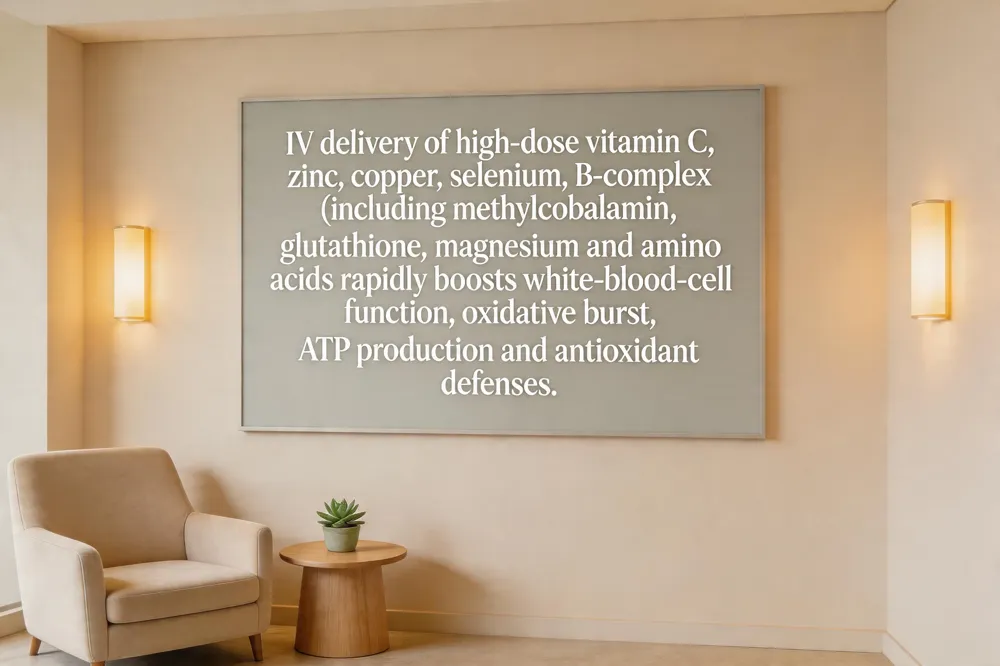 High‑dose vitamin C and white‑blood‑cell function – IV vitamin C bypasses the gut, delivering near‑100 % bioavailability and plasma levels 10‑30 times higher than oral dosing. This concentration fuels neutrophils and lymphocytes, enhances the oxidative burst, and shortens the duration of common colds (JAMA Network Open, 2022).
Zinc, copper, selenium, and trace minerals for immune signaling – Intravenous zinc rapidly raises serum levels, supporting T‑cell development and antiviral defenses (Clinical Nutrition, 2021). Copper and manganese act as cofactors for antioxidant enzymes, while selenium stabilizes cellular membranes and reduces inflammation.
B‑complex vitamins, methylcobalamin, and cellular energy production – IV B‑vitamins (B1, B2, B3, B5, B6, B12) jump‑start ATP generation, allowing immune cells to proliferate quickly during infection (American Journal of Clinical Nutrition, 2020). Methylcobalamin specifically aids DNA synthesis in lymphocytes.
Glutathione, NAD+, and magnesium for antioxidant defense – Glutathione replenishes intracellular antioxidant stores, curbing oxidative stress that impairs immunity (Cell Metabolism, 2023). NAD+ supports mitochondrial repair, while magnesium stabilizes calcium signaling and modulates cytokine release.
Immune boost IV ingredients – A typical anti‑infection IV blends high‑dose vitamin C, zinc, copper, selenium, a B‑complex (including methylcobalamin), glutathione, magnesium chloride, and optional amino acids (arginine, citrulline, ornithine) for nitric‑oxide‑mediated antioxidant support.
Best immune support vitamins for adults – Vitamin C, D, A, B6, and zinc are the core nutrients; they are abundant in citrus fruits, fatty fish, eggs, nuts, and fortified foods.
Best immune support supplements – Start with a third‑party‑tested multivitamin covering C, D, and zinc, add a probiotic for gut health, and consider elderberry, quercetin, or omega‑3s for extra antiviral and anti‑inflammatory benefits.
Clinical Evidence and Therapeutic Benefits
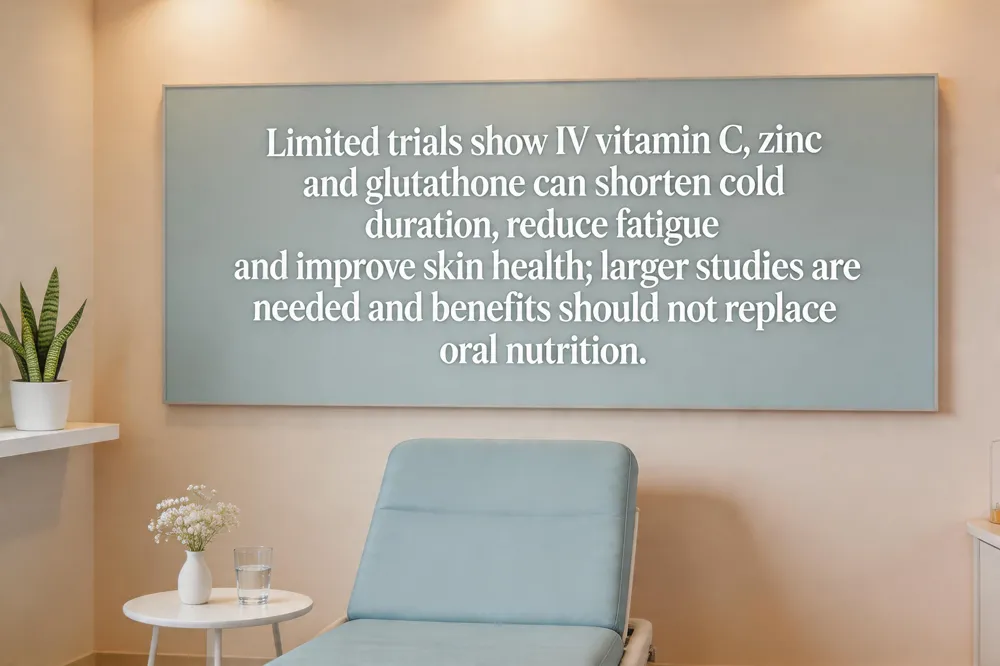 IV nutrient therapy bypasses the gut, delivering vitamins, minerals and antioxidants straight into the bloodstream for near‑100 % bioavailability. High‑dose vitamin C, zinc and glutathione quickly raise plasma levels, enhancing neutrophil and lymphocyte activity and reducing oxidative stress, which can shorten the duration of colds and improve overall immune resilience. Small clinical trials of the Myers’ Cocktail have reported short‑term reductions in fatigue, pain and depressive symptoms, especially in patients with fibromyalgia or post‑cancer treatment malaise, though placebo effects are strong and larger studies are lacking. IV infusions also support skin health: vitamin C and B‑complex vitamins stimulate collagen synthesis, while hydration restores barrier function, yielding a smoother, more radiant complexion. In oncology, high‑dose IV vitamin C can achieve plasma concentrations far beyond oral dosing and may alleviate chemotherapy‑related side effects, yet robust data on survival benefit are absent and risks such as kidney injury or drug interactions exist. Overall, the current evidence suggests that IV drips can provide rapid immune‑support and aesthetic benefits for select individuals, but they should not replace proven oral nutrition, lifestyle measures, or medically indicated treatments.
Safety, Side Effects, and Risks
 IV vitamin therapy can be safe when prescribed and administered by a qualified medical professional for documented deficiencies, malabsorption, or acute medical needs. In healthy individuals the evidence of clear benefit is limited and the treatment carries risks, so a thorough clinician‑patient discussion is essential.
Most people experience only mild, short‑term reactions such as soreness, bruising, or swelling at the insertion site, a brief flushing sensation, metallic taste, nausea, headache, or light‑headedness. These effects usually resolve within a few hours and can be minimized by slowing the drip and sitting up slowly after the infusion.
Serious complications are rare but include infection or sepsis from a contaminated needle, vein inflammation (phlebitis), fluid overload that strains the heart or kidneys, electrolyte imbalances, allergic reactions that may progress to anaphylaxis, and, in extreme cases, air embolism or blood clots. Proper sterile technique, screening for contraindications, and continuous monitoring by trained staff dramatically reduce these risks.
Because the FDA has not approved most IV vitamin blends for general wellness claims, patients should verify that the clinic follows strict aseptic protocols, uses evidence‑based formulations, and provides clear post‑infusion instructions. If fever, rapid heartbeat, difficulty breathing, or sudden swelling occur, seek medical attention immediately.
Cost, Accessibility, and Practical Considerations
 Typical price ranges and insurance coverage
Vitamin IV therapy typically ranges from $120 to $260 per session, depending on the blend and infusion size. Basic hydration drips start around $80 for a 500 ml bag, while comprehensive formulas such as a Myers Cocktail cost $199–$259 for a 1000 ml infusion. Most insurers do not cover these treatments when used for wellness or immune‑support in healthy individuals, so patients pay out‑of‑pocket or use membership discounts that can reduce the price by 15–30 %.
Typical price ranges and insurance coverage
Vitamin IV therapy typically ranges from $120 to $260 per session, depending on the blend and infusion size. Basic hydration drips start around $80 for a 500 ml bag, while comprehensive formulas such as a Myers Cocktail cost $199–$259 for a 1000 ml infusion. Most insurers do not cover these treatments when used for wellness or immune‑support in healthy individuals, so patients pay out‑of‑pocket or use membership discounts that can reduce the price by 15–30 %.
Value versus oral supplementation Because IV delivery bypasses the gastrointestinal tract, bioavailability approaches 100 % compared with 20–50 % for oral supplements. This rapid, high‑dose exposure can be valuable for people with malabsorption, severe deficiencies, or acute illness. For the average healthy person, however, the modest benefit does not always outweigh the higher cost, especially when a balanced diet and oral vitamins can provide similar nutrients at a fraction of the price.
Patient experiences and reviews Clients at Jana HealthCare often report an immediate boost in energy, improved skin hydration, and a sense of well‑being after a customized infusion. Positive reviews highlight the convenience of a 30‑minute session and the personalized blend that targets specific deficiencies. Nonetheless, patients also note the need for thorough medical screening to avoid risks such as vein irritation or infection, and they acknowledge that the placebo effect can be strong. Overall, IV therapy is viewed as a useful adjunct for select individuals rather than a replacement for conventional nutrition and lifestyle practices.
Personalized Treatment at Jana HealthCare
 Who should consider IV therapy? Patients with documented deficiencies, malabsorption, post‑surgical recovery, chronic fatigue, or acute illness may benefit. A clinician will review labs, screen for contraindications (e.g., renal disease, hemochromatosis) and obtain informed consent before treatment.
IV vitamin therapy near me – Jana HealthCare provides a modern, comfortable setting just minutes from downtown Brooklyn.
Immunity IV therapy – The infusion bypasses the gut, delivering 100 % bioavailable nutrients that enhance white‑blood‑cell function, reduce oxidative stress and support rapid rehydration.
Immune booster drip – Book your personalized “Natural Defense” IV online or by calling 123 Main St, Brooklyn, NY, and experience a tailored boost to your body’s natural defenses.
Putting It All Together
IV vitamin therapy offers several hidden advantages for immune health that go beyond simple supplementation. By delivering nutrients straight into the bloodstream, it achieves near‑100 % bioavailability, allowing high‑dose vitamin C, zinc, B‑complexes and glutathione to flood immune cells within minutes. This rapid rehydration and nutrient surge boost white‑blood‑cell production, enhance antioxidant defenses, and shorten the duration of common colds. However, the same potency demands a personalized assessment: clinicians must review laboratory results, medical history, and current medications to tailor the blend and avoid risks such as kidney strain or vascular irritation. Patients should weigh the evidence—strong for specific clinical scenarios but limited for general wellness—while considering cost and safety. Informed, individualized choices empower optimal immunity without compromising health. Regular follow‑up keeps the protocol safe and effective over time.