A New Look at Laser Hair Removal
Laser hair removal is a medical‑grade cosmetic procedure that uses selective photothermolysis—focused light energy absorbed by melanin in the hair follicle—to heat and permanently damage the root. Modern systems (diode, alexandrite, Nd:YAG) incorporate built‑in cooling and adjustable wavelengths, allowing safe, precise treatment across a wide spectrum of skin tones and hair colors. Sessions are brief—15 to 45 minutes for most areas—and each pulse can treat a quarter‑size patch in a fraction of a second, making the process far more time‑efficient than daily shaving or bi‑weekly waxing.
Why it matters today? In an era of busy lifestyles and heightened skin‑health awareness, laser hair removal offers lasting smoothness while reducing common irritants such as razor burn, ingrown hairs, and folliculitis. Clinical studies show 70‑90 % hair reduction after 4‑6 sessions, with regrowth typically finer and lighter. The long‑term cost savings are substantial: after the upfront investment, patients eliminate recurring expenses on razors, creams, and salon waxes. Moreover, the thermal effect can stimulate collagen remodeling, subtly improving skin texture and tone. For individuals seeking a low‑maintenance, confidence‑boosting solution that aligns with holistic wellness goals, laser hair removal has become a compelling, evidence‑based option.
Safety, Side Effects, and Cancer Concerns
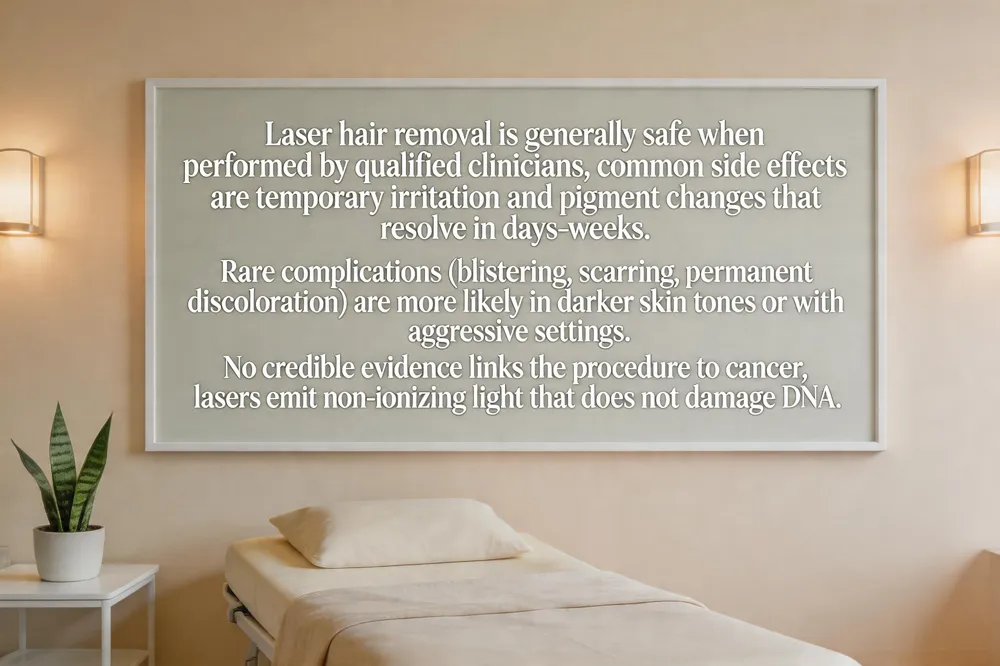 Laser hair removal is generally safe when performed by a qualified medical professional. The most common side effects are temporary skin irritation, redness, and mild pigment changes that resolve within days to weeks. Rare complications such as blistering, scarring, or permanent discoloration can occur, especially in darker skin tones or when aggressive settings are used. Long‑term side effects are uncommon; the main lasting concerns are pigment alterations (hyper‑ or hypopigmentation) and, rarely, scarring or texture changes. Paradoxical hair growth or occasional graying has been reported but is very rare. No credible evidence links laser hair removal to cancer. The lasers (Alexandrite, diode, Nd:YAG) emit non‑ionizing light that does not damage DNA. Over decades of use, large studies have found no statistically significant increase in skin cancer risk. Patients with a personal or family history of skin cancer should discuss precautions, but when performed by trained clinicians using FDA‑approved devices, the procedure remains a low‑risk, safe cosmetic option.
Facial Treatments: Benefits, Side Effects, and Long‑Term Gains
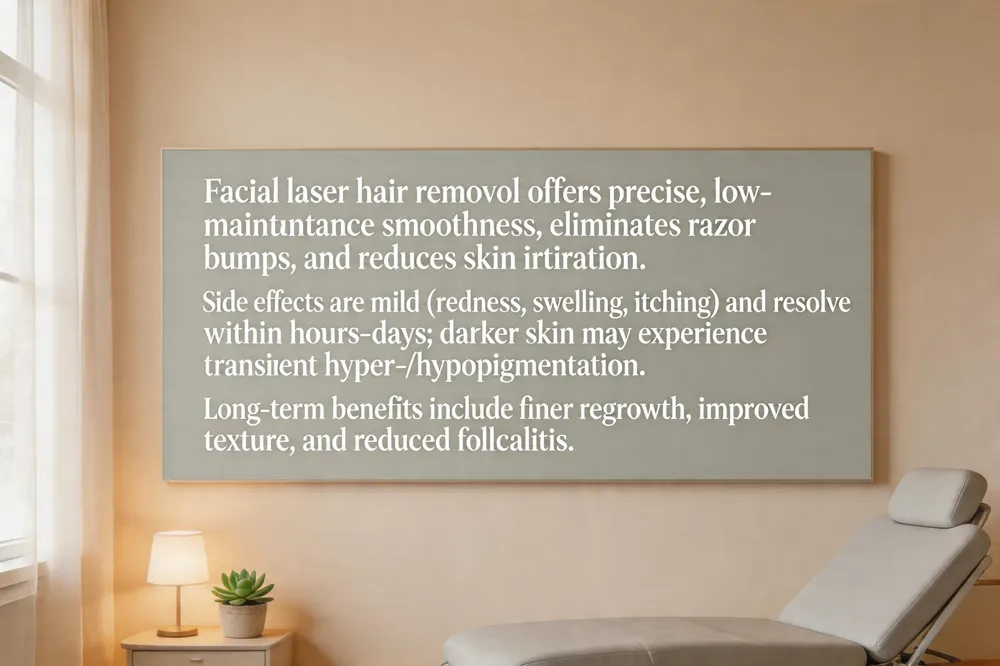 Laser hair removal on the face is a precise, low‑maintenance solution that offers lasting smoothness without the daily hassle of shaving or waxing. The treatment targets dark, coarse hairs while sparing surrounding skin, which virtually eliminates razor bumps and ingrown hairs and reduces skin irritation. Sessions are quick—often under a minute for areas such as the upper lip—making them fit easily into a busy lifestyle.
The side‑effect profile is mild and temporary. Most patients experience brief redness, swelling, itching or a sun‑burn‑like sensation that resolves within a few hours to two days. Individuals with darker skin tones may notice transient hyper‑ or hypopigmentation, while rare cases can lead to blistering or scarring if settings are incorrect. Sun sensitivity increases after treatment, so diligent SPF 30+ sunscreen use for at least two weeks is essential.
Long‑term benefits extend beyond hair reduction. Over time, regrowth becomes finer and lighter, improving overall skin texture and tone. By removing the source of irritation, laser therapy reduces inflammation, hyperpigmentation, and the risk of folliculitis, resulting in a clearer, more even complexion. Periodic maintenance sessions keep results stable, delivering sustained confidence and cost‑effective grooming.
Cost, Savings, and How Laser Stacks Up Against Shaving
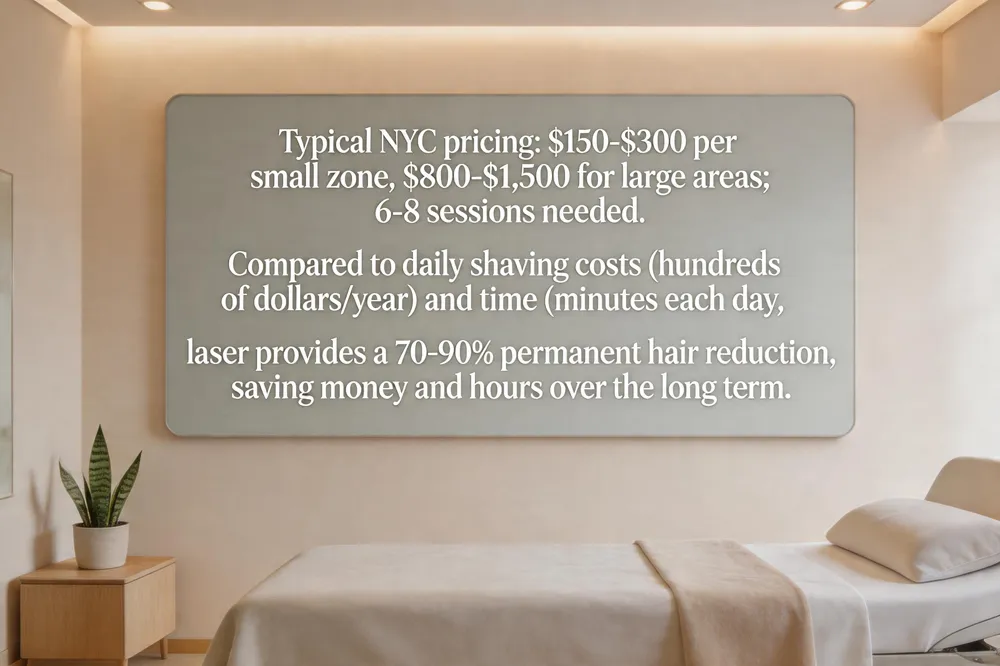 Laser hair removal is a cosmetic procedure, so it isn’t covered by insurance, but pricing is transparent. In Brooklyn, NY a single session for a small zone such as the upper lip, chin, or underarms typically costs $150 – $300, while larger areas like a full leg or Brazilian bikini can range from $800 – $1,500. Most patients need 6 – 8 sessions, and many clinics offer bundled packages that shave 10 %–20 % off the total price.
When you compare this upfront expense with the ongoing cost of shaving, the difference becomes clear. A razor, shave and and shaving cream may appear cheap per use, but daily or every‑few‑days grooming adds up to hundreds of dollars and dozens of hours each year. After a full laser series, only occasional touch‑ups are required, turning the cumulative cost into a long‑term saving.
Time saved is another major benefit. A laser appointment lasts 15–45 minutes, depending on the area, versus the minutes spent shaving every day. Clinically, laser treatment delivers a 70‑90 % permanent reduction in hair growth, leaving the skin smoother for months or years, while shaving provides smoothness for only 1‑3 days before stubble returns.
Overall, laser hair removal offers a more cost‑effective, time‑saving, and lasting solution than the routine of shaving, especially for patients who value convenience and long‑term skin health.
Preparation, Treatment Timeline, and What to Expect
 Pre‑treatment guidelines
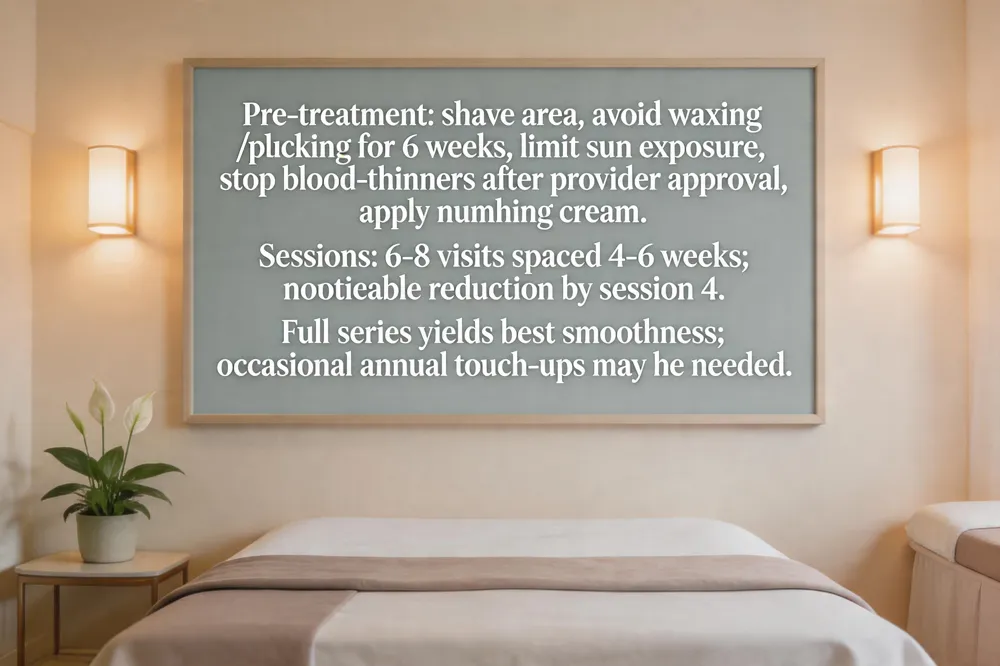
Before your first laser session, shave the area to be treated and Patients must avoid plucking, waxing, or electrolysis for six weeks before treatment. Limit sun exposure and tanning for the same period, and discontinue blood‑thinning medications (e.g., aspirin) after consulting your provider. On the day of treatment, a topical numbing cream is often applied 20‑30 minutes before the laser, and both you and the technician will wear protective eye gear.
Session spacing and number
Laser hair removal works on active (anagen) follicles, so multiple visits are required. Most patients need 6‑8 sessions, each spaced 4‑6 weeks apart, depending on the growth cycle of the treated area. Larger zones (legs, back) may require more sessions, while small areas (upper lip, underarms) often need fewer. After the initial series, occasional touch‑ups once or twice a year keep results optimal.
Changes after four sessions
By the fourth visit, you should notice a marked reduction in hair density, slower regrowth, and finer, lighter hairs. Mild redness or a warm pinprick sensation may still appear, but overall skin texture improves. Completing the full series (usually 6‑8 sessions) delivers the best long‑term smoothness and minimizes ingrown hairs.
What should I know before starting laser hair removal?
Laser hair removal isn’t a one‑time fix; most areas need 6–8 sessions spaced 4–12 weeks apart depending on the region’s growth cycle, and occasional touch‑ups may be required later. The treatment works best on light skin with dark hair, while blonde, red, white, or gray hair often respond poorly and may need alternative methods such as electrolysis. Expect a sensation similar to a rubber‑band snap—some zones like the bikini line or underarms can feel more uncomfortable, though numbing creams are commonly offered. Proper prep and post‑care are essential: shave the area, avoid waxing, plucking, and any sun exposure or tanning for at least four weeks before and after each session. Finally, choose a reputable, board‑certified provider; while the cost can be significant, the long‑term reduction in hair growth usually makes it a worthwhile investment.
Can I expect a different experience after four laser hair removal sessions?
After four sessions you should notice a significant reduction in hair density, slower growth, and finer hairs. The skin may still show mild redness, but continued treatment will further improve results. Completing the full series (usually 6‑8 sessions) yields the best outcome.
Disadvantages, Limitations, and Medical Considerations
 What are the disadvantages of laser hair removal?
Laser hair removal usually requires 6‑8 sessions spaced 4‑6 weeks apart, making the process time‑consuming and more expensive than temporary methods such as shaving or waxing. Treatments can be uncomfortable, especially on sensitive areas, and often cause temporary redness, swelling, or mild skin irritation. The technology works best on dark, coarse hair; light‑colored hairs (blond, red, gray, white) respond poorly. While modern devices have cooling systems, rare but serious complications—burns, blisters, scarring, or pigment changes (hyper‑ or hypopigmentation)—can occur if settings are mismatched to a patient’s skin type. Ongoing maintenance touch‑ups may be needed, adding to long‑term cost.
What are the disadvantages of laser hair removal?
Laser hair removal usually requires 6‑8 sessions spaced 4‑6 weeks apart, making the process time‑consuming and more expensive than temporary methods such as shaving or waxing. Treatments can be uncomfortable, especially on sensitive areas, and often cause temporary redness, swelling, or mild skin irritation. The technology works best on dark, coarse hair; light‑colored hairs (blond, red, gray, white) respond poorly. While modern devices have cooling systems, rare but serious complications—burns, blisters, scarring, or pigment changes (hyper‑ or hypopigmentation)—can occur if settings are mismatched to a patient’s skin type. Ongoing maintenance touch‑ups may be needed, adding to long‑term cost.
Can I get laser hair removal if I have Hashimoto’s disease? Hashimoto’s disease itself is not a contraindication. However, some thyroid medications increase photosensitivity, raising the risk of irritation. Discuss your medication list with a qualified provider; a patch test or adjusted laser settings may be recommended.
Other contraindications and health concerns Pregnancy, active skin infections, recent tanning, or use of photosensitizing drugs (e.g., isotretinoin) are standard contraindications. Individuals with uncontrolled diabetes, severe eczema, or a history of keloid scarring should also be evaluated carefully before treatment.
Permanence, Maintenance, and Managing Unexpected Outcomes
 Laser hair removal delivers permanent hair reduction by damaging the pigment‑rich hair follicle; once a follicle is destroyed it can no longer produce hair. Because the laser only captures hairs in the active growth (anagen) phase, several sessions—usually 4‑8, spaced 4‑6 weeks apart—are needed to treat the majority of follicles. After a full series, most patients enjoy a long‑term reduction of 70‑90 % with any regrowth typically being finer, lighter and fewer.
Touch‑up schedule: Even though the result is durable, a small proportion of hairs may re‑emerge over months or years, especially in hormonal areas such as the face or bikini line. Most clinicians recommend maintenance‑up session 6‑12 months after the final treatment, then annual or as‑needed touch‑ups to keep the skin smooth.
If results are unsatisfactory: Begin by scheduling a follow‑up consultation with your provider. The clinician will assess the treated area, review your treatment records, and may suggest additional laser passes with adjusted settings, complementary procedures (microneedling, chemical peels), or targeted electro‑lysis for stubborn hairs. Short‑term topical regimens or laser‑assisted skin rejuvenation can address discoloration or texture changes. If expectations still aren’t met, consider alternative hair‑removal methods while allowing the skin to fully heal. Maintaining realistic expectations and adhering to after‑care instructions are essential for the best possible outcome.
Beyond Hair Removal: Skin Health, Confidence, and Lifestyle Gains
 Modern laser hair removal does more than eliminate unwanted hair—it can boost overall skin health and well‑being. The focused light triggers selective photothermolysis, which not only damages hair follicles but also stimulates collagen production. This collagen remodeling smooths fine lines, improves texture, and gives the skin a firmer, more radiant appearance. Because the laser eliminates the follicle at its root, the incidence of ingrown hairs and folliculitis drops dramatically—studies show reductions of up to 80%, meaning fewer painful bumps, less inflammation, and a lower risk of secondary infection. In areas prone to excess sweating, such as the underarms or bikini line, fewer hairs reduce moisture retention, offering noticeable relief for hyperhidrosis and a drier, more comfortable skin surface. Beyond the physical benefits, patients frequently report heightened confidence and a psychological uplift. The freedom from daily shaving, waxing, or plucking removes a constant grooming stress, allowing individuals to enjoy social activities, athletic performance, and personal intimacy without self‑consciousness. Together, these skin‑level improvements and confidence boost make laser hair removal a holistic lifestyle enhancer.
Final Thoughts: Embrace Smoother Skin
Laser hair removal offers more than just lasting hair‑free skin; it delivers a suite of unexpected wellness perks. By disabling follicles, the treatment slashes ingrown hairs, razor burn, and folliculitis, leaving the skin smoother and less prone to infection. The controlled heat also stimulates collagen remodeling, which can improve texture, tone, and even reduce mild acne or hyperpigmentation. For those with hyperhidrosis, fewer hairs mean less moisture retention and a drier, odor‑free surface. Over time, the need for daily shaving or frequent waxing disappears, saving both time and money while boosting confidence and overall quality of life. If you’re ready to experience these holistic benefits, schedule a personalized consultation with Jana HealthCare. Their board‑certified specialists will assess your skin type, discuss realistic expectations, and design a safe, effective laser plan tailored to your aesthetic and wellness goals.