Why the Immigration Medical Exam Matters
The immigration medical exam protects health by screening for contagious diseases like tuberculosis and syphilis that could burden the U.S. health system. It also fulfills a requirement under INA Sections 212(a) and 221(d), mandating that every immigrant‑visa or green‑card applicant demonstrate medical admissibility before a visa is issued or status is approved. Failure to meet the exam’s health standards—missing vaccinations, untreated tuberculosis, or a Class A medical condition—can lead to visa denial, a waiver, or delays while is is completed, affecting the applicant’s timeline for residency. By integrating vaccination updates, chronic‑condition documentation, and personalized counseling, the exam also serves as a wellness checkpoint, helping applicants start their U.S. journey with a foundation.
Step 1 – Find a Qualified Civil Surgeon Near You
 Finding the right doctor is the first step toward a smooth immigration medical exam. The U.S. Citizenship and Immigration Services (USCIS) maintains an online “Find a Civil Surgeon” tool (https://my.uscis.gov/find-a-civil-surgeon). Enter your address, city, state, or ZIP code and the system returns a list of USCIS‑designated civil surgeons, complete with office hours, contact numbers, and languages spoken. For applicants outside the United States, the Department of State designates panel physicians at U.S. embassies and consulates; you can locate them.
Step 2 – Gather Required Documents and Prepare for the Visit
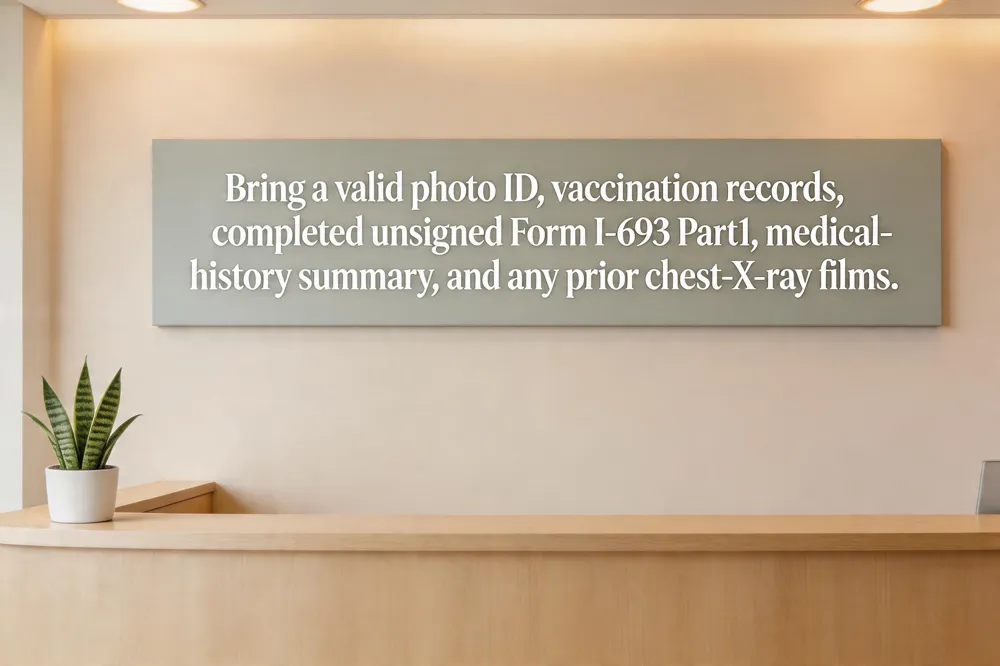
- Valid government‑issued photo ID – passport, driver’s license, or state ID.
- Vaccination records – include the COVID‑19 series; if you lack paperwork, the physician can assess immunity or give needed shots.
- Completed but unsigned Form I‑693 Part 1 – fill out personal information, A‑Number, and health‑history questions, but wait to sign until the surgeon is present.
- Medical‑history summary – list current medications, chronic‑condition documentation (e.g., diabetes, hypertension), and any prior TB or syphilis treatment certificates.
- Optional – health‑insurance card (for vaccines that may be covered) and an interpreter’s contact if needed.
What to bring to the USCIS medical exam – Bring the items above, plus any prior chest‑X‑ray films and a copy of the appointment letter. The civil surgeon will review your records, conduct a comprehensive physical, order TB screening (IGRA or chest X‑ray), syphilis blood work, and verify vaccinations. Missing immunizations can be administered on site.
Form I‑693 – This Report of Medical Examination and Vaccination Record must be completed by the civil surgeon after the exam, signed in your presence, and sealed in a sealed envelope. For adjustment‑of‑status filings, a partial I‑693 (Parts 1‑5, 7, 10) may be submitted with Form I‑485. Ensure the edition date is the current one (01/20/25 or later) and all pages are from the same edition.
What to expect during the exam – The clinician will first verify your identity, then perform a comprehensive physical: heart and lung auscultation, eye‑ear‑throat inspection, and vital‑sign measurements. Laboratory screening includes an IGRA TB test, syphilis blood test, and, when indicated, a chest X‑ray. A brief mental‑health questionnaire is also completed. Results are entered on Form I‑693, which the surgeon signs, places in a sealed envelope, and returns to you for submission with your immigration paperwork.
Step 3 – Understand the Examination Components
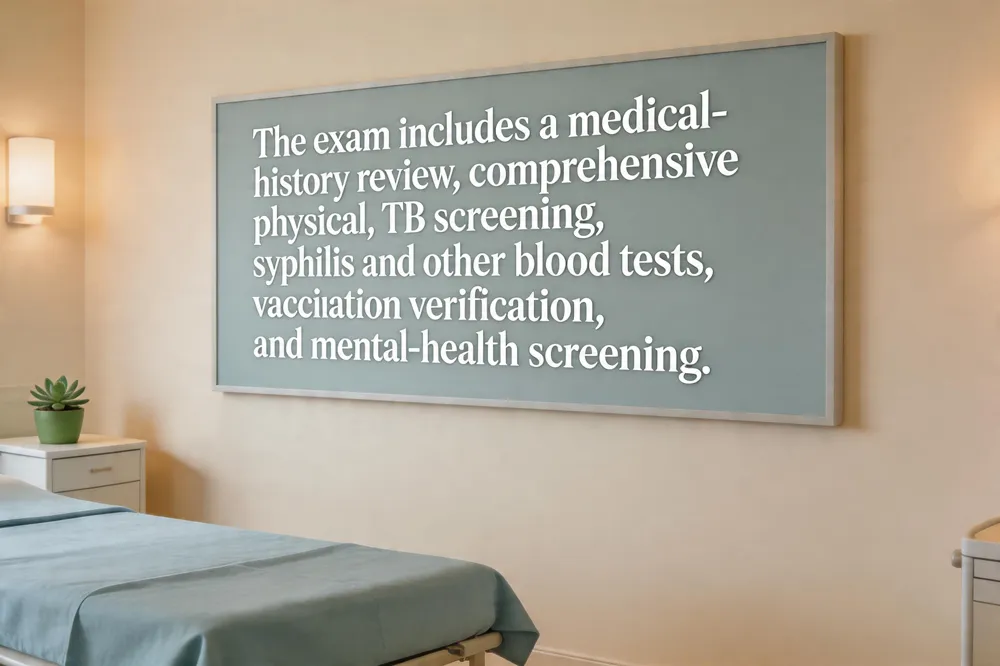 An immigration medical exam is a focused health‑screening step that protects both you and the United States. First, the physician conducts a medical‑history review, asking about past surgeries, chronic illnesses, medications, vaccinations, and any prior treatment for tuberculosis, syphilis, or other communicable diseases. This sets the stage for a comprehensive physical examination that checks the eyes, ears, nose, throat, heart, lungs, abdomen, lymph nodes, skin, and extremities—ensuring nothing is missed.
Tuberculosis screening follows the CDC guidelines: most adults receive an Interferon‑Gamma Release Assay (IGRA) blood test; a positive or indeterminate result triggers a chest X‑ray. Children under 15 generally skip the X‑ray and syphilis blood draw. Blood and urine tests are taken for syphilis, hepatitis (A, B, C) and, when required, gonorrhea; some clinics also screen for drug use.
Vaccination verification is documented on Form I‑693 (Part 10). Required vaccines include MMR, polio, varicella, hepatitis A/B, influenza, and others listed by the CDC. Missing shots are administered on the spot or scheduled for follow‑up.
Finally, a brief mental‑health and substance‑use screening identifies any severe disorders or addiction issues that could affect admissibility. All findings are sealed in a tamper‑evident envelope and submitted with your adjustment‑of‑status packet.
Immigration medical exam: what do they check? During the exam the physician reviews your history, performs a full physical, screens for TB, syphilis, and other infections, verifies vaccinations, and conducts mental‑health and substance‑use assessments. Results are recorded on Form I‑693 to determine public‑health eligibility.
What is done during an immigration medical exam? You present a passport and appointment letter to a USCIS‑approved civil surgeon or panel physician. The doctor reviews your medical history and immunization records, conducts a thorough physical exam, orders a chest X‑ray and blood tests, verifies vaccinations, and may screen for drugs, alcohol, and mental health concerns. All data are entered on Form I‑693.
Immigration medical exam requirements – The exam must be performed by a designated civil surgeon or panel physician and documented on Form I‑693. Required components include a medical‑history review, comprehensive physical exam, TB screen (X‑ray or skin test), blood tests for syphilis (and other CDC‑mandated labs), vaccination verification, and, when indicated, drug/alcohol and mental‑health screening. The sealed Form I‑693 must accompany your Form I‑485 to avoid rejection.
Step 4 – Manage Lab Tests, X‑rays, and Vaccinations
 Before your I‑693 appointment, gather a passport, appointment letter, any vaccination cards, and a list of current meds. The civil surgeon will first review your medical history, then perform a focused physical exam—checking heart, lungs, eyes, ears, throat, and vital signs.
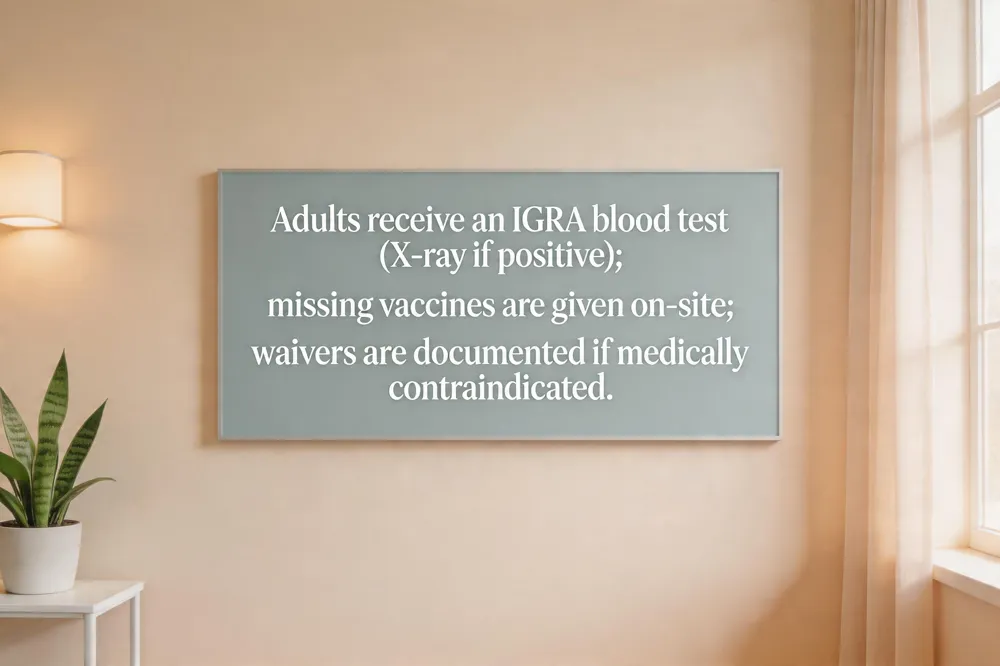
TB testing options: Most adults receive an Interferon‑Gamma Release Assay (IGRA) blood test. If the IGRA is positive or indeterminate, a chest X‑ray is ordered. In high‑TB‑burden countries, a skin test (TST) may be used instead, followed by an X‑ray if needed. Children under 15 usually skip X‑rays and blood tests for syphilis.
Blood work: A single draw screens for syphilis (RPR/VDRL), hepatitis B (and sometimes C), and, for some clinics, HIV. Applicants age 15+ also provide a urine sample for gonorrhea testing.
Vaccination gaps: The surgeon compares your records against the CDC’s immigration list (MMR, Tdap, varicella, hepatitis A/B, influenza, etc.). Missing shots are administered on the spot; multi‑dose series may require a follow‑up visit.
Waiver procedures: If a vaccine is medically contraindicated, the physician completes a waiver form documenting the reason. A religious or moral objection waiver requires a separate Form I‑601 filing with supporting evidence.
What to expect: After the exam, the doctor signs and seals Form I‑693 in a tamper‑evident envelope—do not open it. Submit the sealed envelope with your green‑card filing.
How to pass near San Francisco: Locate a USCIS‑designated civil surgeon via the online tool, verify payment options, and schedule early to allow time for any needed vaccinations or lab work. Arrive prepared, follow the clinician’s instructions, and keep the sealed I‑693 envelope intact for USCIS submission.
Step 5 – Complete and Seal Form I‑693 Correctly
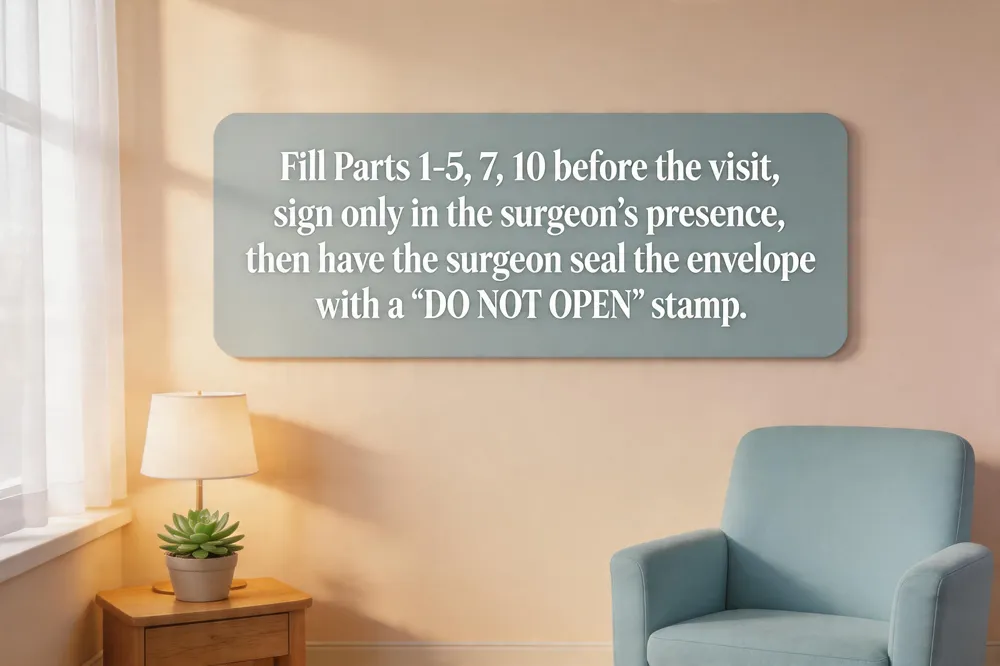 Form I‑693 is the cornerstone of your immigration medical record. First, verify the edition you are using: the 03/09/23 and 01/20/25 versions are acceptable if the civil surgeon signs on or before July 2 2025; any signature on or after July 3 2025 must be the 01/20/25 edition. Complete Parts 1‑5, 7, and the vaccination record (Part 10) before the appointment; do not sign until the surgeon is present. During the visit the surgeon will review your history, conduct the physical, order TB, syphilis and urine tests, and administer any missing vaccines. After all results are in, the surgeon signs the form, places it and supporting documents in a sealed envelope, and stamps “DO NOT OPEN. FOR USCIS USE ONLY.” Never open or alter this envelope – a broken seal leads to a rejected I‑485 package. If you were examined abroad, you can submit a partial I‑693 (Parts 1‑5, 7, 10) with your adjustment‑of‑status filing; the embassy may have already sent the full report directly to USCIS. Common envelope errors include missing pages, mismatched edition dates, unsigned forms, or a seal that is not intact. Address these details now to avoid costly re‑exams and delays.
FAQ
- Form I‑693 PDF – Download the current 01/20/25 edition from https://www.uscis.gov/i‑693. Use the 03/09/23 edition only if the surgeon signs before July 2 2025.
- How much do doctors charge for I‑693? – Expect $250‑$650 total: exam fee $150‑$300, labs $50‑$150, vaccines $0‑$500, plus a $50‑$100 sealing fee.
- Immigration medical exam cost – The overall range is $250‑$650, varying by location and required vaccinations; many clinics do not accept insurance.
Step 6 – Avoid Common Reasons for Failure
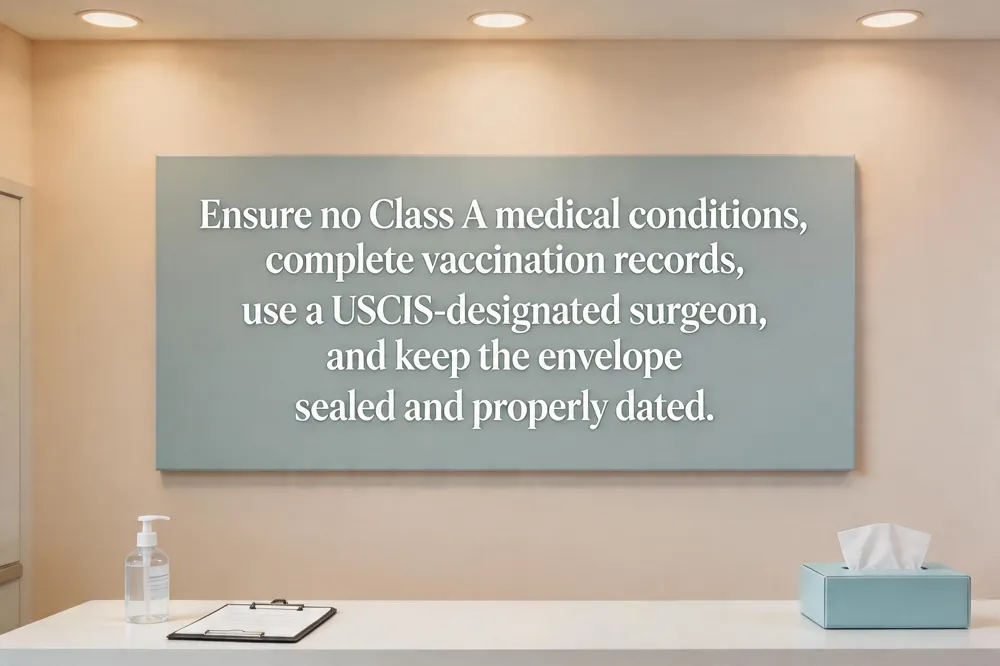 USCIS will reject an immigration medical exam when a Class A medical condition is found—active tuberculosis, untreated syphilis, gonorrhea, or any serious mental‑health disorder linked to violent or self‑harmful behavior. Likewise, missing or incomplete vaccination records for required immunizations (e.g., MMR, varicella, tetanus‑diphtheria‑pertussis, influenza, hepatitis B, Hib, meningococcal) can cause denial. The exam must be performed by a USCIS‑designated civil surgeon or panel physician; a non‑designated doctor, an unsigned Form I‑693, or a form signed on the wrong edition date will be rejected. Finally, the sealed envelope containing the completed I‑693 must remain untouched—if the envelope is opened, altered, or not properly sealed, USCIS will consider the medical documentation invalid.
What can cause you to fail an immigration medical exam? You can fail if the physician identifies a communicable disease of public‑health significance (active TB, untreated syphilis, gonorrhea), if vaccination records are missing or incomplete, if you have a current drug‑abuse problem or a mental disorder associated with violent behavior, or if the exam is performed by an unapproved clinician, the I‑693 is unsigned or outdated, or the sealed envelope is compromised.
What does USCIS look for in a medical exam? USCIS expects a civil surgeon or panel physician to verify that you meet U.S. public‑health standards. The exam includes a medical‑history review, a thorough physical exam, TB screening, syphilis and gonorrhea testing, and verification of all required vaccines. Any Class A condition or documentation error—such as an unsigned or improperly sealed Form I‑693—will render the applicant inadmissible.
Step 7 – Submit the Sealed Package and Follow Up
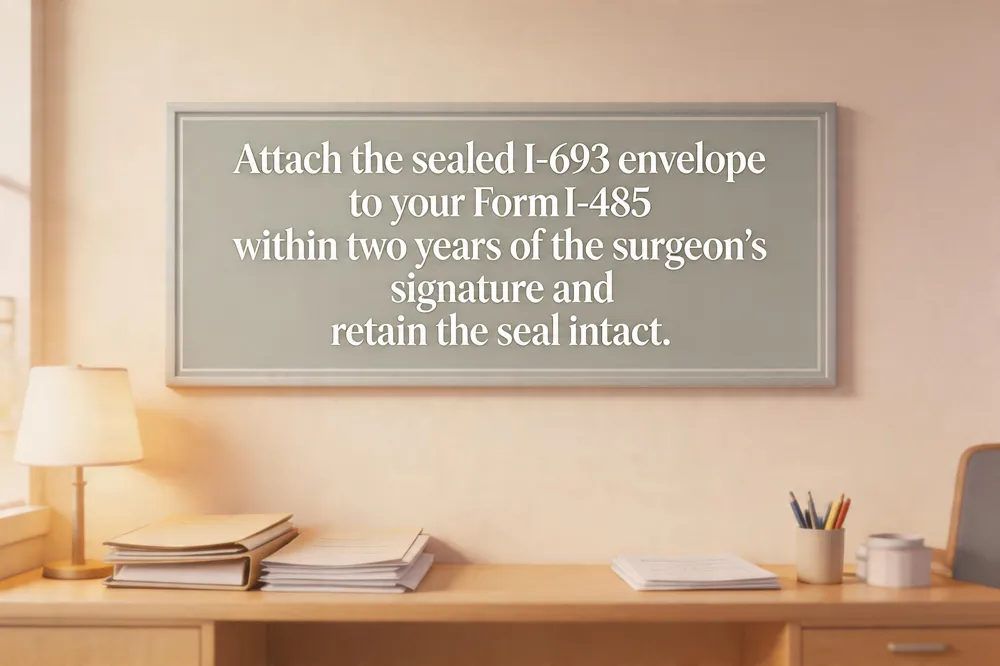 Timing with Form I‑485 – Once you receive the sealed I‑693 envelope, attach it to your adjustment‑of‑status packet and mail it together with Form I‑485. USCIS requires the sealed form to be submitted within two years of the civil surgeon’s signature; filing later can trigger a new exam. Two‑year validity – The sealed I‑693 is valid for two years from the surgeon’s signing date, regardless of when your I‑485 is filed, as long as the form remains unopened. Handling rejections and RFE notices – If USCIS opens, alters, or finds an unsigned envelope, they will issue a Request for Evidence (RFE) or reject the package. In that case, obtain the original sealed envelope, include the rejection notice, and resubmit. Typical processing timeline – After the exam, labs usually return in 3–10 business days, and the civil surgeon prepares the sealed form within a week. Expect the entire medical‑exam‑to‑submission process to take 1–2 weeks; if additional chest X‑ray or vaccine follow‑up is needed, allow up to 4 weeks.
How long does an immigration medical examination take? The first visit generally lasts 30–45 minutes for the physical, history review, blood draw and vaccine check; many clinics schedule 60–90 minutes to accommodate on‑site testing. Lab results (TB, syphilis, gonorrhea) take 3–10 business days, with expedited results possible in 3–4 days. A brief second visit to hand you the sealed I‑693 is about 10–15 minutes. Overall, the process usually spans 1–2 weeks, but missing records or extra X‑rays can extend it to 3–4 weeks. Plan your exam 4–6 weeks before filing to avoid delays.
Immigration medical exam cost – Total fees range from $250 to $650, covering the physician’s charge ($150‑$300), laboratory work ($50‑$150), and any needed vaccinations (0‑$500). Prices vary by surgeon and location; many do not accept insurance. Call several designated civil surgeons in your area, compare costs, and confirm whether labs and vaccines are billed separately. Remember, the sealed Form I‑693 you receive must be submitted with your green‑card application.
Final Checklist Before You Walk In
Before stepping into your immigration medical appointment, double‑check that the doctor you have scheduled is a USCIS‑designated civil surgeon (or panel physician if you are abroad) and that the appointment date fits your filing timeline. Gather every required item: a photo ID, vaccination cards, a completed but unsigned Form I‑693 (use the latest edition accepted by USCIS), a list of medications, and any treatment certificates for TB, syphilis, or chronic conditions. Set aside the exam fee—typically $100‑$500—and funds for lab work, chest X‑ray, and any missing vaccines, which the civil surgeon can give on the spot. Finally, keep the sealed I‑693 envelope unopened; you will submit it with your I‑485 or bring it to the visa interview. Following these steps avoids delays and supports a journey.