Introduction
Age‑specific skincare is essential because skin biology changes predictably over time—collagen production slows, barrier function wanes, and hormonal shifts alter oil balance. Jana HealthCare unites board‑certified dermatology, aesthetic medicine, and wellness coaching to create truly personalized regimens that address both medical concerns and aesthetic goals. Our guiding principles are simple yet powerful: protect the skin daily with broad‑spectrum SPF, support the barrier with gentle, pH‑balanced cleansers and humectants, and introduce targeted actives (antioxidants, retinoids, peptides) at the right decade to prevent damage and correct early signs of aging. By integrating evidence‑based treatments with lifestyle advice—nutrition, sleep, stress management—we help patients achieve lasting skin health and a radiant, youthful appearance at any age.
Why Consistency and Evidence Matter
 A regular skin‑care routine is more than a beauty habit—it’s a science‑backed strategy for protecting the skin’s barrier and preventing premature aging. Daily application of broad‑spectrum sunscreen with at least SPF 30 blocks the UV rays that cause up to 80‑90 % of visible skin damage, Collagen production in the skin begins to decline in the early 20s. Gentle, pH‑balanced cleansing removes impurities without stripping the skin’s natural lipid barrier while moisturizers fortified with hyaluronic acid, ceramides, or squalane restore hydration and reduce transepidermal water loss. Antioxidant serums such as vitamin C neutralize free radicals from UV exposure and pollution, supporting collagen synthesis and brightening hyperpigmentation.
Benefits of a skin‑care routine: Consistent cleansing, moisturization, and sunscreen keep the skin supple, reduce acne and fine lines, and improve texture and tone, leading to greater confidence and overall well‑being.
Does skincare actually work? Yes—clinical data show that daily sunscreen, barrier‑supporting moisturizers, and proven actives (vitamin C, retinoids, AHAs/BHAs) reliably improve hydration, barrier function, and signs of aging. Dramatic changes may require professional procedures, but a simple, evidence‑based routine delivers measurable results.
What does skincare do to your face? It removes excess oil and dead cells, prevents clogged pores, restores moisture, shields against UV‑induced collagen loss, and promotes cell turnover for a smoother, brighter complexion.
Foundations for Teens and Twenties
 Gentle cleansing and SPF basics
Start with a pH‑balanced, non‑stripping cleanser morning and night to remove excess oil and pollutants without compromising the barrier. Follow with a lightweight moisturizer that includes ceramides or hyaluronic acid for hydration. Finish every morning with broad‑spectrum SPF 30+ (mineral zinc oxide or chemical). Daily sunscreen is the single most effective anti‑aging tool, preventing UV‑induced collagen breakdown and hyperpigmentation.
Early antioxidant protection
Introduce a Vitamin C serum (10‑15 % L‑ascorbic acid) after cleansing. Vitamin C neutralizes free radicals from UV exposure and pollution, supports collagen synthesis, and brightens early dark spots. Pair with a non‑comedogenic moisturizer containing squalane or niacinamide for additional barrier support.
Signs of the first aging changes
In the late 20s you may notice fine lines around the eyes, subtle uneven tone, and a slight loss of the “baby‑fat” fullness. Collagen production begins to slow after age 25, losing ~1 % per year, while elastin and hyaluronic acid levels dip, leading to reduced elasticity and mild dryness. Lifestyle factors—screen time, stress, irregular sleep—can accelerate these shifts.
Best age‑specific skincare building a routine that evolves with you
Begin simple in your teens: gentle cleanser, lightweight moisturizer, daily SPF. In your 20s add a salicylic‑acid cleanser or BHA toner for pore control and a Vitamin C serum for antioxidant defense. By the 30s incorporate a retinol or prescription retinoid at night to boost collagen, and richer moisturizers with hyaluronic acid. In the 40s and beyond, focus on peptide-rich serums, deeper hydration, and periodic professional treatments while maintaining consistent broad‑spectrum SPF 30+.
Dermatologist‑recommended skin‑care routine for 20s
Morning: gentle pH‑balanced cleanser → Vitamin C serum → SPF 30+ → barrier‑strengthening moisturizer. Evening: double cleanse (if makeup), lightweight hydrating serum, occasional retinol 2‑3×/week, followed by a ceramide‑rich night cream.
First signs of aging 20s
Fine lines, early dark spots, and a subtle loss of plumpness signal the start of collagen decline. UV exposure, oxidative stress, and dehydration exacerbate these changes.
When does your skin start losing collagen?
Noticeable loss begins around age 25, with an approximate 1 % annual decline. Hormonal shifts during perimenopause can accelerate this further.
Best skincare products for 20s, 30s, 40s (dermatologist‑approved)
20s: gentle cleanser (e.g., Roche‑Posay Toleriane), Vitamin C serum, SPF 30+, lightweight moisturizer. 30s: add retinol, hyaluronic‑acid serum, ceramide‑rich night cream. 40s: introduce peptide serums, richer barrier‑repair moisturizers, AHA/BHA exfoliation 2‑3×/week, and targeted eye creams.
Your 30s: Targeted Actives and Budget‑Friendly Choices
 What skincare products should I be using on your face at age 30‑40?
Begin with a gentle, pH‑balanced cleanser (e.g., CeraVe Foaming or La Roche‑Posay Toleriane) to remove impurities without stripping the barrier. Follow with a lightweight moisturizer containing hyaluronic acid and ceramides or niacinamide for lasting hydration. Every morning, apply a broad‑spectrum SPF 30+ (mineral zinc‑oxide or chemical) to prevent UV‑induced collagen loss. Add a vitamin C antioxidant serum before sunscreen to neutralize free radicals and brighten tone. In the evening, introduce a low‑dose retinol or bakuchiol (2–3 times/week) to boost collagen, smooth fine lines, and improve cell turnover.
Best skin care routine for 30s on a budget
Use a drug‑free cleanser (CeraVe or La Roche‑Posay), a budget‑friendly hyaluronic‑acid moisturizer like Neutrogena Hydro Boost, and an affordable SPF 30‑40 such as EltaMD UV Daily. Incorporate a chemical exfoliant (glycolic or salicylic acid) 2–3 times weekly for texture and dark‑spot reduction. Finish with an inexpensive vitamin C serum (e.g., The Ordinary 15% Ascorbic Acid) and a modest retinol (0.25% over‑the‑counter) at night.
Best anti‑aging skin care routine 30s
Cleanse gently, apply a vitamin C serum, moisturize with hyaluronic‑acid ceramide blend, and protect with SPF 30+. At night, use a low‑concentration retinol and a peptide‑rich night cream to support collagen synthesis. Consider a quarterly professional consultation (e.g., Jana HealthCare) for personalized tweaks.
Best skin care products for a 30‑year‑old woman
Choose a gentle cleanser (Paula’s Choice RESIST Perfectly Balanced Foaming Cleanser), a hydrating toner (CeraVe Hydrating Toner), a vitamin C serum (Summer Fridays CC Me Vitamin C + Niacinamide), an eye cream (RoC Retinol Correxion Line‑Smoothing), and a mineral SPF 40 (EltaMD UV Daily).
Your 40s: Advanced Anti‑Aging and Smart Budgeting
 In your 40s the skin barrier needs extra support, collagen production slows, and fine lines become more visible. A budget‑friendly routine starts with a gentle, fragrance‑free cleanser—think Vanicream or CeraVe Renewing SA—to remove makeup without stripping lipids. Follow with an antioxidant vitamin C serum (e.g., Timeless) for brightening and free‑radical protection, then add a hydrating serum such as CosRX Snail Mucin. In the morning, seal everything with a lightweight, barrier‑repair moisturizer that contains hyaluronic acid or ceramides and a broad‑spectrum SPF 30‑50 sunscreen, the single most effective anti‑aging step.
At night, cleanse again and apply a cost‑effective retinol or bakuchiol product 2–3 times per week to stimulate collagen and smooth texture. Finish with the same moisturizer to lock in hydration. For added firmness, incorporate peptide‑rich serums or creams (copper peptide, GHK‑Cu) a few times weekly; peptides signal cells to produce more collagen without the irritation of high‑strength retinoids.
A dermatologist‑approved 40s regimen includes the steps above plus a mild chemical exfoliant (5 % glycolic acid) once or twice a week and a dedicated eye cream with peptides or niacinamide for the orbital area. Consistency, sun protection, and barrier‑supporting ingredients are the cornerstones of healthy, radiant skin in your 40s—no matter the budget.
Safety, Labeling, and the Science Behind the Ingredients
 Understanding skincare safety starts with recognizing contraindications. Absolute or relative contraindications include severe allergy to a specific ingredient (e.g., anaphylaxis to fragrance), pregnancy for teratogenic actives such as isotretinoin, uncontrolled hypertension before using vasoconstrictive products, significant liver or kidney disease when using metabolites cleared by these organs, and concurrent anticoagulant therapy with products containing aspirin‑like salicylates.
Regulatory labeling follows the “1 % rule”: ingredients are listed in descending order by weight until an ingredient reaches 1 % of the formula; beyond that point, order may be rearranged. Active drug‑type ingredients (sunscreens, acne treatments) are listed first with exact percentages, helping consumers spot dominant components.
While most cosmetics remain topical, some chemicals (e.g., parabens, phthalates, heavy metals) can be absorbed and processed by the liver, adding to its detox workload. Choosing clean, non‑toxic formulations reduces this systemic burden.
Timing, Frequency, and Lifestyle Integration
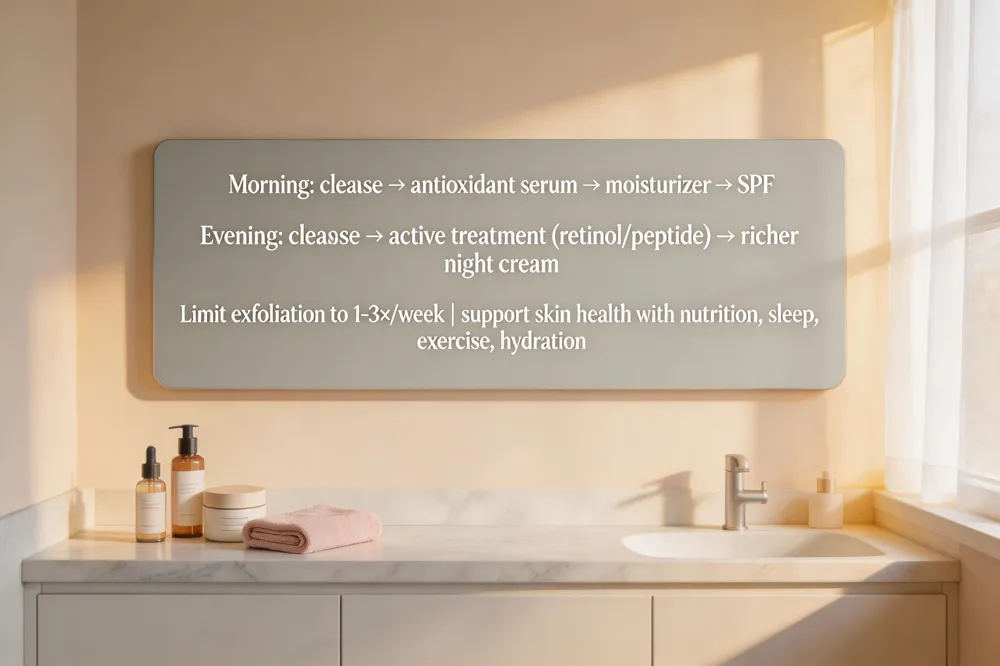 Proper timing is the backbone of an effective routine. In the morning, cleanse gently, apply an antioxidant serum such as vitamin C, layer a lightweight moisturizer, and finish with a broad‑spectrum SPF 30+ to shield against UV, blue light, and pollution. At night, cleanse again (double‑cleanse if makeup is worn), treat with actives like retinol or peptide serums, and seal moisture with a richer cream to support overnight repair.
Exfoliation and active‑ingredient use should be limited to 1–3 times per week, depending on skin tolerance; over‑exfoliation can compromise the barrier.
Lifestyle habits that reinforce skin health include daily sunscreen, balanced nutrition rich in antioxidants, regular exercise, adequate sleep (7‑9 hours), stress management, and staying well‑hydrated.
Visible aging typically begins in the late‑20s to early‑30s, with fine lines and subtle loss of elasticity. By the mid‑30s, changes become more apparent, especially with cumulative sun exposure. Early preventive steps—daily SPF, gentle cleansing, and antioxidants—can delay these signs.
Age‑specific skincare evolves: infants need sun‑avoidance; children and teens benefit from gentle, non‑comedogenic cleansers, acne‑targeted actives, and consistent SPF. In the 20s‑30s, focus on hydration (hyaluronic acid), antioxidant protection (vitamin C, and optional retinol for early fine lines. The 40s‑50s call for richer ceramide‑rich moisturizers, peptide‑rich serums, and gentle chemical exfoliation to support collagen loss. Over 60, prioritize deep hydration, barrier‑repair lipids, soothing niacinamide, and professional treatments as needed.
The seven pillars of anti‑aging wellness—nutrition, exercise, mental health, social engagement, sleep, preventive care, and purposeful lifestyle—work together to sustain radiant, resilient skin across the lifespan.
Professional Interventions, Transformations, and Longevity
 Skin transformation before and after
Patients who combine at‑home regimens with Jana HealthCare cosmetic dermatology treatments often see striking before‑and‑after changes. Laser resurfacing, fractional peels, and microneedling stimulate collagen and elastin, reducing freckles, enlarged pores, fine lines, and uneven texture. Within weeks the complexion looks smoother, more even‑toned, and radiant as new collagen fibers form. Consistent follow‑up care—hydrating serums, barrier‑repair moisturizers, and daily SPF 30+—locks in these gains and continues the improvement over months.
Best anti‑aging skincare routine for the 60s
- Gentle, non‑foaming cleanser – preserves the skin’s natural lipids.
- Hydrating toner/essence on damp skin to prep the barrier.
- Antioxidant serum – vitamin C + niacinamide protects from free radicals and brightens.
- Hyaluronic‑acid + peptide](https://www.isabellemcleod.com/blog/the-best-anti-aging-skincare-for-your-20s-30s-40s-and-beyond?srsltid=AfmBOorFnWEgm1OGWBbc0CGSfLthJv7glD4U56NMJgalyC-TRV_u9bux) moisturizer – plumps fine lines and signals collagen production.
- Ceramide‑rich night cream – restores the thinned barrier and reduces transepidermal water loss.
- Broad‑spectrum SPF 30+ every morning, reapplied after two hours.
- Weekly gentle exfoliation – lactic acid or PHA 1‑2× to renew cells without irritation.
Occasional professional peels or hydrafacials add extra texture refinement.
How to take 20 years off your face?
- Laser resurfacing for deep collagen remodeling and texture reset.
- Blepharoplasty (eyelid lift) to restore periorbital firmness.
- Facial fat transfer to replenish volume loss in cheeks and temples.
These procedures, paired with daily antioxidant serums, retinol (or bakuchiol) and vigilant SPF 30+ use, can dramatically reverse visible age.
Best anti‑age specific skincare routine
Start with a pH‑balanced cleanser, then a vitamin C serum for brightening and free‑radical defense. Follow with a hyaluronic‑acid or peptide‑infused moisturizer for hydration and collagen support. Add retinol (or bakuchiol 2‑3 times weekly to resurface fine lines, and finish every morning with SPF 30+. Weekly BHA toners or enzymatic exfoliants keep pores clear and maintain a youthful texture.
Conclusion
Across the decades, skin’s needs shift—from barrier support and oil control in the 20s, to antioxidant protection and early collagen‑boosting in the 30s, followed by hydration, peptide‑rich moisturizers, and retinoid therapies in the 40s, and finally barrier‑repair, ceramide‑dense formulas and exfoliation for the 50s and beyond. The common thread is broad‑spectrum SPF 30+, pH‑balanced cleansing, and moisturization, which together prevent UV‑induced damage and preserve the skin’s natural barrier. Use of targeted actives—vitamin C, hyaluronic acid, niacinamide, peptides, and retinoids—delivers measurable improvements when applied consistently over weeks and months. Because each individual’s skin history, lifestyle, and hormonal profile are unique, professional assessment ensures the right actives are introduced at the right time. We invite you to schedule a personalized consultation at Jana HealthCare, where our multidisciplinary team will tailor a routine that balances prevention, correction, and wellness for lasting radiance.