Why Subtle Cardiac Signals Matter
Heart disease claims roughly one in five deaths in the United States, making it the nation’s leading killer. While classic signs such as crushing chest pain are well known, many patients first notice milder clues—persistent fatigue, breathlessness on a short walk, vague chest pressure, ankle swelling, or occasional palpitations. These atypical presentations often slip past routine checks, yet they signal the heart’s reduced output or early fluid buildup. Detecting them promptly lets clinicians intervene before a full‑blown heart attack or sudden cardiac arrest occurs. Early evaluation also opens the door to personalized lifestyle plans, nutrition tweaks, stress‑reduction techniques, and aesthetic‑focused wellness programs that together optimize heart health and overall vitality. By integrating cardiac screenings with practices—yoga, mindfulness, fitness—patients can address subtle signals while boosting appearance, creating a cardiovascular wellness plan.
Chest Discomfort, Atypical Pain, and Warning Symptoms
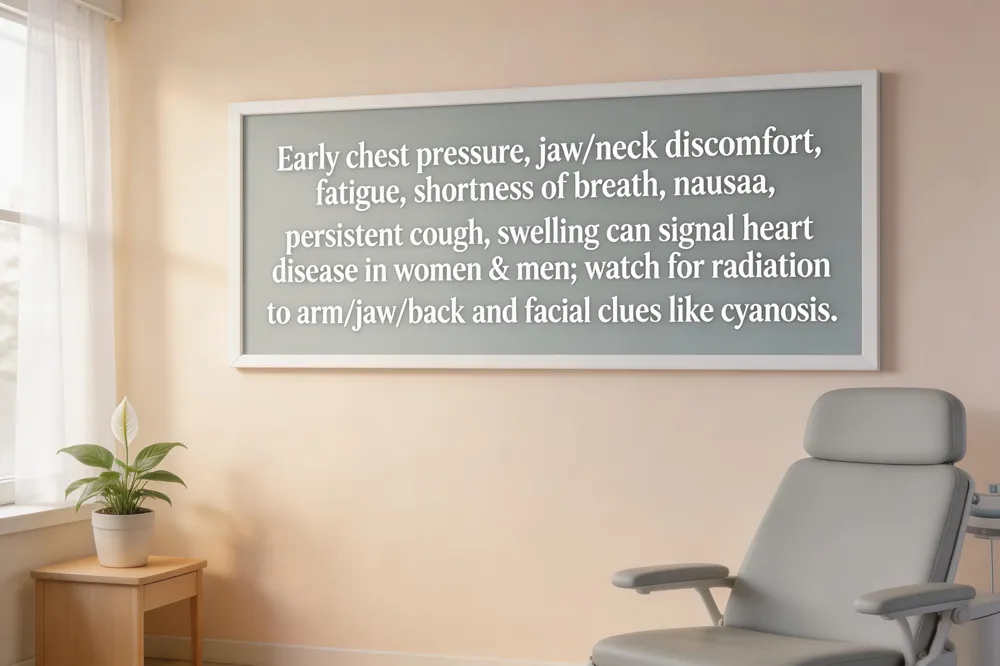 Early Chest discomfort in women often appears as vague pressure in the neck, jaw, shoulder, upper back, or upper stomach, sometimes described as a squeezing or heaviness. Couples shortness of breath fatigue, and nausea can accompany this discomfort, especially during sleep or mild activity. In men, the first clue may be mild chest pressure or a burning sensation that mimics indigestion, along with radiating pain to the left arm, jaw, neck, or back. Both sexes may notice swelling in the ankles or feet, a persistent cough(https://www.cardiaccarepc.com/content-hub/silent-signals-recognizing-the-subtle-symptoms-of-heart-disease), or a feeling of being “clammy” without clear cause.
Early signs of heart disease in females – atypical chest pressure, jaw or neck discomfort, unexplained fatigue, shortness of breath, nausea, cold sweats, and indigestion‑like sensations.
Early signs of heart disease in males – mild chest pressure, arm or jaw pain, shortness of breath with light activity, persistent fatigue, ankle swelling, and occasional cough.
Five most common heart‑attack warnings – central chest pressure or pain, radiation to arms/neck/jaw/back, sudden shortness of breath, cold clammy sweat, and nausea or light‑headedness.
Heart‑attack warning signs – chest discomfort that comes and goes, spreading pain, breathlessness, sweats, nausea, and unusual fatigue; call 911 immediately if any appear.
Facial clues – bluish lips (cyanosis), periorbital swelling, unexplained flushing, yellow‑white eyelid deposits (xanthomas), or a puffy morning face can signal fluid retention or poor cardiac output.
Fatigue, Breathlessness, and Dizziness – The Silent Trio
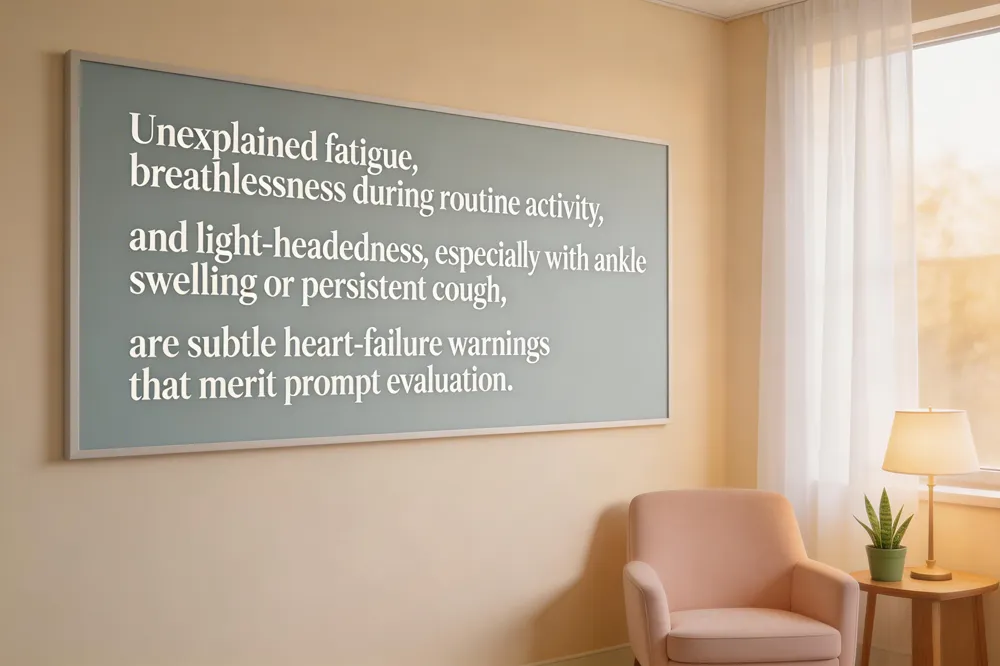 Subtle cardiac clues often appear as a trio of unexplained fatigue, shortness of breath during routine tasks, and light‑headedness or dizziness. When the heart can’t pump efficiently, oxygen delivery drops, leading to persistent tiredness even after rest, breathlessness on a single flight of stairs, and occasional faintness when standing quickly.
Early signs of heart disease in females – Women may feel vague pressure in the neck, jaw, shoulder, upper back or stomach, accompanied by unusual fatigue, shortness of breath, nausea, or cold sweats.
Early signs of heart disease in males – Men often notice mild chest tightness, pressure, or discomfort that mimics indigestion, plus shortness of breath, unexplained weakness, ankle swelling, or a persistent cough.
Six warning signs a month before a heart attack – Persistent fatigue, heightened anxiety, shortness of breath at rest, vague chest pressure, recurrent indigestion, and unexplained cold sweats.
Three early warning signs of heart disease – Chest pressure/tightness, shortness of breath with mild activity, and pain radiating to neck, jaw, throat, upper abdomen, or back.
Three early signs your heart is failing – Unexplained breathlessness (especially when lying flat), ongoing fatigue, and peripheral edema in ankles or feet.
Early signs of a heart problem – Subtle chest discomfort, breathlessness, fatigue, ankle swelling, persistent cough, and referred pain to jaw, neck, back, or arm. Recognizing these signals early allows personalized lifestyle optimization, aesthetic‑focused wellness plans, and timely cardiology referral to keep your heart—and your whole self—thriving.
Palpitations, Arrhythmias, and Getting to a Cardiologist Fast
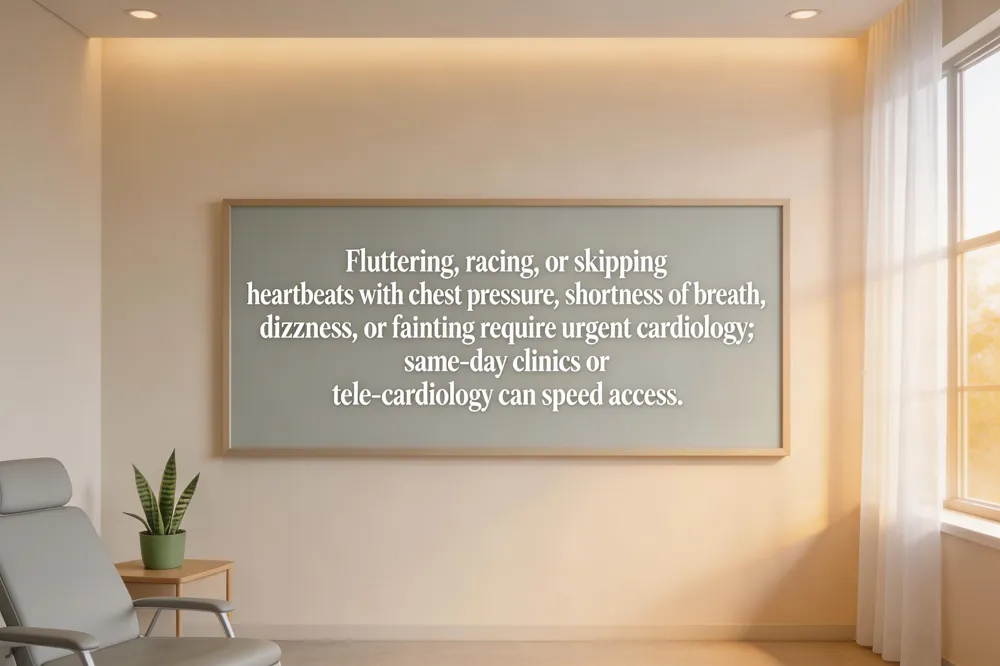 When your heartbeat feels like a flutter, race, or skip, it isn’t just annoying—it can be a red‑flag for an arrhythmia such as atrial fibrillation, a condition that raises stroke risk. When to see a cardiologist for heart palpitations – If the flutter comes with chest pressure, shortness of breath, dizziness, fainting or lasts more than a few seconds—even at rest or during sleep—schedule a specialist visit promptly. Even without pain, frequent or persistent palpitations that don’t improve after cutting caffeine, alcohol, nicotine, or stress merit evaluation, especially if you have hypertension, thyroid disease, or take medications that affect heart rhythm.
How to see a cardiologist quickly – Call a walk‑in cardiac‑care clinic or urgent‑care center that offers same‑day appointments with board‑certified cardiologists, or use a tele‑cardiology service that can arrange a video visit within 24 hours. Ask your primary‑care doctor to fax recent ECGs or labs to the cardiology office to speed scheduling. Arrive with a symptom log and medication list for on‑site testing.
Do I need a referral to see a cardiologist with Blue Cross Blue Shield? – PPO plans usually allow direct specialist appointments; HMO plans typically require a primary‑care referral. Verify your plan’s Evidence of Coverage or call member services for confirmation.
When to see a cardiologist according to Reddit – Strong family history of early heart disease, high‑risk factors (high BP, cholesterol, diabetes, obesity), or persistent symptoms—chest discomfort, shortness of breath, palpitations, unexplained fatigue, or leg swelling—should trigger a referral. Many users stress that early cardiology input enables personalized lifestyle and medication plans that can prevent future emergencies.
Peripheral and Skin Clues: Feet, Legs, and the Body’s Surface
 Early heart disease often whispers through the skin and the lower extremities. 1) Edema and swelling – painless puffiness in the ankles, feet, or lower legs signals fluid retention from a struggling heart; the skin may feel tight and the shoes feel snug. 2) Foot‑related red flags – look for persistent swelling, shiny thin skin, cramping that eases with rest, and slow‑healing sores or ulcers; these point to poor circulation linked to peripheral artery disease and heightened heart‑attack risk. 3) Skin manifestations – yellow‑orange waxy bumps (xanthomas) on eyelids or ankles, bluish cyanosis on lips or fingertips, splinter hemorrhages under nails, and a net‑like livedo reticularis on the legs all hint at high cholesterol, vascular blockage, or systemic inflammation that increase cardiovascular danger. 4) Facial and ocular signs – bluish lips, periorbital edema, sudden flushing, or yellowish deposits on the eyelids (xanthomas) may reflect low cardiac output, fluid overload, or severe hyperlipidemia. Together with unexplained fatigue, shortness of breath, or dizziness, these peripheral clues merit prompt evaluation by a primary‑care clinician or cardiologist, while lifestyle tweaks—regular movement, balanced nutrition, and skin‑care hydration—can support both heart health and aesthetic well‑being.
Silent Heart Attacks: Hidden Damage and Long‑Term Outlook
 Typical and atypical silent‑attack presentations
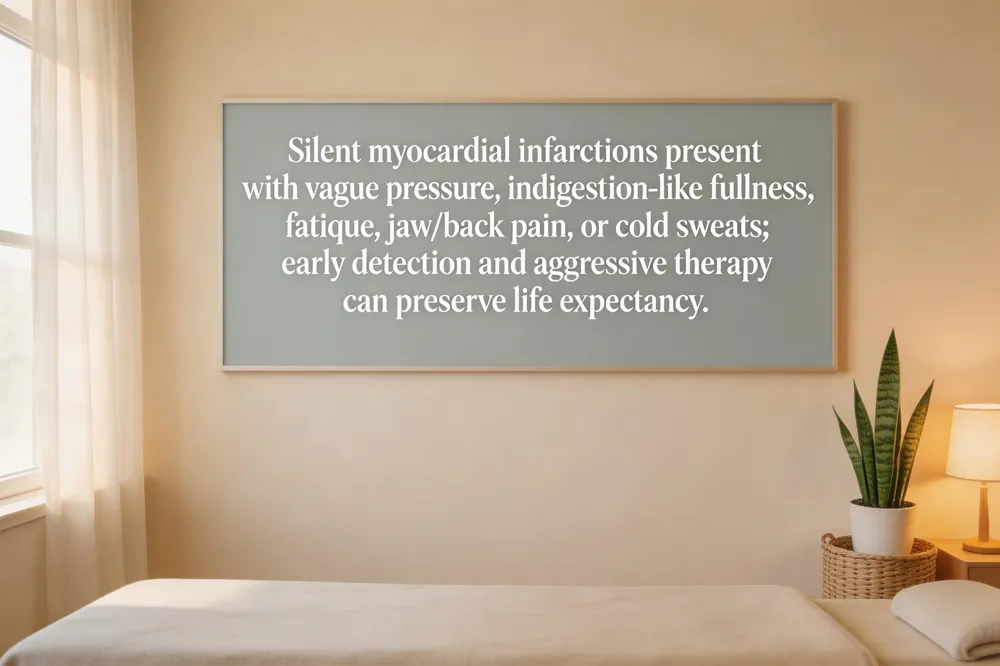
Silent myocardial infarctions often lack crushing chest pain. Patients may notice vague chest pressure, indigestion-like fullness, flu‑like fatigue, shortness of breath, jaw or upper‑back discomfort, light‑headedness, cold sweats, or sudden nausea. Women, older adults, and people with diabetes are especially prone to these subtle cues.
Typical and atypical silent‑attack presentations
Silent myocardial infarctions often lack crushing chest pain. Patients may notice vague chest pressure, indigestion-like fullness, flu‑like fatigue, shortness of breath, jaw or upper‑back discomfort, light‑headedness, cold sweats, or sudden nausea. Women, older adults, and people with diabetes are especially prone to these subtle cues.
Impact on life expectancy and age considerations A silent heart attack can trim life expectancy by roughly 8‑10 years—similar to a symptomatic event—because permanent myocardial damage occurs. The exact impact varies with age, comorbidities (e.g., hypertension, diabetes), and how promptly the injury is identified and treated.
Management strategies after a silent infarction Early detection through ECG, cardiac enzymes, or imaging allows cardiologists to start beta‑blockers, antiplatelet agents, ACE‑inhibitors/ARBs, and high‑intensity statins. Personalized care includes a heart‑healthy, plant‑rich diet, regular aerobic activity, stress‑reduction practices, and smoking cessation. Ongoing follow‑up and lifestyle coaching optimize long‑term health and aesthetic well‑being.
Mini‑heart‑attack (NSTEMI) treatment pathways NSTEMI warrants urgent care: chew aspirin, receive oxygen, nitroglycerin for pain, and fast‑acting anticoagulants (heparin). Coronary angiography with possible PCI and stent placement restores flow. Post‑procedure therapy mirrors silent‑attack management plus cardiac rehabilitation focused on functional fitness and body‑confidence goals.
FAQs
- Life expectancy after silent heart attack: ~8‑10 years reduction; early therapy can improve survival.
- Silent heart attack symptoms (female): Indigestion, jaw/back pain, fatigue, shortness of breath, nausea, light‑headedness.
- Silent heart attack symptoms: Vague pressure, fatigue, dyspnea, dizziness, heartburn‑like discomfort.
- Mini heart attack treatment: Aspirin, oxygen, nitroglycerin, anticoagulants, angiography/PCI, then beta‑blocker, ACE‑I/ARB, statin, lifestyle changes.
- Mini heart attack symptoms: Unexplained fatigue, shortness of breath, light‑headedness, mild chest ache, cold sweats, nausea.
- I think I had a heart attack but now I feel fine: Seek prompt cardiology evaluation—silent infarction can cause hidden damage and future risk.
Putting It All Together: When to Act and What to Expect
The seven subtle red‑flag signs to watch for are: (1) shortness of breath during routine activities, (2) persistent, unexplained fatigue, (3) mild or intermittent chest pressure that may spread to the neck, jaw or back, (4) swelling in the ankles, feet or abdomen, (5) irregular heartbeats or palpitations, (6) frequent dizziness or light‑headedness, and (7) digestive complaints such as indigestion or nausea that don’t improve with diet changes. Prompt cardiology evaluation is critical—early detection can prevent heart failure, stroke or a heart attack and dramatically improves long‑term outcomes. Jana HealthCare blends cardiac expertise with holistic wellness: patients receive personalized cardiac testing, evidence‑based lifestyle coaching, nutrition guidance, stress‑reduction strategies, and aesthetic‑focused support, creating a comprehensive plan that optimizes heart health and overall well‑being.