Introduction
Collagen is the body’s most abundant structural protein, giving skin its firmness, elasticity, and resilience. As we age—starting in the mid‑20s—collagen production drops roughly 1 % per year, accelerating after menopause and under the assault of UV exposure, smoking, and high‑sugar diets. This natural decline leads to visible signs of aging such as fine lines, sagging skin, and weaker connective tissue. A comprehensive collagen‑boosting strategy combines three pillars: (1) adequate protein and collagen‑rich foods (e.g., chicken thigh, fish skin, bone broth, egg whites) to supply the essential amino acids glycine, proline, and lysine; (2) vitamin C‑rich fruits, vegetables and and bell peppers that act as a critical co‑factor for pro‑collagen formation; and (3) lifestyle habits—sun protection, balanced sleep, regular exercise, and limiting refined sugars—that preserve existing collagen and reduce inflammation. By integrating nutrition, targeted nutrients, and healthy habits, patients can support their body’s own collagen synthesis for smoother, firmer skin and overall tissue health.
Fundamentals of Collagen Synthesis
Key Components of Collagen Synthesis
| Component | Role | Primary Food Sources |
|---|---|---|
| Proline, Lysine, Glycine | Building blocks of the triple‑helix backbone | Chicken, fish, egg whites, legumes |
| Vitamin C | Cofactor for pro‑collagen stability & antioxidant protection | Citrus, berries, leafy greens |
| Zinc | Cofactor for lysyl oxidase (cross‑linking) | Oysters, pumpkin seeds, beef |
| Copper | Cofactor for lysyl oxidase (cross‑linking) | Cashews, liver, shellfish |
| Sulfur (from garlic) | Supports disulfide bond formation | Garlic, onions, cruciferous veg |
| Direct Collagen Sources | Provides intact collagen peptides | Bone broth, chicken skin, beef connective tissue, marine fish skin |
Note: Marine collagen (fish skin) is generally more bio‑available than bovine sources.
 Collagen is built from three key amino acids—proline, lysine, and glycine—found in high‑protein foods such as chicken, fish, egg whites, and legumes.
Vitamin C acts as a vital co‑factor, converting these amino acids into stable pro‑collagen and protecting fibers from oxidative damage.
Mineral cofactors—zinc, copper, and sulfur (from garlic)—support the enzymes that cross‑link collagen strands and guard against breakdown.
Animal sources (bone broth, chicken skin, beef connective tissue) supply collagen directly, but marine collagen from fish skin, scales, and cartilage appears more bioavailable, meaning the body can absorb and use it more efficiently for skin elasticity.
How to restore collagen in the face
Combine a protein‑rich, Vitamin C‑laden diet (citrus, berries, leafy greens) with hydration, sunscreen, and topical retinoids or vitamin C serums. In‑office microneedling, radio‑frequency tightening, or injectable stimulators like Sculptra further activate fibroblasts for firmer skin.
Can you rebuild collagen in your body?
You can’t reverse age‑related loss completely, but you can stimulate new production. Adequate sleep, stress control, avoidance of smoking/alcohol, and a balanced diet provide the internal environment for synthesis. Topical retinoids, peptides, and professional laser or microneedling treatments trigger repair pathways that rebuild collagen fibers.
How to stimulate collagen production in skin
Eat Vitamin C‑rich foods, zinc‑rich nuts, and amino‑acid‑dense proteins; use daily retinoid or vitamin C serums; and consider regular microneedling or radio‑frequency sessions. Consistency across nutrition, skincare, and lifestyle yields the best collagen‑boosting results.
Collagen‑Rich Foods for Skin and Joints
Collagen‑Rich Foods Overview
| Food | Collagen Type(s) | Vitamin C Pairing | Supporting Minerals |
|---|---|---|---|
| Bone broth (slow‑cooked) | I, II, III | Citrus fruits, kiwi | Zinc, copper |
| Chicken skin | I | Bell peppers, strawberries | Zinc |
| Pork skin | I | Orange slices | Copper |
| Fatty fish skin (salmon, mackerel) | I, III | Berries | Selenium, zinc |
| Eggs (whites) | I, III | Lemon juice | Copper |
| Citrus‑vitamin C fruits | — | — | — |
| Copper‑rich nuts (cashews) | — | — | Copper |
| Gelatin (derived from animal bones) | I, II, III | — | — |
Combining these foods with vitamin C‑rich sources maximizes pro‑collagen conversion.
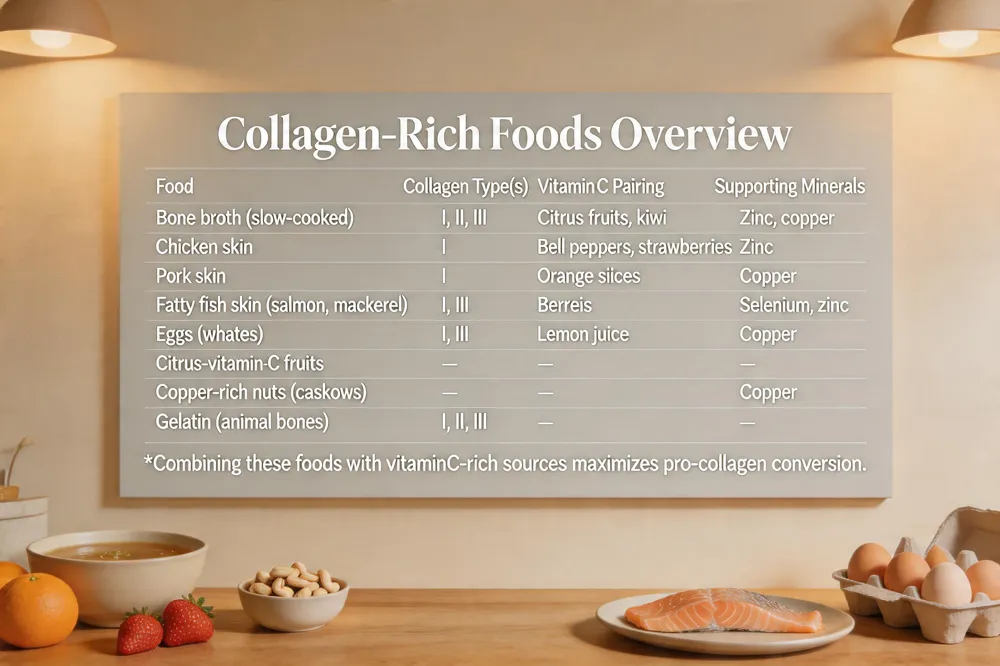 A diet that fuels both skin elasticity and joint resilience starts with animal connective‑tissue sources. Bone broth, simmered for hours, releases gelatin rich in glycine, proline, and hydroxy‑proline—the core building blocks of collagen. Chicken skin, pork skin, and fatty fish skin (salmon, mackerel, sardines) also supply abundant type I collagen, while cuts such as beef shank, oxtail, and lamb neck provide collagen‑laden tendons and cartilage. To turn these amino acids into stable fibers, pair them with vitamin C‑rich plant foods—citrus, berries, kiwi, bell peppers, leafy greens—which act as essential cofactors. Minerals that support cross‑linking come from copper‑ and zinc‑rich nuts, seeds, legumes, and shellfish. Marine collagen from fish skin appears especially bioavailable, offering a modest edge for skin elasticity.
Collagen‑rich foods for skin: animal connective‑tissue proteins plus vitamin‑C sources and copper‑rich nuts boost dermal collagen and reduce fine lines.
Collagen‑rich foods for joints: Bone broth, skin‑on poultry/fish, and cartilage‑rich cuts, combined with vitamin C‑rich and amino‑acid‑dense eggs (whites), beans, and nuts, support cartilage repair and joint flexibility.
Highest‑collagen food: slow‑cooked bone broth or gelatin derived from animal bones and cartilage provides the most concentrated collagen.
Eight top collagen‑rich foods: bone broth, gelatin, chicken skin, pork skin, fish skin, eggs (whites), citrus‑vitamin C fruits, and copper‑rich nuts (cashews).
Plant‑Based Support for Collagen
Plant‑Based Nutrients that Aid Collagen Production
| Plant Food | Key Nutrient(s) | How It Helps Collagen |
|---|---|---|
| Citrus fruits (orange, lemon) | Vitamin C | Cofactor for pro‑collagen synthesis |
| Leafy greens (spinach, kale) | Vitamin C, iron | Antioxidant protection; iron needed for hydroxylation |
| Bell peppers | Vitamin C, capsicum | Strong antioxidant, supports fibroblast activity |
| Garlic | Sulfur compounds | Provides sulfur for disulfide bonding |
| Cashews & sunflower seeds | Zinc, copper | Cofactors for cross‑linking enzymes |
| Berries (blueberries, strawberries) | Vitamin C, polyphenols | Antioxidant, protects collagen from degradation |
| Legumes (lentils, chickpeas) | Proline, lysine (via protein) | Supplies amino acids for collagen backbone |
While plants don’t contain collagen, they supply essential cofactors and amino acids that support the body’s own synthesis.
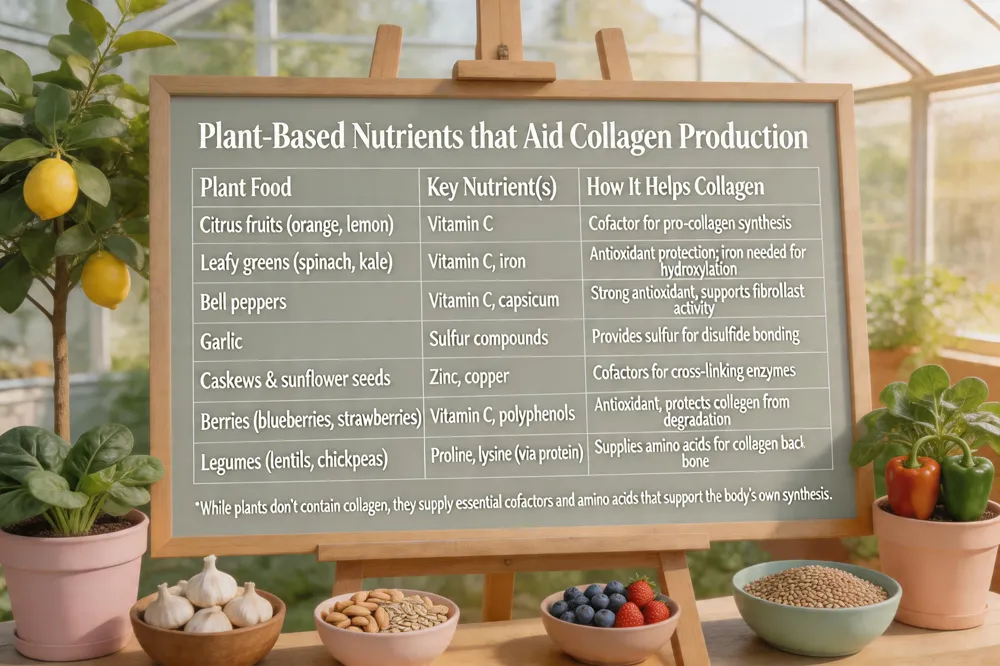 Collagen‑rich foods vegetarian – Vitamin C‑rich citrus, leafy greens for iron, garlic for sulfur, and zinc/copper‑rich cashews and seeds together create a collagen‑friendly plant profile.
Natural collagen drink for skin – A warm cup of bone broth (or a dairy‑free milk alternative) supplies gelatinous collagen; leafy‑green or citrus juices add vitamin C and antioxidants; a berry‑packed smoothie delivers polyphenols that further boost skin elasticity.
How to make collagen at home – Simmer animal bones, skin, and connective tissue with a splash of apple cider vinegar for 12–24 hours, strain, chill, and dehydrate the gelatinous broth into a powder to add to soups or smoothies.
Supplements: Types, Evidence, and Choosing Wisely
Supplement Types & Evidence Summary
| Supplement | Source | Main Collagen Types | Typical Dosage | Evidence of Benefit |
|---|---|---|---|---|
| Hydrolyzed collagen peptides (bovine) | Bovine hide | I, III | 5‑15 g/day | Moderate improvement in skin hydration & wrinkle depth |
| Marine‑derived collagen (fish skin) | Fish skin/scale | I, III | 10 g/day | Slightly higher bio‑availability; modest skin elasticity gains |
| Multi‑collagen blends | Bovine, chicken, fish, eggs | I, II, III, V, X | 10‑12 g/day | Broader tissue support; limited but promising data for joint health |
| Vitamin C (ascorbic acid) | Synthetic or natural | — | 500‑1000 mg/day | Essential cofactor; enhances collagen peptide uptake |
| Zinc & copper capsules | Mineral salts | — | 15 mg Zn + 2 mg Cu/day | Supports lysyl oxidase activity; may improve cross‑linking |
| Peptide‑rich topical serums (e.g., hexapeptides) | Synthetic | — | Applied 2×/day | Small studies show increased dermal collagen expression |
Choose products with third‑party testing for heavy metals and contaminants.
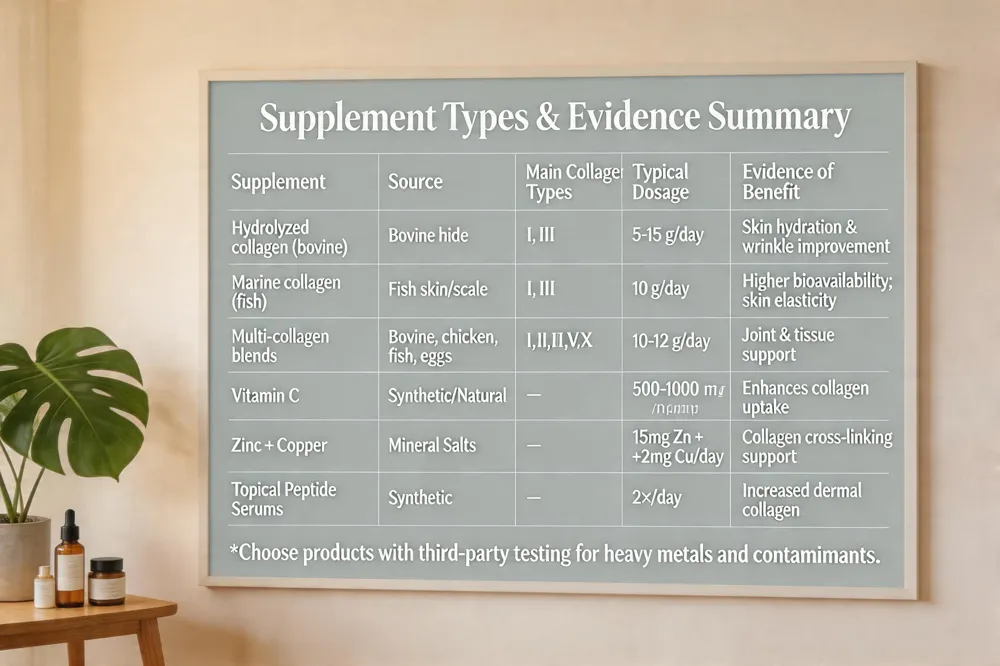 Hydrolyzed collagen peptides are broken‑down fragments, mainly type I and III, that dissolve in liquids and absorb more efficiently than whole collagen. Marine‑derived collagen (from fish skin or scales) is slightly more bioavailable than bovine sources, but allergies and sustainability guide choice. The FDA does not pre‑approve supplements, so product quality varies; seek third‑party testing for heavy metals. Recommended dosages range from 5 g to 15 g daily, and synergy with vitamin C, zinc and copper enhances cross‑linking.
Collagen supplement – Provides glycine, proline and hydroxyproline in an absorbable form; modest skin benefits are reported, yet a protein‑rich diet supplies comparable building blocks.
Why collagen supplements don’t work – Peptides break into amino acids that the body distributes broadly; without targeted delivery they may not reach skin, hair or nails sufficiently.
Hydrolyzed collagen supplements – Convenient powders delivering 10‑15 g daily, shown to improve moisturization and reduce wrinkle depth with minimal side effects.
Supplements to increase collagen production – Vitamin C, zinc, copper and antioxidants support synthesis; pairing them with collagen peptides maximizes natural collagen formation.
Top‑Rated Collagen Products and Multi‑Collagen Blends
Popular Collagen Products (2025)
| Brand & Product | Form | Collagen Types | Added Ingredients | Approx. Price (12‑wk supply) |
|---|---|---|---|---|
| Vital Proteins Collagen Peptides | Powder | I, III | Unflavored | $30‑$35 |
| Vital Proteins Collagen Peptides + Vitamin C | Powder | I, III | 500 mg Vitamin C | $35‑$40 |
| Sports Research Hydrolyzed Type I & III | Powder | I, III | Cocoa flavor | $28‑$33 |
| Ancient Nutrition Multi‑Collagen Protein | Powder | I, II, III, V, X | Vitamin C, biotin | $45‑$50 |
| Beyond Collagen (Blend) | Powder | I, II, III, V, X | Vitamin C, biotin | $40‑$45 |
| Vital Vitamins Multi‑Collagen Capsules | Capsules | I, II, III, V, X | Vitamin C | $25‑$30 |
| OLLY Glowing Skin Gummies | Gummies | I, III | Vitamin C, hyaluronic acid | $20‑$25 |
Clinical data suggest ≥10 g/day of hydrolyzed marine collagen paired with vitamin C yields the most consistent skin elasticity improvements.
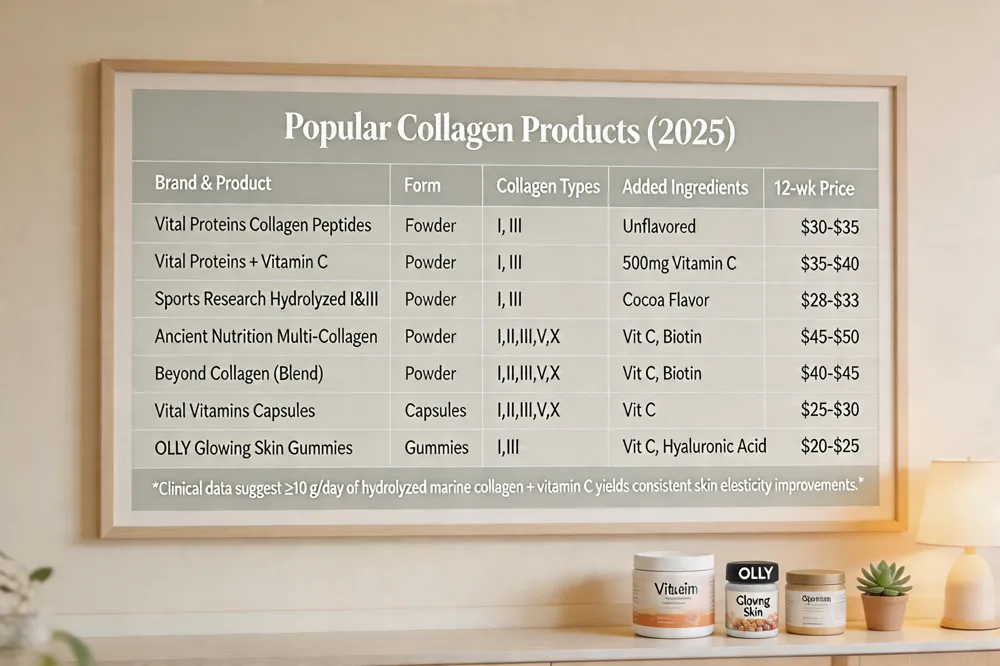 Collagen supplementation has exploded, with powders, capsules and gummies all vying for top spots. The current best‑selling powders include Vital Proteins Collagen Peptides (unflavored) and its Vitamin‑C‑enriched version, Sports Research Hydrolyzed Type I & III, and the multi‑collagen blend from Ancient Nutrition. Capsules such as Vital Vitamins Multi‑Collagen and gummies like OLLY Glowing Skin round out the market for those who prefer convenience.
Multi‑collagen blends—typically Types I, II, III, V and X—are marketed for broader tissue support. Beyond Collagen, for example, combines these five types with Vitamin C and biotin, offering a holistic formula that scores high in user reviews for smoother skin and stronger hair.
Clinical data remain modest but encouraging: meta‑analyses of 26 studies show modest improvements in skin elasticity, especially with hydrolyzed marine collagen (≥10 g/day) paired with Vitamin C. User testimonials echo these findings, noting reduced fine lines after 3‑6 months of consistent use.
Regulatory oversight is limited; consumers should prioritize third‑party tested products free of heavy metals, fillers and artificial sweeteners. Discuss any new regimen with a Jana HealthCare professional to ensure safety and optimal results.
Integrating Collagen Into a High‑Collagen Diet Plan
Sample 3‑Meal High‑Collagen Day
| Meal | Collagen Source | Vitamin C Source | Mineral Boost |
|---|---|---|---|
| Breakfast | Bone‑broth smoothie (1 cup) | Orange wedges | Pumpkin seeds (Zn) |
| Lunch | Grilled salmon skin (3 oz) on mixed greens | Bell‑pepper strips | Cashews (Cu) |
| Snack | Greek yogurt + berries | Strawberries | Sunflower seeds (Zn) |
| Dinner | Beef shank stew (2 cups) | Kiwi slices | Lentils (Zn) |
| Evening | Gelatin dessert (1 cup) | Lemon zest | Almonds (Cu) |
Aim for 2‑3 collagen‑rich servings daily and pair each with a vitamin‑C‑rich food to maximize synthesis.
 High collagen diet plan
A high‑collagen diet centers on animal‑based foods that naturally contain collagen—bone broth, chicken feet, beef shank, pork skin, fish skin, and shrimp. Pair each collagen‑rich serving with vitamin‑C‑packed fruits or vegetables (citrus, berries, kiwi, bell peppers) to boost pro‑collagen conversion. Aim for 2‑3 collagen‑rich meals daily: a morning bone‑broth smoothie, a lunch salad topped with grilled chicken or fish skin, and an evening gelatin‑infused dessert. Include zinc‑ and copper‑rich nuts, seeds, and whole grains for enzymatic support. Hydrate well and limit processed sugars, which cause glycation and damage collagen fibers.
High collagen diet plan
A high‑collagen diet centers on animal‑based foods that naturally contain collagen—bone broth, chicken feet, beef shank, pork skin, fish skin, and shrimp. Pair each collagen‑rich serving with vitamin‑C‑packed fruits or vegetables (citrus, berries, kiwi, bell peppers) to boost pro‑collagen conversion. Aim for 2‑3 collagen‑rich meals daily: a morning bone‑broth smoothie, a lunch salad topped with grilled chicken or fish skin, and an evening gelatin‑infused dessert. Include zinc‑ and copper‑rich nuts, seeds, and whole grains for enzymatic support. Hydrate well and limit processed sugars, which cause glycation and damage collagen fibers.
How can I boost my collagen naturally? Consume protein‑dense foods (fish, poultry, lean meat, eggs, dairy, legumes, soy) for glycine, proline, and lysine. Add vitamin‑C sources (citrus, berries, leafy greens, bell peppers, tomatoes) and minerals (zinc from oysters or pumpkin seeds, copper from beans or cashews). Protect skin from UV, quit smoking, curb alcohol, and get 7‑9 hours sleep. Regular strength‑training further stimulates collagen synthesis in muscle, tendons, and skin.
What are the 5 super collagens? Types I, II, III, V, and X. Type I provides skin, bone, and tendon strength; Type II supports cartilage in joints; Type III aids skin elasticity and tissue repair; Type V regulates fibril formation; Type X contributes to bone development and cartilage mineralization.
What type of collagen is best for spinal discs? Hydrolyzed peptides containing both Type I and Type II collagen are most effective for spinal disc health, supporting cartilage, ligaments, and overall spinal flexibility.
Professional Aesthetic Options to Accelerate Collagen
Aesthetic Procedures & Collagen Impact
| Procedure | Primary Mechanism | Typical Sessions | Expected Collagen Outcome |
|---|---|---|---|
| Microneedling | Controlled micro‑injuries → fibroblast activation | 3‑6 treatments (4‑6 wk apart) | ↑ New type I/III collagen, improved texture |
| Radio‑frequency (RF) tightening | Heat‑induced collagen denaturation & remodeling | 1‑3 sessions (monthly) | ↑ Collagen fibril thickness, skin tightening |
| Laser resurfacing (fractional CO₂) | Ablative thermal injury → wound healing cascade | 1‑2 sessions (6‑8 wk apart) | ↑ Collagen density, reduced fine lines |
| Sculptra (poly‑L‑lactic acid) | Biostimulatory filler → gradual collagen production | 3‑4 injections (4‑6 wk apart) | ↑ Volume & collagen over 3‑6 months |
| Red‑light therapy (LED) | Photobiomodulation → fibroblast metabolism boost | 2‑3 times/week for 8‑12 weeks | Mild ↑ Collagen, anti‑inflammatory benefits |
| PRP (platelet‑rich plasma) | Growth‑factor delivery → tissue regeneration | 1‑2 sessions (4‑6 wk apart) | ↑ Collagen synthesis, improved skin tone |
Combine with a vitamin‑C‑rich diet for synergistic results.
 Aesthetic medicine offers several evidence‑based procedures that jump‑start the skin’s natural collagen factory.
Microneedling and radio‑frequency create micro‑injuries that activate fibroblasts, leading to new collagen and elastin fibers. When combined with a vitamin‑C‑rich diet, the response is amplified because the nutrients serve as essential cofactors for the repair cascade.
Laser resurfacing and Sculptra use controlled thermal injury or injectable poly‑L‑lactic acid to stimulate a prolonged collagen‑building phase, improving skin elasticity and volume over months.
Red‑light therapy and PRP (platelet‑rich plasma) provide low‑level photobiomodulation or growth‑factor delivery that further encourage fibroblast activity without downtime.
Integrating treatments with nutrition maximizes results: consume protein‑rich foods (chicken, fish, egg whites), vitamin‑C sources (citrus, bell peppers), and zinc‑rich nuts or beans to supply the amino acids and minerals needed for robust collagen synthesis.
Frequently Asked Questions
- Can I take collagen while on HRT? Yes—collagen works via amino‑acid supply while HRT restores estrogen; they do not interfere and can be complementary.
- Should people with EDS take collagen? Current evidence does not support oral collagen for Ehlers‑Danlos syndrome; focus on multidisciplinary, evidence‑based care instead.
- Which is the best supplement for collagen? High‑quality marine‑derived hydrolyzed peptides (type I & III) paired with vitamin C are the most effective for skin elasticity.
- How to stimulate collagen production in skin? Combine a nutrient‑dense diet, topical retinoids or vitamin‑C serums, adequate sleep, and the professional procedures above for a synergistic boost.
Special Populations and Practical Considerations
Guidelines for Specific Populations
| Population | Key Considerations | Recommended Collagen Dose | Safety Notes |
|---|---|---|---|
| Pregnant/Lactating | Protein priority for fetal/infant growth; avoid contaminants | 5‑10 g/day from high‑quality, third‑party‑tested source | Discuss with prenatal provider; limit bone‑broth volume to avoid excess calcium |
| Ehlers‑Danlos Syndrome (EDS) | No strong evidence for oral collagen benefit | Focus on physical therapy & joint protection | Oral collagen not recommended as primary therapy |
| Renal disease | Potential reduced clearance of nitrogenous waste | Start low (5 g) and monitor renal labs | Consult nephrologist; avoid excess protein load |
| Allergies (fish‑derived collagen) | Risk of anaphylaxis | Use bovine or plant‑based collagen‑supporting nutrients instead | Verify ingredient list; consider allergy testing |
| Older adults (>65 yr) | Decreased endogenous synthesis | 10‑15 g/day hydrolyzed collagen + vitamin C | Monitor for digestive upset; ensure adequate hydration |
General tip: Pair collagen intake with vitamin C, zinc, and copper for optimal absorption.
 Collagen needs differ across life stages and health conditions. During pregnancy and lactation, the body already prioritises protein for fetal growth and milk production, so a modest intake from food is usually sufficient; high‑dose supplements should be discussed with a prenatal clinician to avoid excess contaminants such as heavy metals that can be present in low‑grade animal sources.
Potential side‑effects are generally mild—digestive upset, occasional allergic reactions to fish‑derived collagen, or rare hypercalcemia when bone broth is consumed in large volumes. Choosing hydrolyzed collagen , third‑party‑tested powders reduces the risk of unwanted additives.
Individualized dosing starts at 5–10 g of hydrolyzed collagen daily, paired with Vitamin C, zinc, and copper for optimal absorption; clinicians may monitor serum zinc or kidney function in patients with pre‑existing renal disease.
FAQs
- Should people with EDS take collagen? No evidence supports benefit; focus on physical therapy and multidisciplinary care instead.
- Can I take collagen while on HRT? Yes, they act via different pathways; discuss dosage with your provider.
- Why collagen supplements don’t work? They break down into amino acids that the body uses wherever needed; a balanced diet provides the same building blocks.
- How to make collagen at home? Simmer bones, skin, and connective tissue with a splash of apple cider vinegar for 12‑24 h, strain, chill, then dehydrate the gelatin to a powder for soups or smoothies.
Conclusion
Key takeaways:
- A collagen‑supporting diet supplies the amino acids (proline, lysine, glycine) from protein‑rich foods (chicken, fish, egg whites, beans, nuts) and the essential cofactors vitamin C, zinc, copper and sulfur from citrus, bell peppers, leafy greens, garlic and cashews. Limiting sugar and refined carbs reduces glycation, protecting existing collagen.
- Oral collagen peptides can modestly improve skin elasticity, but the strongest results come from a balanced, nutrient‑dense diet combined with adequate hydration, sleep, stress management and sunscreen protection.
- Professional aesthetic procedures—such as microneedling, laser or light therapy, and dermal fillers—stimulate the body’s own collagen production for faster, visible improvements. Personalized plan with Jana HealthCare:
- Begin with a nutrition assessment to tailor protein and micronutrient intake, then add a low‑dose hydrolyzed collagen supplement if needed.
- Schedule periodic skin‑health check‑ins to adjust topical retinoids, vitamin C serums or minimally invasive treatments. Sustainable lifestyle habits:
- Prioritize whole‑food meals, regular exercise, 7‑9 hours sleep, stress‑reduction techniques and daily broad‑spectrum SPF. Consistency in these habits supports lasting collagen health and overall skin vitality.