Why Collagen Matters
Collagen is the structural protein that gives the dermis its firmness, suppleness, and bounce; without enough of it skin becomes thin, wrinkled, and less elastic. Production naturally drops about 1 % per year after the mid‑20s, and factors such as chronic sun exposure, smoking, high‑sugar diets, and inadequate sleep can accelerate this loss. Fortunately, nutrition can bolster the body’s own collagen factories. Protein‑rich foods supply the essential amino acids glycine, proline, and lysine, while vitamin C‑rich fruits and vegetables act as a co‑factor for the enzymes that stitch these building blocks into stable fibers. Minerals like zinc and copper, plus omega‑3s and antioxidants, further protect and cross‑link collagen, helping maintain skin elasticity and a youthful appearance.
Key Nutrients That Drive Collagen Synthesis
Core Nutrients for Collagen Production
| Nutrient | Primary Food Sources | Role in Collagen Synthesis |
|---|---|---|
| Vitamin C | Citrus, berries, kiwi, peppers, leafy greens | Cofactor for pro‑collagen conversion; antioxidant protection |
| Glycine | Chicken thigh, fish, egg whites, legumes, bone broth | Major amino acid in collagen triple‑helix |
| Proline | Same as glycine + pork rind, gelatin | Stabilizes collagen structure |
| Lysine | Same as glycine + soy, cheese | Required for cross‑linking via lysyl‑oxidase |
| Zinc | Nuts, seeds, beans, shellfish | Enables lysyl‑oxidase activity |
| Copper | Nuts, seeds, beans, shellfish | Supports cross‑linking of fibrils |
| Omega‑3 (EPA/DHA) | Fatty fish, walnuts, flaxseed | Reduces inflammation; protects collagen from UV damage |
| Antioxidants (β‑carotene, lycopene, flavonoids) | Carrots, tomatoes, berries, green tea | Guard collagen against oxidative breakdown |
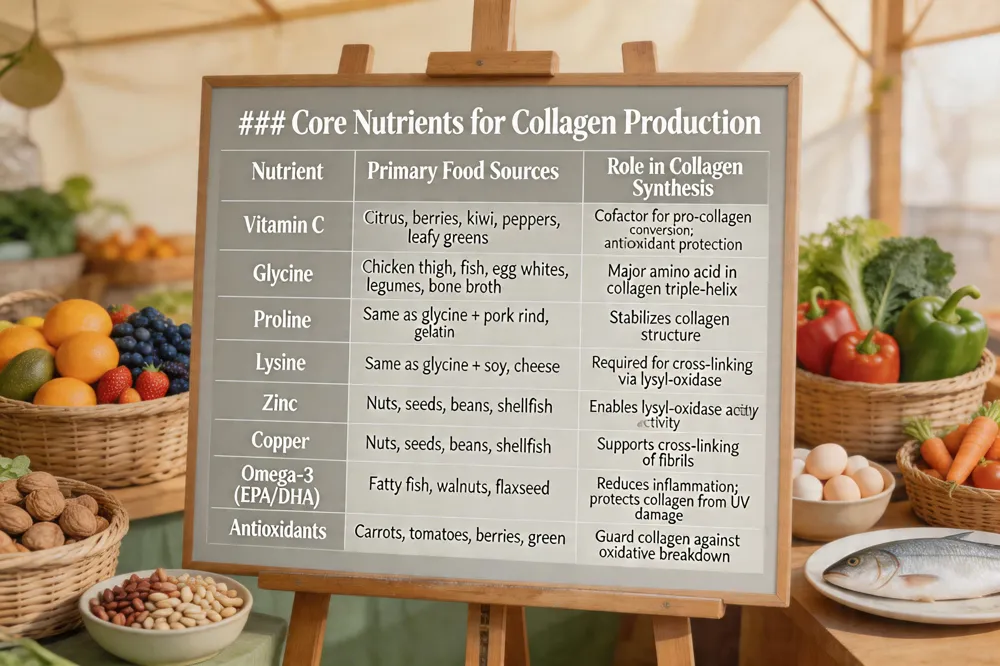 Collagen’s strength hinges on a handful of nutrients. Vitamin C, abundant in citrus, berries, kiwi, peppers and leafy greens, acts as a co‑factor that converts pro‑collagen into stable fibers while shielding them from oxidative stress. The three essential amino acids—glycine, proline and lysine—are supplied by high‑quality protein sources such as chicken thigh, fish, egg whites, legumes and bone broth. Zinc and copper, found in nuts, seeds, beans and shellfish, enable lysyl‑oxidase activity for cross‑linking collagen fibrils. Omega‑3 fatty acids from fatty fish, walnuts or flaxseed and antioxidants (beta‑carotene, lycopene, flavonoids) further protect collagen from UV‑induced breakdown. A balanced diet that pairs these nutrients with adequate hydration and low refined‑sugar intake creates the optimal environment for skin elasticity.
What are the five main types of collagen and their functions?
- Type I – 90 % of body collagen; gives skin, bone, tendons strength. 2. Type II – cartilage support. 3. Type III – works with Type I for skin elasticity. 4. Type IV – basement‑membrane sheets. 5. Type V – regulates fibril formation, important for hair.
How to stimulate collagen production in skin naturally? Consume vitamin C‑rich fruits and vegetables, protein‑dense foods (lean meats, fish, eggs, legumes, bone broth), stay hydrated, get regular strength exercise, prioritize sleep, limit smoking, alcohol and UV exposure, and consider topical retinoids or gentle exfoliation.
The seven most important nutrients for healthy skin Omega‑3 fats, protein (amino acids), vitamin A, vitamin C, vitamin E, zinc, selenium.
How to increase skin elasticity naturally? Use SPF 30+ sunscreen, eat antioxidant‑packed foods (berries, leafy greens, nuts, fatty fish), stay well‑hydrated, apply hyaluronic‑acid moisturizers, incorporate gentle exfoliation or retinol, and avoid smoking, stress and sleep deprivation.
How to boost collagen production naturally? Eat protein‑rich foods (poultry, fish, eggs, soy, legumes), load up on vitamin C, include zinc and copper sources, protect skin from UV, quit smoking, limit alcohol, get adequate sleep and exercise, and add antioxidant‑dense foods like dark chocolate, tomatoes and blueberries.
Top Collagen‑Rich Foods for Skin Firmness
Collagen‑Rich Foods Overview
| Food | Key Collagen‑Supporting Components | Notable Benefits |
|---|---|---|
| Bone broth | Gelatin (glycine, proline, hydroxyproline) | Direct collagen source, gut health support |
| Chicken skin | Gelatin, proline | Improves skin firmness |
| Pork rind | Gelatin, glycine | Boosts collagen building blocks |
| Fatty fish (salmon, mackerel, sardines) | Omega‑3, vitamin D, protein | Reduces inflammation, enhances skin elasticity |
| Egg whites | Proline, lysine | Supports collagen fiber formation |
| Yogurt | High‑quality protein, calcium | Supplies amino acids and promotes skin repair |
| Citrus fruits | Vitamin C | Cofactor for collagen synthesis |
| Berries | Vitamin C, antioxidants | Protects collagen from oxidative stress |
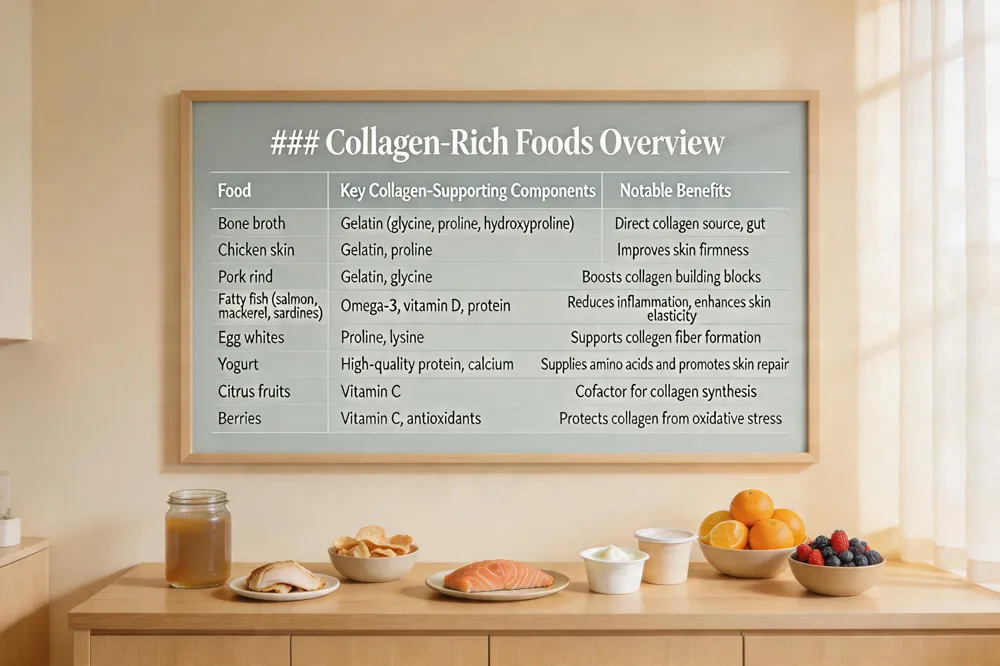 Collagen is skin’s scaffolding; foods supply its blocks. Animal sources include Chicken skin, pork rind and Bone broth, which provide gelatin and glycine, proline, hydroxyproline. Fish skin and marine collagen from salmon, mackerel and sardines are. Egg whites give proline, and yogurt offers protein. Options such as soy, lentils, pumpkin seeds and nuts supply glycine, lysine, copper and zinc, while vitamin C‑rich berries, citrus fruits and leafy greens act as cofactors.
What are 5 collagen‑boosting foods that keep wrinkles away? Bone broth, citrus fruits, berries, a nuts/seeds, and fatty fish like salmon.
Eight collagen‑rich foods Bone broth, Chicken skin, pork skin, fatty fish, egg whites, yogurt, citrus fruits, berries.
Collagen‑rich foods that support joint health Bone broth, Chicken skin, fish with skin, gelatin‑rich cuts, vitamin‑C fruits and vegetables, soy, lentils, pumpkin seeds.
Vegetarian collagen‑rich foods soy, lentils, chickpeas, pumpkin seeds, citrus, strawberries, bell peppers, leafy greens, whole‑grain nuts.
How to increase skin elasticity during weight loss Stay hydrated, eat vitamin C‑rich foods, omega‑3‑rich fish or flaxseed, protein, add resistance training UV protection.
Glow‑Enhancing and Skin‑Repair Foods
Glow‑Enhancing Foods & Their Skin Benefits
| Food | Principal Nutrients | Skin Effect |
|---|---|---|
| Avocado | Monounsaturated fats, vitamin E | Improves moisture retention, antioxidant defense |
| Tomatoes | Lycopene, vitamin C | UV protection, collagen preservation |
| Carrots & Sweet potatoes | β‑carotene (pro‑vitamin A) | Supports collagen production, skin firmness |
| Fatty fish | Omega‑3 fatty acids | Anti‑inflammatory, maintains collagen matrix |
| Nuts & Seeds (almonds, walnuts, pumpkin seeds) | Vitamin E, zinc, copper | Cofactors for cross‑linking, antioxidant protection |
| Green tea | EGCG polyphenols | Prevents UV‑induced collagen breakdown |
| Leafy greens (spinach, kale) | Vitamin C, lutein | Boosts collagen precursors, reduces oxidative stress |
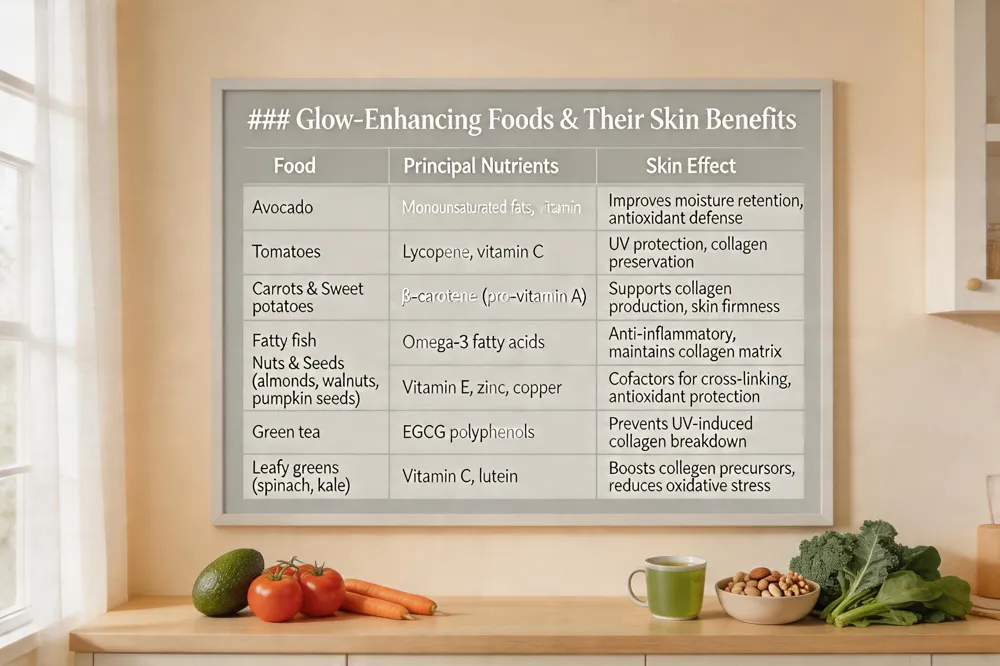 Avocado, tomatoes, carrots, and sweet potatoes are top glow‑enhancers. Avocado supplies monounsaturated fats and vitamin E; tomatoes deliver lycopene and vitamin C; carrots and sweet potatoes are rich in beta‑carotene, a provitamin A that supports collagen. Fatty fish such as salmon, sardines, and mackerel provide omega‑3 fatty acids that reduce inflammation and protect collagen fibers. Nuts and seeds (almonds, walnuts, pumpkin seeds) offer vitamin E, zinc, and copper, essential cofactors for collagen cross‑linking, while green tea polyphenols (EGCG) guard against UV‑induced collagen breakdown. Leafy greens—spinach, kale, collards—are vitamin C powerhouses and contain lutein, which may boost collagen precursors.
Five glow‑enhancing foods: avocado, tomatoes, carrots, fatty fish, and nuts/seeds (including green tea). Best foods for skin repair: antioxidant‑rich berries, omega‑3‑rich fish, vitamin C‑packed vegetables, and collagen‑supporting leafy greens. Anti‑aging choices for younger‑looking skin: leafy greens, strawberries, salmon, avocado, and green tea. Overnight‑clear skin: blueberries, probiotic yogurt, low‑glycemic sweet potatoes, orange or bell pepper vitamin C, pumpkin seeds, and ample water.
Meal Planning for Radiant Elastic Skin
Sample 7‑Day Collagen‑Friendly Menu (Key Meals)
| Day | Breakfast | Lunch | Dinner |
|---|---|---|---|
| Mon | Greek yogurt + berries + chia seeds | Chickpea‑tuna salad with mixed greens, bell pepper | Grilled salmon, quinoa, steamed broccoli |
| Tue | Spinach‑egg white omelette, avocado toast | Lentil soup, side of kale salad | Chicken thigh, sweet potato mash, asparagus |
| Wed | Protein smoothie (milk, banana, whey, cinnamon) | Tofu‑wrap with carrots, cucumber, hummus | Shrimp stir‑fry with bell peppers, brown rice |
| Thu | Oatmeal with almond butter, blueberries | Quinoa‑black bean bowl, salsa, mixed greens | Baked mackerel, roasted Brussels sprouts, quinoa |
| Fri | Cottage cheese, sliced peach, pumpkin seeds | Turkey lettuce wraps, avocado, tomato | Beef bone‑broth stew with vegetables |
| Sat | Egg‑based smoothie (egg whites, spinach, mango) | Salmon salad with mixed greens, walnuts | Grilled chicken, cauliflower rice, sautéed kale |
| Sun | Whole‑grain toast, smoked salmon, cream cheese | Veggie‑rich minestrone soup, side of arugula | Pork rind stir‑fry, sweet potato wedges, green beans |
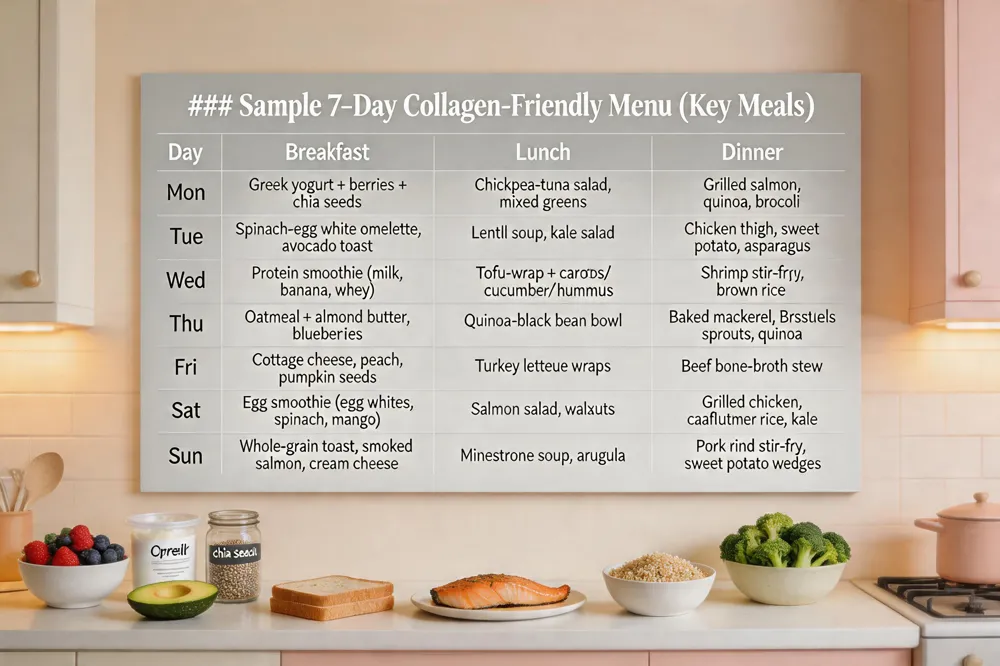 A 7‑day glowing‑skin menu focuses on collagen‑supporting foods: daily servings of leafy greens, berries, avocado, nuts, and fatty fish deliver vitamin C, proline, glycine, omega‑3s and antioxidants that boost collagen synthesis and skin hydration. Each day includes a protein‑rich breakfast (e.g., egg‑based smoothies or Greek yogurt with berries), a lunch of chickpea‑tuna or tofu‑wrap salads rich in vitamin C, and a dinner featuring salmon, chicken thigh, or shrimp with broccoli, quinoa or sweet potato. A 3‑day quick‑boost plan repeats the same principles, emphasizing salmon, spinach, berries and plenty of water/green tea to reduce puffiness and enhance elasticity. For weight‑loss‑friendly skin health, prioritize whole, low‑glycemic foods—citrus, dark greens, nuts, seeds, and lean protein—while limiting added sugars and refined carbs that cause glycation. After weight loss, reinforce skin tightening with protein‑dense sources (lean meats, eggs, legumes), [vitamin C]‑rich fruits and veggies, omega‑3s, healthy fats from avocado and olive oil, and ample hydration to maintain collagen integrity and dermal elasticity.
DIY Collagen Drinks & Home Skin Strategies
DIY Collagen‑Boosting Beverages
| Drink | Main Ingredients | Approx. Collagen/Antioxidant Content |
|---|---|---|
| Warm bone‑broth smoothie | 1 cup bone broth, frozen berries, orange juice, cinnamon | ~4 g collagen, high vitamin C |
| Milk‑honey‑turmeric blend | Milk, honey, vanilla, turmeric | Proline‑rich protein, anti‑inflammatory |
| Green‑juice combo | Kale, spinach, cucumber, lemon, almond butter | Amino acids, healthy fats, vitamin C |
| Berry‑citrus Greek yogurt smoothie | Greek yogurt, mixed berries, orange, honey | Protein, antioxidants, vitamin C |
| Gelatin gel with fruit juice | 1–2 Tbsp gelatin dissolved, mixed with fruit juice | 5 g collagen, added vitamin C from juice |
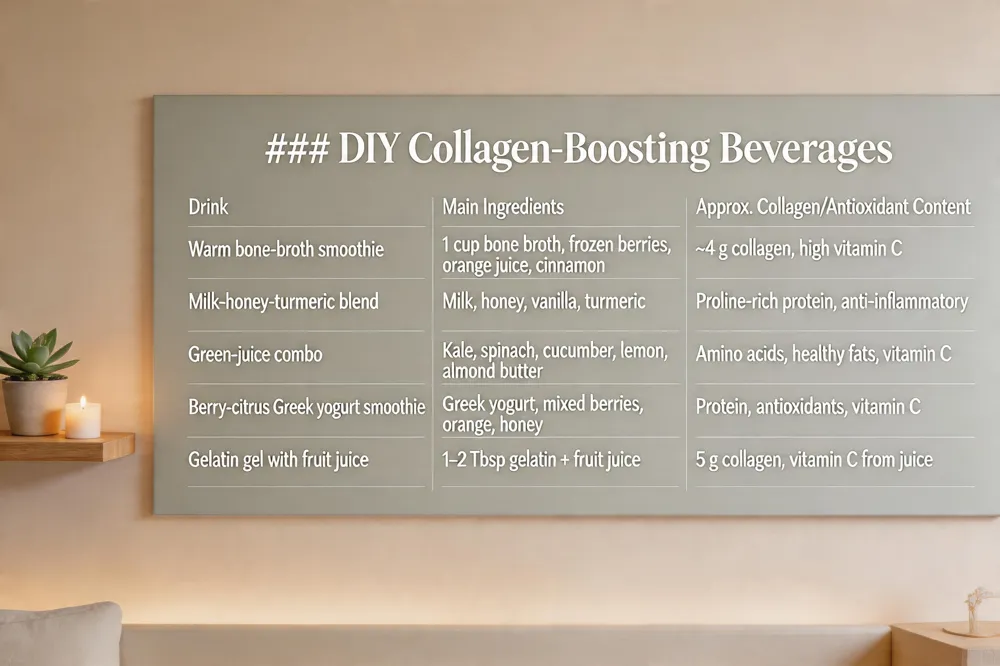 Simple collagen‑boosting beverages include warm bone broth smoothies (1 cup broth, frozen berries, orange juice, cinnamon) delivering ~4 g collagen plus vitamin C. A dairy version mixes milk, honey, vanilla, turmeric for proline‑rich protein. Green‑juice combos (kale, spinach, cucumber, lemon, almond butter) add amino acids and healthy fats. Berry‑citrus smoothies with Greek yogurt supply antioxidants and vitamin C.
Homemade bone broth is made by simmering 2–3 lb beef or chicken bones with apple‑cider vinegar for 12–24 h, then straining and chilling. Gelatin gel (1–2 Tbsp gelatin in hot water, set, blended with fruit juice) offers a quick collagen boost; adding vitamin C fruits enhances synthesis.
To improve skin elasticity at home, stay hydrated, consume vitamin C‑rich fruits, omega‑3 fish, and bone broth gelatin. Use antioxidant masks (aloe, green tea, honey) and gentle facial massage. Protect skin with sunscreen, avoid smoking, and exercise regularly.
Overnight skin‑clearing foods: antioxidant berries, leafy greens, probiotic yogurt, low‑glycemic sweet potatoes, quinoa, almonds, orange slices, red bell pepper, pumpkin seeds, and plenty of water. These habits promote lasting youthful skin daily.
Supplements, Professional Care, and Targeted Treatments
Supplement & Treatment Overview
| Category | Typical Ingredients | Key Benefits |
|---|---|---|
| Hydrolyzed collagen powder | 10–12 g collagen peptides, vitamin C | Easy absorption, supports skin elasticity |
| Collagen gummies | Collagen peptides, vitamin C, hyaluronic acid | Convenient, promotes hydration |
| Vitamin C serum / oral | Ascorbic acid, bioflavonoids | Enhances fibroblast activity, protects from oxidative stress |
| Vitamin E supplement | α‑tocopherol | Stabilizes collagen fibers, antioxidant |
| Retinol (vitamin A) cream | Retinol, sometimes peptides | Increases turnover, stimulates new collagen |
| Peptide creams | Palmitoyl‑pentapeptide‑4, copper peptides | Directly signal collagen production |
| In‑office: microneedling, RF tightening, Sculptra | Collagen‑stimulating technologies | Deep remodeling, long‑term firmness |
 A balanced diet rich in vitamin C, glycine, proline, zinc and copper is the foundation for collagen synthesis, but many people also turn to targeted collagen. Collagen supplement options and safety – Hydrolyzed powders (10‑12 g per serving), gummies and capsules deliver broken‑down peptides that the gut can absorb; most are combined with vitamin C, hyaluronic acid or zinc for added benefit. Because supplements are not FDA‑regulated, choose reputable brands, verify the animal source (fish, beef, pork) to avoid allergens, and discuss use with a clinician if you have kidney disease or protein‑intake concerns.
Skin‑elasticity supplements overview – Vitamin C fuels fibroblast activity, vitamin E stabilizes collagen fibers, retinol (vitamin A) accelerates turnover, and vitamin K supports vascular health; together they protect existing matrix and promote new collagen and elastin.
How to restore collagen in the face – Combine nutrition (lean protein, citrus, leafy greens, nuts) with daily sunscreen, topical retinoids, vitamin C serums and peptide creams. In‑office options such as microneedling, radio‑frequency tightening, and Sculptra injections trigger deeper remodeling for lasting firmness.
Worst foods for skin health – Sugary drinks, refined carbs, excess alcohol, trans‑fat fried foods, and high‑glycemic snacks promote inflammation, glycation and collagen breakdown, accelerating wrinkles and loss of elasticity.
Putting It All Together: A Holistic Collagen Strategy
Holistic Collagen Strategy Checklist
| Pillar | Action Steps | Practical Tips |
|---|---|---|
| Protein | Include lean meats, fish, eggs, dairy, soy, legumes daily | Add a serving of bone broth or a protein‑rich snack each day |
| Vitamin C | Eat citrus, berries, bell peppers, leafy greens each meal | Squeeze lemon into water, keep a fruit bowl handy |
| Trace Minerals | Consume nuts, seeds, beans, shellfish for zinc & copper | Snack on pumpkin seeds, add sesame to salads |
| Healthy Fats | Incorporate avocado, olive oil, fatty fish | Use avocado as toast topping, drizzle olive oil on veggies |
| Hydration | Aim for ≥2 L water daily | Carry a reusable bottle, sip herbal tea |
| Lifestyle | SPF30+ sunscreen, quit smoking, limit alcohol, 7‑9 h sleep, regular strength exercise | Set a bedtime routine, schedule weekly workouts |
| Protection | Antioxidant‑rich foods, green tea, topical retinoids | Replace sugary snacks with nuts or berries |
 Strong, elastic skin rests on three nutrient pillars: protein‑rich foods that supply glycine, proline and lysine; vitamin C‑rich fruits and vegetables that act as a co‑factor for pro‑collagen conversion; and trace minerals such as zinc and copper that enable cross‑linking of collagen fibers. Include poultry, fish, eggs, dairy, soy and legumes for amino acids, citrus, berries, bell peppers and leafy greens for vitamin C, and nuts, seeds, beans and cashews for zinc and copper. Lifestyle habits that preserve elasticity are equally vital: use SPF, quit smoking, limit alcohol, get 7‑9 hours of sleep and stay active to reduce inflammation. Practical tips include adding lemon to water, swapping sugary snacks for almonds, drinking bone‑broth or a spinach‑avocado smoothie, and using a hyaluronic‑acid moisturizer. Avoid common pitfalls such as excessive refined‑carb intake, chronic dehydration and over‑exposure to UV light, all of which accelerate collagen glycation and breakdown. By combining these dietary choices with protective habits, you naturally boost collagen production, improve skin elasticity, and support lasting firmness from home.
The Bottom Line for Collagen‑Boosting Nutrition
To keep collagen thriving, fill your plate with nutrient‑dense foods that supply the building blocks and cofactors the skin needs. Aim for protein sources rich in glycine, proline and lysine—such as chicken thighs, fish skin, eggs, beans and Greek yogurt—while topping meals with vitamin C‑packed fruits and vegetables like citrus, strawberries, bell peppers, kale and spinach. If you choose supplements, use them only to complement, not replace, this whole‑food foundation; a dose of hydrolyzed collagen can help, but the core of your regimen should remain foods. Pair this diet with lifestyle habits that protect collagen: hydration, sunscreen, sleep, and stress‑reduction. Finally, limit sugary drinks, refined carbs and excess alcohol, which promote glycation and inflammation that break down collagen.