Why a Personal Health Coach Is Your Catalyst for Change
Health coaching is a patient‑centered partnership where a trained coach guides you to set realistic, SMART goals, track progress, and overcome obstacles. Partnering with a coach brings measurable benefits: improved nutrition, increased physical activity, lower blood pressure, reduced stress, and higher confidence in managing chronic conditions. Jana HealthCare’s multidisciplinary model blends medical care, cosmetic dermatology, and wellness therapies, allowing the coach to coordinate with physicians, dietitians, and aesthetic specialists for a truly holistic plan. In this article you’ll learn how coaching translates evidence‑based lifestyle medicine into daily actions, the specific advantages of integrating coaching with aesthetic and preventive services, and practical steps to start a coaching relationship that fuels lasting health transformation.
Understanding the Role, Credentials, and Career Landscape
Quick Reference Table
| Aspect | Key Details |
|---|---|
| Credentials | NBC‑HWC, ACE Health Coach, NASM Certified Wellness Coach; 60‑120 h coursework + practicum + ≥70 % exam |
| Salary | Entry‑level $45‑$70k; Experienced $80‑$120k+; Median $56‑$65k; NYC avg $70k (>$28/hr) |
| Work Settings | Private practice, hospitals, clinics, fitness centers, schools, tele‑health, multidisciplinary teams |
| Core Benefits | SMART plans, motivational interviewing, progress tracking; measurable improvements in BP, cholesterol, weight, stress |
| Value to Clients | ↓ systolic BP ~7 mm Hg, 42 % meet LDL goals, ≥7 % weight loss; strong ROI in health outcomes |
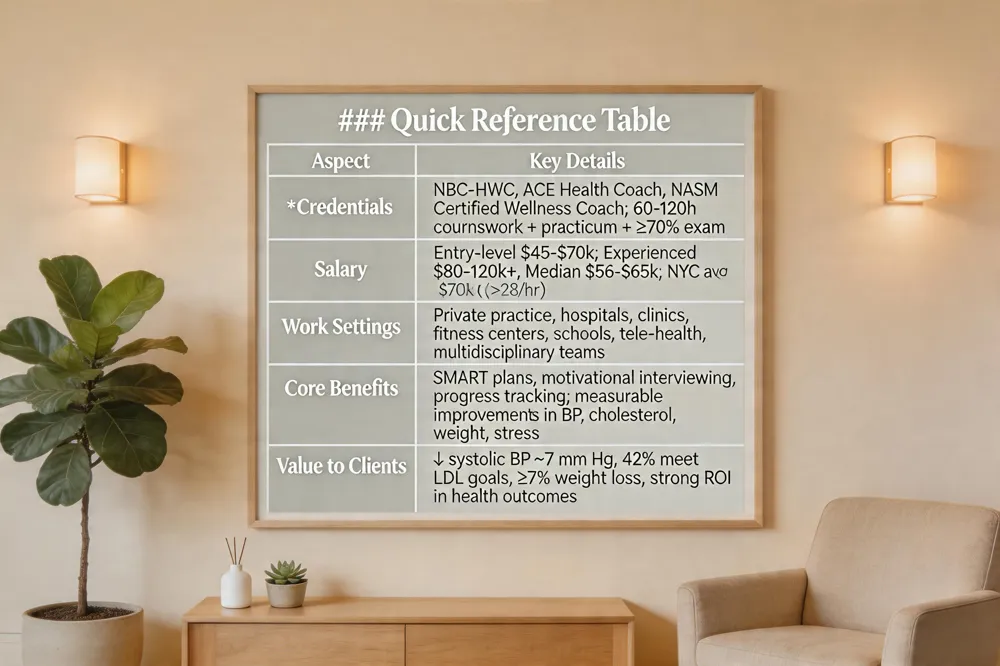 Health Coach certification – Credentials include NBC‑HWC, ACE Health Coach, and NASM Certified Wellness Coach. Programs require 60‑120 hours of behavior‑change, nutrition, movement, and mental‑health coursework, a practicum, and a ≥70 % exam, signaling practice for clinics and sites like Jana HealthCare.
Health Coach salary – Entry‑level pay $45‑70 k; experienced coaches $80‑120 k or more, especially in practice. Median national salary $56‑65 k; New York City averages $70 k with hourly rates >$28.
Where do health coaches work – Settings include practice, hospitals, clinics, departments, fitness centers, schools, and tele‑health, alongside physicians and dietitians.
Benefits of a health coach – Coaches create SMART‑based plans, use motivational interviewing to boost self‑efficacy, track progress, and address nutrition, movement, stress, sleep, and mindset, leading to measurable gains in blood pressure, cholesterol, weight, and health.
Is it worth hiring a health coach? – Research shows coaches lower systolic BP ~7 mm Hg, help 42 % meet LDL goals, and support 7 %+ weight loss, offering a path to change.
Financial Investment: Costs, Returns, and Potential Pitfalls
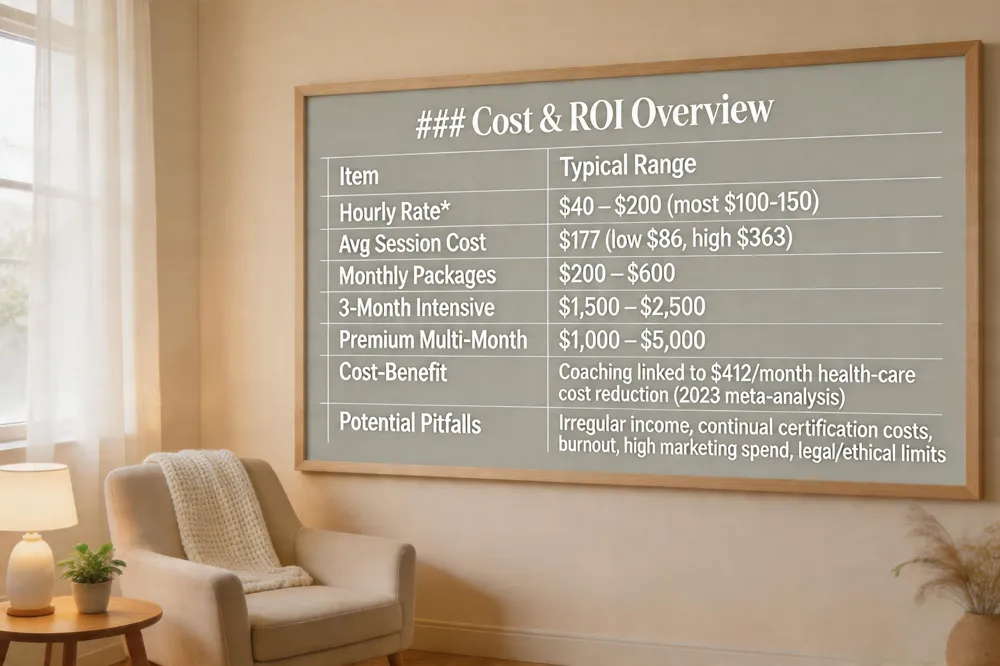
Cost & ROI Overview
| Item | Typical Range |
|---|---|
| Hourly Rate | $40 – $200 (most $100‑$150) |
| Avg Session Cost | $177 (low $86, high $363) |
| Monthly Packages | $200 – $600 |
| 3‑Month Intensive | $1,500 – $2,500 |
| Premium Multi‑Month | $1,000 – $5,000 |
| Cost‑Benefit | Coaching linked to $412/month health‑care cost reduction (2023 meta‑analysis) |
| Potential Pitfalls | Irregular income, continual certification costs, burnout, high marketing spend, legal/ethical limits |
 Average cost of a health coach
The typical hourly rate for a health coach in the United States falls between $40 and $200, with many solo practitioners charging $100‑$150 per hour. Nationally the average cost per session is about $177, while low‑end rates start around $86 and high‑end can exceed $363 per hour or per session. Monthly packages usually run $200‑$600 for a few sessions, and more intensive three‑month programs are often priced at $1,500‑$2,500. Premium or specialty programs that include comprehensive nutrition, fitness, and wellness plans can cost $1,000‑$5,000 for a multi‑month commitment. Prices vary by the coach’s experience, location, and the scope of services offered.
Average cost of a health coach
The typical hourly rate for a health coach in the United States falls between $40 and $200, with many solo practitioners charging $100‑$150 per hour. Nationally the average cost per session is about $177, while low‑end rates start around $86 and high‑end can exceed $363 per hour or per session. Monthly packages usually run $200‑$600 for a few sessions, and more intensive three‑month programs are often priced at $1,500‑$2,500. Premium or specialty programs that include comprehensive nutrition, fitness, and wellness plans can cost $1,000‑$5,000 for a multi‑month commitment. Prices vary by the coach’s experience, location, and the scope of services offered.
Cost‑benefit perspective Evidence shows health coaching improves blood pressure, cholesterol, weight and stress levels, often translating into lower medical expenses and fewer hospitalizations. A 2023 meta‑analysis linked coaching to a $412‑per‑month reduction in healthcare costs, while Mayo Clinic participants reported lasting quality‑of‑life gains. When the coaching fee is weighed against these health savings and the value of personalized, holistic support, the investment frequently pays for itself within a year.
Disadvantages and challenges of the profession Health coaches often face an irregular income stream, as client cancellations and seasonal demand can create gaps in cash flow. They must continually invest in certifications and continuing‑education courses to stay credible, which consumes time and money. The emotional toll of supporting clients through setbacks can lead to burnout, especially when progress is slow or clients are resistant. Operating in a crowded market means coaches spend significant resources on marketing that may yield little return, making business sustainability a challenge. Finally, because they are not medical professionals, coaches must carefully navigate legal and ethical boundaries, which can limit the services they feel offer and add stress.
Goal‑Setting Mastery: SMART, 5 C’s, and Real‑World Examples
Goal‑Setting Toolkit
| Framework | Elements |
|---|---|
| SMART | Specific, Measurable, Attainable, Relevant, Time‑bound |
| 5 C’s | Clarity, Challenge, Commitment, Consistency, Confidence |
| SMART Example | “Walk 20 min each weekday for 4 weeks” – 100 min/week, heart‑health focus, time‑bound |
| 5 C’s Example | Clarity: Replace soda with water 5 days/week; Challenge: Add 10‑min meditation daily; Commitment: Log habits in app; Consistency: Same time each day; Confidence: Review weekly progress |
| Wellness Domains | Emotional – 21‑day gratitude journal; Social – Monthly community club; Intellectual – 1 nonfiction book/month; Overall – Screen‑time ≤2 h after work |
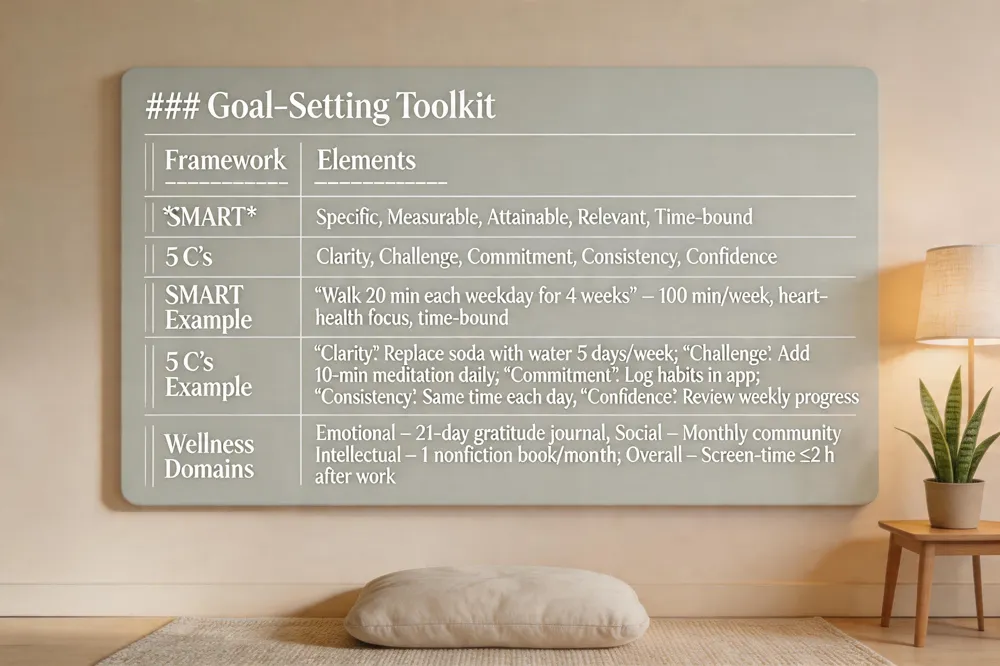 The five SMART components – Specific, Measurable, Attainable, Relevant, Time‑bound – give you a clear roadmap. For example, “walk 20 minutes each weekday for four weeks” is specific, measurable (100 minutes/week), attainable, relevant to heart health, and time‑bound.
The 5 C’s of goal‑setting – Clarity, Challenge, Commitment, Consistency, Confidence – ensure the aim feels both inspiring and realistic. Clarify the target, stretch it enough to stay motivated, commit to the plan, act consistently, and build confidence as you progress.
SMART health‑goal examples include: replacing soda with infused water five days a week, practicing 10‑minute guided meditation daily, adding leafy greens to dinner twice weekly, limiting weekend alcohol to two drinks, and tracking each habit via a phone app.
Emotional, social, intellectual, and overall wellness goals might be a 21‑day gratitude journal (emotional), joining a community club and attending monthly (social), reading one nonfiction book per month (intellectual), and improving sleep by limiting screen time to two hours after work (overall). These goals are personalized, evidence‑based, and align with holistic health and aesthetic well‑being.
Coaching Techniques for Success and Professional Growth
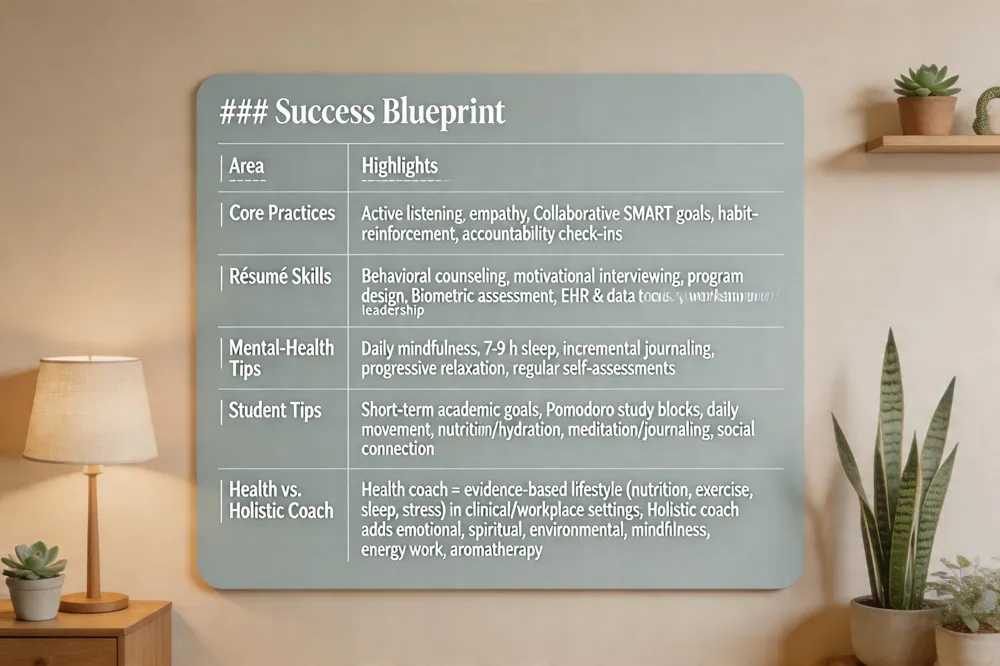
Success Blueprint
| Area | Highlights |
|---|---|
| Core Practices | Active listening, empathy, collaborative SMART goals, habit‑reinforcement, accountability check‑ins |
| Résumé Skills | Behavioral counseling, motivational interviewing, program design, biometric assessment, EHR & data tools, workshop leadership |
| Mental‑Health Tips | Daily mindfulness, 7‑9 h sleep, incremental journaling, progressive relaxation, regular self‑assessments |
| Student Tips | Short‑term academic goals, Pomodoro study blocks, daily movement, nutrition/hydration, meditation/journaling, social connection |
| Health vs. Holistic Coach | Health coach = evidence‑based lifestyle (nutrition, exercise, sleep, stress) in clinical/workplace settings; Holistic coach adds emotional, spiritual, environmental, mindfulness, energy work, aromatherapy |
 How to be a successful wellness coach
A successful coach first builds trust through active listening and genuine empathy, creating a safe space where clients feel heard. They translate this rapport into collaborative SMART goals, habit‑reinforcement techniques, and regular accountability check‑ins. Powerful questioning and concise feedback uncover motivations and overcome resistance. Ongoing professional development, mentorship, and a strong network keep knowledge current, while basic business skills—marketing, client management, financial planning—ensure a sustainable practice, especially within multidisciplinary settings like Jana HealthCare.
How to be a successful wellness coach
A successful coach first builds trust through active listening and genuine empathy, creating a safe space where clients feel heard. They translate this rapport into collaborative SMART goals, habit‑reinforcement techniques, and regular accountability check‑ins. Powerful questioning and concise feedback uncover motivations and overcome resistance. Ongoing professional development, mentorship, and a strong network keep knowledge current, while basic business skills—marketing, client management, financial planning—ensure a sustainable practice, especially within multidisciplinary settings like Jana HealthCare.
Health coach skills for résumé Highlight behavioral‑change counseling, motivational interviewing, personalized program design, biometric assessment, and digital tracking. Emphasize strong communication, teamwork with clinicians, familiarity with EHRs and data‑analysis tools, and experience leading workshops or managing diverse caseloads.
Wellness coaching tips for mental health
- Begin each day with brief mindfulness or breathing.
- Prioritize 7‑9 hours of restorative sleep.
- Set incremental goals and track them in a journal.
- Use progressive muscle relaxation or visualizations before stressors.
- Conduct regular self‑assessments and seek professional help when needed.
Wellness coaching tips for students Set short‑term academic and personal goals aligned with values, break study time into focused blocks with breaks, schedule daily movement, maintain balanced nutrition and hydration, practice guided meditation and journaling, nurture social connections, and review progress with a coach, adjusting strategies and celebrating wins.
Difference between a health coach and a holistic health coach A health coach focuses on evidence‑based lifestyle changes—nutrition, exercise, sleep, stress reduction—acting as an accountability partner within clinical or workplace settings. A holistic health coach expands the scope to emotional, spiritual, and environmental factors, integrating mindfulness, energy work, aromatherapy, and natural‑nutrition principles, aiming for overall well‑being beyond measurable metrics. Both use motivational interviewing, but the holistic coach emphasizes the mind‑body‑spirit connection and may operate in private or integrative wellness centers.
Science Behind Coaching: Key Research Findings
Evidence Snapshot
| Outcome | Typical Effect |
|---|---|
| HbA1c (T2D) | ↓ ~0.5 % (20 studies) |
| Body Weight | ↓ 5‑10 % over 6‑12 mo |
| Physical Activity | ↑ 30 % moderate‑to‑vigorous activity (6 mo post‑coaching) |
| Systolic BP | ↓ 4‑6 mm Hg |
| LDL Cholesterol | ↓ 7 points |
| Weight Loss (GA trial) | ↓ 7.2 % after 12 mo |
| Effective Dose | 10‑12 patient‑centered sessions (SMART, motivational interviewing, accountability) |
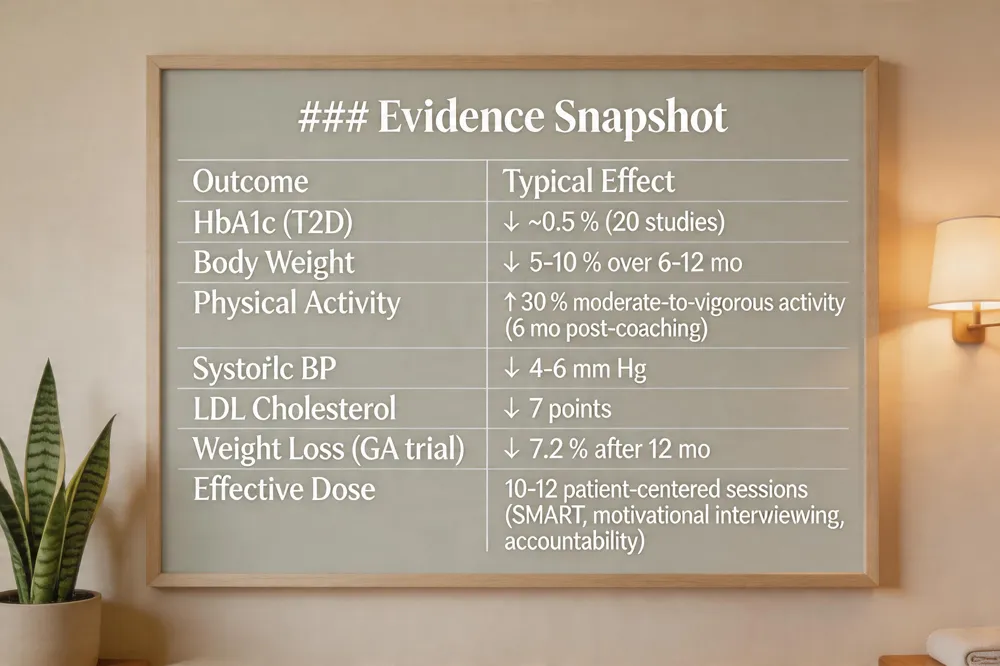 Extensive meta‑analyses and randomized controlled trials consistently show that health coaching delivers modest but statistically significant improvements in chronic‑disease outcomes. In 20 studies of adults with type 2 diabetes, coaching lowered HbA1c by about 0.5 % and produced 5–10 % body‑weight loss over 6–12 months. Larger investigations of at‑risk adults (cardiovascular disease or diabetes) reported a 30 % increase in moderate‑to‑vigorous physical activity that persisted six months after coaching ended. Specific study results include an average systolic blood‑pressure reduction of 4–6 mm Hg, a 7‑point drop in LDL cholesterol, and a 7.2 % weight loss after 12 months in a Massachusetts General Hospital trial. The most effective “dose” appears to be 10–12 patient‑centered sessions—often delivered by nurses, dietitians, or certified coaches—focused on SMART goal‑setting, motivational interviewing, and accountability. Benefits are sustained when programs emphasize personalized plans, regular progress tracking, and integration with multidisciplinary care.
Practical Roadmap: Turning Your Goals Into Real Results
Action Plan Checklist
| Phase | Action |
|---|---|
| Define | Write a SMART goal (specific, measurable, attainable, relevant, time‑bound) |
| Break Down | Split into daily/weekly actions; anticipate barriers |
| Track | Use journal, app, or wearable to log weight, steps, sleep, mood |
| Review | Weekly check‑ins with Jana HealthCare coach; adjust plan in real time |
| Celebrate | Reward milestones (e.g., 2‑lb drop, stress‑free week) to boost confidence |
| FAQ | How to achieve goals? → SMART → actions → track → adjust → reward |
| Become a coach? → NBHWC‑approved training → 50+ supervised hrs → pass exam → liability insurance → market portfolio |
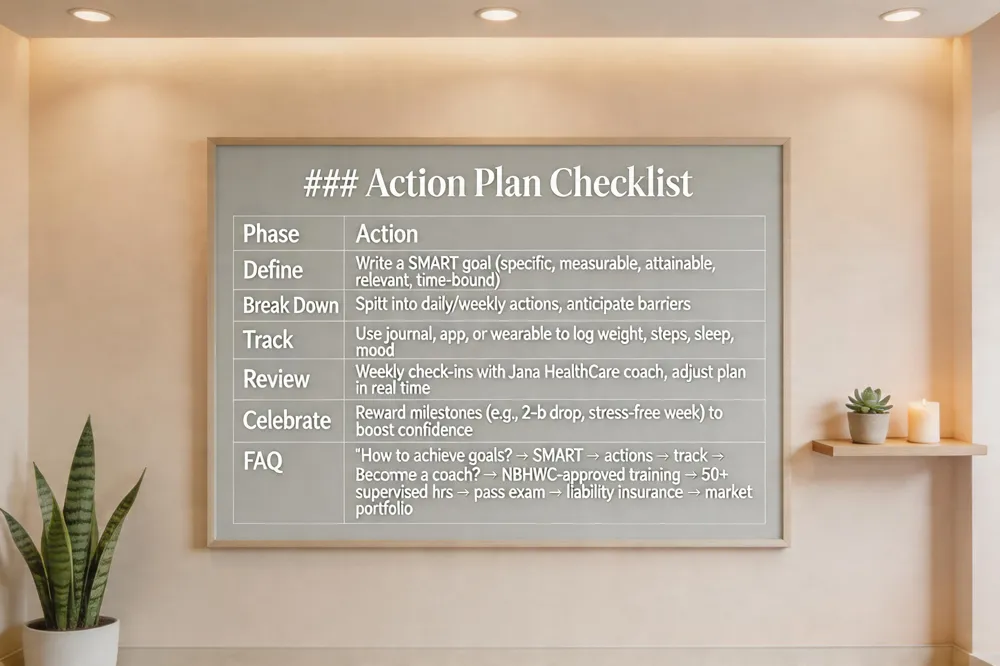 Transforming health aspirations into lasting change starts with a clear, personalized roadmap. First, define a SMART objective—specific, measurable, attainable, relevant, and time‑bound—so the goal feels concrete and meaningful. Break it into bite‑size actions you can schedule daily or weekly, and anticipate obstacles with pre‑planned coping strategies. Use a journal, smartphone app, or wearable to log key metrics (weight, steps, sleep, mood) and review them in weekly check‑ins with your Jana HealthCare coach, who can tweak the plan in real time. Celebrate each milestone—whether it’s a 2‑pound drop, a stress‑free week, or a new habit mastered—to reinforce motivation and build confidence.
How do I achieve my health goals? Start by writing a SMART goal, segment it into actionable steps, track progress regularly, adjust as needed, and reward every win.
How to become a health and wellness coach Follow Complete NBHWC‑approved training, complete 50+ supervised sessions, pass the board exam, obtain liability insurance, and market your expertise through a professional portfolio and digital channels.
Wellness coaching tips for mental health Begin each day with mindfulness, prioritize 7‑9 hours of sleep, set incremental goals, practice stress‑reduction techniques, and use brief self‑assessments to monitor mood, seeking professional help when needed.
Integrating Coaching Within Jana HealthCare’s Multidisciplinary Model
Integrated Care Flow
| Step | Interaction |
|---|---|
| Intake | Physician flags medical priorities (BP, hormones) |
| Coaching Mapping | Coach translates priorities into daily nutrition, movement, stress, skin‑care plans |
| Aesthetic Coordination | Coach ensures lifestyle (hydration, sleep, antioxidants) supports laser, injectables |
| Shared Portal | All providers view appointments, progress logs, action plans |
| Outcome | Unified roadmap → improved health, confidence, aesthetic results for Brooklyn clients |
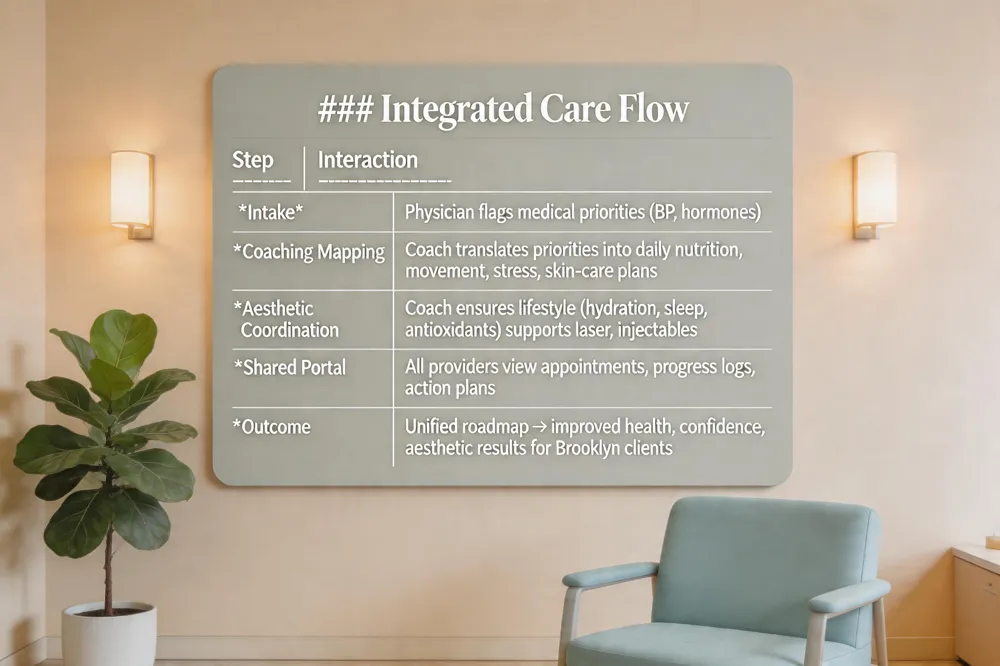 Jana HealthCare in Brooklyn blends conventional medicine, cosmetic dermatology, and evidence‑based wellness coaching into a seamless care experience. A certified health coach works side‑by‑side with physicians, dietitians, and aesthetic specialists, translating clinical recommendations into daily habits that fit each client’s life. During a joint intake, the doctor flags medical priorities—such as blood‑pressure control or hormone balance—while the coach maps those goals onto realistic nutrition, movement, stress‑management, and skin‑care plans. The coach also liaises with the cosmetic team, ensuring that lifestyle changes (e.g., hydration, sleep, antioxidant intake) support procedures like laser resurfacing or injectable treatments, enhancing both safety and results. Brooklyn residents benefit from a single, coordinated portal where appointments, progress logs, and personalized action plans are shared among all providers, creating a unified roadmap for long‑term health, confidence, and aesthetic well‑being.
Your Next Step Toward Sustainable Wellness
Working with a certified health and wellness coach delivers measurable benefits: improved nutrition, higher activity levels, lower blood pressure, reduced stress, and enhanced sleep—all backed by studies from the Mayo Clinic, Harvard Health, and PartnerMD. Coaches also help you align lifestyle changes with your personal values, supporting both inner well‑being and the aesthetic confidence you gain from looking and feeling your best. Jana HealthCare’s multidisciplinary team welcomes you to schedule a complimentary discovery call, where our NBC‑HWC‑qualified coaches will design a personalized plan that integrates medical guidance, cosmetic dermatology, and holistic therapies. Take the first step today: choose one specific health aim, make it measurable, ensure it’s attainable and relevant to your life, and set a clear time‑bound deadline. Your sustainable, whole‑person wellness journey begins now.