Why Your Gut Matters in Weight Management
A diverse gut microbiome is a cornerstone of metabolic health; studies show that higher microbial richness correlates with lower body weight, better insulin sensitivity, and reduced visceral fat. When diversity drops—a state called dysbiosis—the gut becomes more efficient at extracting calories and releases inflammatory lipopolysaccharide, which fuels insulin resistance and can sabotage weight‑loss efforts. Modern science now lets us personalize nutrition to the microbiome: testing reveals "gut‑boosters" (high‑fiber prebiotic foods, fermented probiotic foods) and "gut‑suppressors" (processed sugars, artificial sweeteners) for each individual. Tailored plans that blend nutrient‑dense, fiber‑rich meals with daily fermented foods, adequate sleep, stress‑reduction, and movement not only nurture beneficial microbes but also support a slimmer silhouette and radiant wellbeing.
The Microbiome‑Weight Connection
Microbiome‑Weight Connection Summary
| Aspect | Key Findings |
|---|---|
| Gut health & weight loss | Diverse microbiome → better metabolic health; obesity ↔ reduced richness. |
| Energy harvest | Higher Firmicutes‑to‑Bacteroidetes ratio & certain Lactobacillus boost calorie extraction; ↑ Akkermansia/Prevotella → ↓ weight gain. |
| Intervention effects | Weight‑loss programs raise α‑diversity (SMD ≈ 0.4) & lower permeability (SMD ≈ ‑0.7); ↑ Akkermansia, Bacteroides; ↓ Bifidobacterium. |
| Practical take‑away | High‑fiber + fermented foods + regular exercise + sleep + stress control → sustainable weight management. |
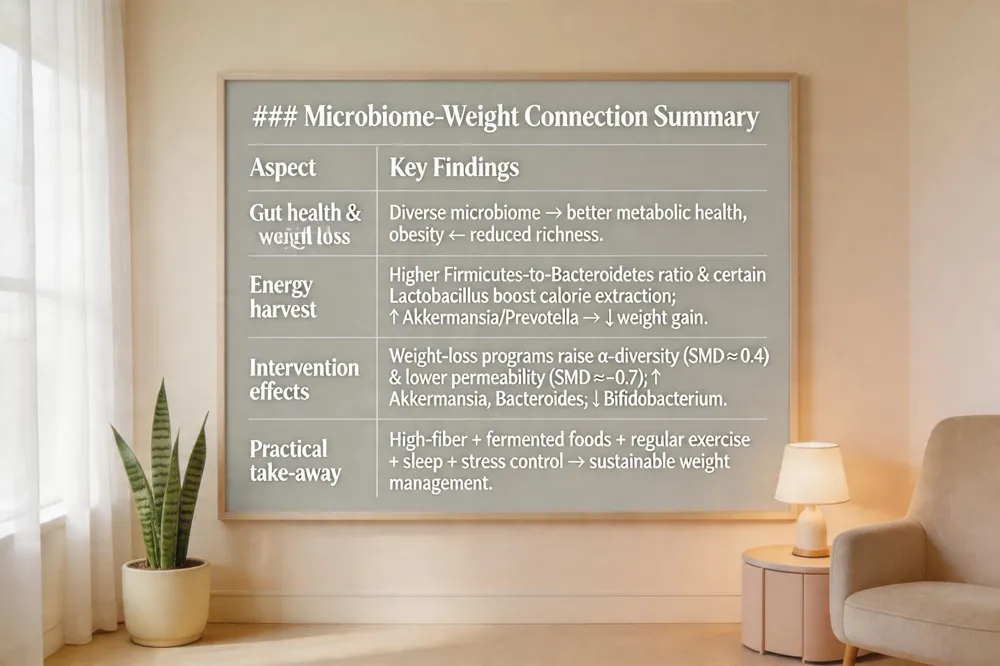 Does gut health affect weight loss? Yes. A diverse gut microbiome is linked to better metabolic health, while obesity is associated with reduced microbial richness. Twin and mouse‑transplant studies show that “obese‑type” bacteria can cause weight gain in lean hosts, indicating a causal role. Probiotic‑rich fermented foods, prebiotic fibers (onions, garlic, oats, whole grains) and personalized gut‑microbiome testing can help shift the microbial balance, improve satiety hormones (PYY, GLP‑1) and lower inflammation, supporting weight‑loss efforts.
Microbiome weight gain Gut microbes influence energy harvest; a higher Firmicutes‑to‑Bacteroidetes ratio and certain Lactobacillus species increase calorie extraction and insulin‑leptin signaling that promote fat storage. Conversely, increasing Akkermansia or Prevotella (via fiber‑rich diets) has been associated with reduced weight gain. Probiotic, prebiotic, and synbiotic interventions may blunt these pathways, but high‑quality trials are still needed.
Microbiome and weight Weight‑loss interventions consistently raise α‑diversity (SMD ≈ 0.4) and lower intestinal permeability (SMD ≈ ‑0.7). Genera such as Akkermansia and Bacteroides rise, while Bifidobacterium may fall. These changes correlate with improved insulin sensitivity and reduced visceral fat. Maintaining gut health through a high‑fiber, fermented‑food‑rich diet, regular exercise, adequate sleep, and stress management offers a practical, personalized strategy to support sustainable weight management.
Key Bacteria Linked to Weight Gain
Weight‑Gain‑Associated Bacteria
| Bacteria / Group | Mechanism / Impact |
|---|---|
| Firmicutes‑to‑Bacteroidetes (high ratio) | ↑ Energy harvest from carbs/fats → excess storage. |
| Enterobacteriaceae (e.g., E. coli) | ↑ Fat absorption & low‑grade inflammation. |
| Specific Lactobacillus spp. | Linked to increased caloric extraction & inflammation. |
| Prevotella + Ruminococcus (over‑abundance) | Dysbiotic pattern → higher visceral fat. |
| Akkermansia muciniphila (reduced) | Loss of gut‑barrier protection → inflammation. |
Take‑away: Shift diet toward prebiotic fibers & fermented foods to suppress obesogenic microbes and restore beneficial ones.
 A growing body of research shows that the composition of the gut microbiome can tip the balance toward weight gain or loss.
Firmicutes‑to‑Bacteroidetes ratio and energy harvest – Obese individuals often have a higher Firmicutes proportion relative to Bacteroides. This shift enhances the gut’s ability to extract calories from carbohydrates and fats, contributing to excess energy storage.
Enterobacteriaceae and Lactobacillus species in obesity – Certain members of the Enterobacteriaceae family (e.g., Escherichia coli) and some Lactobacillus strains have been linked to increased fat absorption and low‑grade inflammation, both of which can promote weight gain.
Prevotella, Ruminococcus and dysbiotic profiles – While Prevotella can aid fiber digestion, an over‑abundance of Prevotella together with Ruminococcus species is often seen in dysbiotic patterns that correlate with higher visceral fat.
Which gut bacteria cause weight gain? Studies identify “obesogenic” microbes such as a high Firmicutes‑to‑Bacteroides ratio, Enterobacteriaceae, and specific Lactobacillus species, while beneficial microbes like Akkermansia muciniphila are reduced.
Gut health and weight gain An unhealthy microbiome fuels inflammation and impairs satiety signaling. A nutrient‑dense, low‑sugar diet rich in prebiotic fibers and fermented probiotic foods helps restore balance, supporting weight‑management goals.
Gut microbiome and weight gain Dysbiosis—low diversity and harmful species—disrupts hormone secretion and increases calorie extraction. Personalized nutrition, fiber‑rich plant foods, and targeted probiotic/prebiotic strategies can improve microbial diversity, curb appetite, and enhance metabolic health, though exact strains and doses remain under study.
Beneficial Microbes That Support Weight Loss
Weight‑Loss‑Promoting Microbes
| Microbe | Primary Benefit |
|---|---|
| Turicibacter | Produces fatty acids that lower blood glucose & triglycerides; low in obesity. |
| Akkermansia muciniphila | Strengthens mucus barrier, reduces permeability & inflammation; ↑ insulin sensitivity. |
| Microbial Diversity (overall) | ↑ SCFA production → better satiety, reduced appetite, improved gut lining. |
| ZOE “good” microbes (≈50) | Associated with lower visceral fat. |
Take‑away: Encourage these microbes via high‑fiber, polyphenol‑rich foods and regular fermented‑food intake.
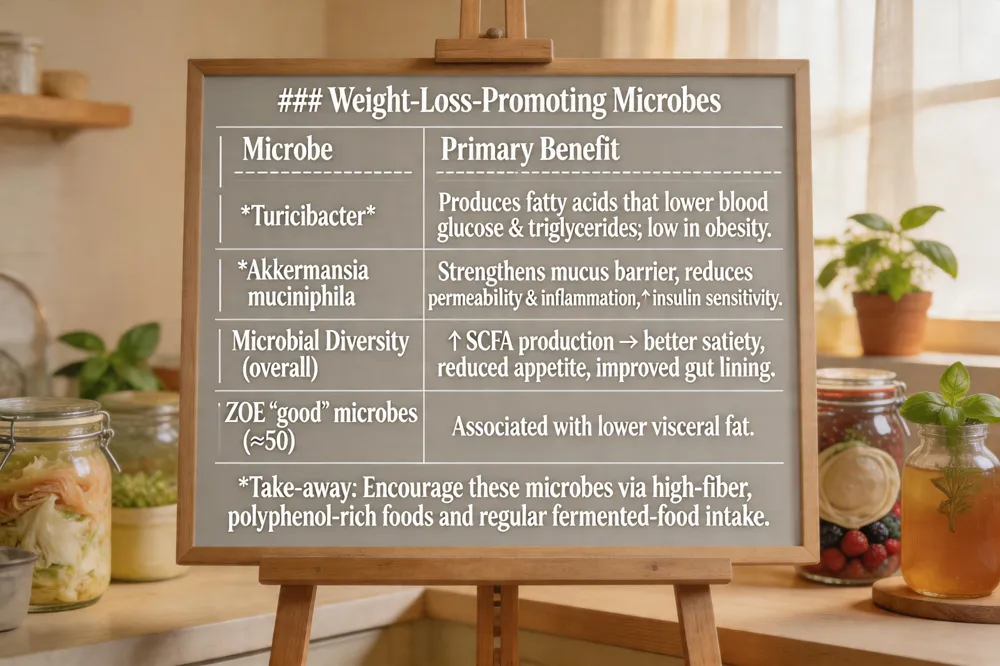 Recent research shows that specific gut microbes can tip the scales toward a leaner body. Turicibacter—identified in mouse studies—produces fatty compounds that keep blood sugar and blood‑fat low, reducing weight gain; obese people typically have lower levels of this bacterium. Another star is Akkermansia muciniphila, which lives in the mucus layer and strengthens gut‑barrier integrity, lowering intestinal permeability and systemic inflammation; higher Akkermansia abundance is consistently linked to better insulin sensitivity and modest fat loss after diet. Beyond single species, microbial diversity is a cornerstone of metabolic health: a diverse microbiome supplies a broader array of short‑chain fatty acids that calm hunger hormones, improve satiety, and protect the gut lining. ZOE’s large‑scale study identified about 50 “good” microbes associated with lower visceral fat and 50 “bad” ones linked to higher weight, underscoring that a balanced community matters more than any one strain.
Which gut bacteria cause weight loss? Research in mice has identified Turicibacter as a weight‑loss‑promoting bacterium; a diverse, balanced gut microbiome also correlates with successful weight loss.
Gut bacteria weight loss supplement? Probiotic blends (e.g., Lactobacillus gasseri, Bifidobacterium longum) paired with prebiotic fibers can modestly aid weight loss when combined with diet and exercise, but they are not a stand‑alone solution.
Best supplements for gut health and weight loss? High‑quality probiotics, prebiotic fibers, omega‑3s, vitamin D, and digestive enzymes support microbiome balance, satiety, and metabolic health; always choose third‑party tested products and consult a clinician.
Personalized Nutrition and Gut‑Boosting Foods
Personalized Gut‑Boosters
| Food Category | Example Foods | Microbial Target |
|---|---|---|
| Prebiotic‑rich vegetables | Onions, garlic, asparagus, leeks | Feed SCFA‑producing bacteria (e.g., Bifidobacterium). |
| Whole grains & oats | Whole‑grain bread, oats, quinoa | ↑ Bacteroides, Prevotella. |
| Fermented foods | Yogurt, kefir, kimchi, sauerkraut | Provide live Lactobacillus & Bifidobacterium. |
| Fiber‑rich legumes & nuts | Beans, lentils, almonds | Support diverse microbiota. |
Key Insight: ZOE data shows higher Prevotella abundance predicts greater fat loss on calorie‑controlled diets.
 Improving gut health supports weight‑loss goals because a diverse microbiome enhances metabolism, satiety and reduces inflammation. ZOE study on the Prevotella/Bacteroides ratio found that a higher Prevotella abundance predicts greater fat loss on calorie‑controlled diets, while a lower ratio is linked to poorer outcomes. Individual “gut‑boosters” and “gut‑suppressors” are identified through at‑home microbiome testing; foods that nurture beneficial microbes (e.g., prebiotic‑rich vegetables) are labeled boosters, whereas those that favor “bad” bacteria (high‑sugar, processed items) are suppressors. Impact of fiber‑rich and fermented foods is profound: dietary fibers in onions, garlic, asparagus, oats, and whole grains fuel SCFA‑producing bacteria, and fermented foods such as yogurt, kefir, sauerkraut, and kimchi supply live probiotics that restore balance.
Gut health and weight‑loss diet – a personalized plan rich in fiber, whole grains, and fermented foods reduces hunger and improves energy, as shown by ZOE’s unpublished trial (average 9.4 lb loss in three months).
Gut health and weight‑loss PDF – summarizes evidence that high‑fiber, low‑glycemic eating improves microbiome diversity, boosts SCFA production, and aids sustainable fat loss.
Gut health and weight‑loss drinks – water, polyphenol‑rich teas, low‑calorie vegetable juices, and low‑sugar kombucha provide hydration, antioxidants, and probiotic support while keeping calories low.
Probiotics, Prebiotics, and Synbiotics in Practice
Pro//Prebiotic/Synbiotic Practical Guide
| Strategy | Typical Components | Expected Effect |
|---|---|---|
| Probiotics | Lactobacillus gasseri, Bifidobacterium longum (live cultures) | Modest weight‑loss aid when paired with diet/exercise. |
| Prebiotics | Onions, garlic, oats, mushrooms, whole grains (fibers) | Feed beneficial microbes, increase α‑diversity. |
| Synbiotics | Combination of above (e.g., probiotic capsule + fiber blend) | Synergistic improvement of gut barrier & satiety hormones. |
Clinical Note: Use high‑quality, third‑party‑tested products and consult a clinician for dosing.
 Probiotics are live microorganisms that confer a health benefit (WHO definition). Strains such as Lactobacillus and Bifidobacterium have shown weight‑related improvements with calorie‑controlled diets, though systematic reviews note limited evidence. Prebiotic fibers—onions, garlic, leeks, asparagus, oats, mushrooms, whole grains—feed these microbes, boosting diversity and fatty‑acid production that promotes satiety. Combining prebiotics and probiotics creates a synbiotic that can enhance microbial balance more effectively than either alone, supporting gut barrier integrity and reducing inflammation that hinders weight loss.
Gut health and weight‑loss supplements – Probiotic, prebiotic, fiber‑blend and synbiotic supplements can modestly improve satiety and absorption, especially with a diet, regular activity and medical guidance. At Jana HealthCare we blend these evidence products with nutrition counseling and wellness plans for lasting results.
Best foods for gut health and weight loss – Include probiotic‑rich foods (yogurt, kefir, sauerkraut, kimchi) and high‑fiber options (oats, whole‑grain breads, apples, leafy greens, berries). Pair with lean proteins (fish, poultry, legumes) and modest healthy fats (avocado) to create plates that nurture the microbiome while supporting weight management.
Lifestyle Factors That Modulate the Gut and Weight
Lifestyle Modulators of Gut & Weight
| Factor | Impact on Microbiome | Weight‑Related Outcome |
|---|---|---|
| Aerobic activity | ↑ butyrate‑producing taxa & diversity | Better satiety, lower inflammation. |
| Sleep (7‑9 h) | Reduces gut permeability, stabilizes cortisol | Improves insulin sensitivity, ↓ cravings. |
| Stress management | Lowers cortisol‑driven “leaky gut” | Decreases systemic inflammation, supports fat oxidation. |
| Inflammation control | Fiber & fermented foods ↓ LPS translocation | Enhances leptin/ghrelin signaling, aids weight loss. |
Bottom Line: Combine regular exercise, adequate sleep, stress‑reduction, and a high‑fiber diet for optimal gut‑mediated weight management.
 Regular aerobic activity is one of the easiest ways to boost gut microbial diversity. Even moderate walking or yoga stimulates the growth of butyrate‑producing bacteria, which help tighten the intestinal barrier and improve satiety signals.
Sleep quality and stress management are tightly linked to gut permeability. Chronic stress and fragmented sleep increase cortisol, loosening tight‑junctions and allowing lipopolysaccharide (LPS) to leak into circulation. This “leaky gut” fuels low‑grade inflammation that blunts insulin sensitivity and heightens hunger. Prioritizing 7‑9 hours of restorative sleep and practicing mindfulness, deep‑breathing, or meditation can restore a healthier barrier.
Inflammation is a major roadblock to weight‑loss success. When gut inflammation is high, leptin and ghrelin signaling become erratic, appetite spikes, and fat oxidation stalls. Studies show that interventions raising alpha‑diversity and reducing permeability—through fiber‑rich, prebiotic foods and fermented probiotic foods—lower systemic inflammation and enable more consistent weight loss.
Gut inflammation & weight loss: Chronic gut inflammation disrupts hormone balance, driving cravings and metabolic resistance. Targeted nutrition (fiber, fermented foods) and stress‑reduction can repair the barrier and support sustainable loss.
How gut bacteria affect weight, disease, and mood: Diverse microbes ferment fiber into short‑chain fatty acids that regulate appetite, improve insulin sensitivity, and produce neurotransmitters that stabilize mood. Dysbiosis raises obesity, diabetes, cardiovascular risk, and anxiety.
Improving gut health for weight loss: Embrace a varied, high‑fiber diet (vegetables, fruits, whole grains, legumes), include daily fermented foods, curb ultra‑processed snacks, stay hydrated, and seek personalized gut‑microbiome testing to identify your “boosters” and “suppressors.”
Putting It All Together: Practical Steps & Professional Support
Practical Action Plan
| Step | Recommendation |
|---|---|
| Calorie deficit | Sustainable 10‑15 % reduction, 150 min moderate cardio + strength training 2×/week. |
| Gut‑boosting diet | Daily fiber (≥30 g) + 2‑3 servings fermented foods. |
| Targeted supplements | Post‑biotic (e.g., Pylopass™) if H. pylori risk; probiotic during/after antibiotics. |
| Professional support | Jana HealthCare personalized stool testing, nutrition counseling, and follow‑up plans. |
Goal: Integrate diet, movement, sleep, stress management, and microbiome‑focused care for lasting belly‑fat reduction.
 Fast‑track belly‑fat reduction starts with a sustainable calorie deficit and regular movement. Aim for at least 150 minutes of moderate‑intensity cardio (brisk walking, dancing, swimming) or 75 minutes of vigorous activity each week, plus two‑plus strength‑training sessions (squats, deadlifts, push‑ups) to preserve muscle and boost resting metabolism. Pair this with a nutrient‑dense, low‑added‑sugar diet rich in whole foods.
Snap gut‑health products such as Pylopass™ contain a post‑biotic that has shown efficacy against H. pylori overgrowth, helping soothe the mucosa and reduce bloating, gas, and digestive discomfort.
Improving your gut microbiome begins with feeding the good bacteria: eat a variety of fiber‑rich vegetables (leafy greens, broccoli, asparagus, artichokes) and prebiotic foods (whole grains, garlic, onions, bananas, beans, nuts). Limit refined carbs, added sugars, and ultra‑processed items that starve beneficial microbes. Add fermented foods—yogurt, kefir, kimchi, sauerkraut—or a clinician‑approved probiotic supplement. Use antibiotics only when medically necessary and consider a probiotic during and after treatment to protect microbial balance.
Jana HealthCare offers personalized gut‑focused assessments, stool‑testing, and tailored nutrition plans that integrate these evidence‑based strategies, providing the professional support needed for sustainable weight‑loss and gut health.
Your Next Step Toward a Healthier Gut and a Leaner You
To turn gut‑friendly insights into lasting results, blend three pillars: personalized nutrition, lifestyle habits, and professional guidance. First, choose foods that both feed beneficial microbes (prebiotic fibers from onions, garlic, asparagus, oats, whole grains) and seed them (fermented yogurt, kefir, sauerkraut, aged cheese). Second, adopt gut‑supportive routines—regular aerobic activity, consistent sleep, stress‑reduction techniques, and mindful eating—to keep microbial diversity high and intestinal permeability low. Third, enlist a clinician or dietitian to order a gut‑microbiome test, identify your own “good” and “bad” microbes, and tailor a plan that monitors changes in diversity, ermansia muciniphila, and Prevotella/Bacteroides ratios over weeks. This integrated approach not only amplifies weight‑loss success (average 9‑lb loss in ZOE’s program) but also improves satiety, energy, inflammation, and long‑term metabolic health, creating a foundation for sustained wellness and aesthetic confidence.