Why Hydration Matters for High‑Performance Professionals
Maintaining optimal fluid balance is a cornerstone of cognitive sharpness and sustained energy. Even a 1‑2 % loss in body water can slow reaction time, blur short‑term memory, and increase fatigue—effects that directly undermine productivity. Hydration also supports digestion, joint lubrication, temperature regulation, and immune function, linking daily fluid intake to overall health and long‑term disease prevention. For busy professionals, habit‑stacking (e.g., sipping water after each meeting) and environmental cues—visible reusable bottles, water stations near workstations, and reminders via phone or smart bottle—turn hydration into an automatic, low‑effort routine that fuels peak performance.
Daily Hydration Foundations
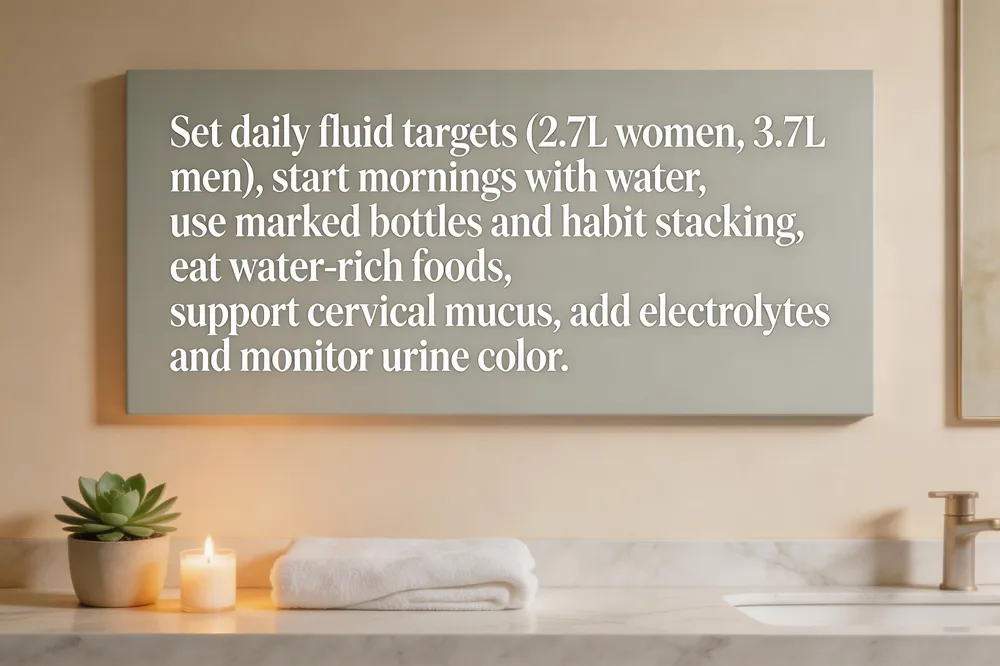 Baseline fluid needs & morning routines – Adults should aim for ~2.7 L (≈9 cups) for women and ~3.7 L (≈13 cups) for men, adjusted for weight, activity, and climate. A glass of water first thing in the morning re‑hydrates after sleep and jump‑starts metabolism.
Reusable bottle cues & habit stacking – Keep a marked bottle on your desk, in your bag, and at the bedside. Pair sipping with existing habits (e.g., after checking email or before a meeting) and set phone or app reminders to sip every hour.
Water‑rich foods for everyday intake – Incorporate cucumber, watermelon, strawberries, oranges, and leafy greens, which are 90‑95 % water, to contribute ~20 % of daily fluid needs.
Boosting cervical mucus quality – Adequate hydration thins cervical mucus, making it more sperm‑friendly. Aim for the daily fluid target, especially in warm weather, to maintain optimal mucus consistency and hormonal balance.
Strategies to increase overall body hydration percentage – Sip regularly, flavor water with citrus or herbs, add a pinch of sea salt or an electrolyte powder after sweat‑inducing activities, limit diuretic drinks (excessive caffeine/alcohol), and monitor urine color (pale yellow = well‑hydrated).
Quick answers
- Does hydration affect cervical mucus? Yes—adequate water makes mucus thinner and more hospitable to sperm; dehydration thickens it.
- What to drink to get hydrated fast? Plain water (8‑12 oz every 15 min), low‑sugar sports drinks, or milk (longer‑lasting hydration) are effective.
- Best fluids for quick hydration at home? Water, warm broth, coconut water, or a homemade electrolyte mix (water + pinch of sea salt + fruit juice).
- 5 tips to stay hydrated: 1) Keep a reusable bottle; 2) Eat water‑rich foods; 3) Add natural flavor; 4) Use electrolytes when needed; 5) Limit alcohol/caffeine.
- How to increase body hydration percentage? Combine frequent sipping, water‑rich meals, electrolyte balance, and visual cues; track intake and use urine color as a guide.
Tech, Tools, and Travel‑Ready Hydration
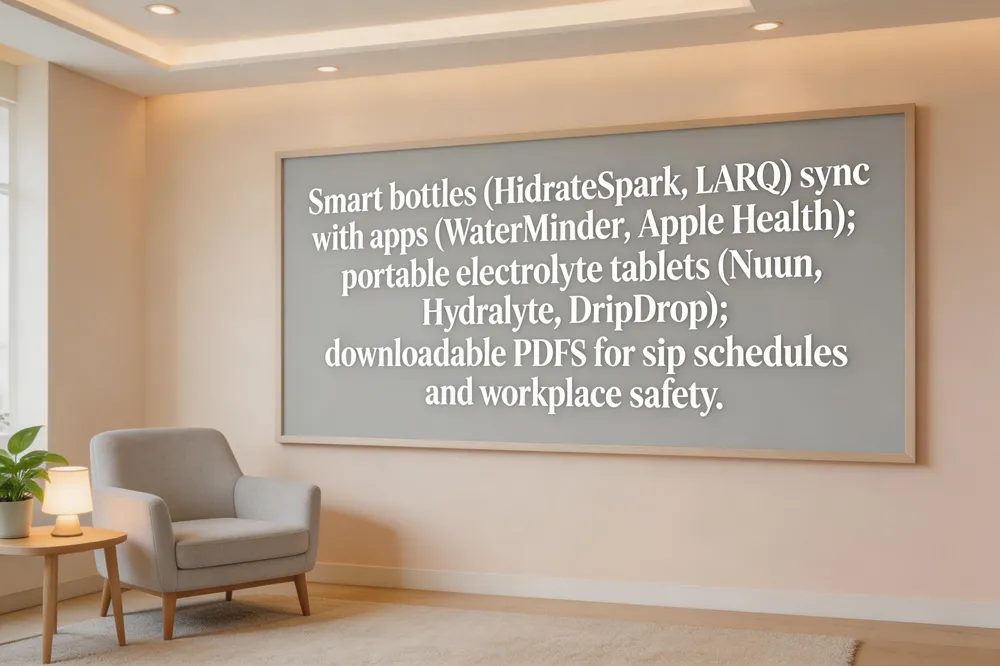 Smart water bottles such as HidrateSpark and LARQ sync with apps like WaterMinder or Apple Health, logging each sip and flashing reminders when it’s time to drink. Pairing these visual cues with habit‑stacking—sip while you check email or finish a meeting—keeps busy professionals hydrated without extra effort. Portable electrolyte tablets (Nuun Vitamins, Hydralyte, DripDrop) dissolve in a reusable bottle, delivering sodium, potassium, and magnesium to offset fluid loss in low‑humidity cabins or hot work sites. For a quick reference, search "smart water bottles hydration apps travel electrolyte tablets" to find the latest reviews and printable PDFs. Our downloadable PDF hydration tips for busy professionals checklist outlines a 15‑minute sip schedule, highlights diuretic culprits (excess coffee, alcohol), and suggests a pinch of sea salt or low‑sugar electrolyte drink for intense days. A complementary hydration toolbox‑talk PDF equips employers with safety guidelines—8 oz every 15‑20 minutes, cool water stations, and urine‑color checks—to protect staff in demanding environments. Together, these tech tools, electrolyte solutions, and ready‑to‑use guides make optimal hydration simple, sustainable, and aesthetically supportive of wellness.
Travel & Flight Hydration Hacks
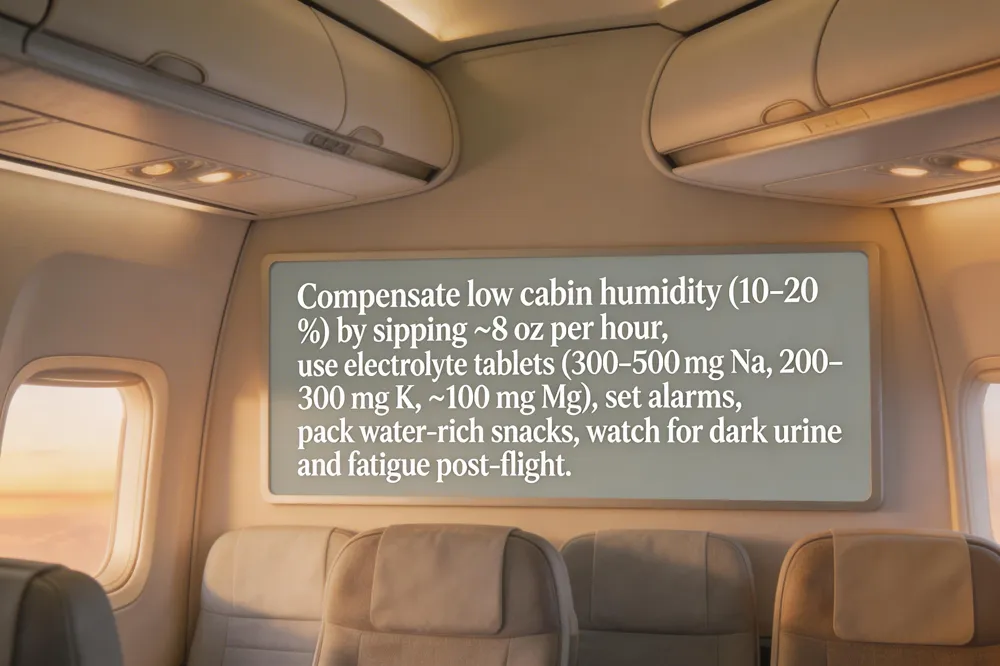 Cabin humidity in most commercial aircraft hovers between 10 %–20 %, far below the 30 %–60 % range the body is used to. This dry air accelerates fluid loss through the skin and lungs, so a pilot‑rule of thumb is to sip roughly 8 oz (≈240 ml) of fluid each hour of flight.
Long‑haul flights demand an electrolyte strategy. Sodium helps retain the water you drink, potassium aids fluid distribution and reduces cramping, while magnesium supports energy production and sleep quality. Portable options—such as LMNT tablets, Buoy Rescue Drops, or a pinch of sea salt with a splash of citrus—deliver 300–500 mg sodium, 200–300 mg potassium, and ~100 mg magnesium per serving, providing a balanced re‑hydration mix without excess sugar.
After a flight, watch for dehydration signs: dry throat or nasal passages, dark‑yellow urine, headache, fatigue, light‑headedness, and a faster heart rate. Swelling of the face or hands can also signal fluid shifts caused by low cabin pressure.
Practical travel tips: start each trip with a glass of water, keep an insulated bottle (or hydration bladder) visible in your bag, and set a phone alarm or use an app (e.g., WaterMinder) to remind you to sip every 30–45 minutes. Pack water‑rich foods—cucumber, watermelon, oranges, berries—and choose low‑sugar electrolyte drinks or coconut water over soda. Limit caffeine and alcohol, and pair any indulgence with an extra glass of water. These habits keep you hydrated, reduce jet‑lag fatigue, and support clear thinking throughout international and domestic journeys.
Office & Home Hydration Hacks
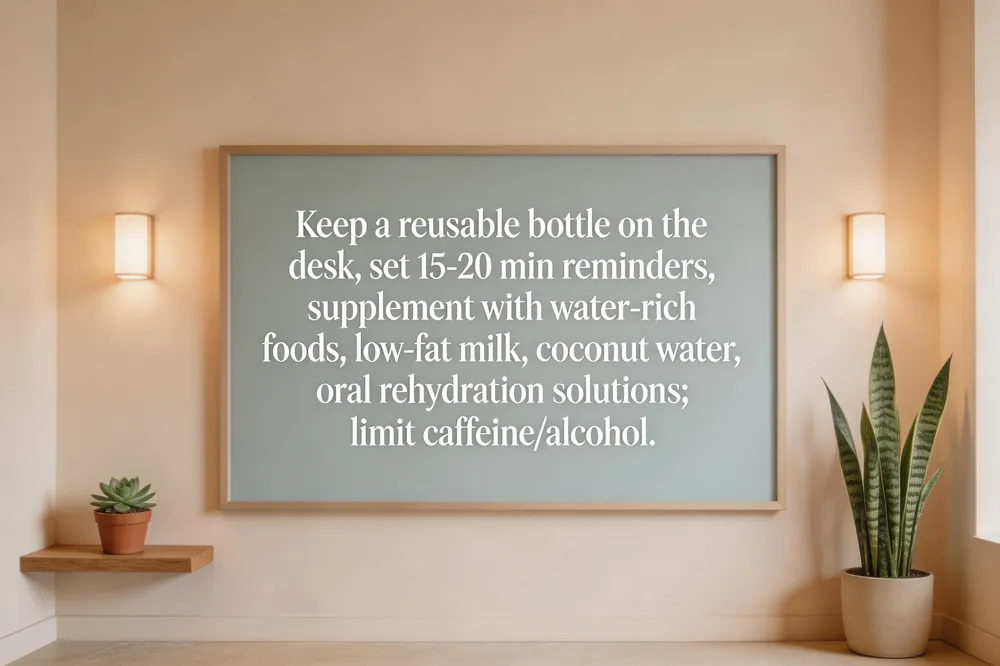 A reusable water bottle at your desk keeps liquid within sight, and setting phone or app reminders (or using a bottle with time‑marked intake) nudges you to sip every 15‑20 minutes, preventing the late‑stage thirst signal that impairs focus. When you can’t drink plain water, reach for water‑rich foods—watermelon, cucumber, strawberries, oranges, lettuce, celery—plus low‑fat milk and coconut water, herbal tea, or diluted fruit‑vegetable juices, which add both fluid and electrolytes. For quick rehydration, especially when ill, choose a low‑sugar oral rehydration solution (e.g., Pedialyte, homemade 1 L water + 6 tsp sugar + ½ tsp salt) or coconut water, which supplies potassium with modest sodium. Limit diuretic drinks: keep caffeine to moderate amounts and balance any alcohol with a full glass of water per drink. Pair water intake with routine cues—after emails, before meals, or during breaks—to make hydration automatic and sustain energy throughout the workday.
Nutrition‑Based Hydration and Electrolyte Balance
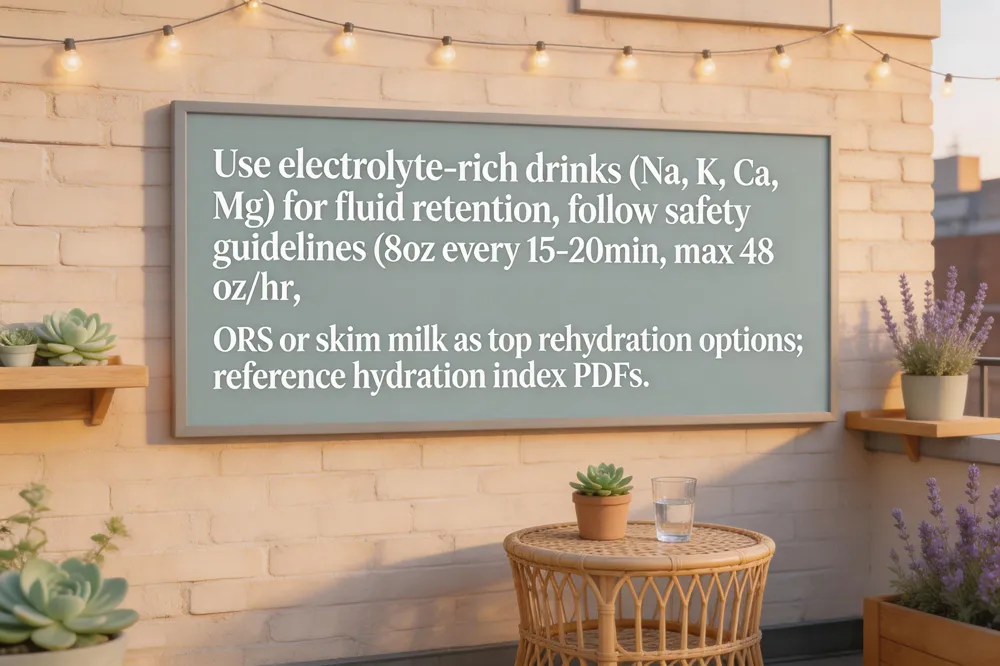
Hydrating drinks with electrolytes
Electrolyte‑rich drinks mix water with sodium, potassium, calcium and magnesium, helping fluid retention and nerve‑muscle function. Mixes or milk make water appealing after workouts or travel.
Hydration Safety pdf
Workplace guide advises starting shifts hydrated and sipping 8 oz every 15‑20 minutes in heat, limiting to 48 oz per hour to avoid hyponatremia. Water stations and electrolyte drinks are recommended; alcohol and caffeine drinks should be avoided.
Best drink for dehydration in adults
Oral‑rehydration solutions (e.g., Pedialyte) or skim milk supply sodium, potassium and carbs, retaining fluid longer than plain water and ranking high on the Beverage Hydration Index.
Best drink to rehydrate fast
For recovery, an ORS with sodium, glucose, or a drink, restores fluid and electrolytes. Milk also offers superior retention due to protein and fat.
Putting the Hacks into Action
Start your day by placing a marked reusable bottle on your desk, in car, and beside your bed. Use phone alarms or apps like WaterMinder to cue a sip after each email, meeting, or task. Pair the habit with existing routines—drink a glass before coffee, after a call, or while waiting for the printer. Adjust the plan for your environment: add cucumber‑mint infusion for freshness, carry a bottle for travel, and keep electrolyte packets handy for long flights or hot hikes. Pay attention to signs—dry mouth, dark urine, fatigue—and increase intake or add electrolytes before symptoms worsen.