Why Understanding Immigration Vaccination Rules Matters
The immigration medical exam, recorded on Form I‑693, is a mandatory step for anyone seeking a green card or adjusting status. A civil surgeon, following the CDC’s Technical Instructions, reviews your vaccination history, verifies age‑appropriate immunity, and either administers missing doses or documents valid medical or religious waivers. Full vaccination compliance is a direct factor in admissibility; an incomplete chart can trigger a Class A medical condition and delay or deny the application. Understanding the exam’s requirements helps you prepare accurate records, avoid costly repeat visits, and ensure a smooth path to permanent residency. By partnering with a knowledgeable civil surgeon and staying current on CDC/ACIP updates—such as the 2024 polio rule change and the 2025 removal of the COVID‑19 requirement—you protect both your health and your immigration goals.
Core Vaccination Requirements for Green Card Applicants
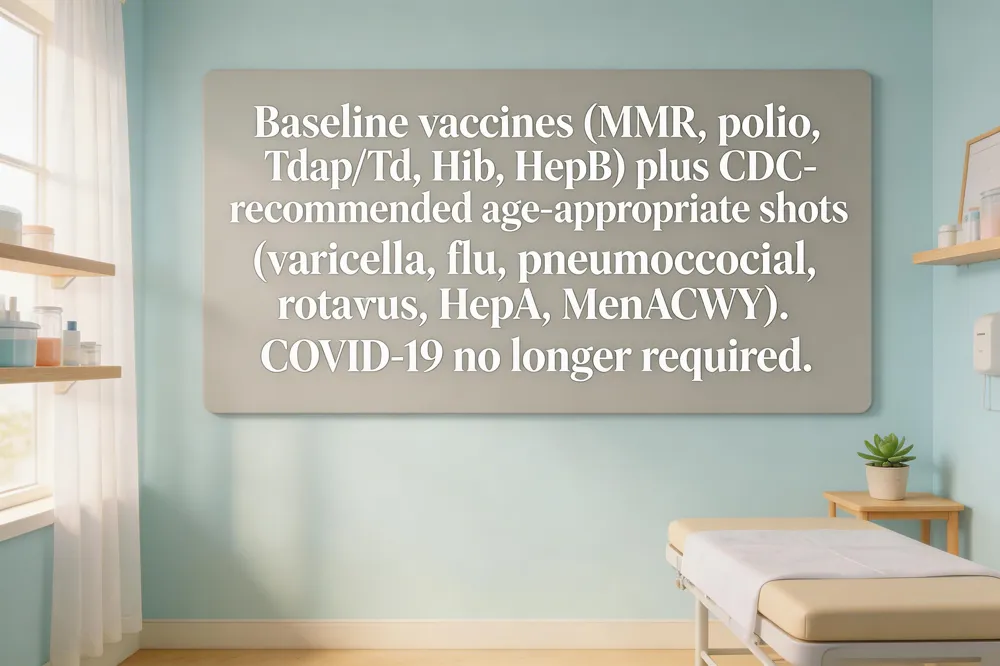 U.S. immigration law (INA §212(a)(1)(A)(ii)) sets the baseline vaccine set that every immigrant‑visa or adjustment‑of‑status applicant must have on record: measles, mumps, rubella (MMR), polio, tetanus‑diphtheria‑pertussis (Tdap or Td), Haemophilus influenzae type B (Hib) and hepatitis B. The CDC’s Advisory Committee on Immunization Practices (ACIP) then adds any age‑appropriate vaccines that meet the outbreak‑potential or disease‑elimination criteria. As of the 2025 Technical Instructions, these supplemental vaccines are varicella (chickenpox), seasonal influenza (required when the exam is between Oct 1 and Mar 31), pneumococ vaccine (PCV13/PCV23 for children and adults 65 +), rotavirus (infants 6 weeks‑14 weeks 6 days), hepatitis A (children 12 months‑18 years) and meningococcal ACWY for adolescents 11‑16 years or other risk groups. The polio requirement was updated on May 1 2024: anyone 2 months or older who is not up‑to‑date per ACIP must receive at least one dose of inactivated polio vaccine (IPV). COVID‑19 vaccination is no longer required for applications filed on or after Jan 20 2025.
What vaccines are required for a U.S. Green Card (immigration) applicant? Applicants must provide proof of the baseline series (MMR, polio, Tdap/Td, Hib, hepatitis B) plus any CDC‑recommended age‑appropriate vaccines: varicella, seasonal flu (when in season), pneumococ vaccine, rotavirus (children), hepatitis A (children) and meningococcal (adolescents). A civil surgeon reviews the applicant’s immunization record on Form I‑693, can administer missing doses on the spot, or can document a blanket waiver when a vaccine is not age‑appropriate, medically contraindicated, or unavailable (e.g., flu vaccine off‑season). The applicant bears all vaccine fees (https://www.uscis.gov/tools/designated-civil-surgeons/vaccination-requirements).
What is the complete list of vaccines required for U.S. immigration? The full set includes: measles, mumps, rubella (MMR); polio; tetanus‑diphtheria‑pertussis; Hib; hepatitis B; varicella; seasonal influenza; pneumococ vaccine (PCV13/PCV23); rotavirus (children); hepatitis A (children); and meningococcal ACWY (adolescents/at‑risk adults). COVID‑19 is optional. Each vaccine must be age‑appropriate per ACIP guidelines; if a vaccine is contraindicated, the civil surgeon notes this on Form I‑693, granting a [blanket waiver without a separate waiver petition. Applicants who refuse vaccines for sincere religious or moral reasons must file a waiver (Form I‑601 or I‑602) for each selected vaccine. Maintaining up‑to‑date immunizations not only satisfies legal requirements but also supports personal health, community protection, and a smoother path to permanent residency.
Age‑Specific Vaccine Schedule
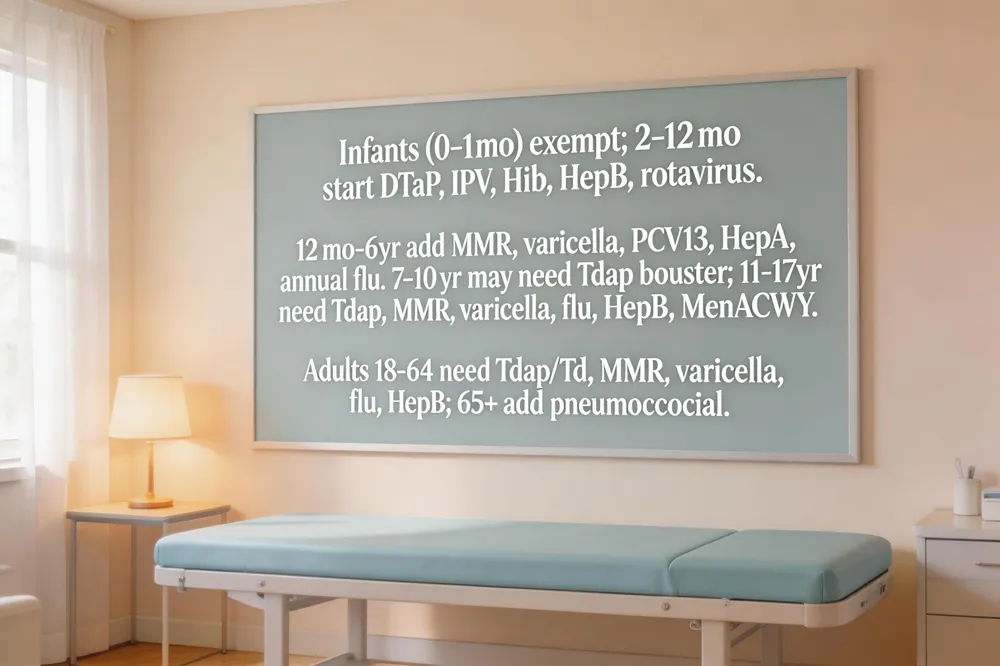 U.S. immigration law ties vaccination requirements to the applicant’s age, mirroring the CDC’s Advisory Committee on Immunization Practices (ACIP) schedule. Infants and newborns (0–1 month) are exempt – no immigration‑required vaccines are needed. Children 2–12 months must start the pediatric series: DTaP, inactivated poliovirus (IPV), Haemophilus influenzae type B (Hib), Hepatitis B, and rotavirus (administered between six and eight weeks). From 12 months through six years, the list expands to include MMR (measles‑mumps‑rubella), varicella, a second DTaP/IPV series if not completed, pneumococcal conjugate (PCV13), Hepatitis A (starting at 12 months), and the annual flu vaccine once the child is six months old. Adolescents 7‑10 years may need a Tdap booster depending on prior vaccinations, while 11‑17 year‑olds require Tdap (or Td), MMR, varicella, seasonal influenza, Hepatitis B, and, when indicated, the MenACWY meningococcal vaccine. Adults 18‑64 years must be up‑to‑date on Tdap/Td, MMR, varicella, seasonal influenza, and Hepatitis B; seniors 65 years and older also need pneumococcal vaccination (PCV13/PCV23). Special exemptions apply: newborns under one month need no vaccines; seniors may receive a pneumococcal polysaccharide (PPSV23) if they have specific risk factors, and the influenza vaccine requirement is waived outside the flu season (Oct 1‑Mar 31) or for medically contraindicated individuals.
What are the USCIS vaccination requirements by age? The age‑based schedule above reflects the CDC‑approved list, with each group required to have the appropriate doses documented on Form I‑693.
Is the polio vaccine required for a Green Card applicant? Yes. All Green Card applicants must have age‑appropriate IPV protection. Missing doses are administered by the civil surgeon, and a medical waiver is only possible for documented contraindications.
Is the flu vaccine required for immigration? The seasonal influenza vaccine is mandatory when the medical exam occurs during flu season (Oct 1‑Mar 31). Outside that window, or with a valid medical contraindication, the civil surgeon can mark it as “not medically appropriate,” granting a blanket waiver without a separate petition.
Where to Get Your Immigrant Vaccines in Brooklyn
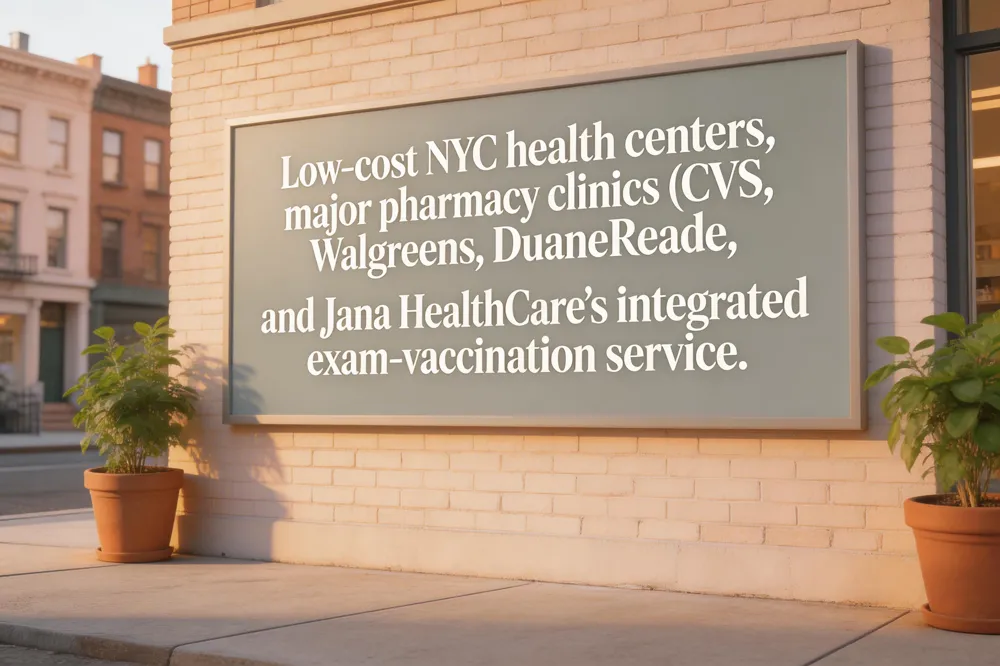 Brooklyn offers a variety of convenient, affordable options for the vaccinations required by USCIS. Below are the most reliable pathways to complete your immigration‑medical immunization schedule while keeping your overall health and wellness in mind.
1. Local health‑center clinics offering low‑cost immunizations
The New York City Department of Health and Mental Hygiene runs community health centers such as the Brooklyn Health Center (Flatbush Ave Extension) and the Fort Greene Health Center. These sites provide the full set of CDC‑recommended vaccines—MMR, Tdap, Varicella, Polio, Hepatitis A/B, Influenza, and more—at reduced fees based on income. They can also verify your vaccination record for the Form I‑693 and, in many cases, refer you to a designated civil surgeon for the official medical exam. Bring any prior immunization cards and a photo ID to streamline the visit.
2. Major pharmacy chains that stock the full immigration vaccine set
CVS, Walgreens, and Duane Reade all carry the CDC/USCIS‑required vaccines. CVS MinuteClinics and Walgreens Pharmacy Clinics can administer shots on‑site once you present a prescription or a recommendation from your civil surgeon. These pharmacies often accept insurance, offer sliding‑scale payments, and allow you to schedule appointments online. For example, CVS locations throughout Brooklyn routinely stock MMR, Tdap, Varicella, Influenza (seasonal), Hepatitis A/B, and Pneumococcal vaccines, making them a one‑stop shop for completing your series.
3. Jana HealthCare’s integrated exam and vaccination services
Jana HealthCare, located at 316 86th St, Brooklyn 11209, provides a seamless experience: a USC‑designated civil surgeon conducts the immigration medical exam, reviews your vaccination history, and administers any missing doses—all in a single visit. The clinic accepts walk‑ins and appointments (call (718) 238‑4287) and can issue the sealed Form I‑693 required for your green‑card or adjustment‑of‑status filing. Their staff also offers personalized health counseling, helping you balance vaccination needs with overall wellness goals such as nutrition, exercise, and stress reduction.
Quick tip: Use the USCIS “Find a Civil Surgeon” tool online to confirm a provider’s designation, and call ahead to verify vaccine availability. By leveraging community health centers, pharmacy clinics, and Jana HealthCare’s integrated services, you can meet immigration requirements efficiently while supporting your holistic health journey.
Bringing Records and the Role of Form I‑693
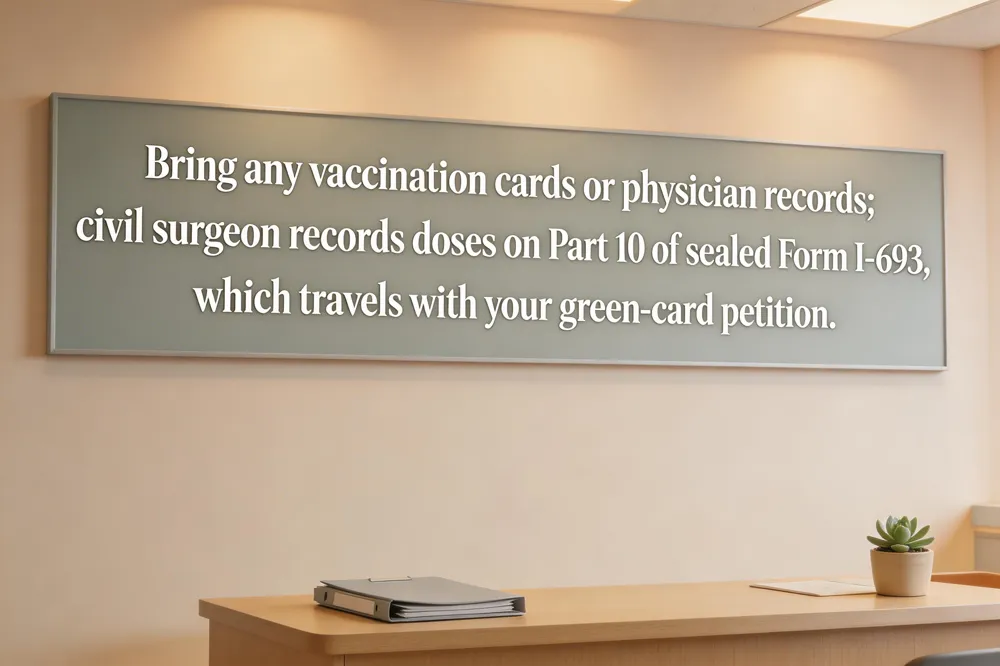 When you walk into a USCIS‑designated civil‑surgeon’s office for your immigration medical exam, the first thing the clinician will ask for is proof of the vaccines you’ve already received. You may bring any official documentation you have – a CDC vaccination card, a printed record from your primary‑care doctor, or an overseas panel‑physician report. These records are compared to the immigration vaccine schedule that includes measles, mumps, rubella, polio, tetanus‑diphtheria, pertussis, Haemophilus influenzae type B, hepatitis B, and any other ACIP‑recommended vaccines. If a required dose is missing, the civil surgeon can give the vaccine on the spot and note it on the form.
The civil surgeon records every vaccine on Part 10 of USCIS Form I‑693, Report of Medical Examination and Vaccination Record. This sealed form travels with your adjustment‑of‑status or visa petition and serves as the official proof that you have met the U.S. government’s immunization standards. USCIS reviewers then verify the entries against the CDC Technical Instructions; only when the chart shows compliance with all age‑appropriate vaccines is the vaccination‑related inadmissibility ground cleared.
A handy reference for both patients and providers is the CDC immigration vaccine chart. The chart aligns the immigration requirements with the ACIP age‑appropriate schedule and lists each vaccine—DTaP/Tdap, IPV, MMR, varicella, hepatitis A/B, Hib, meningococcal, pneumococcal, rotavirus, and seasonal influenza—alongside the age groups for which it is mandatory, optional, or not applicable. It also flags special situations, such as a blanket waiver for a vaccine that is contraindicated, not age‑appropriate, or unavailable during flu season.
In short, bring your vaccination records, let the civil surgeon verify and complete any gaps, and trust that Form I‑693 will capture everything you need for a smooth immigration journey.
Waivers, Exemptions, and Recent Policy Updates
 Medical versus religious/moral waivers
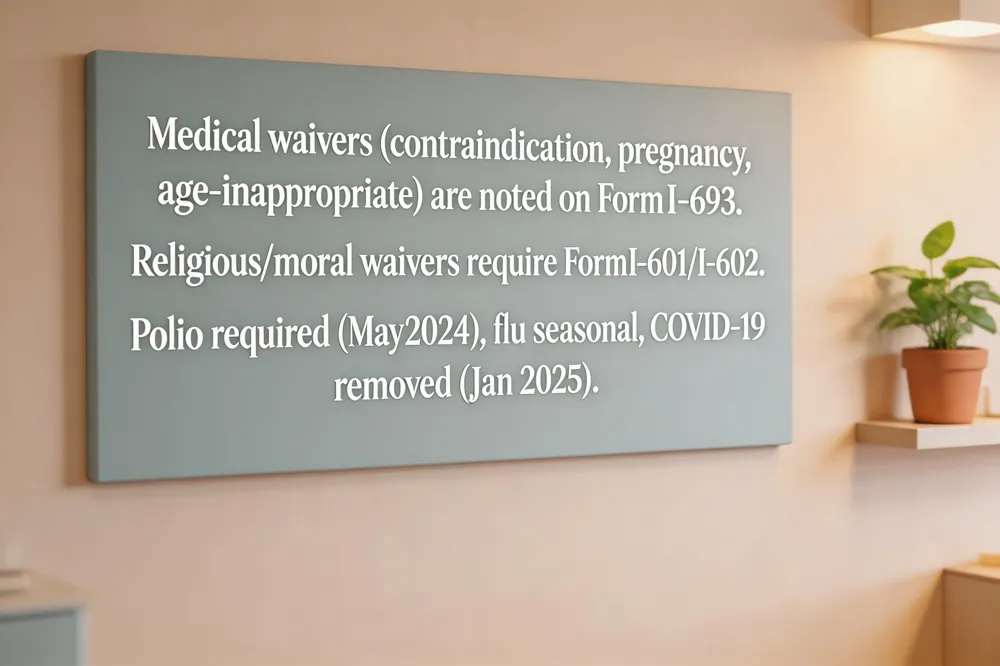
The immigration medical exam (Form I‑693) allows two pathways to a vaccine exemption. A medical waiver is granted by the civil surgeon when a vaccine is “not medically appropriate”—for example, a documented contraindication, pregnancy, severe allergy, or an age‑inappropriate dose. The surgeon records the reason on Part 10 of Form I‑693, and USCIS automatically treats the entry as a blanket waiver—no separate I‑601 or I‑602 filing is needed. A religious or moral waiver is a separate, applicant‑initiated request (Form I‑601) that requires a sincere, documented belief system opposing all vaccinations, not just a single one. This waiver is reviewed by USCIS and may involve an additional filing fee.
Polio, flu, and COVID‑19 specific guidance
Effective May 1 2024, anyone 2 months or older who is not up‑to‑date per the Advisory Committee on Immunization Practices (ACIP) must receive at least one dose of Inactivated Polio Vaccine (IPV). The seasonal influenza vaccine is required for examinations conducted between September 1 and March 31 when the vaccine is available; if the exam falls outside flu season, the civil surgeon marks a blanket waiver for flu. As of January 20 2025 (or January 22 2025 in many USCIS updates), the COVID‑19 vaccine is no longer a required entry on Form I‑693, and its absence will not trigger a Request for Evidence or denial.
How a waiver is documented on Form I‑693
When a vaccine is medically inappropriate, the civil surgeon selects the appropriate code (e.g., “Contraindicated,” “Not age‑appropriate,” or “Insufficient interval”) and provides a brief note on the vaccination table. This entry serves as a blanket waiver, automatically satisfying the requirement without a separate application. If the applicant later receives the vaccine, a new Form I‑693 with the updated record can be submitted to remove the waiver.
Key Q&A
- Can a vaccine be waived during the I‑485 medical exam? Yes. The civil surgeon can waive a required vaccine for medical reasons and records it on Form I‑693; USCIS then waives that specific requirement.
- Is the COVID‑19 vaccine required for the immigration medical exam? No. The COVID‑19 vaccination requirement was removed in early 2025; applicants are not required to submit proof of COVID‑19 immunization.
- How is a waiver documented? The surgeon marks the vaccine as “Not medically appropriate” (or similar) on Part 10 of Form I‑693, providing the clinical rationale. This constitutes an automatic blanket waiver.
Common Reasons Applicants Fail the Immigration Medical Exam
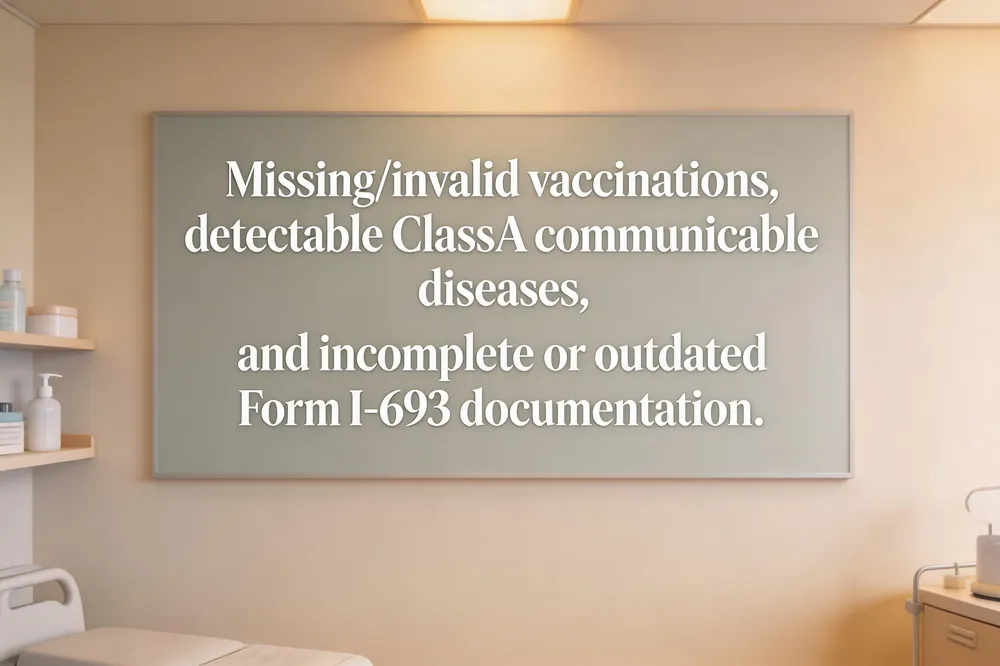 When an applicant applies for an immigrant visa or adjusts status, a USCIS‑designated civil surgeon (or overseas panel physician) conducts a medical exam and completes Form I‑693. Failure most exam can stem from three broad areas:
1. Missing or incomplete vaccinations – U.S. law (INA §212(a)(1)(A)(ii)) mandates proof of age‑appropriate vaccines recommended by the CDC’s Advisory Committee on Immunization Practices (ACIP). The baseline list includes MMR (measles, mumps, rubella), polio, tetanus‑diphtheria‑pertussis (Tdap), Haemophilus influenzae type B, hepatitis B, and seasonal influenza (when the exam occurs between October 1 and March 31). If an applicant lacks documentation for any required vaccine and the vaccine is medically appropriate, the civil surgeon must either administer it on the spot or note the deficiency. Unvaccinated or under‑immunized applicants become inadmissible unless a waiver is granted for a valid medical, religious, or moral reason.
2. Detectable communicable diseases – The exam screens for Class A diseases of public‑health significance. Active tuberculosis, infectious syphilis, gonorrhea, and Hansen’s disease (leprosy) are automatically disqualifying. Mental‑health disorders or substance‑abuse conditions that pose a threat to public safety can also lead to denial. Note that HIV is no longer a Class A disease and does not by itself cause inadmissibility.
3. Documentation and form‑validity issues – An outdated, incomplete, or falsified Form I‑693 (valid for two years from the civil surgeon’s signature) triggers a Request for Evidence or outright denial. Applicants must bring original vaccination records (or reliable translations) and any required serology reports. If a required vaccine is unavailable, the applicant should obtain it elsewhere and provide documentation to the civil surgeon for proper entry on Form I‑693.
Vaccination status check – Yes, vaccination status is systematically verified during the immigration medical exam. The civil surgeon compares the applicant’s records to the CDC‑USCIS list, administers missing age‑appropriate vaccines, and records all findings on Form I‑693, noting any waivers for contraindications or other exemptions.
Travelers versus immigrants – Routine travelers are not required to present vaccination proof for U.S. entry, aside from the current COVID‑19 testing or vaccination mandates. However, staying up‑to‑date with the standard U.S. vaccine schedule (MMR, Tdap, influenza, etc.) is advisable, especially if traveling from regions with disease outbreaks. Carrying a personal immunization record can prevent unexpected delays if officials request proof.
Finding a Civil Surgeon and Scheduling Your Exam
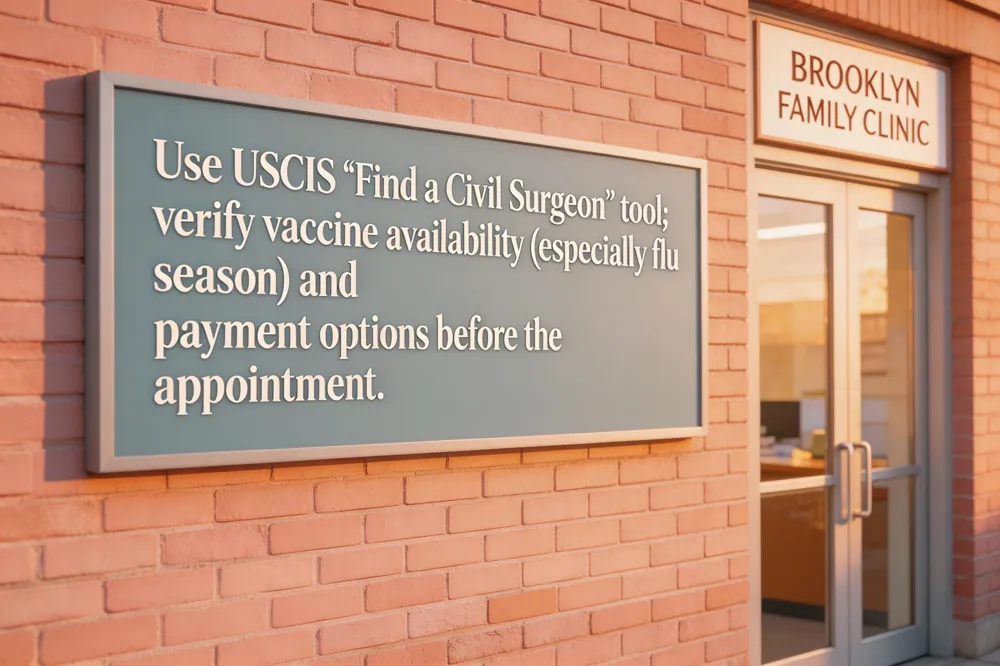 Navigating the immigration medical exam can feel like a runway walk— you need the right outfit (documents), a trusted stylist (civil surgeon, and confidence to shine. The first step is locating a USCIS‑designated civil surgeon in Brooklyn. Use the USCIS "Find a Civil Surgeon" tool on the agency’s website: enter your ZIP code and filter results for providers who offer the full suite of immigration‑required vaccines. Popular choices include the Brooklyn Health Center, NYC Health + Hospitals (Brooklyn Campus), and private practices such as Jana HealthCare. You can also call the NYC Department of Health at 212‑NEW‑2030 for an up‑to‑date list.
Appointment tips: Call ahead to verify that the office accepts your payment method (USCIS does not regulate vaccine fees[https://www.uscis.gov/tools/designated-civil-surgeons/vaccination-requirements]) and to confirm they have the seasonal flu vaccine if your exam falls between October 1 and March 31. Ask if they provide vaccine information statements (VIS) in your preferred language—this aligns with holistic, patient‑centered care. Arrive early, bring a valid photo ID, and your completed Form I‑693 (or a blank copy for the surgeon to fill out). If you lack vaccination records, bring any scrap of paperwork you have; the civil surgeon can order serologic titers to prove immunity and will administer any missing doses on the spot. Once the exam and vaccinations are complete, the surgeon seals Form I‑693 and returns it to you for submission to USCIS.
No vaccination record? Schedule an exam as soon as possible. The surgeon will review your history, perform necessary blood tests, and vaccinate you as required. The sealed Form I‑693 will accompany your green‑card application, ensuring you stay on track toward permanent residency while maintaining your health and aesthetic wellness.
Special Situations: Pregnancy, Immunocompromised, and Other Exceptions
 Medical contraindications and blanket waivers
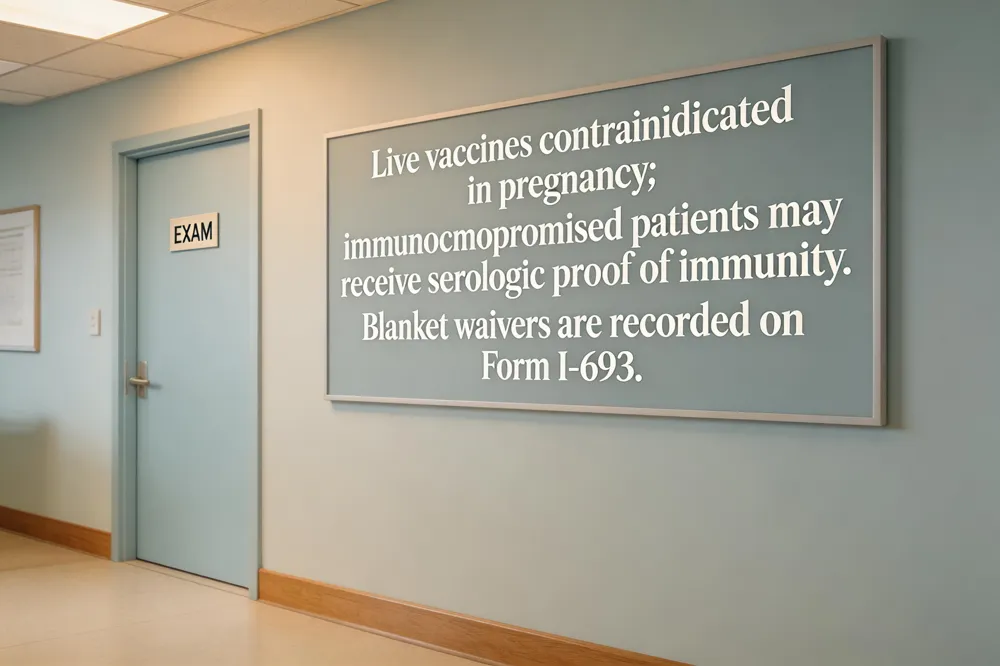
When a civil surgeon determines that a required vaccine is “not medically appropriate”—for example, because of a severe allergy, a documented contraindication, an age‑inappropriate dose, or an insufficient interval since a prior dose—the surgeon records a blanket waiver on Form I‑693. USCIS automatically accepts this waiver; the applicant does not need to file a separate I‑601 or I‑602 form or pay an additional fee. If the applicant later becomes eligible for the vaccine, an updated I‑693 can be submitted to replace the waiver.
Handling pregnancy‑related vaccine restrictions
Pregnancy is a recognized medical condition that can make live vaccines (e.g., MMR, varicella) contraindicated. The civil surgeon will note the pregnancy on Form I‑693 and mark the affected vaccines as “contraindicated.” This blanket waiver protects the applicant from inadmissibility while allowing the exam to proceed. Once the pregnancy ends, the applicant can receive the missed doses and submit a revised I‑693 if desired. Non‑live vaccines such as tetanus‑diphtheria‑pertussis (Tdap) and inactivated influenza are generally permissible during pregnancy and are administered when indicated.
Immunocompromised patients and alternative documentation
Applicants with immunodeficiency (e.g., HIV, chemotherapy) may be unable to receive certain vaccines safely. The civil surgeon documents the medical contraindication on Form I‑693, which serves as a blanket waiver. In many cases, serologic testing (antibody titers) can be used to demonstrate immunity to measles, mumps, rubella, hepatitis B, polio, or varicella when vaccination records are unavailable. The CDC’s Technical Instructions allow these laboratory results to satisfy the vaccination requirement without administering the vaccine.
Can a vaccine be waived during the I‑485 medical exam?
Yes. The civil surgeon can waive a required vaccine if it is medically inappropriate—such as a contraindication, an age‑inappropriate dose, or insufficient time to complete the series. The exemption is recorded on Form I‑693, and USCIS waives that specific vaccine without a separate filing. If the vaccine is later obtained, the waiver can be removed by submitting updated documentation.
What should I do if I have no vaccination record for my Green Card application?
Schedule an appointment with a USCIS‑designated civil surgeon (e.g., Jana HealthCare). Bring any partial records you have; the surgeon will review your history, order blood tests to verify immunity if needed, and administer any missing vaccines. The completed, sealed Form I‑693 will be submitted with your Form I‑485 (or DS‑260) to USCIS. If records remain unavailable at filing, answer “No” on the vaccination question and note that you are in the process of obtaining the exam and documentation.
Final Checklist for a Smooth Immigration Medical Exam
- Collect Your Vaccination Records – Gather every CDC‑approved vaccine card, pediatric record, or serology results for MMR, Polio, Tdap/Td, Varicella, Hepatitis B, Hib, and any other age‑appropriate shots. If a dose is missing, note when it was last given or obtain a titer for M measlee, Hepatitis B, or varicella.
- Book a Brooklyn Civil Surgeon – Schedule your exam with a USCIS‑designated surgeon such as Jana HealthCare in Brooklyn. Confirm they follow the current CDC Technical Instructions (including the May 1 2024 IPV rule and the Jan 20 2025 COVID‑19 removal).
- Bring Essentials – Valid government ID, payment for the exam and any needed vaccines, and any relevant medical history (allergies, pregnancy, immunocompromise).
- Know Age‑Appropriate Requirements & Waivers – Review the ACIP schedule for your age group. If a vaccine is contraindicated, the surgeon will mark a blanket waiver on Form I‑693. Religious or moral objections require a separate Form I‑601/I‑602.
- Retain the Sealed Form I‑693 – After the exam, the surgeon will seal the completed I‑693. Keep it safe and submit it unchanged with your green‑card filing to avoid delays.