Understanding Sensitive Skin and Laser Hair Removal
Sensitive skin reacts more intensely to heat, chemicals and UV light, so even a gentle laser pulse can cause redness, swelling or temporary discomfort. Modern laser platforms—such as diode, Nd:YAG or Soprano systems—allow clinicians to fine‑tune wavelength, pulse duration and energy while adding built‑in cooling (contact tips, cryogen spray, or cold air) that protect the epidermis. When the device is calibrated to a low‑energy, gradual‑heating protocol, the skin stays cool, pain is reduced, and the risk of irritation drops dramatically. Prioritizing comfort not only improves the patient experience but also supports optimal healing and the best long‑term hair‑reduction results.
Pre‑Treatment Preparation and Safe Settings
Pre‑Treatment Preparation & Safe Settings
| Recommendation | Details | Timing |
|---|---|---|
| Shaving vs. Waxing | Shave to leave a short stubble; avoids surface burns from wax/pluck. | 24‑48 h before appointment |
| Sun & Retinoid Avoidance | Discontinue tanning, self‑tanners, broad‑spectrum SPF, retinoids, AHAs, other exfoliants. | ≥2 weeks (sun), ≥1 week (retinoids) |
| Patch Testing & Laser Types | Small test spot to gauge reaction. Use Nd:YAG (1064 nm), diode (800‑810 nm), alexandrite with adjustable fluence & cooling (cryogen spray, contact, air). | Before first full session |
| Portland Clinics | Laser Skin Solutions, The Waldorf Center, Oregon Medical & Laser – FDA‑cleared Cynosure Elite YAG, Diode, Nd:YAG with cooling tips; 6‑week intervals. | Ongoing treatment |
| PCOS Facial Hair | Laser offers durable reduction; combine with hormonal management and consistent after‑care. | Throughout series |
| Effectiveness Tips | Keep skin hydrated, avoid heat 24‑48 h post‑treatment, use fragrance‑free moisturizers, daily SPF 30+. | Post‑session |
| After‑care for Sensitive Skin | Cool compresses or aloe gel, loose breathable clothing, avoid hot showers/saunas/vigorous exercise ≥2 days; gentle moisturization & sun protection. | 24‑48 h after each session |
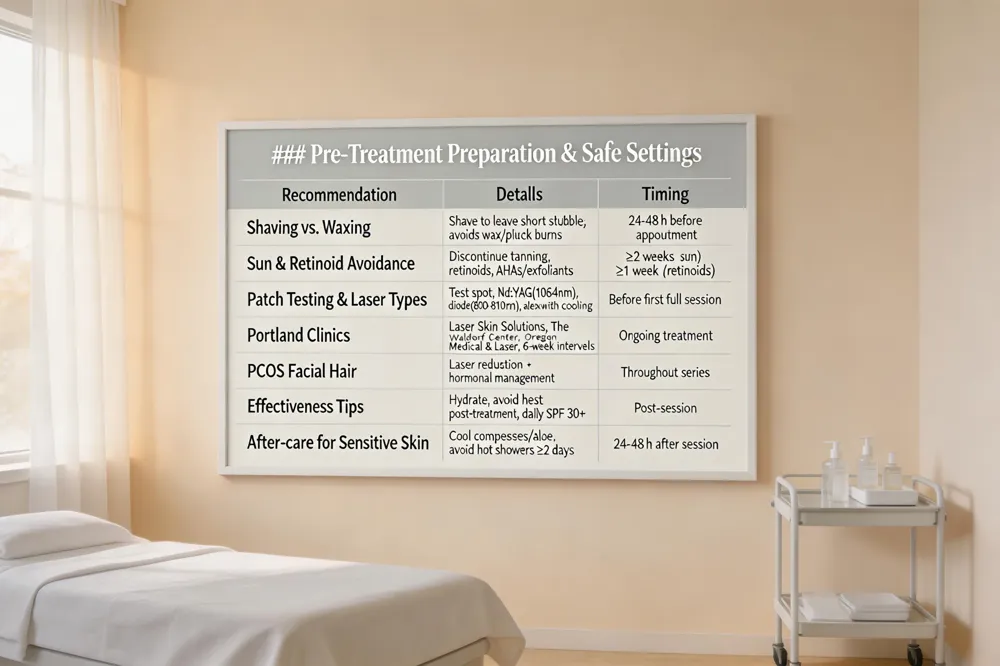 Preparing skin for laser hair removal is a balance of gentle care and precise technology.
Shaving vs. Waxing – For sensitive skin, shave the area 24‑48 hours before your appointment; this leaves a short stubble for the laser to target the follicle while avoiding the surface burns that can occur with waxing or plucking.
Sun and Retinoid Avoidance – Discontinue tanning, self‑tanners, and broad‑spectrum sunscreen for at least two weeks before treatment. Stop using retinoids, alpha‑hydroxy acids, and other exfoliating products a week prior, as they thin the epidermis and increase the risk of irritation.
Patch Testing & Recommended Laser Types – A small test spot confirms how your skin will react. Modern platforms such as Nd:YAG (1064 nm), diode (800‑810 nm), and alexandrite lasers offer adjustable fluence and built‑in cooling (cryogen spray, contact cooling, or air‑cooling) that are ideal for rosacea‑prone or eczema‑sensitive skin.
Laser hair removal in Portland – Clinics like Laser Skin Solutions, The Waldorf Center, and Oregon Medical & Laser use FDA‑cleared Cynosure Elite YAG, Diode, or Nd:YAG systems with cooling tips, scheduling sessions six weeks apart for optimal growth‑phase targeting.
Best hair removal for PCOS facial hair – Laser hair removal provides the most durable reduction for PCOS‑related hirsutism, especially when combined with hormonal management and consistent after‑care.
How to make laser hair removal more effective – Keep the skin well‑hydrated, avoid heat for 24‑48 hours post‑treatment, apply fragrance‑free moisturizers, and protect with SPF 30+ sunscreen daily.
Best laser hair removal aftercare for sensitive skin – Use cool compresses or aloe gel, wear loose breathable clothing, and refrain from hot showers, saunas, or vigorous exercise for at least two days while maintaining gentle moisturization and sun protection.
Pain Management and Medication Guidance
Pain Management & Medication Guidance
| Method | Details | Timing / Notes |
|---|---|---|
| Acetaminophen | 30‑60 mg dose dulls mild‑moderate sting; does not thin blood or increase bruising. | 30‑60 min before appointment |
| Topical Numbing Creams | Lidocaine 4‑5 % or BLT (benzocaine, lidocaine, tetracaine) applied 30‑45 min prior, covered with plastic wrap for enhanced absorption. | 30‑45 min before session |
| Caffeine & Hydration | Avoid coffee, tea, energy drinks (≤24 h before) as caffeine may heighten pain; stay well‑hydrated to aid skin temperature regulation. | 24 h before & during treatment |
| Post‑Procedure Comfort | Cool compresses/aloe gel, loose clothing, fragrance‑free moisturizer, avoid hot showers/saunas/vigorous exercise 24‑48 h, SPF 30+ daily. | 0‑48 h after treatment |
| Quick Q&A | • Can I take painkillers? – Yes, acetaminophen is safe; avoid NSAIDs unless directed. | |
| • Tylenol before laser? – Standard dose 30‑60 min prior helps. | ||
| • Numbing cream? – Apply thick layer 30‑45 min before, cover, remove excess before laser. | ||
| • Reddit tips to reduce pain? – Numbing cream, acetaminophen, hydration, skip caffeine, schedule after menstrual period, use cooling devices, deep‑breathing. | — |
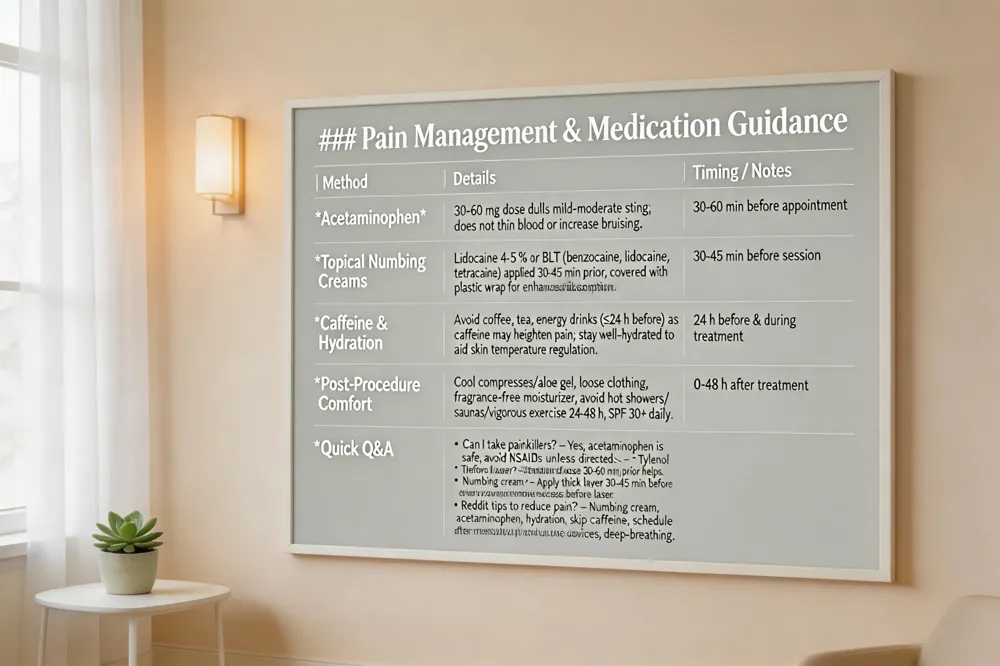 Managing discomfort during laser hair removal is a blend of smart pre‑treatment choices and gentle after‑care.
Pain relievers before treatment – A single dose of acetaminophen (Tylenol) taken 30–60 minutes before your appointment can safely dull the mild to moderate sting most patients feel. Unlike NSAIDs (ibuprofen, naproxen, aspirin), acetaminophen does not thin the blood or increase bruising, making it the preferred over‑the‑counter option. If you are on anticoagulants, photosensitizing drugs, or isotretinoin, discuss any pain‑relief plan with your provider first.
Topical numbing creams – Lidocaine‑based creams (4‑5 %) or prescription blends such as BLT (benzocaine, lidocaine, tetracaine) are applied 30–45 minutes before the session, often covered with plastic wrap to enhance absorption. They reduce the snapping sensation and are especially helpful for ultra‑sensitive zones like the bikini line or underarms. Patients should disclose liver conditions, allergies, or medication interactions, as the cream can mask heat buildup and slightly affect laser efficacy.
Caffeine and hydration – Caffeine can heighten pain perception, so avoid coffee, tea, or energy drinks for at least 24 hours before treatment. Staying well‑hydrated, on the other hand, supports skin temperature regulation and can make the laser pulse feel less intense.
Post‑procedure comfort – After the session, apply cool compresses or aloe‑based gels, wear loose breathable clothing, and keep the skin moisturized with a fragrance‑free lotion. Avoid hot showers, saunas, and vigorous exercise for 24–48 hours, and protect the area with broad‑spectrum SPF 30+ daily to prevent post‑laser hyperpigmentation.
Quick answers to common questions
- Can I take painkillers before laser hair removal? Yes—acetaminophen is safe; avoid NSAIDs unless directed by your clinician.
- Can I take Tylenol before laser hair removal? Absolutely; a standard dose 30–60 minutes prior helps ease discomfort without increasing bruising risk.
- Numbing cream for laser hair removal – Apply a thick layer of lidocaine or BLT cream 30–45 minutes before treatment, cover, then remove excess before the laser begins.
- How to make laser hair removal hurt less (Reddit tips) – Use numbing cream, take acetaminophen, stay hydrated, skip caffeine, schedule after your menstrual period, request cooling devices, and practice deep‑breathing or distraction techniques during the session.
After‑Care Strategies for Sensitive Skin
After‑Care Strategies for Sensitive Skin
| Step | Action | Details |
|---|---|---|
| Immediate Soothing | Apply cool compress or fragrance‑free aloe‑vera gel (10‑15 min). Repeat 2‑3×/day for first 24‑48 h. | Reduces redness & swelling |
| Moisturizing | Use hypoallergenic, fragrance‑free moisturizer with ceramides or hyaluronic acid. Avoid alcohol, retinoids, acids for ≥1 week. | Restores barrier, keeps skin supple |
| Sun Protection | Broad‑spectrum SPF 30+ every morning; reapply every 2 h outdoors; limit direct sun ≥7 days. | Prevents hyperpigmentation |
| Activity Restrictions | Skip hot showers, saunas, steam rooms, vigorous exercise, tight clothing. Wear loose, breathable fabrics. | 24‑48 h post‑treatment |
| Home After‑care | Gentle cleanse with lukewarm water & mild sulfate‑free cleanser; keep area dry & protected. | Daily |
| Facial After‑care | Same cooling & moisturizing; avoid makeup & exfoliating/acidic products for 1 week. | 0‑7 days |
| Underarm After‑care | After cleaning, apply aloe or fragrance‑free lotion; avoid deodorants with alcohol/aluminum for 24 h; wear loose cotton tops. | 0‑24 h |
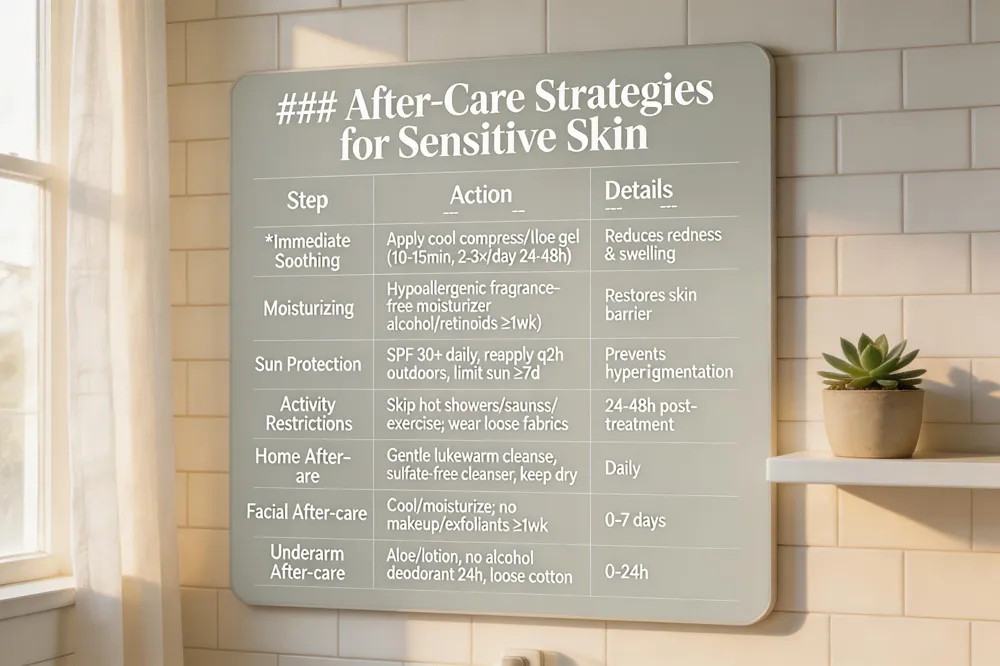 Laser hair removal on delicate skin needs a gentle post‑care routine to calm inflammation, preserve hydration, and prevent UV‑induced pigment changes.
Immediate soothing – Within minutes of treatment apply a cool compress or a thin layer of fragrance‑free aloe‑vera gel for 10‑15 minutes. Repeat 2‑3 times daily for the first 24‑48 hours to reduce redness and swelling.
Moisturizing – Follow cooling with a hypoallergenic, fragrance‑free moisturizer containing ceramides or hyaluronic acid. Apply liberally to restore the skin barrier and keep the area supple; avoid products with alcohol, retinoids, or acids for at least one week.
Sun protection – The treated skin is photosensitive for weeks. Use a broad‑spectrum SPF 30+ sunscreen every morning, reapply every two hours outdoors, and limit direct sun exposure for at least seven days after each session.
Activity restrictions – Skip hot showers, saunas, steam rooms, vigorous exercise, and tight clothing for 24‑48 hours. Wear loose, breathable fabrics to reduce friction.
Home aftercare – Cool compresses and moisturizers remain the core steps; cleanse gently with lukewarm water and a mild sulfate‑free cleanser, and keep the area dry and protected.](https://germaindermatology.com/skincare-routine-after-laser-hair-removal-dos-donts/)
Facial aftercare – Same cooling and moisturizing protocol, plus avoid makeup and any exfoliating or acidic products for a week.
Underarm aftercare – After cleaning, apply aloe‑vera gel or fragrance‑free lotion, skip deodorants containing alcohol or aluminum for 24 hours, and wear loose cotton tops.
These steps, performed after each of the typical 6‑8 sessions spaced several weeks apart, help sensitive skin heal quickly and achieve optimal, long‑lasting hair‑reduction results.
Scheduling, Pricing, and Regional Options
Scheduling, Pricing & Regional Options
| Item | Cost / Details | Notes |
|---|---|---|
| Treatment Interval | 4‑6 weeks between sessions (allows active growth phase targeting). | Standard for sensitive skin |
| Typical Sessions | 6‑8 sessions needed; occasional maintenance later. | Long‑term plan |
| Portland Session Prices | • Small facial (upper lip): $150‑$300 | |
| • Full legs: $400‑$800 | ||
| • Underarms: $65‑$149 | Varies by area | |
| Package Deals | 8‑treatment set for single area ≈ $900 (≈10 % discount). Full‑body “Ladies Choice” ≈ $2,870. Unlimited‑treatment plan > $9,000. Promo codes can shave up to 25 % off. | Savings on bulk purchases |
| Nearby Clinics | Thrive Aesthetic & Wellness (Lumenis LightSheer® DUET), Fresh Faces Rx (DiolazeXL), Portland Med Spa (Diode). | Offer cooling‑enhanced lasers, board‑certified staff, financing |
| Electrolysis Alternatives | Portland Electrolysis & Skin Care, Electrolysis Clinic of Portland, Queen of Swords Electrolysis – FDA‑cleared Apilus xCell devices. | Permanent all‑tone solution |
| Outside Portland | Jana HealthCare (Brooklyn, NY) – FDA‑cleared lasers, on‑site cooling, personalized plans. | For patients elsewhere |
 Laser hair removal works best when treatments are spaced 4‑6 weeks apart, allowing the laser to hit follicles in the active growth phase. Most people with sensitive skin need six‑to‑eight sessions, with occasional maintenance visits later on.
Cost in Portland – In Portland, a single session for small facial areas (e.g., upper lip) typically runs $150‑$300, while larger zones like full legs range $400‑$800 per visit. Underarms are $65‑$149 per session, and a set of eight treatments for a single area (abdomen, chest, or underarms) usually totals about $900, representing a 10 % discount versus per‑session pricing. Full‑body “Ladies Choice” packages of eight treatments can cost around $2,870, and unlimited‑treatment plans over eight months may exceed $9,000. Promo codes or multi‑session packages can shave up to 25 % off the bill.
Nearby clinics – In the Portland metro area, reputable providers include Thrive Aesthetic & Wellness (Lumenis LightSheer® DUET), Fresh Faces Rx (DiolazeXL), and Portland Med Spa (Diode platforms). These clinics offer modern cooling‑enhanced lasers, board‑certified staff, and flexible financing.
Electrolysis alternatives – For those who prefer a permanent, all‑tone solution, electrolysis is available at Portland Electrolysis & Skin Care, Electrolysis Clinic of Portland, and Queen of Swords Electrolysis. Certified technicians use FDA‑cleared devices such as the Apilus xCell, delivering long‑lasting results without the need for multiple laser sessions.
Laser hair removal near you – If you reside outside Portland, look for partner clinics that meet the same high standards, such as Jana HealthCare in Brooklyn, NY, which offers FDA‑cleared lasers, on‑site cooling, and personalized treatment plans.
Scheduling your first consultation early ensures you can lock in optimal intervals, budget wisely, and enjoy smooth, irritation‑free skin.
Special Situations and Frequently Asked Concerns
Special Situations & Frequently Asked Concerns
| Situation | Considerations | Recommendations |
|---|---|---|
| Hormonal Conditions (e.g., PCOS) | Spirnololactone does not affect laser targeting but may increase redness/pigment changes. | Continue medication; inform provider for monitoring |
| Skin Conditions | Auto‑immune thyroid disease (Hashimoto’s) → heightened sensitivity; active HPV lesions not a contraindication, but genital warts require separate discussion. | Perform patch test before first full session; disclose conditions |
| Pregnancy & Medication | Theoretical fetal risk; hormonal fluctuations may increase discomfort. | Most clinicians postpone until post‑delivery |
| Brazilian Prep | Shave 24‑48 h before; avoid waxing/tweezing/bleaching 4‑6 weeks; no sun/tanning beds ≥2 weeks; SPF 30+ daily; avoid self‑tanners, strong exfoliants, retinoids 3 days prior. | Arrive with clean, lotion‑free skin; wear loose clothing |
| Timing of Shave | Shave 2 h before is permissible, but 12‑24 h window is ideal to reduce irritation. Use fresh razor; no lotions/deodorants after shaving. | Maintain hair‑free area without wax/plucking for weeks leading up |
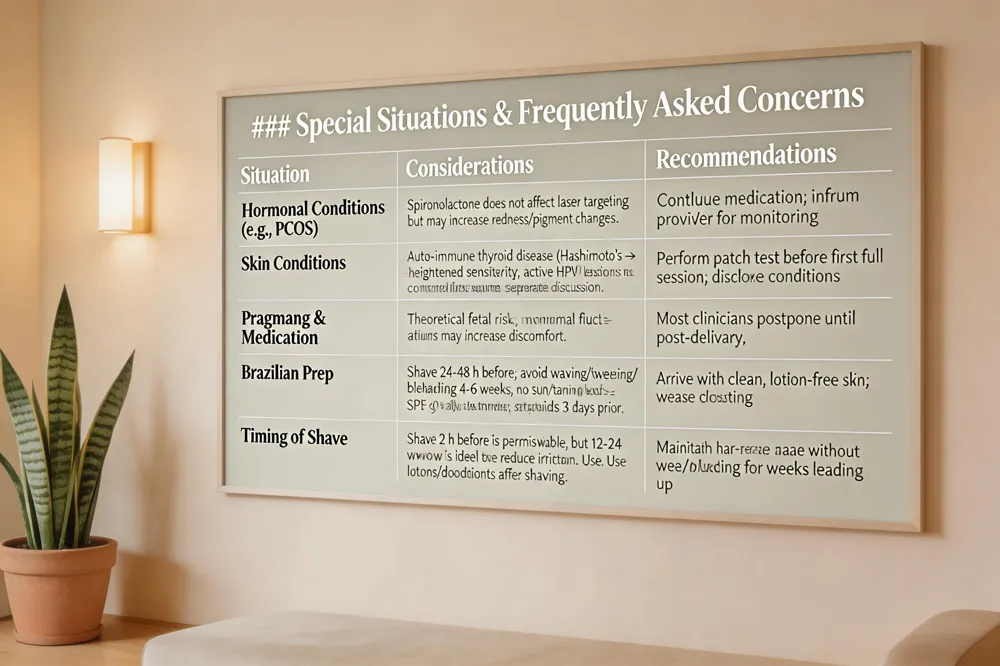 When you have unique health circumstances, laser hair removal can still be safe and effective—but a few extra steps are wise.
Hormonal conditions – Medications such as spironolactone do not interfere with the laser’s ability to target hair follicles. You can continue the drug, but let your provider know so they can watch for any unusual redness or pigment changes, as hormonal therapy may affect skin healing.
Skin conditions – Auto‑immune thyroid disease (e.g., Hashimoto’s) isn’t a contraindication, yet thyroid medication can heighten skin sensitivity. A patch test before the first full session helps gauge tolerance. Active HPV lesions do not affect laser hair removal, but if you have genital warts, discuss separate treatment options with your clinician.
Pregnancy and medication – While most lasers are not harmful to a developing fetus, many clinicians postpone treatment until after delivery to avoid any theoretical risk and to accommodate hormonal fluctuations that can increase discomfort.
Brazilian prep – Shave the bikini area 24–48 hours before your appointment; avoid waxing, tweezing, plucking, or bleaching for 4–6 weeks; stay out of sun and tanning beds for at least two weeks, use SPF 30+ daily, and skip self‑tanners, strong exfoliants, and retinoids for three days before treatment. Arrive with clean, lotion‑free skin and wear loose, breathable clothing.
Timing of shave – Shaving 2 hours before a session is permissible, but a 12‑24‑hour window is ideal to reduce skin irritation. Use a fresh razor, avoid lotions or deodorants after shaving, and keep the area free of wax or plucking in the weeks leading up to treatment.
Putting Comfort First for Sensitive Skin
Putting comfort first for sensitive skin begins with a personalized care plan. Before the first pulse, a test‑spot assesses how your skin reacts, allowing the technician to fine‑tune laser energy, pulse duration and cooling settings to your unique tolerance. Throughout the series, consistent follow‑up visits let the provider monitor healing, adjust parameters and address any lingering redness or swelling. This attentive approach reduces irritation, builds confidence, and ensures each session stays painless. Over time, the cumulative effect of gentle, well‑spaced treatments yields lasting hair reduction, smoother texture and fewer ingrown hairs—delivering both aesthetic satisfaction and long‑term skin health and vitality.