Why Post‑Laser Ingredient Choice Matters
Laser treatments disrupt the skin’s outer barrier, increasing transepidermal water loss and making the tissue more vulnerable to irritation, infection and UV damage. Restoring this barrier quickly is essential, and the ingredients you choose play a decisive role. Hydrating agents such as hyaluronic acid, glycerin, ceramides and panthenol draw moisture into the epidermis and seal it, reducing redness and speeding re‑epithelialization. Protective sunscreens with zinc oxide or titanium dioxide shield the healing skin from harmful rays without heating it, preventing post‑inflammatory hyperpigmentation. Avoiding retinoids, glycolic, salicylic acids, vitamin C serums and any fragrance or alcohol‑based products for the first week prevents stinging and delayed healing. Consistently using gentle, fragrance‑free moisturizers and a mineral sunscreen supports a smoother recovery and preserves the aesthetic benefits of the laser. By honoring these ingredient rules, patients can minimize complications, maintain comfort, and enjoy radiant results.
What to Avoid Immediately After Laser Treatment
• Skip sun exposure and tanning for 1‑2 weeks. • Avoid fragrance‑laden toners, alcohol‑based astringents, retinoids, AHAs/BHAs, and chemical exfoliants for 7‑10 days. • No saunas, steam rooms, hot showers, or intense exercise for the first 24‑48 hours. • Do not pick, scratch, scrub, or apply makeup for 24‑48 hours.
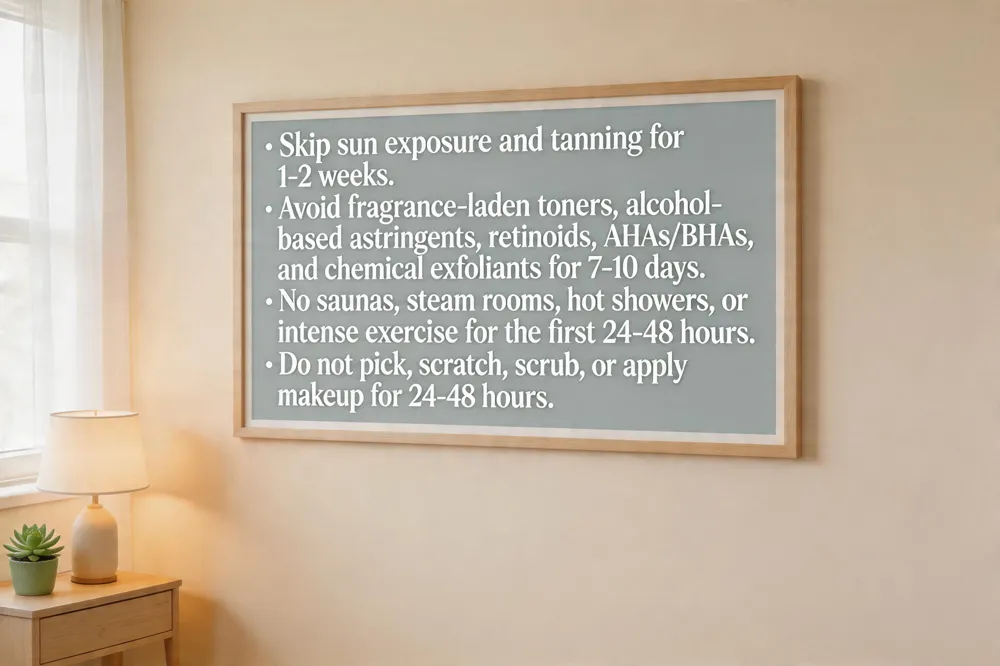 After a laser session the skin is ultra‑sensitive and needs a gentle, protective environment.
Sun exposure and tanning – Skip direct sunlight and tanning for at least 1–2 weeks; UV rays can trigger severe redness, inflammation, and post‑inflammatory hyperpigmentation.
Harsh or scented skincare products – Do not use fragrance‑laden toners, alcohol‑based astringents, retinoids, glycolic or salicylic acids, or any chemical exfoliants for 7–10 days. Opt for fragrance‑free, hydrating moisturizers (e.g., hyaluronic acid, ceramides, panthenol).
Heat, sweat, and intense exercise – Avoid saunas, steam rooms, hot showers, and intense workouts for the first 24–48 hours; heat and excess sweat amplify inflammation and delay healing.
Physical manipulation of the treated area – Do not pick, scratch, scrub, or apply makeup for 24–48 hours . Let the skin breathe and heal naturally.
Answer to the key question:
• Avoid sun exposure, harsh or scented products, heat/sweat, and any physical disturbance of the treated skin during the immediate post‑laser period to ensure optimal recovery and lasting results.
Optimizing Your After‑Care Routine
• Gentle cleanser (fragrance‑free, non‑foaming) 2‑5 × daily for 48 hours. • Apply occlusive moisturizer (Aquaphor, petroleum jelly, ceramide‑rich cream) immediately after cleansing. • From 24 hours onward, use mineral SPF 30+ sunscreen (zinc oxide or titanium dioxide) and reapply every 2 hours outdoors. • Keep cool; avoid heat, sweat, and vigorous exercise for 24‑48 hours. • Follow physician‑specific instructions for re‑introducing actives (usually after 7‑14 days).
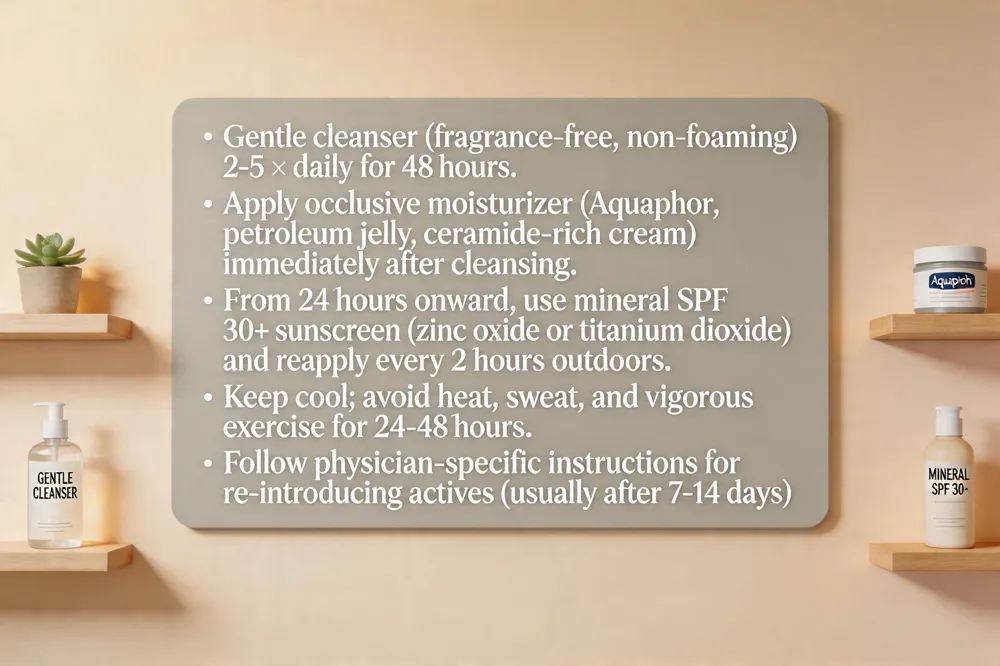 A successful post‑laser regimen balances gentle cleansing, barrier repair, sun protection, and activity moderation.
Gentle cleansing schedule – For the first 48 hours use a fragrance‑free, non‑foaming cleanser or a mild saline/1 % diluted apple‑cider‑vinegar rinse 2‑5 times daily; pat dry with a clean towel.
Moisturizing with occlusive agents – Apply a fragrance‑free, hydrating ointment such as Aquaphor, petroleum jelly, or a ceramide‑rich cream (e.g., Vanicream) immediately after cleansing to lock in moisture and reduce transepidermal water loss.
Broad‑spectrum sunscreen use – After the initial 24 hours, protect the healing skin daily with a mineral SPF 30+ sunscreen (zinc oxide or titanium dioxide). Reapply every two hours outdoors and wear a wide‑brimmed hat.
Heat and activity restrictions – Avoid saunas, steam rooms, hot showers and vigorous exercise that induces heavy sweating for the first 24‑48 hours; cool compresses can soothe swelling.
Physician‑specific instructions – Follow any personalized guidance from your treating aesthetic professional, especially regarding when to re‑introduce actives such as retinol, vitamin C, or exfoliating acids (typically 7‑14 days after clearance). Consult a licensed aesthetic professional for a personalized post‑laser skincare regimen.
Answers to common questions
- Best after‑care routine: Clean gently, apply an occlusive moisturizer, use mineral SPF 30+ sunscreen, stay cool, and heed your doctor’s timeline.
- Healing timeline: Superficial non‑ablative lasers heal in 3‑7 days; fractionated CO₂ or Er:YAG resurfacing requires 7‑14 days; deeper ablative resurfacing may need 10‑21 days before visible redness fades, with collagen remodeling continuing for months.
Speeding Up Healing and Supporting Recovery
• Hydrate internally (8‑10 glasses water) and topically (hyaluronic acid, glycerin, ceramides) 2‑3 × daily. • Apply cool compresses 5‑10 minutes several times a day; elevate head while sleeping. • Use a humidifier in dry environments. • Eat protein‑rich foods and vitamins A, C, E, and zinc to aid collagen synthesis. • Avoid mechanical irritation (picking, scrubbing, abrasive tools) for 1‑2 weeks.
 Healing after laser skin resurfacing can be accelerated by focusing on five key areas:
Hydration (internal & topical) – Drink 8‑10 glasses of water daily and apply a fragrance‑free, hydrating moisturizer (containing hyaluronic acid, glycerin, or ceramides) 2‑3 times a day to restore the compromised barrier.
Cold compresses & elevation – Place a clean, cool (not icy) cold compress on the face for 5‑10 minutes, several times a day, to reduce erythema and swelling. Keep your head elevated with an extra pillow while sleeping for the first 2‑3 days to minimize facial edema.
Humidifier use – Run a humidifier in dry indoor environments (especially winter) to prevent excess transepidermal water loss and keep the skin supple.
Nutrient‑rich diet – Prioritize protein, vitamins A, C, E, and zinc (found in lean meats, leafy greens, citrus, nuts, and seeds) to support collagen synthesis and tissue repair.
Avoiding mechanical irritation – Do not pick, scratch, rub, or apply scrubs, peels, or abrasive tools for at least 1‑2 weeks. Gentle cleansing and non‑fragrant moisturizers are sufficient during this period.
Special Considerations for Specific Laser Types
• Laser hair removal: wait 48‑72 hours before applying fragrance‑free hyaluronic‑acid serum; keep area moisturized and protected with SPF 30+. • CO₂ resurfacing: start with occlusive barrier (Aquaphor, ceramide cream) immediately; introduce hyaluronic acid, niacinamide, panthenol after day 2‑3. • Common side effects: redness, swelling, sunburn‑like sensation (1‑5 days), crusting/flaking (next week), temporary pigment changes.
 Different laser procedures demand tailored after‑care.
Laser hair removal & hyaluronic acid – Hyaluronic‑acid serums can soothe and hydrate, but wait 48‑72 hours after treatment before applying. Choose a fragrance‑free, alcohol‑free, non‑comedogenic formula and use a thin layer. Keep the area cool, moisturized with a gentle fragrance‑free cream, and protect it with SPF 30+ when outdoors.
CO2 laser moisturizers – Immediately after a CO2 resurfacing, an occlusive barrier such as Aquaphor or a ceramide‑rich, fragrance‑free moisturizer restores the disrupted stratum corneum. Hyaluronic acid, niacinamide, and panthenol are safe once the skin has begun to re‑epithelialize (typically after day 2‑3).
Common side effects after facial laser – Expect redness, mild swelling, and a sunburn‑like sensation for 1‑5 days, followed by crusting or flaking over the next week. Temporary pigment shifts (hyper‑ or hypo‑pigmentation) and occasional tingling or itching are normal; rare complications include blistering or infection if proper hygiene is not maintained.
Q&A
- Can I use hyaluronic acid after laser hair removal? Yes—apply a thin, fragrance‑free layer after 48‑72 hours, avoiding other actives.
- What are the common side effects after laser treatment on the face? Redness, swelling, tingling, crusting/flaking, and temporary pigment changes are typical, usually resolving within 2‑3 weeks.
Choosing the Right Moisturizer and Sunscreen
• Immediately post‑CO₂: fragrance‑free occlusive ointments (Aquaphor, Vaseline) or ceramide‑rich creams. • Add lightweight hyaluronic‑acid gel beneath occlusive layer for extra hydration. • Once healed (5‑7 days), introduce peptide‑rich serums to boost collagen. • Daily mineral sunscreen (zinc oxide or titanium dioxide, SPF 30+) applied after moisturizer.
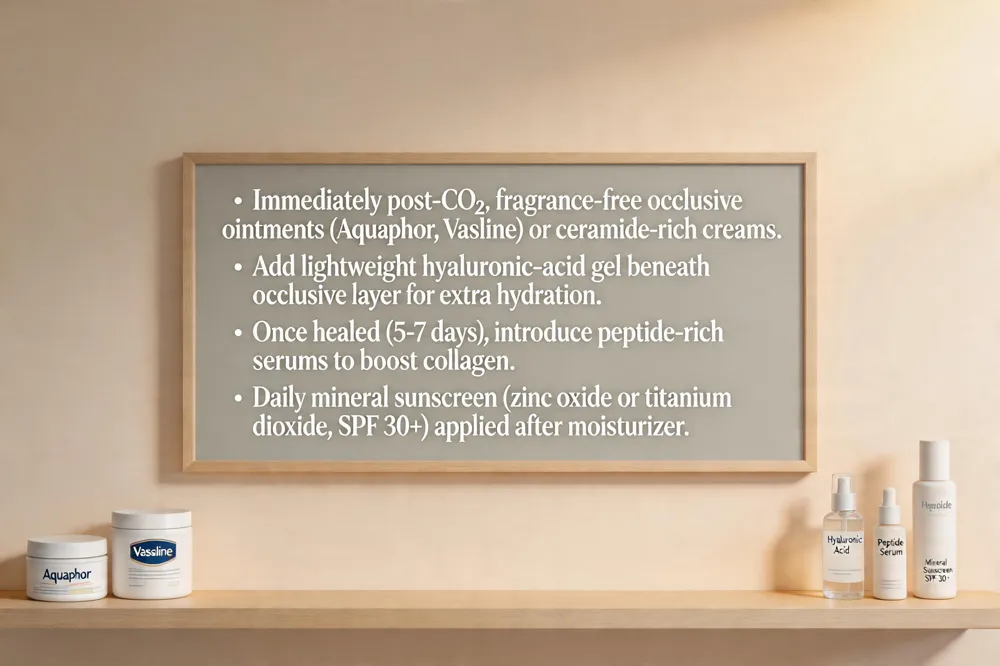 After a CO2 laser resurfacing the skin barrier is temporarily broken, so an occlusive, fragrance‑free moisturizer is the first line of defense. Petroleum‑based ointments such as Aquaphor or plain Vaseline create a protective seal that prevents transepidermal water loss and calms irritation. For longer‑term repair, choose ceramide‑rich creams (e.g., CeraVe Healing Ointment) that replenish lipid layers and support barrier restoration. A lightweight hyaluronic‑acid gel can be added for extra hydration, but it should be applied beneath the occlusive layer to lock in moisture and avoid rapid evaporation.
Which moisturizers are recommended after CO2 laser treatment?
Fragrance‑free occlusive ointments (Aquaphor, Vaseline) and ceramide‑boosting creams are ideal; they protect, hydrate, and accelerate re‑epithelialization.
Do peptides help after laser resurfacing?
Yes. Once the skin has healed enough (typically 5‑7 days), peptide‑rich serums (copper‑peptide, Matrixyl, growth‑factor peptides) can be introduced to stimulate collagen, reduce inflammation, and improve texture. Avoid retinoids, acids, alcohol, and fragrance until fully healed.
Mineral sunscreen preferences
Use a broad‑spectrum mineral sunscreen with zinc oxide or titanium dioxide (SPF 30 ) daily, applied under the moisturizer or as the final step in the morning routine. Mineral filters are gentle, sit on the skin surface, and do not generate heat, making them safest for post‑laser protection.
Makeup and Cosmetic Re‑Introduction
• Re‑introduce makeup after full re‑epithelialization (typically 7‑10 days) or per clinician guidance. • Choose mineral‑based, non‑comedogenic, fragrance‑free foundation or tinted moisturizer. • Use sanitized brushes/sponges; keep makeup light and moisturized with a mist spray. • Discontinue any product that stings, irritates, or causes breakout.
 Re‑introducing makeup after a laser procedure should be done only after the skin has fully re‑epithelialized—typically 7‑10 days for most resurfacing treatments, or when your clinician gives the green light. Choose a mineral‑based, non‑comedogenic foundation or tinted moisturizer that is fragrance‑free, alcohol‑free, and oil‑free; zinc oxide or titanium dioxide filters are gentlest on the fresh barrier. If residual redness is a concern, a thin layer of a green‑tinted primer or concealer can neutralize the hue without overwhelming the skin. Apply products with clean brushes, sponges, or fingertips that have been sanitized, and avoid heavy, occlusive formulas until the barrier is restored. Keep the makeup light, moisturizer, and, after a mist spray to lock in hydration. Discontinue any product that stings, irritates, or causes breakout, and always follow your provider’s specific timing recommendations for the safest, most flattering results.
Ingredient Checklist: What to Skip and What to Embrace
• Avoid for 14 days: alcohol, fragrance, essential oils, retinoids, strong AHAs/BHAs, high‑concentration vitamin C, benzoyl peroxide, harsh exfoliants. • Embrace barrier‑repair ingredients: hyaluronic acid, glycerin, ceramides, niacinamide, panthenol, aloe vera, centella asiatica. • Re‑introduction timeline: 1‑2 days cleanser + occlusive moisturizer; 3‑7 days add hyaluronic‑acid serum and barrier‑repair cream; after day 7‑10 re‑introduce low‑concentration actives one at a time.
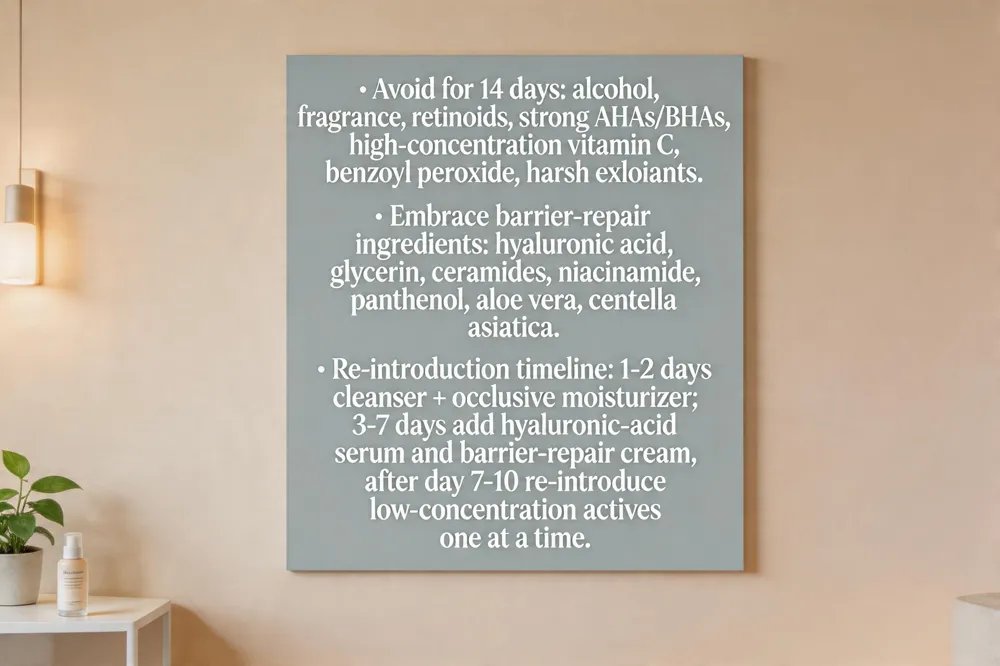 What skincare ingredients should I avoid after laser treatment?
Do not use products containing:
- Alcohol, fragrance, or essential oils
- Retinoids (retinol, tretinoin) and strong acids (AHA/BHA, glycolic, salicylic, lactic)
- Vitamin C serums with high concentration until the barrier is restored
- Harsh exfoliants or physical scrubs
- Benzoyl peroxide and aggressive acne treatments
Generally avoid these for 7‑14 days or as directed by your dermatologist.
Ingredients to avoid for 7‑14 days: all exfoliating agents, retinoids, vitamin C, benzoyl peroxide, alcohol‑based toners, and any product with added fragrance or essential oils.
Beneficial barrier‑repair ingredients: hyaluronic acid, glycerin, ceramides, niacinamide, panthenol, aloe vera, and centella asiatica. Choose fragrance‑free cleanser, non‑comedogenic moisturizers that lock in moisture and calm inflammation.
Re‑introduction timeline for actives:
- Days 1‑2: fragrance‑free cleanser + occlusive moisturizer (e.g., Aquaphor, Vanicream).
- Days 3‑7: add hyaluronic‑acid serum and barrier‑repair cream.
- After day 7–10 (or when cleared): re‑introduce low‑concentration actives one at a time—start with niacinamide, then vitamin C, and finally retinoids, monitoring for irritation.
Final Takeaways for Faster Laser Recovery
Stick to gentle, fragrance‑free basics: cleanse with a mild, non‑foaming cleanser and moisturize with a calming, fragrance‑free oint like Aquaphor, Vanicream, or a ceramide‑rich cream. Protect from UV and heat: apply a mineral sunscreen (zinc oxide or titanium dioxide) SPF 30+ every morning, re‑apply outdoors, and avoid saunas, hot showers, and intense workouts for the first 24‑48 hours. Hydrate internally and externally: drink at least eight glasses of water daily and use hydrating ingredients such as hyaluronic acid, glycerin, and panthenol to restore the skin barrier. Re‑introduce actives only after clearance: wait until redness, flaking, and sensitivity have resolved (usually 7‑14 days) before adding retinoids, vitamin C, AHAs, BHAs, or other potent serums, and always patch‑test first.