The Weight‑Loss Landscape
In 2022, the CDC reported that 42.4 % of U.S. adults were obese, underscoring a national health crisis that demands more than quick‑fix diets. DIY and fad approaches often eliminate whole food groups, leading to nutrient deficiencies, electrolyte imbalances, and a rapid loss of basal metabolic rate—effects documented by the USDA, CDC, and studies in the Journal of the Academy of Nutrition and Dietetics. These short‑term fixes also trigger hormonal shifts (↑ghrelin, ↓leptin) that fuel hunger and weight regain. In contrast, medically supervised programs combine physician oversight, prescription‑grade medications (e.g., GLP‑1 agonists), personalized nutrition, behavior counseling, and safe exercise—components endorsed by the American Diabetes Association and the Academy of Nutrition and Dietetics. Regular follow‑ups provide accountability, monitor labs, and adjust plans, producing higher sustained weight‑loss rates and broader wellness benefits, from improved blood pressure to enhanced aesthetic confidence.
Understanding Fad Diets
 Fad diets examples: Common fads include the Atkins low‑carb diet, the Zone diet (40 % carbs, 30 % protein, 30 % fat), the ketogenic (keto) diet, Sirtfood diet, intermittent‑fasting schedules, and the paleo diet that eliminates grains, legumes, and dairy. These trends gain quick popularity but can be nutritionally unbalanced or hard to sustain long‑term.
Fad diet full form: “Fad diet” is not an abbreviation; “fad” simply means a short‑lived craze. There is no expanded acronym—just two words describing a diet that becomes popular quickly and then fades without solid scientific support.
Medical Weight‑Loss Programs: Core Components
 Medical weight‑loss programs are built around a multidisciplinary team that brings together physicians, certified dietitians, behavioral therapists, and exercise specialists. The first step is a comprehensive medical assessment—including a physical exam, body‑composition analysis, and laboratory tests (lipid panel, A1C, thyroid function, electrolytes)—to uncover hormone imbalances, metabolic disorders, or comorbidities such as diabetes, hypertension, or sleep apnea. This data guides the selection of FDA‑approved prescription‑grade medications, most commonly GLP‑1 receptor agonists (e.g., semaglutide, liraglutide) or phentermine‑topiramate, which are prescribed only under medical supervision to ensure safety and efficacy.
Nutrition counseling is personalized: a registered dietitian creates a calorie‑controlled plan that meets nutrient needs, often incorporating meal‑replacement options for rapid, safe weight loss. Physical‑activity planning is tailored by an exercise physiologist, offering supervised fitness classes and progressive strength‑training to preserve lean mass and boost metabolism. Behavioral support—provided through individual counseling and group sessions—addresses emotional eating, habit formation, and motivation, with regular follow‑up appointments to monitor progress, adjust prescriptions, and reinforce accountability. Together, these evidence‑based components deliver higher sustained‑weight‑loss rates than unsupervised DIY diets, while also improving blood pressure, cholesterol, and blood‑sugar control.
Evidence on Effectiveness
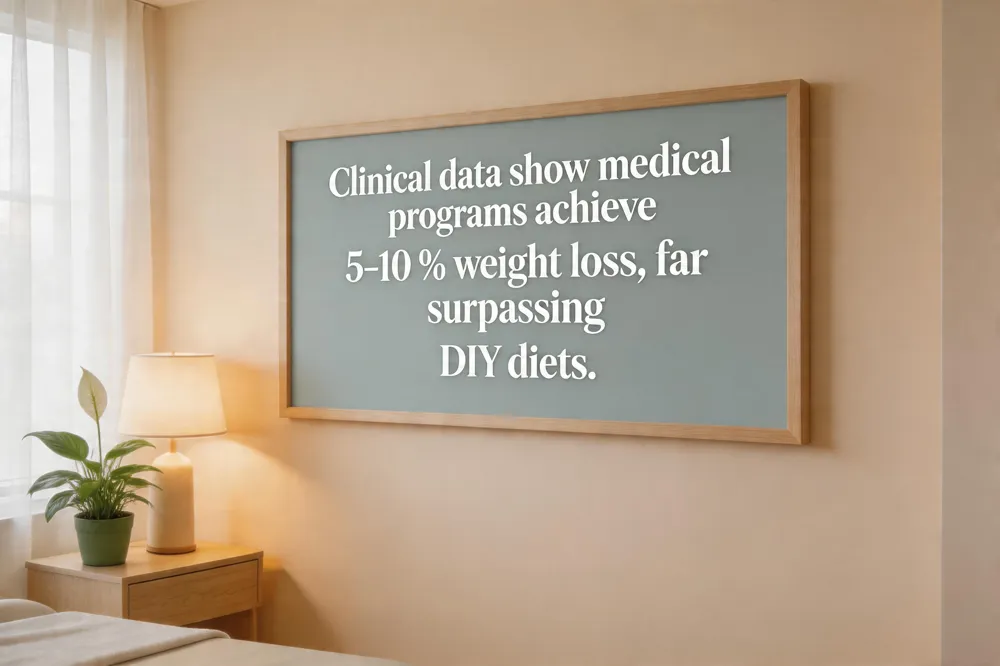 Comparative weight‑loss outcomes of medical programs vs. DIY diets
Medical weight‑loss programs consistently outperform self‑directed diets. Randomized trials and systematic reviews show clinician‑led interventions achieve 5–10 % body‑weight loss over 12 months, while DIY approaches average only 2–4 % (Healthline 2023; AJCN meta‑analysis 2022). Regular follow‑up appointments, lab monitoring, and behavioral counseling in these programs provide accountability and allow clinicians to adjust calorie goals, medications, and exercise plans, leading to higher sustained‑loss rates American Society of Clinical Oncology.
Sustained loss and long‑term maintenance data
Long‑term data reveal that more than half of weight lost is regained within two years, and over 80 % within five years without ongoing support (Weight Management Maintenance NIH). Structured medical programs that continue for at least one year reduce regain: participants who receive ongoing counseling have a 30 % lower risk of regaining ≥5 % of lost weight (AJCN 2023). In contrast, self‑directed fad diets see >50 % of initial loss returned within two years, with many participants experiencing metabolic adaptations that lower resting energy expenditure and increase appetite (Journal of the Academy of Nutrition and Dietetics; Michigan Medicine).
Impact of FDA‑approved medications on percent body‑weight reduction
Prescription weight‑loss drugs, especially GLP‑1 receptor agonists such as semaglutide and tirzepatide, dramatically amplify results. Clinical trials report average reductions of 15‑20 % of body weight with semaglutide (Wegovy) and 18‑25 % with tirzepatide when combined with lifestyle changes (Medscape; CONCI). Other FDA‑approved agents (phentermine‑topiramate, liraglutide) yield 5‑10 % loss. These medications require medical oversight to monitor safety, adjust dosing, and address comorbidities like diabetes or hypertension (Medical Weight Loss vs DIY Diets – Well Being Health Care).
"Are fad diets effective?"
Fad diets are generally not effective for sustainable weight loss and can even lead to weight gain. They often promise rapid results, eliminate entire food groups, and impose rigid, calorie‑restrictive rules that are difficult to maintain long‑term. Research shows that these short‑term approaches do not provide the balanced nutrition needed for health and may trigger hormonal changes that increase appetite. Evidence‑based eating patterns—such as the Mediterranean, DASH, or the Mayo Clinic Diet—focus on variety, moderate portions, and regular exercise, which are proven to support lasting weight management and overall wellness. For safe and effective results, it’s best to follow a balanced, personalized plan rather than a trendy “quick‑fix” diet.
"What is the best medical treatment for weight loss?"
The most effective medical treatments for weight loss today are the GLP‑1 receptor agonists, particularly semaglutide (Wegovy, Ozempic) and tirzepatide (Zepbound, Mounjaro), which consistently produce 10‑20 % reductions in body weight in clinical trials. These agents are recommended for adults with a BMI ≥ 30 or a BMI ≥ 27 with weight‑related comorbidities, and they are also approved for adolescents ≥ 12 years with severe obesity. Choosing the “best” medication depends on individual factors such as medical history, tolerance of gastrointestinal side effects, cost, and insurance coverage, so a thorough evaluation with a qualified provider is essential. When prescribed at the appropriate dose and combined with lifestyle changes, these drugs dramatically improve the odds of achieving and maintaining clinically meaningful weight loss.
Maintaining Lost Weight

Maintenance of lost weight and long-term management of obesity
Long‑term success depends on a continuous, multidisciplinary strategy rather than a one‑time diet. After weight loss the body often slows its resting metabolic rate (≈20‑30 kcal per kilogram lost) and hunger hormones such as ghrelin rise while leptin falls, creating a strong drive to regain weight. Counter‑balancing these physiological shifts requires sustained lifestyle changes and regular clinical monitoring. Professional programs provide periodic check‑ins, lab testing, and, when appropriate, FDA‑approved maintenance medications (e.g., low‑dose GLP‑1 agonists) to help stabilize appetite and metabolism.
Maintain weight loss calculator
A weight‑loss maintenance calculator estimates the daily calories needed to keep your new weight. It uses age, sex, height, current weight, and activity level to calculate basal metabolic rate (BMR) and applies an activity factor to generate a maintenance target. Entering your data into a reliable tool—such as the Mayo Clinic’s calculator—gives a specific calorie goal. Aim to meet that intake, balance macronutrients, and stay active (≥150 minutes/week of moderate‑intensity exercise). Weekly weigh‑ins and Self‑monitoring of food logs help you spot drift early and adjust portions or activity, improving adherence and preventing regain.
Behavioral tools
Self‑monitoring, SMART goal‑setting, and stress‑management techniques (mindfulness, adequate sleep) reinforce healthy habits. Regular counseling sessions—individual or group—provide accountability, problem‑solving skills, and motivation, dramatically raising the odds of maintaining at least a 5‑10 % weight loss over years.
Program Cost and Accessibility
 When you compare medical weight‑loss programs, understanding cost and access is essential.
Pricing structures – Inova Medical Weight Loss program offers two plans: a 12‑week program at $999 that includes 20 boxes of meal replacements, weekly one‑on‑one dietitian and exercise specialist sessions, and a baseline body‑composition analysis, labs, and EKG (billed to insurance). The 6‑week option costs $450, provides 12 boxes of meal replacements, bi‑weekly dietitian visits, weekly group exercise, and the same baseline testing. Kaiser Permanente’s program starts with a one‑time $199 medical assessment. The 16‑week active phase costs $1,499 for monitoring plus $134 per week for meal replacements, followed by a 14‑week transition/maintenance phase at $999 plus $57 per week for meals. Total out‑of‑pocket costs are about $2,953, and these fees are not covered by the health plan, though FSA/HSA accounts can be used.
Insurance considerations – Both programs bill labs and EKGs to insurance, but the core program fees and meal‑replacement products are typically paid by the patient. Verify your plan’s coverage for obesity counseling, prescription medications, and any ancillary services.
Virtual vs. in‑person – Inova Medical Weight Loss program provides in‑person education at its Fair Oaks campus with optional virtual exercise and education sessions. Kaiser Permanente also offers virtual group classes and telehealth check‑ins, expanding access for patients who cannot attend on‑site. Choosing the right mix of in‑person and virtual support can help you stay accountable while fitting the program into your lifestyle.
Patient Experiences and Reviews
 Patients consistently praise the Inova Medical Weight‑Loss program for its structured, multidisciplinary approach and tangible results. Testimonials such as Catie V.’s 130‑pound loss and Jason’s ongoing 100‑pound drop illustrate how the 6‑ and 12‑week meal‑replacement plans, combined with weekly dietitian check‑ins and supervised exercise sessions, translate into measurable weight loss. Participants highlight the value of the comprehensive education they receive—nutrition basics, sleep hygiene, portion control, and strength‑training benefits—citing these lessons as essential for sustaining progress after the program ends. The multidisciplinary team includes board‑certified bariatricians, registered dietitians, exercise physiologists, and behavioral‑health specialists, receives high marks for personalized care, rapid access both in‑person and virtually, and the ability to address comorbidities such as hypertension or diabetes. Many reviewers describe the program as life‑changing, noting improvements in strength, self‑image, and overall quality of life. The integration of medical supervision, evidence‑based counseling, and ongoing accountability is perceived as the key driver of success, setting Inova apart from unsupervised DIY diets and fostering lasting health improvements and greater confidence.
DIY Approaches: Risks and Realities
 DIY weight‑loss plans often look attractive, but the evidence shows three major pitfalls that can turn a short‑term win into a long‑term health setback.
Nutrient deficiencies and electrolyte imbalances – When whole food groups are eliminated, as many fad diets do, the USDA and CDC warn of gaps in vitamins (B12, iron), minerals (calcium, potassium) and fiber. Severe calorie restriction can also deplete electrolytes, leading to fatigue, muscle cramps, or cardiac arrhythmias.
Metabolic adaptations that favor regain – Crash or very‑low‑calorie diets (e.g., an 800‑calorie per day plan for four days) trigger a drop in basal metabolic rate of 20–30 kcal per kilogram lost and a rise in hunger hormones such as ghrelin. This physiological “set‑point” shift makes it biologically harder to maintain the loss and fuels rapid weight regain.
Psychological effects of yo‑yo dieting – Repeated cycles of extreme restriction and rebound weight gain erode self‑efficacy and can foster disordered‑eating patterns. Studies link yo‑yo dieting to increased stress, mood swings, and a higher likelihood of abandoning weight‑management efforts altogether.
"Crash diet example" – A classic crash‑diet example is a 4‑day “very low‑calorie” plan that limits intake to about 800 calories per day, mostly from lean protein, non‑starchy vegetables, and limited fruit. During the four days you also follow a strict exercise schedule, such as 45 minutes of brisk cardio plus light resistance work each day. After the block ends you transition back to a more balanced eating pattern while gradually increasing calories to avoid rebound weight gain. This type of diet can produce rapid loss of 2–3 pounds per week, but it is medically supervised for short periods only. It is best used under the guidance of a healthcare professional to monitor nutrition, electrolytes, and overall health.
In contrast, medical weight‑loss programs provide personalized nutrition, regular labs, behavioral counseling, and—when needed—FDA‑approved medications, dramatically improving safety and long‑term success.
Choosing the Right Path
 Factors to consider when selecting a program
Look for a multidisciplinary team (physician, registered dietitian, behavioral therapist) that conducts a full medical assessment, evaluates hormone balance and comorbidities, and offers regular follow‑up. Programs that incorporate FDA‑approved medications (e.g., semaglutide, liraglutide) and set‑replacement plans tend to produce greater, sustained loss than DIY diets.
Evidence‑based programs that work
Clinical trials show clinician‑led interventions achieve 5‑10 % body‑weight loss over 12 months, compared with self‑directed diets (2‑4 %). Structured,‑surgical programs such as OPTIFAST®, HMR, New Direction™, Medi‑Fast®, and hospital‑based services at Brigham and Women’s Hospital combine phase‑based meal replacements, personalized nutrition counseling, and behavioral support, leading to higher long‑term success rates.
Free resources and the 80/20 diet‑exercise myth
Free, evidence‑based options include the Mayo Clinic Diet’s personalized assessment and the NHS Digital Weight Management Programme, both offering tools for tracking food, activity, and behavior. While diet is a major driver, research confirms that both nutrition (≈80 %) and regular physical activity (≈20 %) are essential for lasting results.
“Best medically supervised weight loss programs”
OPTIFAST®, HMR, New Direction™, Medi‑Fast®, and Brigham and Women’s Hospital’s calorie‑controlled and meal‑replacement plans, all supervised by physicians, dietitians, and psychologists.
“Weight loss programs that work”
Programs that blend a reduced‑calorie, nutritionally complete plan with exercise, behavioral counseling, and ongoing monitoring—such as the Mayo Clinic Diet—show the highest sustained outcomes.
“Free weight loss programs that really work”
The Mayo Clinic Diet’s free assessment and the NHS Digital 12‑week programme provide clinician‑backed, cost‑free pathways to safe weight loss.
“Is it true that weight loss is 80 % diet and 20 % exercise?”
Yes. Research supports the 80/20 rule: nutrition has the greatest impact, but regular physical activity is still crucial for health and maintenance.
Putting It All Together
Take‑Home Points: • Medical weight‑loss programs consistently achieve 5‑10 % body‑weight loss in a year—far more than DIY diets, which average 2‑4 %. • Professional oversight prevents nutrient deficiencies, monitors metabolic changes, and safely incorporates FDA‑approved medications such as GLP‑1 agonists. • Regular follow‑ups, behavioral counseling, and personalized exercise plans boost accountability and long‑term maintenance. Ready for a tailored solution? Jana HealthCare offers a multidisciplinary team—physicians, bariatric specialists, registered dietitians, mental‑health counselors, and exercise physiologists—who design individualized plans that address hormonal balance, nutrition adequacy, and emotional eating. Our integrated approach aligns weight‑loss goals with overall health, aesthetic enhancement, and sustainable lifestyle change. Prioritize evidence‑based, supervised weight‑loss strategies. By choosing a medically guided program, you gain safety, scientific rigor, and the support needed to turn modest weight loss into lasting health optimization.