Why Aftercare Matters
Proper aftercare is the backbone of a successful microblading result. During the first 24 hours the skin is inflamed and lymph fluid can accumulate; gentle blotting and keeping the brows dry prevents scabbing and infection. Healing progresses through distinct phases—initial darkening, scabbing (days 3‑7), natural exfoliation (around day 4), and final pigment settling by weeks 4‑6—each requiring specific care to lock in color. Skipping these steps can lead to pigment loss, uneven shading, scarring, or bacterial infection, ultimately compromising the aesthetic outcome. By adhering to a disciplined routine—cleaning twice daily with a mild antibacterial soap, applying a thin ointment layer, avoiding water, heat, and UV exposure, and protecting the brows with SPF after day 10—you safeguard both health and the longevity of your flawless brows.
Day‑by‑Day Healing Timeline
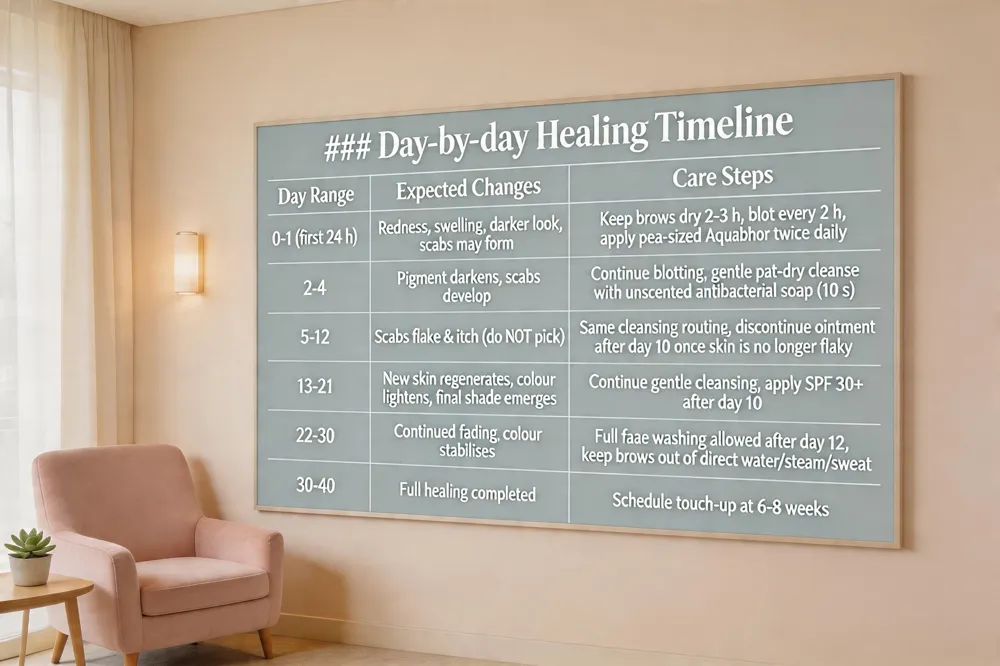
Day‑by‑day Healing Timeline
| Day Range | Expected Changes | Care Steps |
|---|---|---|
| 0‑1 (first 24 h) | Redness, swelling, darker look; scabs may form | Keep brows dry 2‑3 h, blot every 2 h, apply pea‑sized Aquaphor twice daily |
| 2‑4 | Pigment darkens, scabs develop | Continue blotting, gentle pat‑dry cleanse with unscented antibacterial soap (10 s) |
| 5‑12 | Scabs flake & itch (do NOT pick) | Same cleansing routine, discontinue ointment after day 10 once skin is no longer flaky |
| 13‑21 | New skin regenerates, colour lightens, final shade emerges | Continue gentle cleansing, apply SPF 30+ after day 10 |
| 22‑30 | Continued fading, colour stabilises | Full face washing allowed after day 12, keep brows out of direct water/steam/sweat |
| 30‑40 | Full healing completed | Schedule touch‑up at 6‑8 weeks |
 What to expect each day after microblading
The first 24 hours bring redness, swelling and a darker look; gentle blotting every 2 hours keeps scabs from forming. Days 2‑4 see the pigment darken further as scabs develop. During days 5‑12 the scabs flake and itch—do not pick. By days 13‑21 new skin regenerates, the colour lightens and the final shade begins to emerge. Full healing is usually complete by day 30‑40, with a touch‑up scheduled at 6‑8 weeks.
Cleansing routine and ointment application
Keep the brows dry for the first 2‑3 hours. From day 1, blot with a clean, lightly dampened tissue and apply a pea‑sized (rice‑grain) layer of Aquaphor or the artist’s ointment twice daily. Days 2‑10 allow a gentle pat‑dry wash with an unscented antibacterial soap (e.g., Cetaphil) for 10 seconds; avoid scrubbing. Discontinue ointment after day 10 once the skin is no longer flaky.
When it’s safe to wash brows
Full face washing with normal water can resume after 10‑12 days, once scabs have naturally fallen off. Until then, keep the brows out of direct water, steam and sweat; use a soft cotton pad and pat dry.
Typical color changes and scabbing
Initial darkness fades to a "ghost" phase (days 8‑14) as the outer skin layer peels. Expect a lighter shade before the pigment settles during weeks 4‑6. Protect the brows with SPF 30+ after day 10 to preserve colour.
Key after‑care tips
Avoid sun, saunas, swimming, makeup, retinol and AHAs for the first two weeks. Keep the area moisturized, avoid picking, and schedule a professional touch‑up at 6‑8 weeks for optimal results.
Ointments & Creams: Choosing the Right Formula
Ointments & Creams: Choosing the Right Formula
| Product | Base Type | Key Benefits | Application |
|---|---|---|---|
| Aquaphor | Mineral‑oil (petroleum‑based) | Occlusive moisture lock, inexpensive | Pea‑sized layer twice daily for 7‑10 days |
| Hustle Butter Deluxe PMU Cream | Petroleum‑free, organic | Anti‑inflammatory, breathable | Same as above |
| Skin Candy Aftercare Balm | Light, non‑comedogenic | Fast absorption, soothing | Same as above |
| Biotek Armony Calming Cream | Botanical blend | Promotes re‑epithelialization | Same as above |
| PhiTattoo Gel | Gel‑based, petroleum‑free | Quick dry, protects pigment | Same as above |
Petroleum‑free vs. petroleum‑based: Petroleum‑free formulas provide a balanced barrier that moisturizes without suffocating the pigment, reducing infection risk. Petroleum‑based (e.g., Vaseline) can trap bacteria and impede pigment retention.
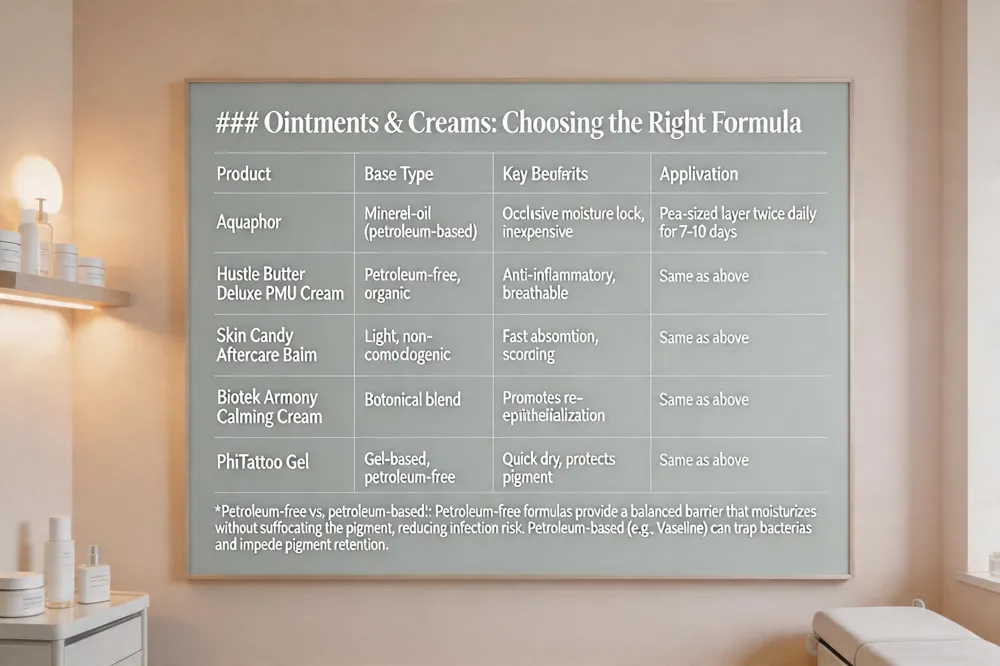 Choosing the right post‑microblading ointment is essential for soothing the skin, protecting the pigment, and preventing infection. Top recommended aftercare products include Aquaphor (a mineral‑oil base that locks in moisture), Hustle Butter Deluxe PMU Aftercare Cream (Petroleum‑free, organic, anti‑inflammatory), Skin Candy Aftercare Balm (lightweight, non‑comedogenic), Biotek Armony Calming Cream, and PhiTattoo Gel. These formulas contain humectants, vitamins, and botanical extracts that aid re‑epithelialization while allowing the skin to breathe.
Petroleum‑free vs. petroleum‑based: Petroleum‑based ointments like Vaseline form an occlusive barrier that can trap bacteria and limit oxygen, slowing healing and increasing infection risk. Petroleum‑free options provide a balanced barrier that moisturizes without suffocating the fresh pigment.
Why Vaseline is not ideal: Its 100 % petroleum composition creates a thick film that may impede pigment retention and increase scarring. Professional aftercare balms incorporate anti‑inflammatory agents and are specifically tested for microblading.
Application technique & frequency: After gently cleansing the brows twice daily with a mild antibacterial soap, pat the area dry. Apply a pea‑sized (≈ half‑grain‑of‑rice) layer of the chosen ointment twice a day—morning and night—for the first 7‑10 days. Avoid rubbing, keep hair away from the brows, and discontinue the ointment after the first week while continuing gentle cleansing. This routine supports optimal color longevity and a smooth, scar‑free heal.
Two‑Week Milestone & Beyond
Two‑Week Milestone & Beyond
| Week | Do | Don't |
|---|---|---|
| 1‑2 | Keep brows dry, blot gently, apply ointment twice daily, avoid sweat, steam, swimming | Pick scabs, use makeup, retinol, AHAs, UV exposure |
| 3‑4 | Continue gentle cleansing, switch to fragrance‑free lotion if skin feels tight, apply SPF 30+ outdoors | Re‑introduce makeup, retinol, glycolic acid, heavy workouts that cause profuse sweat |
| 5‑8 | Maintain SPF, moisturize daily, schedule touch‑up at 6‑8 weeks | Use harsh exfoliants, prolonged sun exposure without protection |
| >8 weeks | Daily SPF, periodic touch‑ups every 12‑18 months, avoid harsh skin treatments | Neglect sun protection, ignore signs of infection |
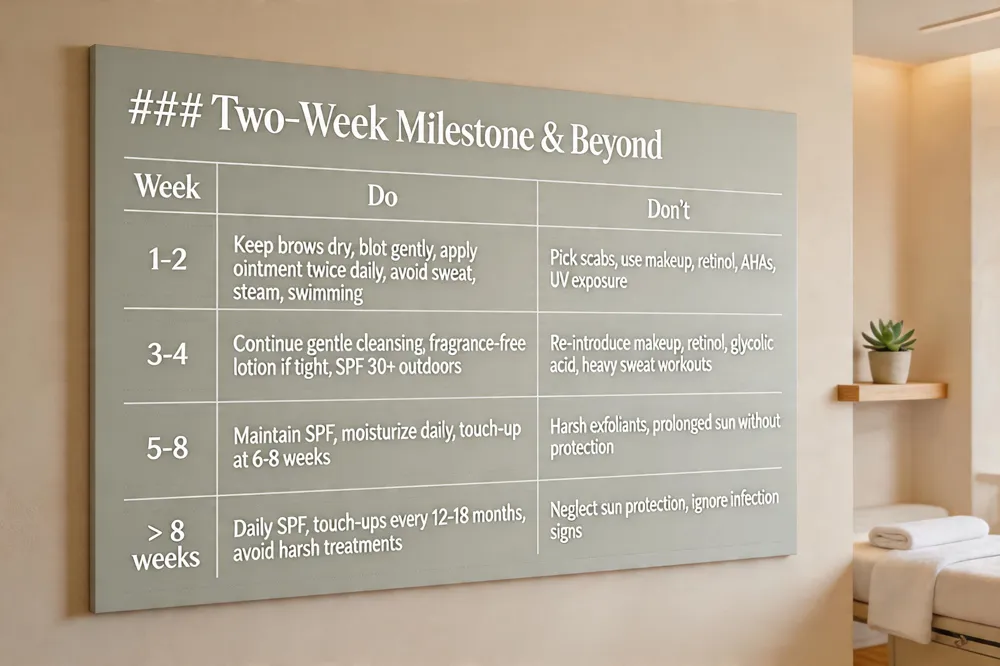 After the first two weeks the brow skin is still settling, but most daily activities can resume. Continue gentle cleansing twice daily with a fragrance‑free antibacterial soap (e.g., Cetaphil) and pat dry; stop applying ointment unless the skin feels tight. Avoid intense sweating, swimming, saunas, and prolonged sun exposure until the full four‑week healing window closes.
Reddit‑derived routines echo professional guidance: keep the brows dry for the initial 7 days, then from day 4 onward wash gently and apply a rice‑grain amount of Aquaphor or CeraVe with a clean cotton swab for the next 7 days. Do not pick, scratch, or peel scabs, and stay out of UV light, harsh acids, retinol, and chemical peels until after the touch‑up (usually 6 weeks).
Do‑and‑don’t for week 4: ✅ Keep the area moisturized with a fragrance‑free lotion ✅ Apply SPF 30+ sunscreen when outdoors ❌ Re‑introduce makeup, retinol, glycolic acid, or any exfoliating product ❌ Engage in heavy workouts that produce profuse sweat.
Long‑term pigment protection hinges on daily SPF, avoiding harsh skin treatments, and scheduling periodic touch‑ups every 12‑18 months. If redness, swelling, fever, or foul discharge appear at any stage, contact your provider or a medical professional promptly.
Touch‑Up, Longevity & Maintenance
Touch‑Up, Longevity & Maintenance
| Timeline | Action | Details |
|---|---|---|
| 6‑8 weeks | First touch‑up | Correct uneven zones, boost colour intensity before excessive fading |
| 12‑18 months | Periodic touch‑up | |
| Ongoing | Daily care | Fragrance‑free moisturizer + broad‑spectrum SPF 30+ every morning; re‑apply after swimming/sweating |
| Immediate (if needed) | Consult professional | For uneven colour, scarring, or adverse reactions – consider pigment lightening, corrective microblading, or laser removal after healing |
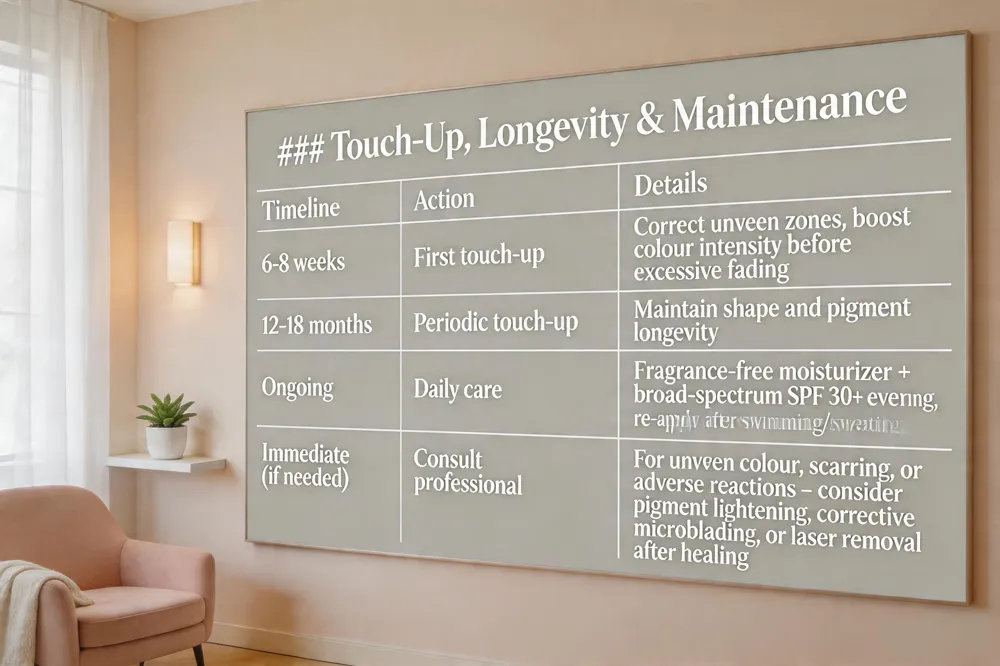 A well‑planned touch‑up schedule is the cornerstone of lasting, natural‑looking brows. Most artists recommend a corrective session 6–8 weeks after the initial microblading, when the pigment has settled but before excessive fading occurs; this allows any uneven zones to be refined and ensures color intensity remains optimal.
Long‑term upkeep hinges on daily moisturization and sun protection. After the first two weeks, switch from healing ointment to a fragrance‑free moisturizer to keep the skin supple, and apply a broad‑spectrum SPF 30+ sunscreen every morning—especially when outdoors—to guard the iron‑oxide pigment from UV‑induced fading. Re‑apply sunscreen after swimming, sweating, or any prolonged sun exposure.
Financial etiquette for tipping is straightforward: for a $400 microblading session, a tip of 15 %–20 % ($60‑$80) reflects appreciation for skill, hygiene, and personalized after‑care guidance. Round the amount for convenience if desired.
If the pigment looks uneven, discolored, or the skin reacts adversely, schedule a prompt consultation. A qualified technician can perform a gentle pigment lightening, corrective microblading, or, in severe cases, laser removal. Early intervention, combined with a tailored after‑care plan, minimizes scarring and restores the brows to their intended shape.
When to Seek Professional Help & Safety Tips
When to Seek Professional Help & Safety Tips
| Sign | Description | Action |
|---|---|---|
| Persistent redness & swelling beyond brow line | Possible infection | Contact provider or medical professional ASAP |
| Fever, throbbing pain, pus, foul odour | Infection or severe inflammation | Seek medical attention immediately |
| Red streaks toward heart | Systemic infection risk | Emergency medical care |
| Tingling that intensifies after day 1‑ Early complication | Call provider for advice | |
| Discoloration, uneven pigment, scarring after healing | Need for corrective work | Schedule consultation for lightening, corrective microblading, or laser removal |
Safety Tips: Keep brows dry for first 7‑10 days, avoid water, soap, makeup, and direct contact. Apply ointment twice daily with a clean cotton swab. Do not pick or scratch scabs. Limit heavy sweating, swimming, saunas, tanning, and direct sunlight for two weeks. Use fragrance‑free antibacterial cleanser and SPF 30+ after day 10.
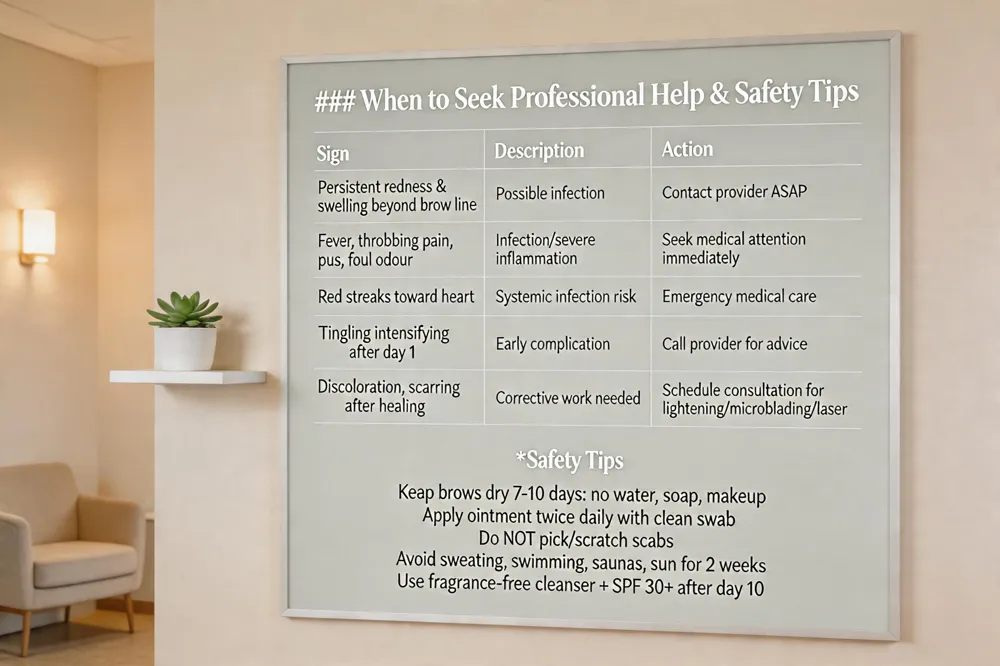 Signs of infection or complications – Watch for persistent redness that spreads beyond the brow line, increasing swelling, fever, throbbing pain, pus or foul‑smelling discharge, and red streaks heading toward the heart. Even a mild tingling that intensifies after the first few days warrants a prompt call to your provider.
Avoiding harsh skincare during healing – For the first two weeks keep the brows dry and steer clear of any products containing acids (AHA/BHA, glycolic, lactic), retinol, vitamin C serums, or chemical exfoliants. These can disrupt the delicate pigment layer and provoke irritation. Stick to a fragrance‑free antibacterial cleanser, a pea‑sized ointment applied twice daily, and a broad‑spectrum SPF 30+ after day 10.
Consultation for corrective procedures – If the shape looks uneven, the pigment is too dark or faint, or you notice scarring, schedule a follow‑up with a qualified cosmetic dermatologist or experienced microblading artist. Early assessment may allow gentle pigment lightening, a corrective microblading session, or, in rare cases, laser removal after the skin has healed.
What to do after Microblading face – keep the area clean and completely dry for the first 7‑10 days; avoid water, soap, makeup, and direct contact. Apply a thin layer of the prescribed ointment twice daily with a clean cotton swab. Do not pick, scratch, or peel scabs. Limit heavy sweating, swimming, saunas, tanning, and direct sunlight for two weeks. Refrain from waxing, threading, or plucking the brows, and sleep on a clean pillowcase. If you notice excessive redness, swelling, fever, or discharge, contact a medical professional immediately.
I ruined my microblading – First, book a consultation with a qualified cosmetic dermatologist or reputable microblading professional to evaluate the damage. Depending on the issue—uneven shape, wrong pigment, or scarring—treatment options may include gentle pigment lightening, a corrective microblading session, or laser removal for stubborn color. If irritation or infection is present, appropriate topicals or prescription medication will be prescribed before any corrective work. A personalized after‑care plan will protect the skin and help achieve the best final appearance.
Final Feather‑Light Brow Checklist
- Keep brows dry for the first 7‑10 days; blot excess fluid with a clean tissue every 30 minutes.
- Clean twice daily with a mild, fragrance‑free antibacterial soap (e.g., Cetaphil) for 10‑15 seconds, then pat dry.
- Apply a rice‑grain amount of Aquaphor or prescribed ointment twice daily after the skin is dry; avoid over‑application.
- Do not pick, scratch, or peel scabs—let them fall naturally.
- Avoid swimming, saunas, intense workouts, and direct sun for at least 14 days; wear a hat outdoors.
- After day 10, use broad‑spectrum SPF 30+ to protect pigment.
- Schedule a touch‑up at 6‑8 weeks and a yearly follow‑up for lasting results.