Why NAD+ Matters for Aging and Wellness
Across the body, NAD+ levels drop by 10‑80 % from early adulthood to old age, with the steepest declines seen in liver, skin, brain, muscle and immune cells. This loss fuels many hallmarks of aging—DNA‑damage accumulation, mitochondrial slowdown, cellular senescence, and chronic inflammation—because NAD+ is the essential co‑factor for sirtuins (SIRT1‑7), PARPs and the NAD‑consuming enzyme CD38. When NAD+ is abundant, sirtuins drive efficient ATP production, robust DNA‑repair, collagen synthesis, and the de‑acetylation of proteins that keep blood vessels and skin elastin.
Oral NAD+ precursors such as nicotinamide riboside (NR) and nicotinamide mononucleotide (NMN) reliably raise circulating NAD+ by 30‑140 % and modestly improve mitochondrial function, inflammatory markers and, in some trials, skin elasticity or vascular stiffness. At Jana HealthCare we view these supplements as one pillar of a personalized anti‑aging plan: they complement a diet rich in niacin‑precursor foods, regular aerobic exercise, and targeted aesthetic treatments (laser resurfacing, microneedling) that benefit from the‑ DNA‑repair and collagen‑remodeling pathways NAD by higher NAD+. For patients with age‑related metabolic dysfunction—early‑stage neurodegeneration, type 2 diabetes, or obesity—NAD+ boosting may offer the greatest impact, while routine use before age 30 is generally unnecessary for healthy individuals.
The Clinical Landscape: NAD+ Precursors in Human Trials
 Today’s NAD+ research is moving rapidly from bench to bedside.
Neurodegenerative disease trials – Alzheimer’s, Parkinson’s and ALS studies are testing nicotinamide riboside (NR) at 1 g–3 g and 500 mg niacin to raise cerebrospinal‑fluid NAD+ and support mitochondrial health. Early dose‑finding work suggests higher NR doses may improve cognition and reduce neuro‑inflammation, while combination therapy (NR + metabolic activators) or pterostilbene has shown memory gains and reversal of neurodegeneration in small AD cohorts.
Metabolic and cardiovascular studies – Trials in obese, insulin‑resistant men (2 g NR) and post‑menopausal women (250 mg NMN have produced mixed metabolic results, yet NMN improved insulin sensitivity in women. Heart‑failure patients receiving 250 mg NR showed modest reductions in systolic pressure and aortic stiffness, and a 1 g NMN trial is exploring aerobic capacity in fit adults.
Dose‑finding & combination approaches – Ongoing dose‑response studies (1‑3 g NR) and NR‑plus‑pterostilbene aim to pinpoint optimal brain NAD+ elevation while minimizing side‑effects.
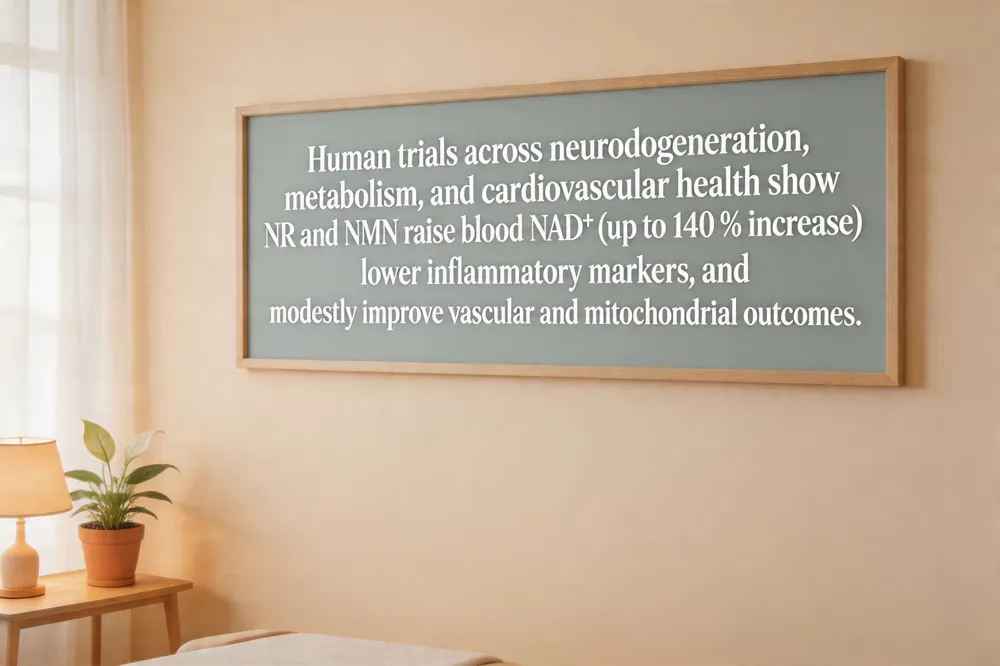
Key outcomes & biomarkers – Across trials, NAD+ precursors reliably raise whole‑blood NAD+ (up to 140 % increase) , lower inflammatory cytokines (IL‑6, CRP) , improve mitochondrial respiration in PBMCs, and modestly reduce blood pressure and arterial stiffness.
Q: NAD research Harvard – Harvard’s aging lab, led by Dr. David Sinclair, identifies NAD+ as a pivotal co‑factor that declines with age. Boosting NAD+ with NMN or NR restores SIRT1 activity, improves vascular health, and extends mouse lifespan, prompting human trials to translate these findings into anti‑aging therapies.
Q: NAD supplement clinical trials – Numerous placebo‑controlled studies show oral NR and NMN are safe and raise circulating NAD+, and modestly improve mitochondrial function, insulin sensitivity, and vascular markers. Larger, longer‑term trials are now underway to confirm therapeutic benefits for age‑related diseases.
NAD+ Supplementation: Benefits and Risks for Men
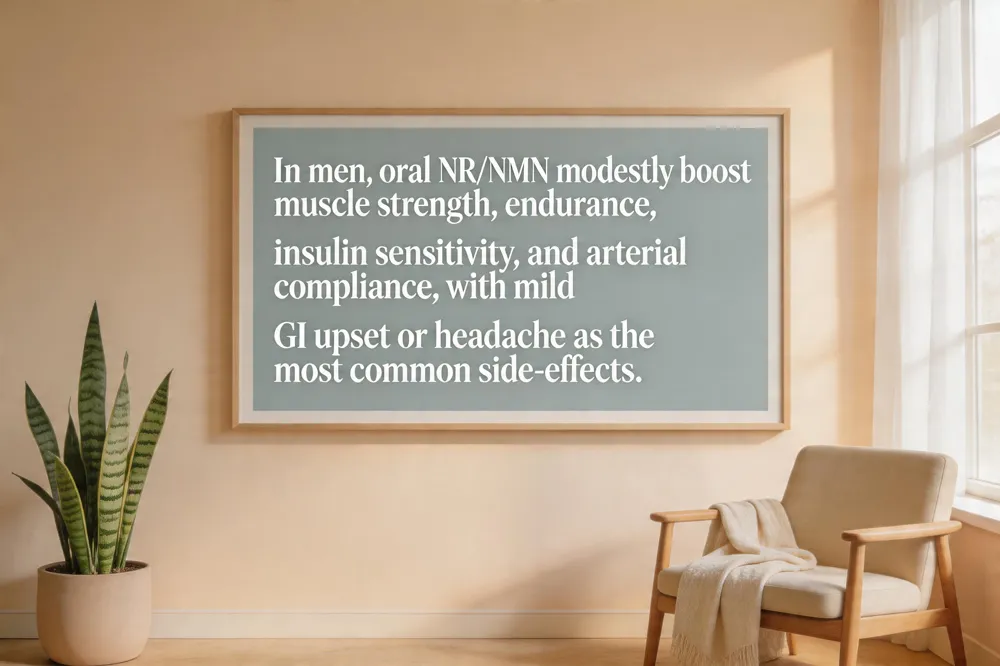 NAD+ is a vital coenzyme that fuels cellular energy, repairs DNA, and orchestrates metabolic pathways. Levels fall with age, and oral precursors such as nicotinamide riboside (NR) or nicotinamide mononucleotide (NMN) can modestly raise blood NAD+ concentrations. In men, early trials have reported modest gains in muscle strength, endurance, and mitochondrial respiration, translating into smoother recovery after exercise. Some studies also note lower arterial stiffness, modest reductions in systolic blood pressure](https://pmc.ncbi.nlm.nih.gov/articles/PMC9512238/), and improved insulin sensitivity—potentially lowering the risk of type 2 diabetes and heart disease. Cognitive benefits, including better focus and mood, have been observed in small cohorts, likely reflecting enhanced neuronal metabolism. Generally, NAD+ precursors are well‑tolerated; common side effects are mild gastrointestinal upset, headache, or flushing with high‑dose niacin. Rarely, excessive niacin may strain the liver or raise uric acid, so individuals with liver disease or gout should be monitored. Because optimal dosing and long‑term outcomes remain unclear, men should discuss NAD+ supplementation with a healthcare professional before starting.
NAD+ Supplementation: Benefits and Risks for Women
 NAD⁺ levels fall as women move through perimenopause and menopause, often bringing fatigue, brain‑fog and weight‑gain. Supplementing with NAD⁺ precursors such as nicotinamide riboside (NR) or nicotinamide mononucleotide (NMN) restores the co‑enzyme that drives mitochondrial ATP production, improves DNA‑repair pathways and curbs chronic inflammation. Clinical trials in middle‑aged adults show modest gains in cognition, insulin sensitivity and blood‑pressure regulation, effects that can translate into more stable energy and clearer focus during hormonal shifts.
Higher NAD⁺ may also protect reproductive tissues. Animal data suggest that boosting NAD⁺ preserves ovarian reserve and reduces embryonic malformations; human work points to better ovarian‑health biomarkers, though definitive proof is pending.
Skin and hair benefit from enhanced NAD⁺‑dependent sirtuin activity, which promotes collagen synthesis, reduces matrix‑metalloproteinase breakdown and supports hair‑follicle metabolism, leading to firmer skin and reduced thinning.
Safety is reassuring—studies report only mild gastrointestinal discomfort at 250‑500 mg NR or 250‑300 mg NMN daily. Dosing should be personalized, considering age, diet, gut‑microbiome and any metabolic conditions; a healthcare professional can help choose the right amount.
Safety, Dosing, and Choosing the Right NAD+ Product
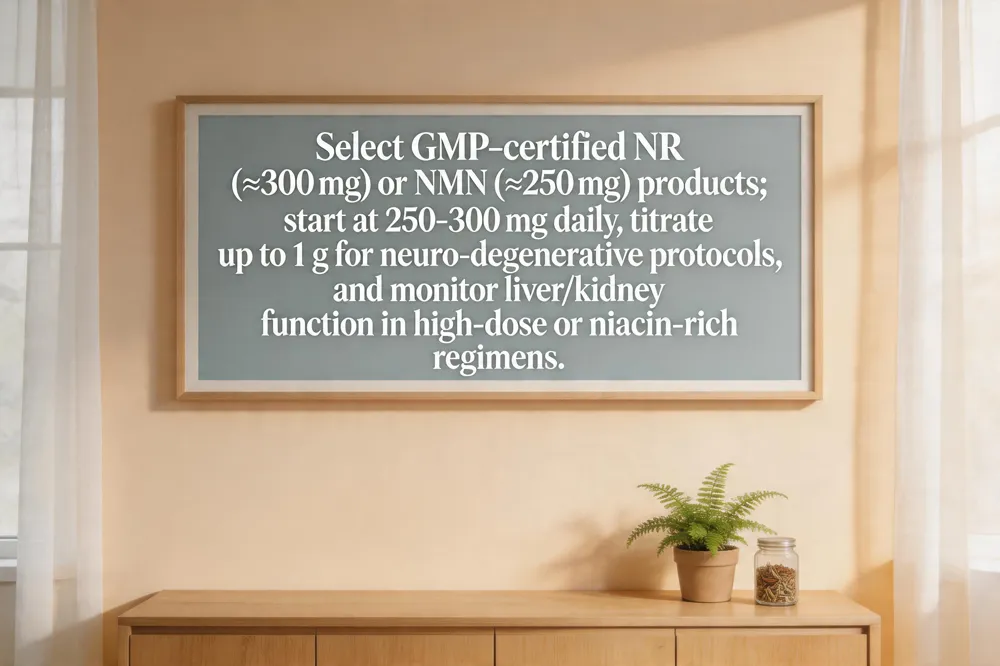 When selecting an NAD+ booster, look for a reputable, GMP‑certified brand that undergoes third‑party testing for purity—Tru Niagen (300 mg NR per capsule) is a leading example, offering a solid safety record and clear dosing guidance. NAD+ supplements are generally safe for healthy adults, but common mild side‑effects include nausea, headaches, flushing, and occasional gastrointestinal upset; liver or kidney disease, pregnancy, and high‑dose niacin warrant caution. Nicotinamide riboside (NR) and nicotinamide mononucleotide (NMN) are the most studied precursors—NR has a longer safety track record, while NMN shows promise for insulin‑sensitivity benefits, especially in post‑menopausal women. Trial data suggest starting doses of 250–300 mg NR or 250 mg NMN daily, with some studies using up to 1 g for neuro‑degenerative research. Pairing NR with magnesium may synergistically support ATP production and skin rejuvenation, enhancing both metabolic health and aesthetic outcomes. Always discuss supplementation with your clinician, especially if you take prescription meds, have cardiovascular concerns, or are planning aesthetic procedures.
NAD+ IV Therapy: What to Expect
 Mechanism of IV NAD+ delivery and cellular uptake: Intravenous NAD+ bypasses the gut, delivering the coenzyme directly into the bloodstream where it is taken up by cells through nucleoside transporters and rapidly replenishes intracellular NAD+ pools. This supports mitochondrial ATP production, sirtuin‑mediated DNA repair and reduces pro‑inflammatory signaling.
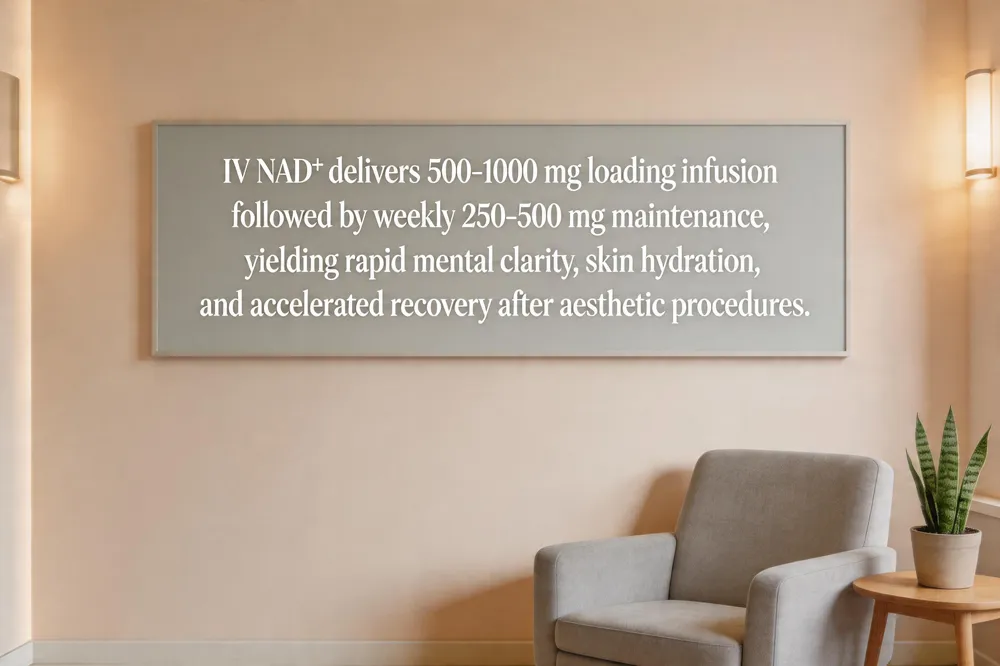
Typical treatment protocols: Clinics usually start with a loading infusion of 500‑1000 mg over 30‑45 minutes, followed by weekly maintenance doses of 250‑500 mg. Patients are asked to fast for a short period, stay well‑hydrated, and avoid alcohol before the session.
Reported short‑term benefits and timeline: Within 24‑48 hours many users notice clearer mental focus, a boost in energy and improved sleep. By two‑four weeks skin hydration and radiance improve, and recovery from aesthetic procedures such as microneedling or laser is faster. At six‑eight weeks cumulative effects can include firmer skin, reduced fine lines and sustained vitality.
Potential side‑effects and cost considerations: Mild nausea, dizziness, flushing or a transient “tired” feeling may occur; serious adverse events are rare. Each infusion costs $400‑$800, and multiple sessions are typically recommended for lasting benefits.
NAD+ anti aging IV: NAD+ IV therapy is marketed as an anti‑aging treatment that aims to boost cellular energy, support DNA repair and reduce inflammation by replenishing the body’s nicotinamide‑adenine dinucleotide levels. Small studies and anecdotal reports suggest improvements in stamina, cognition and skin vitality, but large‑scale clinical trials are limited and the therapy is not FDA‑approved for anti‑aging claims.
NAD+ injections before and after: Before injections patients often feel chronic fatigue, brain fog, dull skin and slower cosmetic healing. Within 24‑48 hours mental clarity, energy and sleep quality improve. Over two‑four weeks skin becomes more hydrated and radiant, with accelerated recovery from aesthetic procedures. By six‑eight weeks skin elasticity, fine‑line reduction and overall vitality are noticeable, making NAD+ a supportive adjunct for wellness and aesthetic care.
Why Some Users Stop NMN and How to Optimize
 Many people discontinue NMN because of gastrointestinal upset, flushing, or the high cost of premium products that often deliver only modest energy or skin‑rejuvenation gains. When the supplement is stopped, a so‑called “crash” can occur; this is not a withdrawal symptom but simply the body returning to its baseline NAD⁺ production after the artificial boost. To maintain healthy NAD⁺ levels without relying on pills, focus on lifestyle habits that naturally support the salvage pathway: regular aerobic exercise, a diet rich in niacin‑containing foods (meat, legumes, whole grains), adequate sleep, and stress‑reduction techniques. If you plan to pause or switch supplements, consult a clinician to taper safely, monitor any changes in energy or mood, and adjust doses of alternative precursors such as NR or NMN under medical guidance.
Why I stopped taking NMN I stopped NMN after persistent digestive upset, occasional flushing, and the high price seemed unjustified for modest benefits. Learning that the “crash” is just a baseline reset, I shifted to exercise, a balanced B3‑rich diet, and sleep, and discussed clinician‑directed alternatives.
NAD+ nicotinamide riboside magnesium NAD+ drives cellular energy, DNA repair, and metabolism. NR supplies a B3‑derived NAD⁺ precursor, while magnesium supports enzyme function and ATP synthesis. Together they may synergistically boost vitality, but dosing and safety should be reviewed with a healthcare professional, especially for those on blood‑pressure meds or who are pregnant.
The Science Behind NAD+ and Skin Rejuvenation
 NAD⁺ fuels DNA‑repair enzymes (PARP1, SIRT1/6), drives collagen and elastin synthesis, and curbs inflammation, keeping fibroblasts and keratinocytes youthful. Clinical studies show that oral NR or NMN raises systemic NAD⁺, modestly improves skin hydration, elasticity, and barrier lipids, while small pilot trials of topical NR/NMN formulations boost ceramide production and reduce transepidermal water loss. When NAD⁺ precursors are combined with aesthetic procedures—microneedling, laser resurfacing, or radio‑frequency—the enhanced cellular stress response supports faster collagen remodeling and smoother recovery. Emerging peptide‑based NAD⁺ therapies aim to deliver NAD⁺ directly to skin cells, amplifying sirtuin activation and DNA repair for deeper, longer‑lasting rejuvenation.
NAD+ benefits for skin: NAD⁺ strengthens the skin barrier, improves hydration and elasticity, supports collagen synthesis, and accelerates UV‑damage repair, yielding a plump, radiant complexion.
NAD+ nicotinamide riboside reviews: Users rate NR 4.2/5, noting better focus and energy; some see clearer vision and reduced fatigue, while a few report mild GI discomfort or minimal effects. Scientific data confirm NAD⁺ elevation, though definitive skin outcomes remain under study.
NAD+ peptide what does it do: NAD⁺ peptide therapy boosts mitochondrial ATP, enhances DNA‑repair pathways, activates sirtuins, and reduces fatigue, supporting anti‑aging, muscle health, and faster post‑procedure recovery.
Emerging Anti‑Aging Strategies Beyond NAD+
 New anti‑aging breakthroughs focus on clearing senescent cells, tailoring sex‑specific interventions, and tackling protein aggregates while reprogramming aged cells.
What are the latest anti‑aging breakthroughs? Senolytic drugs such as dasatinib + quercetin and the natural flavonoid fisetin selectively eliminate harmful senescent cells, improving healthspan in animal models and early human trials. Targeted dietary tweaks (e.g., methionine restriction) and regular exercise further slow cellular aging. Protein‑aggregation inhibitors and emerging reprogramming compounds show promise in restoring youthful function, and epigenetic clocks now allow real‑time tracking of biological age.
What is better than NAD for anti‑aging? NMN (nicotinamide mononucleotide) is generally preferred over direct NAD⁺ because it is absorbed via the Slc12a8 transporter and rapidly converted to intracellular NAD⁺, supporting mitochondrial health, DNA repair, and sirtuin activity more efficiently. NR also boosts NAD⁺, but NMN’s bioavailability gives it an edge.
NAD anti‑aging review NAD+ levels decline with age, affecting energy, DNA repair, and skin collagen. NR or NMN supplementation can modestly improve skin firmness, reduce fine lines, and boost energy, yet most evidence remains limited to short‑term studies with mixed outcomes. Mild side effects include flushing and gastrointestinal upset; professional guidance is advised. At Jana HealthCare we integrate these insights with personalized nutrition, exercise, and aesthetic treatments for optimal healthspan.
Future Directions and Clinical Evidence Gaps
 NAD what is it – NAD (nicotinamide adenine dinucleotide) is a universal co‑enzyme that shuttles electrons in metabolism, fuels ATP production, and powers DNA‑repair enzymes and sirtuins. NAD+ levels decline with age in multiple human tissues, compromising cellular energy, repair, and longevity. NAD precursor supplementation in human ageing: clinical evidence and challenges – Human trials show oral nicotinamide riboside (NR) or nicotinamide mononucleotide (NMN) reliably raise blood NAD⁺, but functional benefits are modest and often inconsistent. Small sample sizes , varied dosing (100 mg–3 g), short durations, and lack of tissue‑specific biomarkers limit conclusions. Moreover, age, sex, and gut‑microbiome differences affect conversion efficiency, suggesting a one‑size‑fits‑all approach may be suboptimal. Future directions – Larger, long‑term randomized studies are needed, together with standardized NAD⁺ assays and validated tissue markers. Personalized dosing strategies that account for age, sex, and microbiome composition should be explored, as should protocols that combine NAD⁺ boosters with aesthetic procedures (e.g., laser resurfacing or microneedling) to enhance collagen remodeling and healing, and overall skin rejuvenation.
Putting NAD+ into Practice at Jana HealthCare
At Jana HealthCare, we start every NAD+ plan with a personalized assessment that looks beyond a single lab value. A brief health‑history questionnaire, dietary review, exercise habits, and a simple blood draw to measure circulating NAD+ metabolites help us gauge each patient’s baseline and identify lifestyle factors—such as a diet low in niacin‑rich foods or sedentary behavior—that may already be supporting or limiting NAD+ production.
Based on that profile, we recommend evidence‑based oral precursors (nicotinamide riboside or nicotinamide mononucleotide) at doses proven safe in clinical trials, or—when appropriate—IV NAD+ infusions to rapidly prime cells before a cosmetic procedure. For patients seeking aesthetic rejuvenation, we combine NAD+ boosting with targeted treatments like laser resurfacing or microneedling, because higher intracellular NAD+ can enhance DNA repair, collagen synthesis, and post‑procedure healing.
We track outcomes with repeat NAD+ metabolite panels, skin elasticity measurements, and patient‑reported energy or mood scores every 4–6 weeks. Adjustments—whether a dose increase, addition of a CD38 inhibitor, or a shift to topical formulations—are made collaboratively, ensuring the regimen evolves with the patient’s goals and clinical response.