Why NAD⁺ Is Gaining Attention
NAD⁺ is a tiny coenzyme that powers every cell’s energy factories and helps repair DNA after damage. It fuels the production of ATP, the molecule that fuels muscle work, brain activity, and even the immune response. As we age, the body’s ability to synthesize NAD⁺ drops, while demand rises from chronic inflammation, oxidative stress, and increased DNA‑repair work. The result is a measurable decline in cellular stamina, which can manifest as fatigue, slower recovery, and reduced cognitive sharpness.
Because of this age‑related shortfall, researchers and clinicians have explored ways to boost NAD⁺ levels. Oral precursors such as nicotinamide riboside (NR) and nicotinamide mononucleotide (NMN) are popular for their convenience and safety record in short‑term studies. For a rapid, more pronounced rise, intravenous (IV) infusions or subcutaneous injections deliver the coenzyme directly into the bloodstream, bypassing the digestive tract. Each delivery method has its own risk‑benefit profile, and personalized dosing—guided by a qualified health professional—helps maximize benefits while minimizing mild side‑effects like flushing, headache, or brief nausea.
NAD⁺ Benefits for Women and Skin Health
NAD⁺ Benefits for Women and Skin Health
| Benefit | Mechanism | Reported Outcome |
|---|---|---|
| Energy & fatigue | Fuels mitochondrial ATP production | Reduced brain fog, steadier mood, better sleep |
| Skin regeneration | Powers DNA‑repair enzymes & sirtuin pathways → collagen & elastin synthesis | Faster healing, tighter barrier, fewer fine lines, more even tone |
| Hormonal & menstrual support | Modulates inflammation & mitochondrial stress | Less menstrual‑related fatigue, irritability, cramping; smoother mood swings |
 NAD⁺ is a cellular co‑enzyme that declines with age, and restoring it can revitalize energy, support skin health, and balance hormones—key concerns for many women.
Energy and fatigue – By fueling mitochondrial ATP production, NAD⁺ helps combat the low‑energy slump that often follows a busy day or a menstrual cycle. Patients report less brain fog, steadier mood, and smoother sleep after a short course of IV or high‑bioavailability oral precursors.
Skin regeneration – NAD⁺ powers DNA‑repair enzymes and sirtuin pathways that keep keratinocytes healthy. The result is faster collagen and elastin synthesis, reduced fine‑lines, tighter barrier function, and a more even tone. Women who receive NAD⁺ before cosmetic procedures such as laser resurfacing or microneedling experience quicker healing and less post‑procedure redness.
Hormonal and menstrual support – NAD⁺ modulates inflammation and mitochondrial stress, which can lessen menstrual‑related fatigue, irritability, and cramping. Some clinicians observe smoother hormone‑related mood swings when NAD⁺ levels are optimized.
Frequently asked questions
Q: NAD+ benefits for women – NAD⁺ restores cellular energy, reduces fatigue, improves mood, and enhances sleep. For skin, it boosts keratinocyte repair, leading to smoother texture, fewer fine lines, and better overall tone. It also helps alleviate menstrual‑related fatigue and mood swings, supporting mental well‑being.
Q: NAD+ benefits for skin – NAD⁺ supplies the energy skin cells need for collagen and elastin production, supports DNA‑repair enzymes, and regulates inflammation. This improves hydration, elasticity, and reduces fine lines, hyperpigmentation, and UV‑induced damage.
Q: NAD+ benefits for skin before and after – Before therapy, skin often appears dull, dehydrated, and slow to heal after procedures. After a series of NAD⁺ injections (IV, IM, or SC), mitochondrial function and DNA‑repair pathways are re‑energized, boosting turnover and collagen synthesis. Within 2–4 weeks, complexion looks brighter, more hydrated, and less inflamed; post‑procedure recovery speeds up. Long‑term (6–8 weeks) results include firmer, more resilient skin with lasting radiance and a steadier stress response.
Efficacy and Safety of NAD⁺ Supplements vs. Injections
Efficacy & Safety: Oral Supplements vs. Injections
| Route | Bioavailability* | Typical Dose | Peak NAD⁺ Increase | Common Side Effects |
|---|---|---|---|---|
| Oral (NAM, NR, NMN) | 10‑30 % (gut & first‑pass) | 500 mg‑1 g daily | Modest, gradual rise | Nausea, bloating, headache, flushing |
| IV/IM NAD⁺ | 60‑80 % (direct to bloodstream) | 500‑1 000 mg per infusion | Rapid, high peak | Flushing, warmth, mild nausea, headache, injection‑site tenderness |
*Bioavailability reflects the proportion of administered NAD⁺ that reaches systemic circulation.
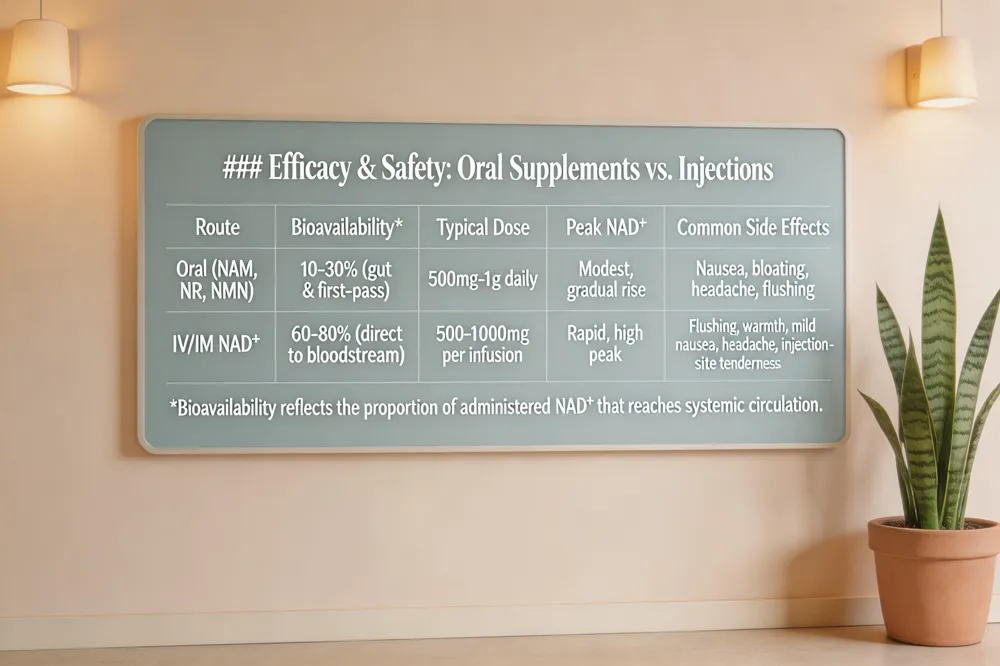 When you ask, “Is taking NAD orally effective?” the answer is yes—butwith nuances. Oral NAD⁺ boosters such as nicotinamide (NAM), nicotinamide riboside (NR) or nicotinamide mononucleotide (NMN) are absorbed through the gut, converted via the salvage pathway, and raise blood NAD⁺ levels in a dose‑dependent way (e.g., 500 mg NAM can increase NAD⁺ within 12 hours). Clinical trials show measurable, transient boosts and modest metabolic shifts, yet the rise is lower and more variable than that achieved by an IV or IM infusion because gastrointestinal absorption and first‑pass metabolism limit bioavailability. For people seeking a convenient, daily maintenance dose, oral precursors are a practical, well‑tolerated option.
Side effects of NAD injections –Injectable NAD (IV, IM, or sub‑Q) delivers the coenzyme directly into the bloodstream, producing rapid peaks. Most patients experience mild, short‑lived reactions: flushing or warmth, temporary nausea, mild‑to‑moderate headache, and brief tenderness or redness at the injection site. Less common sensations include dizziness, light‑headedness, mild muscle cramps, or fleeting chest pressure. These symptoms usually resolve within hours and can be mitigated by slow infusion (2–4 hours), adequate hydration, and a gradual dose‑escalation protocol.
NAD injections long‑term side effects –Long‑term safety data are still emerging. Chronic high‑dose NAM can strain methyl‑group pathways, potentially altering epigenetics and glucose metabolism. Rare serious events reported in the literature include allergic or anaphylactoid reactions, injection‑site infection, liver enzyme elevations, and impaired insulin sensitivity. When administered under professional supervision with moderate dosing, most patients continue to experience only the mild, transient reactions described above.
Side effects of NAD⁺ oral supplement –Oral NAD⁺ precursors are generally well‑tolerated, but some users report nausea, bloating, headache, flushing, itching, or leg cramps. Higher doses may cause stomach pain, diarrhea, or temporary liver‑enzyme rises. Rare serious events—liver toxicity, severe hypotension, thrombocytopenia, or allergic reactions—have been documented, especially with NAM >250 mg/day. Because oral intake bypasses the rapid surge of IV delivery, it tends to produce fewer systemic spikes, making it a safer long‑term choice for most adults, provided liver or metabolic disease is screened for beforehand.
Comparative outcomes –IV/IM administration produces the fastest, highest NAD⁺ peak, useful for acute therapeutic protocols (e.g., rapid energy restoration, addiction recovery). Oral supplementation offers a steadier, lower‑level increase that aligns well with holistic wellness plans—exercise, diet, sleep—and carries a lower risk of acute infusion‑related reactions. Choosing between routes should balance desired speed of effect, personal health background, and the level of medical oversight available.
Balancing Benefits and Risks of NAD⁺ Therapy
Balancing Benefits & Risks
| Dose Range | Primary Benefits | Common Risks | Monitoring Needed |
|---|---|---|---|
| Low‑dose oral NR/NMN (≤1 g/day) | Improved mitochondrial function, mild anti‑aging glow | Mild GI upset, flushing | Periodic liver enzymes if >500 mg/day |
| High‑dose oral NAM (≥1 g/day) | Strong anti‑inflammatory effect | Elevated liver enzymes, reduced insulin sensitivity, oxidative stress | Baseline & follow‑up CMP, fasting glucose |
| IV/IM NAD⁺ (500‑1 000 mg per session) | Rapid energy boost, accelerated skin repair | Transient flushing, nausea, rare allergic reaction | Vital signs, hydration status, infusion rate monitoring |
 NAD⁺ is an essential co‑enzyme that fuels cellular energy, repairs DNA and regulates metabolism. As we age, natural NAD⁺ levels drop, prompting many patients to turn to boosters—nicotinamide riboside (NR), nicotinamide mononucleotide (NMN), oral nicotinamide (NAM), or IV/patch/peptide formulations—to support vitality, skin health and cognitive clarity. Early studies suggest low‑to‑moderate dosing can reduce inflammation, improve mitochondrial function and give a modest “anti‑aging” glow, but long‑term safety data are still limited.
Overall risk–benefit profile Short‑term use of NR and NMN up to 1 g/day is generally well‑tolerated, with only mild nausea, flushing, headache or gastrointestinal discomfort reported. High‑dose oral NAM (≥1 g/day) may raise liver enzymes, decrease insulin sensitivity and increase oxidative stress, while very large doses (≥3 g/day) have been linked to reversible hepatotoxicity and kidney changes in animal models. IV NAD⁺ infusions produce rapid, but short‑lived side effects—flushing, nausea, light‑headedness, mild injection‑site irritation—that are usually resolved by slowing the infusion and ensuring hydration. Rare serious events include allergic reactions, phlebitis, electrolyte imbalances, or exacerbation of mood disorders, especially in patients with pre‑existing liver, kidney, cardiovascular or metabolic disease.
Contraindications Known severe allergies to NAD⁺ formulations, uncontrolled hypertension, active cancer, severe hepatic or renal impairment, pregnancy, breastfeeding, and a history of severe IV‑therapy reactions should preclude treatment unless a specialist approves a modified protocol.
Monitoring recommendations Baseline labs (CMP, liver enzymes, hs‑CRP, fasting glucose) are advised before initiating high‑dose or repeated therapy. During IV sessions, vital signs, hydration status and infusion rate should be tracked; post‑infusion observation for 30–60 minutes helps catch early hypersensitivity. For oral or topical regimens, periodic liver function testing and glucose monitoring are prudent, especially when doses exceed 500 mg/day of NAM.
Side‑effect FAQs
- NAD+ risks and benefits: Boosting NAD⁺ may improve energy, cognition and skin tone, but the lack of robust long‑term data and potential liver or metabolic strain at high doses temper enthusiasm. Individualized dosing and close monitoring are essential.
- Side effects of NAD patches: Mostly local skin irritation, mild flushing, occasional nausea or headache; rare liver enzyme changes in sensitive users.
- NAD⁺ peptide – what does it do?: Delivers NAD⁺ directly to cells, enhancing mitochondrial output, DNA repair and sirtuin activity, which can translate into clearer skin, sharper focus and overall vitality.
- Liposomal NAD side effects: Generally mild—muscle aches, headaches, fatigue or brief sleep disturbances—resolving with dose adjustment.
By integrating careful screening, personalized dosing, and ongoing laboratory checks, clinicians can optimize the therapeutic promise of NAD⁺ while safeguarding patient health.
Real‑World User Experiences and Reviews
Real‑World User Experiences
| Product | Key Ingredients | Typical Dose | User‑Reported Benefits | Common Side Effects |
|---|---|---|---|---|
| PartiQlar Pure NMN | 500 mg NMN (vegetable‑cellulose capsule) | 1 × 500 mg daily | Increased stamina, clearer focus | Mild nausea, flushing |
| Omre NMN + Resveratrol | 500 mg NMN + resveratrol + BioPerine | 1 × 500 mg daily | Enhanced performance, antioxidant support | Headache, mild GI upset |
| Wonderfeel Youngr NMN | 900 mg NMN + ergothioneine + trans‑resveratrol + olive fruit extract + vitamin D3 | 1 × 900 mg daily | Better skin tone, reduced fine lines ( Women‑specific skin health) | Stomach cramps at high dose |
| Nutricost NAD⁺ | 1 g NAD⁺ per serving | 1 × 1 g daily | Strong energy surge, muscle recovery | Flushing, occasional dizziness |
| Innerbody Labs NAD⁺ Support | 700 mg NMN + trimethylglycine + NR + spermidine + BioPerine | 1 × 700 mg daily | Sustained energy, mood stability | Light headache, mild GI discomfort |
 When patients try NAD‑boosting supplements—most commonly nicotinamide riboside (NR) or nicotinamide mononucleotide (NMN)—the consensus is that side effects are usually mild and short‑lived. The most frequently reported symptoms are nausea, bloating, headache, and a warm flushing sensation that can feel similar to a mild niacin flush. A few users experience occasional dizziness, stomach cramps, or a temporary rise in liver enzymes, especially at higher oral doses or when the compound is delivered quickly by IV infusion. Rare but more serious complaints include low blood pressure, skin rashes, or brief allergic‑type reactions; these events typically resolve after the supplement is stopped and are uncommon in clinical practice.
Among the best‑rated NAD⁺ products of 2026, five brands stand out for third‑party testing, transparent labeling, and clinically studied formulations.
- PartiQlar Pure NMN (500 mg) – praised for its pure, vegetable‑cellulose capsules and verified potency.
- Omre NMN + Resveratrol – combines 500 mg NMN with antioxidant‑rich resveratrol and BioPerine to enhance absorption, appealing to performance‑focused users.
- Wonderfeel Youngr NMN (900 mg) – adds ergothioneine, trans‑resveratrol, olive fruit extract, and vitamin D3, targeting women’s wellness and skin health.
- Nutricost NAD⁺ (1 g per serving) – a straightforward high‑dose NAD⁺ option popular with men seeking a potent boost.
- Innerbody Labs NAD⁺ Support – blends 700 mg NMN with trimethylglycine, NR, spermidine, and BioPerine for sustained energy.
User feedback is generally positive: many report increased stamina, clearer mental focus, and faster post‑workout recovery. However, a notable minority notice little or no benefit, attributing this to low bioavailability or short treatment windows. Common complaints revolve around gastrointestinal upset, mild headaches, or the flushing sensation at higher doses. Pricing concerns also surface, as premium brands often command higher costs without definitive long‑term efficacy data. Because individual responses vary, it is advisable to start with a low dose, monitor how you feel, and consult a qualified health professional—especially if you have liver, kidney, metabolic, or cardiovascular conditions—before committing to a NAD supplementation regimen.
Special Considerations: Interactions, Contraindications, and Lifestyle Integration
Special Considerations
| Interaction / Contraindication | Example | Clinical Advice |
|---|---|---|
| Diabetes medications | NAD⁺ may lower insulin sensitivity | Monitor glucose closely; adjust meds if needed |
| Antihypertensives | NAD⁺ can cause vasodilation → hypotension | Check blood pressure before and after infusion |
| Anticoagulants (e.g., warfarin) | NAD⁺ may affect clotting factor metabolism | Frequent INR monitoring |
| Chemotherapy / PARP inhibitors | NAD⁺ could protect tumor cells | Avoid NAD⁺ during active cancer treatment |
| Pregnancy & breastfeeding | Limited safety data | Discuss with clinician; generally avoid high‑dose NAD⁺ |
| Severe liver/kidney disease | Impaired metabolism of NAD⁺ precursors | Contraindicated unless under specialist supervision |
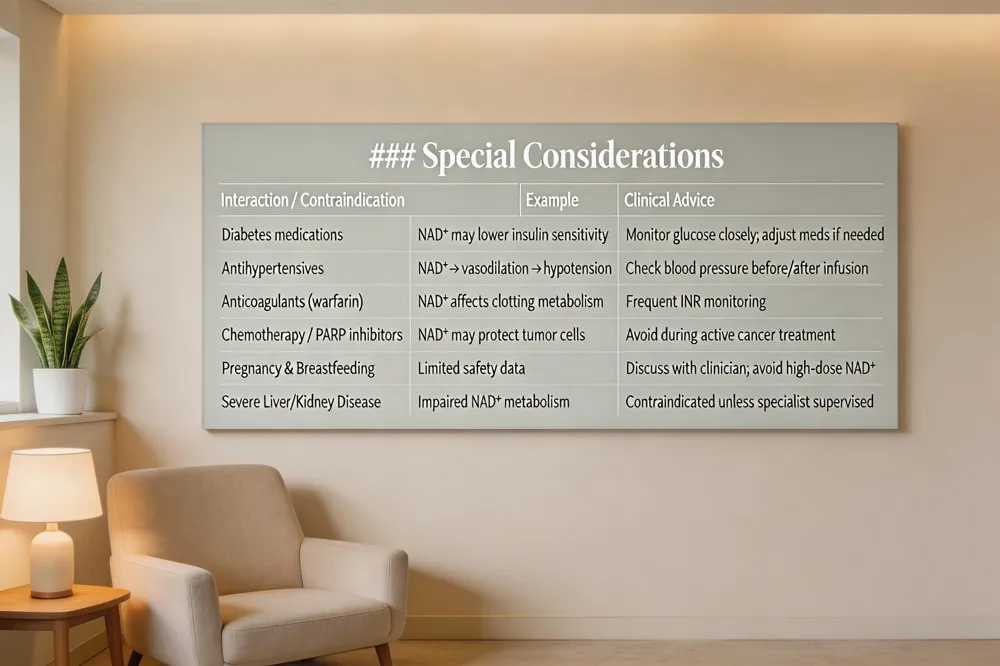 When adding NAD+ to a wellness regimen, it’s essential to check for drug interactions, population‑specific cautions, and ways to blend the therapy with daily habits.
Drug interactions – NAD+ can lower insulin sensitivity, so it may blunt the effect of insulin or other glucose‑lowering agents; patients on diabetes medication should be monitored closely. Blood‑pressure drugs are also a concern because high‑dose NAD+ can cause additional vasodilation and hypotension, especially when combined with antihypertensives. Anticoagulants such as warfarin may be affected by NAD+‑driven changes in clotting factor metabolism, so INR should be checked frequently if the two are used together. Finally, individuals undergoing chemotherapy or PARP‑inhibitor treatment should avoid NAD+ because it could protect tumor cells and reduce therapeutic efficacy (https://pmc.ncbi.nlm.nih.gov/articles/PMC7277745/).
Population‑specific cautions – People with uncontrolled hypertension, severe heart or kidney disease, active infections, or chronic liver impairment are at higher risk for adverse events from NAD IV or high‑dose oral nicotinamide (NAD IV therapy side effects are generally mild and short‑lived). Pregnant or breastfeeding women, as well as those with a personal or family history of cancer, should discuss NAD use with a clinician before starting (https://www.cuanschutz.edu/news-stories/can-nad-supplements-fend-off-aging-and-cancer).
Lifestyle synergy – To minimize side effects, stay well‑hydrated (Hydrating before and after infusion reduces nausea and mild symptoms, fast lightly (water only) before IV sessions, and pair NAD supplementation with regular aerobic exercise, adequate sleep, and a nutrient‑dense diet rich in NAD‑precursor foods (fish, poultry, nuts). Gradual dose escalation and slow infusion rates (2–4 hours) further reduce flushing, nausea, and headache (Careful dosing, slow infusion (typically 2–4 hours), adequate hydration, and professional medical supervision help minimize side effects.
Side‑effect snapshot – NAD patches and IV infusions usually cause only mild, short‑lived reactions (NAD IV therapy side effects are generally mild and short‑lived. The most common complaints are local skin irritation or redness, flushing, mild nausea, headache, and occasional dizziness. Rarely, high doses may affect liver enzymes (Serious but rare side effects can include ... liver toxicity or trigger an allergic response (Allergic reactions may present as rash, itching, or, in severe cases, anaphylaxis), underscoring the need for medical supervision, especially in individuals with liver disease or known skin allergies.
Practical Guidance for Patients Considering NAD⁺ Therapy
Practical Guidance for Patients
| Phase | Key Steps | Tips |
|---|---|---|
| Screening & Preparation | Medical history review, baseline labs (CMP, liver enzymes, hs‑CRP, fasting glucose), hydration (≥2 L water), 4‑6 h fast | Light snack after infusion to stabilize glucose |
| Monitoring During Treatment | Vital signs every 30 min, slow infusion (2‑4 h), watch IV site for phlebitis, optional hs‑CRP/glucose checks | Pause infusion if chest tightness, rash, or breathing difficulty occurs |
| Post‑Treatment Care | Continue hydration, avoid intense exercise for 2‑3 h, monitor for lingering symptoms, schedule periodic liver & glucose labs for repeated therapy | Contact provider if symptoms persist >24 h |
 NAD⁺ therapy can be a valuable tool for boosting cellular energy, supporting metabolic health, and enhancing overall vitality. To ensure a safe and effective experience, follow these three pillars of care:
Screening and Preparation Before your first session, a qualified clinician will review your medical history, looking for allergies, liver or kidney disease, uncontrolled hypertension, or any prior reactions to IV therapies. Blood work may be ordered to check liver enzymes, hs‑CRP (inflammation marker), and basic metabolic panels, especially if you plan repeated or high‑dose infusions. Arrive well‑hydrated (2 L of water) and fast for 4–6 hours to reduce nausea and stomach discomfort. Some clinics also recommend a light snack after the infusion to stabilize blood sugar.
Monitoring During Treatment During the IV (typically 2–4 hours), vital signs are checked at regular intervals. The infusion rate is kept slow to prevent rapid vasodilation, which can cause flushing, headache, or light‑headedness. Nurses watch the IV site for signs of phlebitis or infection and may track hs‑CRP and glucose levels if you have metabolic concerns. If you feel any sudden chest tightness, rash, or difficulty breathing, the infusion is paused and emergency protocols are initiated.
Post‑Treatment Care After the session, continue to hydrate and avoid intense exercise for the next few hours. Most mild side effects—flushing, nausea, headache, or mild fatigue—resolve within the same day, often within a few hours. If symptoms persist beyond 24 hours, contact your provider. Long‑term monitoring may include periodic liver function tests and glucose checks, particularly for those receiving repeated high‑dose NAD⁺.
Common Questions
- How long do NAD side effects last? Most are short‑lived, improving within a few hours and usually gone by the end of the day. Severe reactions are rare but require immediate medical attention.
- Do NAD side effects go away? Yes—most are mild and temporary. Persistent or worsening symptoms should be evaluated promptly.
- Is NAD⁺ therapy appropriate for men? Absolutely. Restoring NAD⁺ supports energy, muscle strength, hormone balance (including testosterone utilization), insulin sensitivity, cardiovascular health, skin appearance, cognition, and sleep—all areas that contribute to male vitality and overall wellness.
By following careful screening, vigilant monitoring, and thoughtful post‑treatment care, patients can enjoy the benefits of NAD⁺ while minimizing risks.
Future Directions and Research Gaps
Future Directions & Research Gaps
| Research Area | Current Knowledge | Gaps / Needs |
|---|---|---|
| Long‑term safety | Mostly short‑term trials (weeks‑months); mild, transient side effects reported | Data beyond 1 year, especially for high‑dose oral & repeated IV regimens |
| Optimal dosing schedules | Oral 500‑900 mg/day tolerable; IV 500‑1 000 mg per session effective | Comparative studies of intermittent vs. continuous dosing, circadian‑aligned regimens |
| Oncology implications | Pre‑clinical dual role (protect normal cells, may aid tumor survival) | Human trials assessing tumor growth, chemo response, recurrence risk |
| User complaints & efficacy variability | Mixed reports; GI upset, flushing common; some see no benefit | Biomarker‑guided responder profiling, product quality standardization |
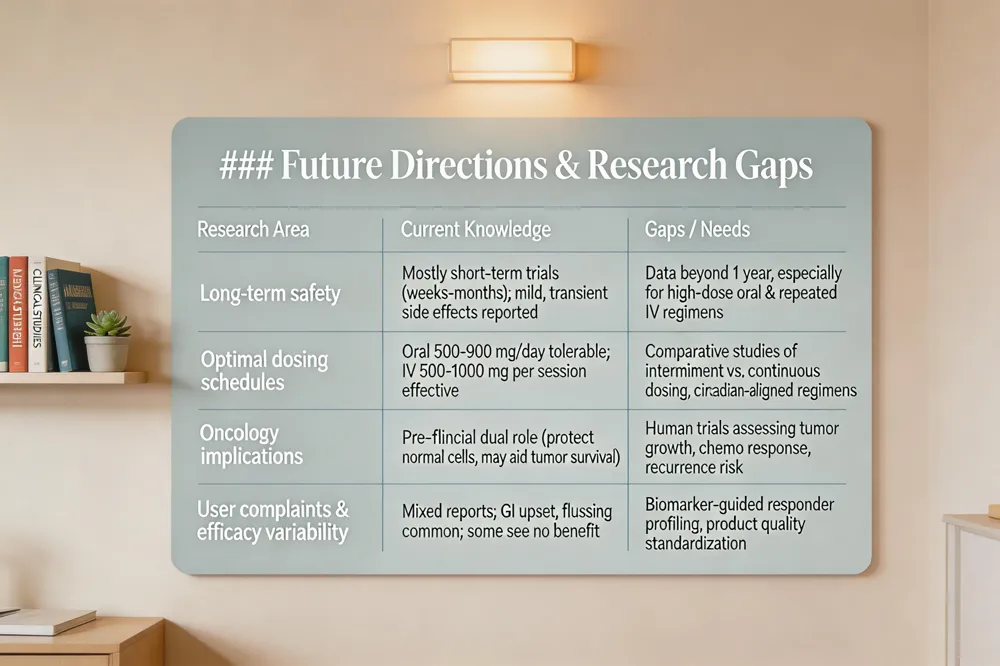 Long‑term safety data
Current evidence for NAD+ boosting—whether via oral precursors (NR, NMN, NAM) or intravenous infusions—remains short‑term. Most clinical trials span weeks to a few months and report only mild, transient side‑effects such as nausea, flushing, headache, or temporary liver‑enzyme elevations. Rare serious events (allergic reactions, phlebitis, electrolyte imbalance) are documented mainly in case reports or when non‑pharmaceutical‑grade preparations are used. Long‑term safety beyond a year is still unknown, especially for high‑dose regimens, repeated IV infusions, and populations with liver, kidney, or cardiovascular disease. Ongoing phase‑II/III trials aim to monitor liver function, inflammation markers (hs‑CRP, and metabolic panels over 2‑5 years to fill this gap.
Optimal dosing schedules
There is no consensus on the ideal dose or timing for NAD+ augmentation. Oral studies suggest tolerable upper limits of 500‑900 mg/day for nicotinamide and up to 1 g/day for NR/NMN, while IV protocols often deliver 500‑1 000 mg over a 2‑4‑hour infusion. Emerging data indicate that slower infusion rates (2‑4 h and gradual dose escalation reduce nausea and flushing. Researchers are also exploring intermittent versus continuous dosing to respect the natural circadian oscillation of NAD+ and avoid feedback inhibition of salvage pathways. Future trials will compare daily low‑dose oral regimens with periodic high‑dose IV “boosts” to determine which strategy maximizes benefits while minimizing adverse events.
Potential oncology implications
Pre‑clinical work shows a dual role for NAD+: it may protect normal cells from DNA damage but could also support tumor cell survival, especially at very high intracellular NAD+ levels. High‑dose nicotinamide has been linked to altered methylation and PARP inhibition, raising theoretical concerns about genomic stability. Human data are inconclusive; no increase in cancer incidence has been observed in moderate‑dose trials, yet animal studies suggest possible tumor promotion when NAD+ is combined with carcinogens. Ongoing oncology‑focused studies will assess whether NAD+ precursors influence tumor growth, response to chemotherapy, or recurrence risk.
NAD+ risks and benefits
NAD+ is essential for energy production, DNA repair, and metabolic regulation. Boosting NAD+ with NR, NMN, or NAM may reduce inflammation, improve cognition, and enhance skin health, but long‑term safety remains uncertain.
NAD review and complaints
Most users report modest energy and mental‑clarity gains, while others notice little benefit and experience gastrointestinal discomfort or flushing. Cost and variable product quality are common grievances.
Can NAD be harmful
When administered in appropriate, pharmacy‑grade doses under professional supervision, NAD+ is generally safe. Risks arise from excessive dosing, non‑sterile IV preparations, and pre‑existing health conditions such as uncontrolled hypertension or severe liver disease.
Key Takeaways for Safe and Effective NAD⁺ Therapy
NAD⁺ therapy can boost cellular energy, support DNA repair, and improve mental clarity, but its benefits must be weighed against possible side effects. The safest way to enjoy these gains is under the care of a qualified clinician who can screen for allergies, liver or kidney disease, and medication interactions. A personalized protocol—starting with a low dose, infusing slowly over two to four hours, and ensuring proper hydration—reduces nausea, flushing, headache, and vein irritation. Ongoing monitoring of liver enzymes, blood pressure, and inflammation markers such as hs‑CRP helps catch rare complications early. Tailoring the regimen to individual goals, whether enhancing skin glow, supporting fitness recovery, or managing metabolic health, creates a holistic, aesthetic‑focused plan that maximizes benefit while minimizing risk. Follow‑up visits allow dose or infusion‑speed adjustments, and adding balanced nutrition, adequate sleep, and exercise enhances outcome and supports vitality.