Setting the Stage: Microneedling Meets Regenerative Medicine
Microneedling, also called collagen induction therapy, uses fine, FDA‑cleared needles to create controlled micro‑injuries in the epidermis. These tiny wounds activate the body’s natural wound‑healing cascade, prompting fibroblasts to produce new collagen and elastin, which smooths texture, tightens pores and reduces fine lines. Platelet‑rich plasma (PRP) is an autologous serum obtained by drawing a small amount of the patient’s blood, centrifuging it to concentrate platelets, and then activating the concentrate (often with calcium chloride). PRP is packed with growth factors such as PDGF, TGF‑β and VEGF that amplify cellular repair and neocollagenesis. When PRP is applied immediately after microneedling, it floods the freshly created channels, delivering these bio‑active proteins deep into the dermis. This synergy boosts collagen remodeling, shortens downtime and delivers more consistent results across all skin types, making the combo a cornerstone of modern aesthetic dermatology.
How Microneedling and PRP Work Together to Rejuvenate Skin
Key Mechanisms
| Step | Description |
|---|---|
| Micro‑injury | Thousands of tiny punctures trigger wound‑healing cascade (platelet aggregation, clotting, fibroblast activation). |
| PRP application | Autologous plasma rich in PDGF, TGF‑β, VEGF, EGF floods micro‑channels. |
| Growth‑factor penetration | Deeper delivery than topical serums, amplifying collagen & elastin synthesis. |
| Clinical outcomes | Firmer, smoother skin; reduced fine lines, acne/surgical scars, hyperpigmentation, enlarged pores. |
| Recovery | Mild redness & swelling resolve within 2–5 days. |
| Protocol | 3‑4 sessions spaced 4‑6 weeks; texture improvement visible 2‑3 weeks, peak remodeling 4‑6 weeks. |
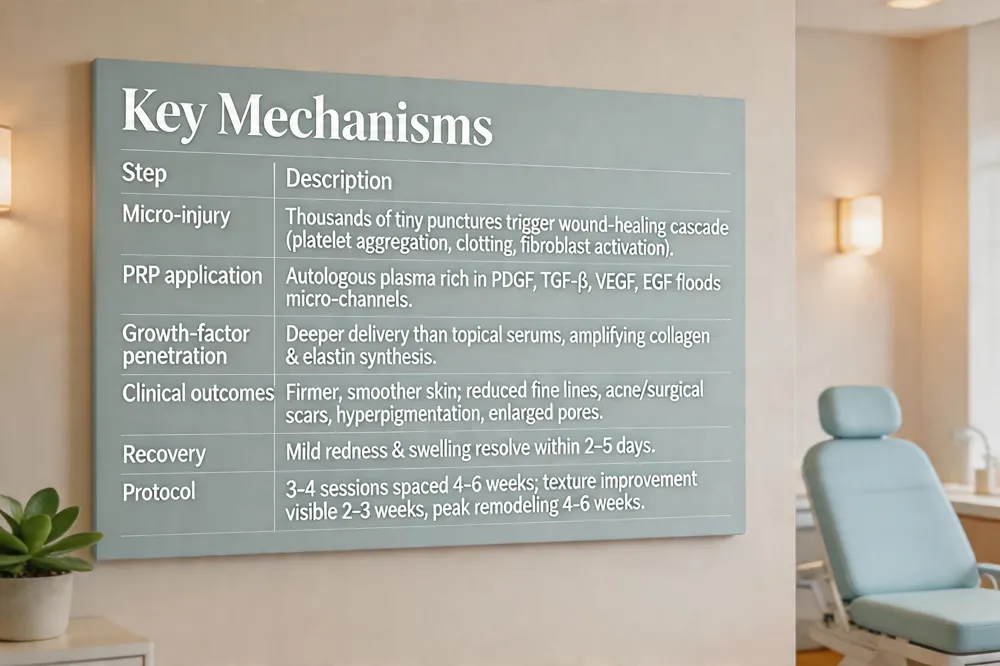 Microneedling creates thousands of tiny, controlled micro‑injuries in the epidermis and dermis.
These micro‑punctures trigger the body’s natural wound‑healing cascade: platelets aggregate, clotting factors are released, and fibroblasts are activated to begin producing new collagen and elastin.
When platelet‑rich plasma (PRP) is applied immediately after the needles have opened fresh micro‑channels, the growth‑factor‑rich serum floods the wound bed.
The PRP’s platelet‑derived growth factors—PDGF, TGF‑β, VEGF, and EGF—penetrate deeper than topical serums could, amplifying the healing response and accelerating neocollagenesis.
The synergy of micro‑injury‑driven signaling and PRP‑enhanced factor delivery yields a marked increase in collagen and elastin synthesis.
Clinical studies report firmer, smoother skin, reduced fine lines, acne and surgical scars, hyperpigmentation, and enlarged pores.
Patients also experience faster recovery with only mild redness and swelling that resolve within a few days.
Because PRP is autologous, allergic risk is negligible, making the combination safe for all skin tones.
A typical protocol of three to four sessions spaced four to six weeks apart shows visible texture improvement within two to three weeks and peak remodeling by four to six weeks.
Safety, Contraindications, and Who Can Benefit
Safety Overview
| Aspect | Details |
|---|---|
| Common side effects | Mild erythema, edema, occasional bruising (2‑5 days). |
| Contraindications | Active infection, uncontrolled diabetes, recent isotretinoin (<6 months), anticoagulants, keloid history, pregnancy/lactation. |
| Suitable ages | No upper age limit; 40 + years benefit from collagen induction. |
| Skin tones | Safe for all Fitzpatrick tones (no heat‑induced pigment change). |
| Practitioner | Board‑certified dermatologist or aesthetic physician assessment required. |
| PRP sessions | 3‑6 treatments spaced 4‑6 weeks for optimal results; maintenance thereafter. |
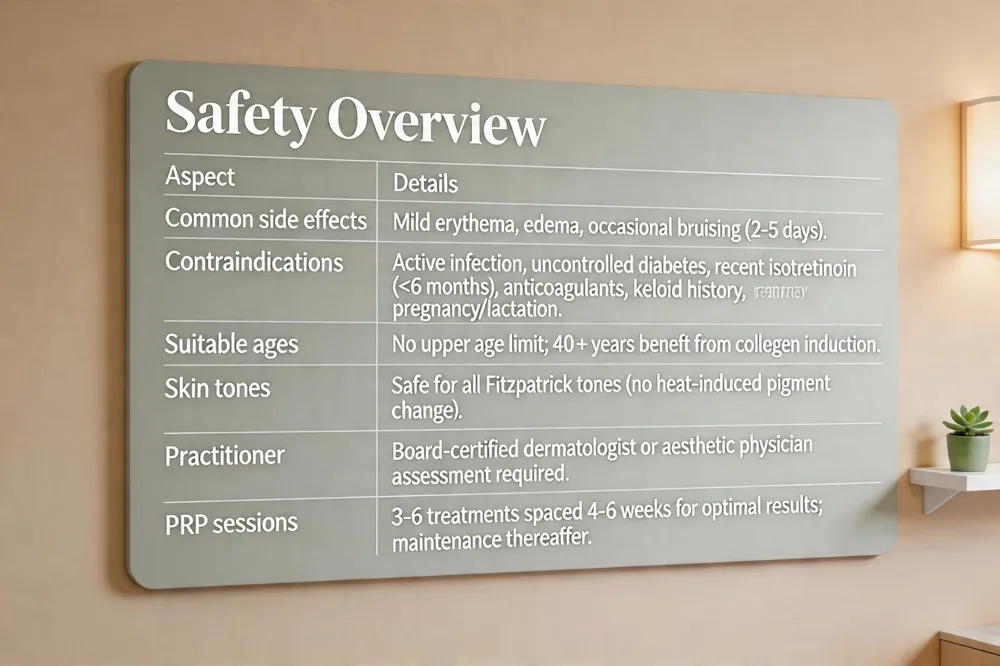 Microneedling, when combined with platelet‑rich plasma (PRP), is a minimally invasive collagen‑induction therapy that can be safely performed on most skin types, including darker Fitzpatrick tones, because it does not use heat‑induced energy that can cause pigment changes. Common short‑term side effects are mild erythema, edema, and occasional bruising, typically resolving within 2–5 days; patients often return to normal activities the next day.
Contraindications include active skin infections, uncontrolled diabetes, recent isotretinoin (within 6 months), anticoagulant therapy, a history of keloid scarring, and pregnancy or breastfeeding, during which treatment should be postponed.
Age is not a barrier—40 years is not too old for microneedling. Mature skin still benefits from the controlled micro‑injuries that stimulate new collagen and elastin, improving texture, fine lines, and mild laxity. Suitability is determined by overall skin health and medical history, so a board‑certified dermatologist or aesthetic physician should assess each patient.
Regarding PRP, three sessions can initiate collagen remodeling, but most protocols recommend 4–6 treatments spaced 4–6 weeks apart for optimal scar reduction or skin rejuvenation, with maintenance sessions thereafter to sustain results.
Facial Rejuvenation: Evidence‑Based Benefits
Evidence Summary
| Study | Population | Outcome |
|---|---|---|
| Split‑face trial (30 pts) | Atrophic acne scars | 18.5 % ≥2‑grade improvement with PRP vs 7 % with vitamin C (P=0.01). |
| GAIS & DLQI (multiple studies) | General facial rejuvenation | Significant score rise 2‑3 weeks (smoother texture, brighter tone). |
| Typical concerns addressed | Marionette lines, fine pores, sun‑damage, enlarged pores, hyperpigmentation. | |
| Recovery | Mild redness/edema 3‑5 days; visible improvement 4‑6 weeks; optimal after 3‑4 monthly sessions. | |
| Safety | Autologous PRP → negligible allergic risk; suitable for all skin types. |
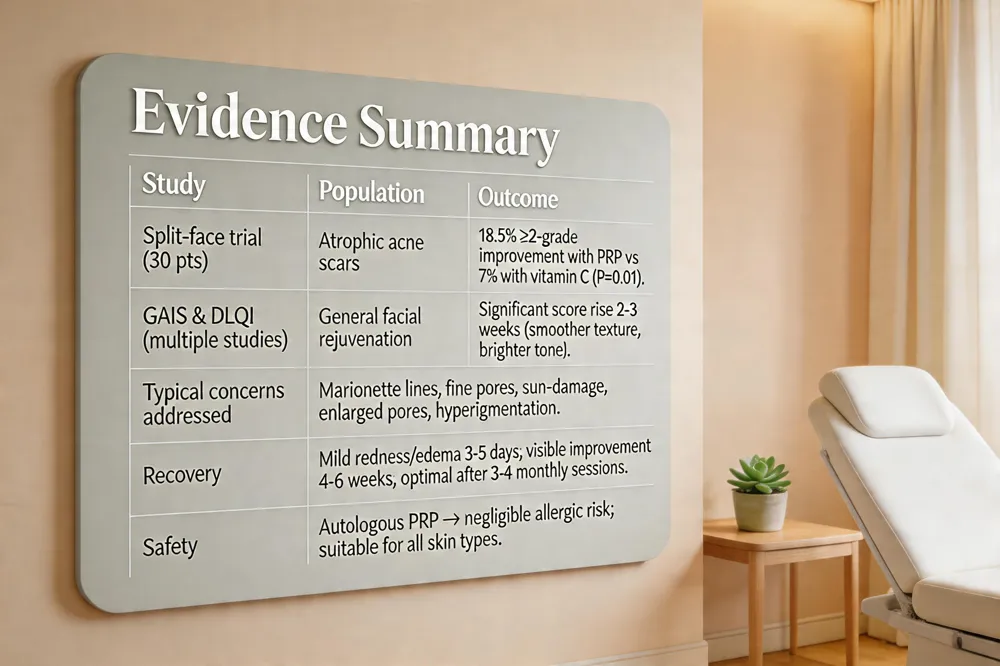 Microneedling combined with autologous platelet‑rich plasma (PRP) delivers growth factors directly into the micro‑channels created by the needles, amplifying collagen‑ and elastin synthesis. A split‑face trial on 30 patients with atrophic acne scars showed an “excellent” response (≥2‑grade scar improvement) in 18.5 % of PRP‑treated sides versus only 7 % on the vitamin‑C side, and a statistically higher overall patient‑satisfaction score (P = 0.01). In broader studies, Global Aesthetic Improvement Scale (GAIS) and Dermatology Life Quality Index (DLQI) scores rise markedly after 2–3 weeks, reflecting smoother texture, brighter tone, and reduced fine lines. The protocol addresses common facial concerns: marionette lines, fine per, sun‑damage, enlarged pores, and hyperpigmentation. PRP’s concentrated growth factors accelerate dermal remodeling, softening marionette lines and diminishing sun‑spots while preserving epidermal integrity, making it safe for all Fitzpatrick skin types. Typical recovery is brief—mild redness and edema resolve within 3–5 days—and most patients notice visible improvement by 4–6 weeks, with optimal results after a series of three to four monthly sessions. The synergistic effect of PRP thus makes microneedling a highly effective, minimally invasive option for comprehensive facial rejuvenation.
Hair Restoration: What the Evidence Shows
Hair‑Restoration Highlights
| Parameter | Details |
|---|---|
| Mechanism | Micro‑injury opens pathways; PRP delivers PDGF, TGF‑β, VEGF to stimulate follicular stem cells & blood flow. |
| Typical regimen | 3‑4 sessions 4‑6 weeks apart; 45‑60 min each; maintenance 6‑12 months. |
| Results | Modest increases in hair density & thickness, especially early‑stage androgenetic alopecia. |
| Patient satisfaction | High; fuller, natural appearance after full series. |
| Safety | Autologous, minimally invasive; suitable for all skin types. |
| Downtime | Minimal; similar to facial microneedling. |
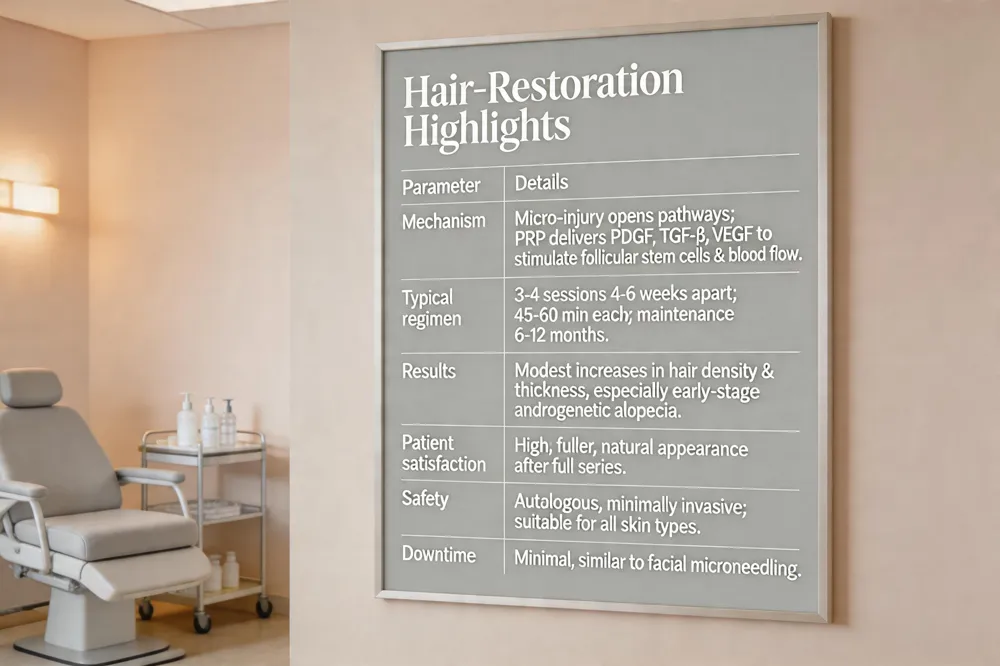 Microneedling with platelet‑rich plasma (PRP) leverages the body’s own growth‑factor cocktail to revitalize hair follicles. The tiny needles create controlled micro‑injuries, triggering a wound‑healing cascade that opens pathways for PRP to infiltrate the dermis. PRP delivers concentrated PDGF, TGF‑β, VEGF and other cytokines directly to the scalp, stimulating follicular stem cells, enhancing blood flow, and promoting new hair‑shaft formation.
Typical regimens involve 3–4 sessions spaced 4–6 weeks apart, each lasting about 45‑60 minutes. A small blood draw is centrifuged to yield 4‑5‑fold platelet concentrations, which are applied to the micro‑channels immediately after microneedling. Maintenance treatments every 6–12 months help sustain follicle activity.
Clinical observations report modest but meaningful increases in hair density and thickness, especially in early‑stage androgenetic alopecia. Patient‑reported satisfaction scores are high, with many noting a fuller, more natural appearance after the full series. The procedure is minimally invasive and autologous, and suitable for all skin types, offering a low‑downtime alternative to oral or surgical hair‑restoration options.
Timeline, Recovery, and Maintaining Results
Timeline & After‑care
| Phase | Timeline | Typical Observation |
|---|---|---|
| Immediate | 0‑3 days | Mild sunburn‑like redness, swelling, tight texture. |
| Early improvement | 2‑3 weeks | Clearer “glow”, smoother texture. |
| Mid‑term | 4‑6 weeks | Noticeable reduction in fine lines, pores, hyper‑pigmentation. |
| Long‑term | 3‑4 months | Maximal collagen remodeling; fine line reduction. |
| Maintenance | 6‑12 months | Repeat sessions to sustain results (usually 1‑2 per year). |
| After‑care tips | Clean, fragrance‑free moisturizer; avoid active acids 24‑48 h; SPF 30+ daily; no makeup/exercise for 48 h. |
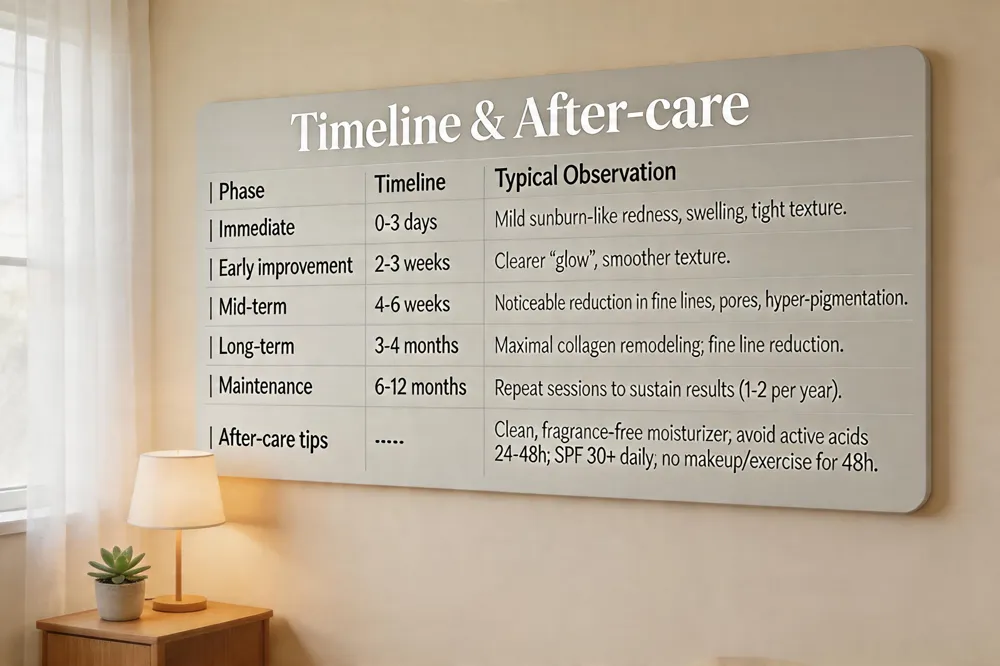 When patients first notice changes
Patients usually notice the first visible improvements within 2–3 weeks after a microneedling + PRP session, with a clearer “glow” and smoother texture appearing by week 4–6. Collagen remodeling continues, so the most noticeable reduction in fine lines, pores, and hyper‑pigmentation typically becomes apparent after 3–4 months of consistent treatment. Most clinicians recommend a series of 4 sessions spaced about six weeks apart to achieve optimal, long‑lasting results. Individual timelines can vary based on skin type, the severity of the concerns being treated, and how well post‑procedure aftercare is followed.
Typical post‑procedure skin reactions and after‑care
After a PRP‑enhanced microneedling session, the skin typically looks like a mild sunburn: redness, slight swelling and a tight, sand‑paper texture that last 1–3 days. Keep the treated area clean and moisturized with a fragrance‑free, hyaluronic‑acid or soothing‑ingredient gel, and avoid washing, scrubbing, or applying active acids for the first 24–48 hours. Skip makeup, hot showers, saunas and vigorous exercise for at least two days, and use a cool compress or soothing mist to ease discomfort. Protect the newly rejuvenated skin with a broad‑spectrum SPF 30 or higher sunscreen every day, reapplying every two hours when outdoors. Most patients experience no downtime beyond the brief redness and can resume normal skin‑care routine after 48‑72 hours.
Prp microneedling results before and after
Before‑and‑after photos of PRP microneedling typically show a smoother, more refined skin texture with visibly reduced pore size. After a series of three to four treatments, patients often notice a brighter complexion and a subtle, natural lift as fine lines and early acne‑scar marks fade. The combined microneedling and PRP approach accelerates collagen and elastin remodeling, resulting in firmer, more resilient skin. Many patients report a noticeable improvement in skin tone and overall radiance within a few weeks of the final session. Results generally last six to twelve months, with maintenance sessions helping to sustain the rejuvenated appearance.
Cost, Logistics, and Practical Decision‑Making
Cost & Decision Factors
| Factor | Typical Range |
|---|---|
| Per‑session price (Brooklyn, NY) | $300‑$600 |
| Nationwide average | ≈ $750 per treatment |
| Cost drivers | Treatment area size, number of sessions, practitioner expertise. |
| Microneedling vs. PRP‑enhanced | PRP adds growth‑factor boost → faster, deeper collagen remodeling; higher scar‑improvement rates (split‑face studies). |
| Package discounts | Often available for 3‑6 session series. |
| Practical tip | Evaluate skin concerns, budget, and practitioner credentials; consider maintenance plan for lasting results. |
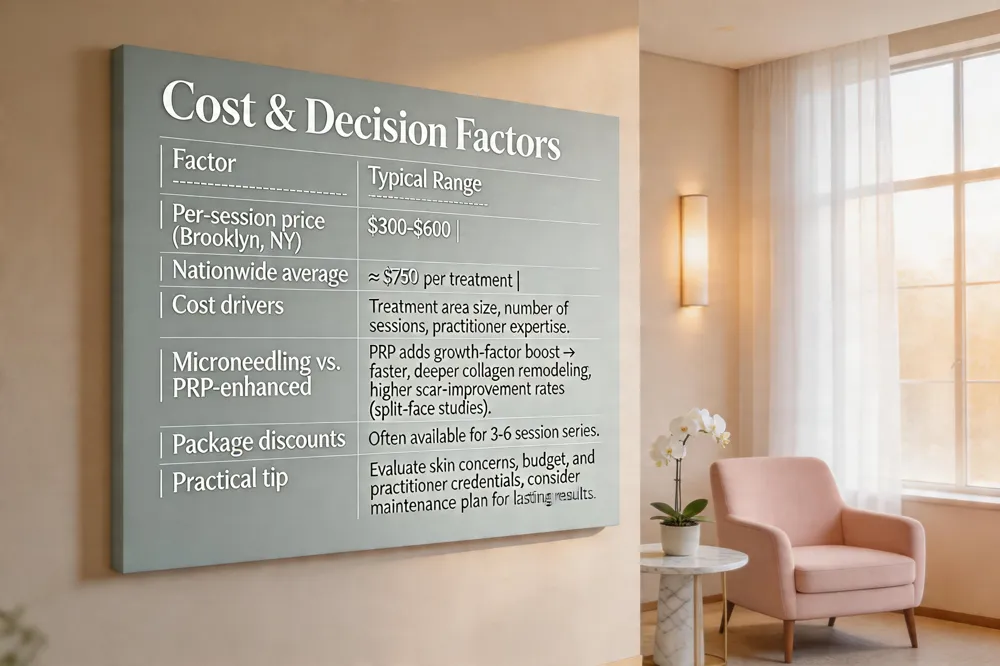 When you’re considering a microneedling‑plus‑PRP (often called a “vampire facial”) the price can vary widely. In Brooklyn, NY most clinics charge between $300 and $600 per session, reflecting the added expense of drawing and processing your own platelet‑rich plasma. Nationwide the average cost is around $750 per treatment, with many providers offering package discounts for a series of visits.
Factors that drive the cost include the size of the treatment area (larger faces or full‑body resurfacing require more needles and PRP), the number of sessions recommended (most patients need three to six sessions spaced 4‑6 weeks apart), and the practitioner’s expertise (board‑certified dermatologists and aesthetic physicians typically charge higher fees).
Microneedling alone vs. microneedling + PRP for acne scarring – Stand‑alone microneedling creates micro‑channels that stimulate collagen and can improve mild to moderate scars with minimal downtime. Adding PRP supplies a concentrated boost of growth factors that accelerates tissue repair and reduces inflammation, leading to deeper collagen remodeling. Split‑face studies show that the combined approach yields higher rates of ≥2‑grade scar improvement and greater patient satisfaction than microneedling with topical vitamin C, and it outperforms microneedling alone for boxcar and rolling scars. For most patients seeking the fastest, most noticeable scar reduction, the microneedling‑plus‑PRP protocol is the preferred option.
Emerging Technologies and the Future of PRP‑Enhanced Microneedling
Future Trends
| Technology | Potential Benefit |
|---|---|
| RF‑microneedling | Adds controlled thermal energy → deeper collagen remodeling while preserving tissue. |
| Nanoneedling | Ultra‑fine needles → smaller channels, reduced trauma & downtime. |
| Gene‑therapy delivery | Microneedling as conduit for viral/lipid vectors → local skin cell modification (research stage). |
| Platelet‑rich fibrin (PRF) | Fibrin matrix provides sustained growth‑factor release over days; may enhance scar remodeling. |
| PRP session count | 3 sessions may initiate follicle activation; 4‑6 sessions typically needed for noticeable regrowth; maintenance injections recommended. |
 Radiofrequency‑enhanced microneedling and nanoneedling are pushing the boundaries of skin rejuvenation. RF‑microneedling adds controlled thermal energy to the micro‑channels, allowing deeper collagen remodeling while still preserving surrounding tissue, and nanoneedling employs ultra‑fine needles that create even smaller channels, reducing trauma and downtime. Both technologies can serve as precise delivery platforms for autologous platelet‑rich plasma (PRP) and other biologics, amplifying the wound‑healing cascade.
Researchers are now exploring microneedling as a conduit for gene‑therapy agents and systemic medications. By pairing microneedling‑induced micro‑channels with viral or lipid‑based vectors, it may become possible to modify skin cells locally or deliver therapeutic proteins systemically, though large‑scale trials are still needed to confirm safety and efficacy.
A next‑generation alternative to PRP is platelet‑rich fibrin (PRF). Unlike liquid PRP, PRF retains a fibrin matrix, white blood cells, and stem‑cell precursors, providing a slower, sustained release of growth factors over days. Early studies suggest PRF may extend collagen‑induction benefits and improve scar remodeling.
Is 3 sessions of PRP enough? Three PRP sessions can sometimes spark early hair‑follicle activation, but most patients require a series of 4 to 6 treatments to achieve noticeable regrowth. The first noticeable changes often appear after the second or third injection, yet the full thickness and density improvements typically develop after the later sessions. Individual factors—such as the stage of hair loss, overall health, and how the scalp responds—can influence whether three visits are enough for a given person. Maintenance injections are usually recommended to keep follicles active and sustain long‑term growth. Therefore, while three sessions may be a good starting point, a complete protocol usually involves additional treatments and follow‑up maintenance.
Bottom Line: Does PRP Microneedling Live Up to the Hype?
Microneedling combined with autologous platelet‑rich plasma (PRP) consistently shows higher collagen and elastin remodeling than microneedling alone, with clinical studies reporting 2‑grade scar improvement in 18‑20 % of patients and superior patient satisfaction (p = 0.01). Safety is robust: the most common side effects are transient erythema, mild edema, and occasional bruising, all resolving within 5‑7 days. Contraindications include active infections, recent isotretinoin use, pregnancy, and certain blood disorders. Costs vary widely—from $500 to $1,300 per U in the United States—so a typical 3‑6 session series can range $2,500‑$6,000, a consideration for budget‑conscious individuals.
Ideal candidates are adults with mild‑to‑moderate acne scarring, fine lines, enlarged pores, or uneven tone who want a non‑laser, minimally invasive option and are not pregnant or on anticoagulants.
Patients interested in Jana HealthCare should schedule a comprehensive skin assessment, discuss personalized treatment depth (up to 2.5 mm) and PRP preparation, and plan a series of 3‑4 sessions spaced 4‑6 weeks apart, followed by maintenance as needed.