Understanding Macro Balancing
Macronutrients—carbohydrates, protein, and fat—are the body’s primary fuel sources and building blocks, so a each balanced proportion is essential for health, energy, and a pleasing physique. Carbohydrates and protein each supply 4 calories per gram, while fat delivers 9 calories per gram; these values let you translate a calorie goal into gram targets for each macro. Sustainable weight loss hinges on a modest calorie deficit—typically 10‑20 % below your total daily energy expenditure (TDEE)—so you burn more than you eat while still nourishing tissues. Protein, at 25‑35 % of calories, protects lean muscle, boosts satiety, and has a higher thermic effect, meaning more calories are used in digestion. Complex carbs (whole grains, legumes, vegetables, fruits) provide steady energy and fiber, whereas unsaturated fats support hormone balance and nutrient absorption. By calculating your TDEE, applying a gentle deficit, and assigning macro percentages that match your activity level and aesthetic goals, you create a personalized, nutrient‑dense plan that promotes lasting health and a confident, fit appearance.
Macro Ratios for Fat Loss and Muscle Gain
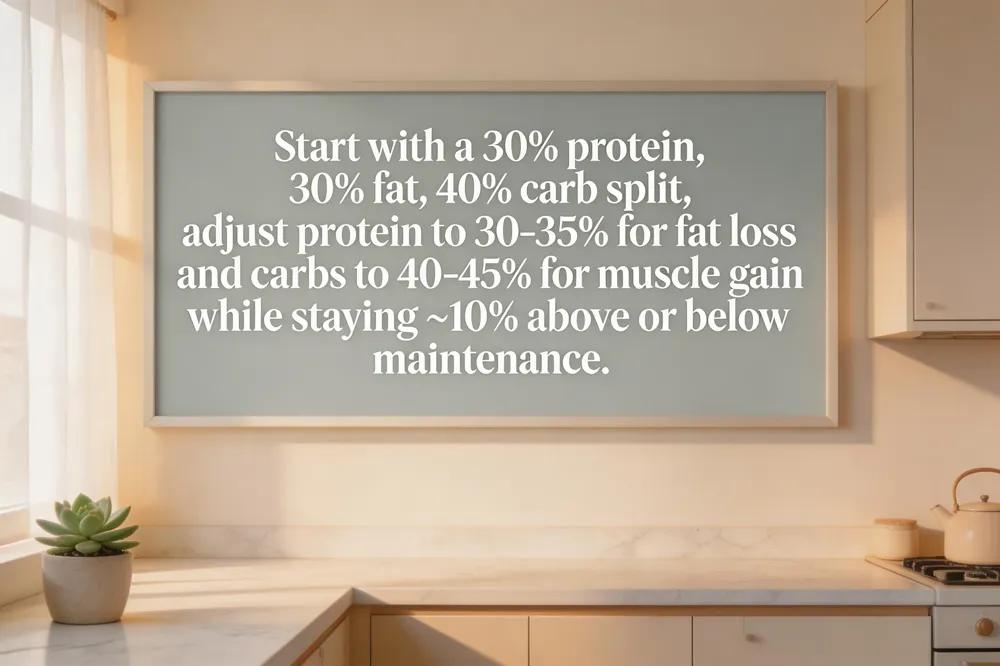 Choosing the right macronutrient split is the cornerstone of both cutting (fat loss) and bulking (muscle gain). A solid starting point for most adults is a 30 % protein, 30 % fat, 40 % carbohydrate distribution. When the goal shifts to fat loss, protein is nudged up to 30‑35 % of calories to preserve lean tissue, refined carbs are minimized, and the remaining calories are split between healthy fats and complex carbs while staying in a modest calorie deficit. For muscle gain, keep protein in the same 30‑35 % range, but allocate the bulk of the remaining calories to carbs (≈40‑45 %) and a moderate amount of fat (≈30 %) and consume roughly 10 % above maintenance.
Protein emphasis for muscle preservation – Protein supplies the amino acids needed for repair and has a high thermic effect, helping to maintain muscle during a calorie deficit. Aim for 1.2‑2.0 g per kilogram body weight (or 0.55‑0.9 g per pound) and spread intake across 4‑5 meals to maximize muscle‑protein synthesis.
Adjusting carbs and fats – Complex carbs (whole grains, legumes, veg, fruit) provide slow‑release energy and nutrients such as whole grains, legumes, vegetables, and fruits provide slower‑releasing energy and fiber. Unsaturated fats (olive oil, avocado, nuts, fatty fish) are beneficial; limit saturated/trans fats from olive oil, avocado, nuts, and fatty fish support hormone health; saturated and trans fats should stay under 10 % of total calories.
Tracking and periodic adjustments – Use a reliable macro calculator (e.g., Mifflin‑St Jeor‑based) to set your TDEE, then convert target percentages into gram amounts (Protein and carbs each provide 4 kcal per gram, while fat provides 9 kcal per gram. Re‑evaluate every 3‑4 weeks, tweaking percentages based on weight change, performance, and hunger cues. This flexible, evidence‑based approach aligns with U.S. Dietary Guidelines: 45‑65% carbs, 10‑35% protein, 20‑35% fat and supports sustainable, personalized results.
Women’s Weight‑Loss Strategies
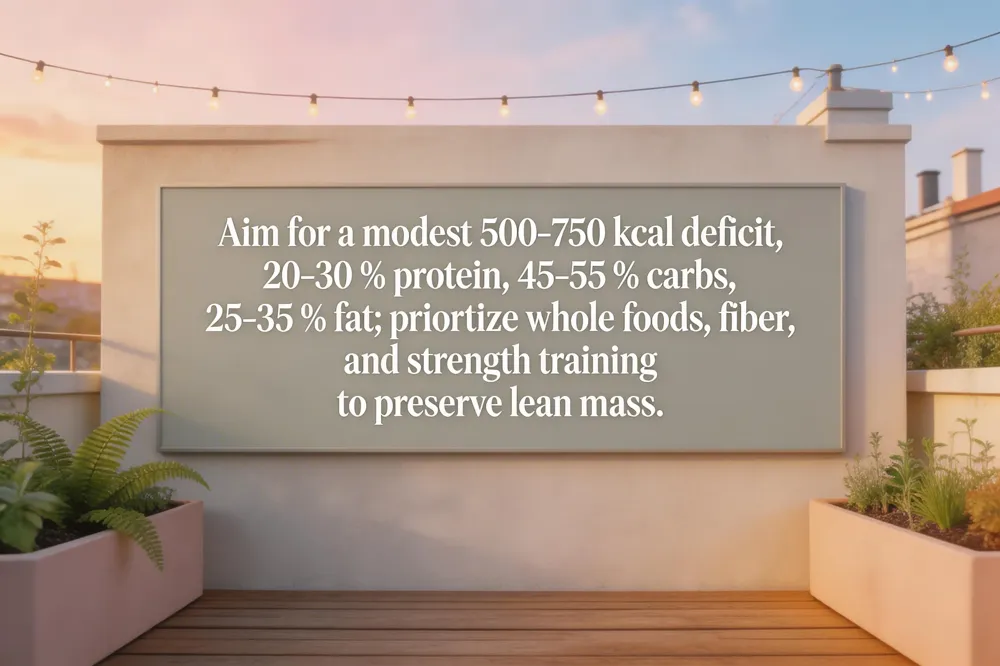 Balancing macronutrients and creating a modest calorie deficit are the cornerstones of safe, sustainable weight loss for women at any stage of life. Carbohydrates: 4 kcal/g; Proteins: 4 kcal/g; Fats: 9 kcal/g, so a well‑planned split can control intake while preserving lean tissue.
How can a woman lose weight in 2 weeks? Aim for a daily deficit of 500–750 kcal by trimming refined carbs and added sugars, and increase protein (≈1.2 g kg⁻¹) and fiber‑rich vegetables to stay satisfied. Pair this with 30 min of moderate cardio and 2–3 short strength sessions per week. Hydration (≈8 glasses water) and 7–8 h sleep help keep leptin and ghrelin balanced, allowing a realistic loss of 2–4 lb (0.9–1.8 kg).
Best macros for weight loss for women over 40 – A 20‑30 % protein, 45‑55 % carbohydrate, 25‑35 % fat split works well. Target 1.4‑1.6 g protein kg⁻¹ daily, choose whole‑grain carbs and low‑glycemic fruit, and fill fat calories with unsaturated sources (olive oil, avocado, nuts, fatty fish) to support hormone health during menopause.
How to lose weight in 7 days – Follow a “Lose It!” habit‑based approach: add five healthy habits (e.g., water before meals, 30 min movement), break five unhealthy ones, and keep daily intake around 1,500–1,700 kcal. Track food with a digital app and include daily aerobic activity.
What is the most sustainable way to lose weight? Adopt lasting lifestyle habits: a balanced, calorie‑controlled diet rich in whole foods, regular aerobic (≥150 min/week) and strength training, realistic goals (1–2 lb/week), and ongoing self‑monitoring. Stress‑reduction, adequate sleep, and a supportive environment further enhance adherence.
Tips to lose weight fast – Set a 1–2 lb/week target, use a Mediterranean‑style plate (½ vegetables,¼ carbs,¼ protein), limit added sugars, and stay active (150 min/week cardio + 2 strength sessions). Log meals and emotions to spot patterns and adjust quickly.
Best macros for weight loss during menopause – Increase protein to 30‑35 % of calories, keep carbs moderate (20‑35 %) with fiber‑rich choices, and fill the remainder with healthy fats (30‑45 %). Combine this macro plan with regular strength training, 7‑9 h sleep, and stress‑management for optimal results.
Macro Calculators and Tracking Tools
 Mifflin‑St Jeor equation
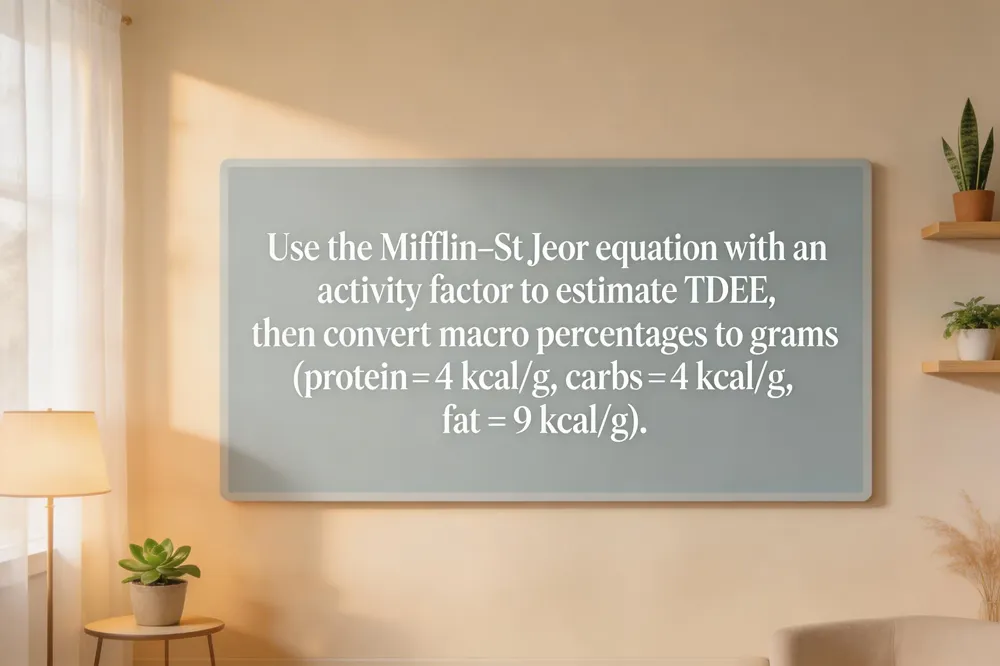
The Mifflin‑St Jeor formula (BMR = 10 × weight kg + 6.25 × height cm – 5 × age + 5 for men or –161 for women) is the gold‑standard for estimating basal metabolic rate in U.S. adults. Multiplying BMR by an activity factor (1.2 – 1.9) yields Total Daily Energy Expenditure (TDEE), the calorie target that drives macro calculations.
Mifflin‑St Jeor equation
The Mifflin‑St Jeor formula (BMR = 10 × weight kg + 6.25 × height cm – 5 × age + 5 for men or –161 for women) is the gold‑standard for estimating basal metabolic rate in U.S. adults. Multiplying BMR by an activity factor (1.2 – 1.9) yields Total Daily Energy Expenditure (TDEE), the calorie target that drives macro calculations.
Activity factors and TDEE Common activity multipliers are 1.2 for sedentary, 1.375 lightly active, 1.55 moderately active, 1.725 very active, and 1.9 extra active. Choosing the correct factor tailors your macro split to real‑world energy use.
Online macro calculators Web‑based tools (e.g., Macro Calculator, MyFitnessPal) plug your age, gender, height, weight, activity level, and goal into the Mifflin‑St Jeor equation, then divide calories into protein, carbs, and fat using user‑chosen percentages (40 % carb / 30 % protein / 30 % fat is a popular start). Apps convert percentages to gram targets (protein = 4 kcal/g, carbs = 4 kcal/g, fat = 9 kcal/g) and let you log meals.
Free PDFs and meal plans Jana HealthCare offers downloadable PDFs with a 40‑30‑30 macro plan, sample recipes, and a printable food‑list. These guides show portion sizes, quick prep tips, and a step‑by‑step macro‑calculation worksheet for beginners.
Macro diet calculator A macro diet calculator personalizes daily calorie needs and splits them into protein, carbohydrate, and fat grams based on your profile, supporting balanced nutrition for weight loss, maintenance, or muscle gain.
Macro diet plan for beginners (PDF) The beginner PDF follows a 40‑30‑30 split (~1,600 kcal) with three meals and two snacks, complete with recipe ideas and a quick macro‑target worksheet.
Macro diet plan for weight loss Aim for ~30 % protein, 30 % healthy fat, 40 % complex carbs; include lean proteins, fiber‑rich grains, and modest monounsaturated fats. Track with an app and combine with strength‑training.
Macro diet food list Protein: eggs, chicken breast, Greek yogurt; Carbs: quinoa, sweet potatoes, oats; Fats: avocado, almonds, olive oil; plus plenty of non‑starchy veg and berries.
Macro diet recipes Breakfast: protein‑packed overnight oats (≈31 g P, 45 g C, 6 g F). Lunch: chicken‑basil sandwich with light aioli (≈25 g P). Snacks: cottage‑cheese pancakes with berries (≈12 g P).
Recommended macronutrient intake in grams On a 2,000 kcal diet: 225‑325 g carbs, 50‑175 g protein (≈1.2 g/kg for active adults), and 44‑78 g fat, keeping saturated fat <10 % of calories.
Free macro diet plan A 7‑day guide with balanced meals, printable grocery list, and tracking sheet; adjust portions weekly based on progress.
What to eat to lose weight fast Prioritize non‑starchy veg, lean protein, whole‑grain carbs, and modest healthy fats; create a ~600 kcal deficit and stay hydrated.
How did David Goggins lose 100 lb in 3 months? He paired a very low‑calorie diet with ultra‑high‑rep, low‑weight resistance training (100+ reps) to preserve muscle while shedding fat rapidly.
Macro Ratios for Different Goals
 When you tailor your diet to a specific goal, a clear macronutrient split can keep you on track while supporting overall health.
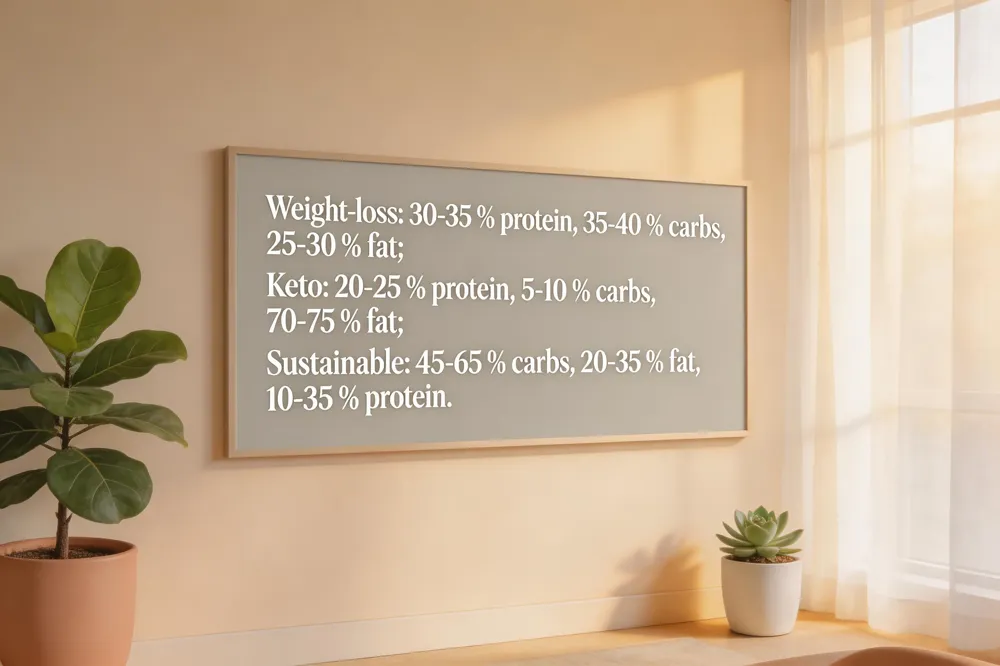
Weight‑loss macro split – An evidence‑based starting point is about 30‑35 % protein, 35‑40 % carbohydrates, and 25‑30 % fat. Protein (≈1 g per lb of lean body mass) preserves muscle and boosts satiety; moderate carbs supply steady energy for daily activity; a lower‑mid‑range fat intake provides essential fatty acids without excess calories. Aim for a modest deficit of 250‑500 kcal per day to lose 0.5‑1 lb weekly.
Keto macro considerations – For ketogenic weight loss, keep net carbs at 5‑10 % of calories (20‑50 g), healthy fats at 70‑75 %, and protein at 20‑25 % (0.8‑1.0 g/kg). This maintains ketosis while protecting muscle. A 15‑20 % calorie reduction from maintenance is usually sufficient.
Sustainable macro guidelines – A balanced, nutrient‑dense approach works long‑term: 45‑65 % carbs (focus on fiber‑rich vegetables, whole grains, legumes), 20‑35 % healthy fats (olive oil, avocado, nuts, fatty fish), and 10‑35 % protein (lean meats, fish, tofu, low‑fat dairy). Adjust toward the higher end of carbs if you’re active, and keep protein at 0.8‑1.2 g per lb body weight to preserve lean mass.
Carbohydrate‑protein‑fat balance for weight loss – The U.S. Dietary Guidelines recommend 45‑65 % carbs, 20‑35 % fat, and 10‑35 % protein, with protein on the higher side (15‑25 % of calories) to enhance satiety and thermogenesis. Choose complex carbs and unsaturated fats for steady energy and hormone health.
Smart dieting for a sustainable plan – Calculate personal targets (≈30‑35 % protein, 40‑45 % carbs, 25‑30 % fat), prioritize lean protein, whole‑food carbs, and moderate healthy fats. Meal‑prep, portion control, and tracking with an app keep you accountable while avoiding deprivation. Adjust ratios as needed and consult a registered dietitian for individualized guidance.
Practical Strategies for Macro Balancing
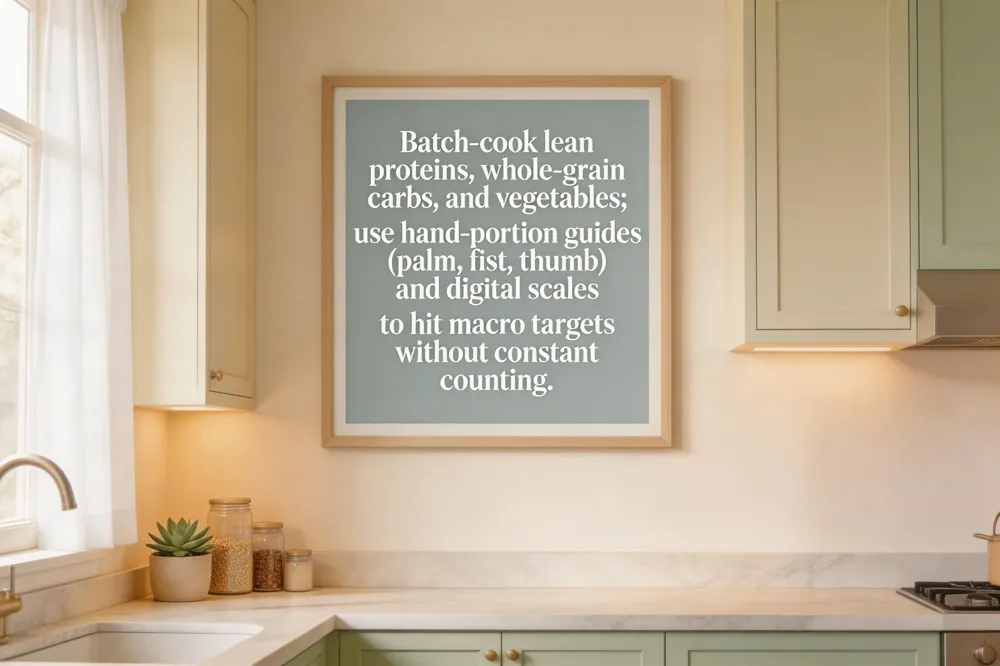 Meal planning and portion control are the foundation of a macro‑balanced diet. Use a weekly menu template, batch‑cook lean proteins (chicken, tofu, fish) and Complex carbs (brown rice, quinoa, legumes), and portion each serving with a digital scale or the hand‑portion guide (palm for protein, fist for carbs, thumb for fats). Reading nutrition labels lets you verify gram amounts, prioritize foods with higher protein‑to‑sugar ratios, and avoid hidden fats or added sugars. Hydration and mindful eating work together: sip water throughout the day, replace sugary drinks with plain or lightly flavored sparkling water, and sit down without screens, chew slowly, and pause between bites to listen for fullness cues. Home‑based sustainable tips include filling half of every plate with non‑starchy vegetables, swapping processed snacks for fruit or nuts, and establishing a consistent morning ritual—light activity, a protein‑rich breakfast, or brief meditation—to set a positive tone.
Sustainable dieting tips at home: Focus on whole, minimally processed foods, fill half the plate with vegetables, and choose lean protein, whole grains, and low‑fat dairy for the other half. Replace sugary drinks with water, practice mindful eating without distractions, and incorporate enjoyable home workouts such as body‑weight circuits, dancing, or yoga.
Tips to lose weight fast: Aim for a realistic 1–2 lb per week loss, follow a balanced pattern like Mediterranean or DASH, control portions with smaller plates, and prioritize low‑calorie veg. Add at least 150 minutes of weekly aerobic activity plus twice‑weekly strength training, track intake and activity in an app, plan meals ahead, keep healthy snacks on hand, and enlist social support for accountability.
Professional Guidance and Health Considerations
 Risks of excessive macro tracking – While counting grams can sharpen awareness, over‑monitoring may foster anxiety, social isolation, and nutrient gaps. Studies link intensive macro apps to disordered eating patterns, especially in those with prior eating‑disorder histories.
Eating‑disorder awareness – Be vigilant for signs such as obsessive weighing, rigid food rules, or extreme calorie restriction. Early referral to a mental‑health professional and a registered dietitian can prevent escalation.
Consulting dietitians – A dietitian tailors macro ratios to your medical profile, activity level, and food preferences, ensuring adequate micronutrients and sustainable habits. This personalized approach is especially valuable for conditions like diabetes, thyroid disease, or PCOS.
Menopause and age‑related adjustments – Post‑menopausal women benefit from slightly higher protein (≈25‑30 % of calories) to preserve lean mass and bone health, while modest reductions in total calories accommodate a slower metabolism.
What to eat to lose weight fast
Focus on nutrient‑dense, low‑calorie foods: non‑starchy vegetables, lean proteins (fish, poultry, legumes, low‑fat dairy), and complex carbs (whole grains). Add modest servings of unsaturated fats (olive oil, avocado). Aim for a 500‑750 kcal daily deficit, staying hydrated and pairing meals with regular activity.
What did David Goggins lose 100 lb in 3 months?
Goggins achieved rapid loss using high‑rep, low‑weight resistance work (100+ reps) combined with strategic calorie reduction, emphasizing muscle preservation and metabolic stress without drastic dieting.
Macro diet for beginners
Begin by estimating your calorie needs (Mifflin‑St Jeor + activity factor). Apply a balanced split—45‑65 % carbs, 10‑35 % protein, 20‑35 % fat—and convert percentages to grams (4 kcal/g for carbs/protein, 9 kcal/g for fat). Track intake with an app or food scale, adjust portions, and consider a dietitian’s guidance for optimal results.
Integrating Exercise and Lifestyle
 Macro diet calculator
A macro diet calculator uses this TDEE to split calories into protein, carbohydrate and fat targets, applying the standard 4 kcal/g for protein and carbs and 9 kcal/g for fat. Enter age, gender, height, weight, activity level, and weight‑goal, and the tool (often based on Mifflin‑St Jeor or Katch‑McArdle) provides a personalized daily macro split. Tracking these numbers with an app helps ensure you meet energy needs while preserving lean mass.
Macro diet plan for weight loss
A typical weight‑loss ratio is 30 % protein, 30 % healthy fat, and 40 % complex carbs. Choose lean proteins (chicken, fish, Greek yogurt), fiber‑rich carbs (quinoa, sweet potatoes, whole‑grain breads), and monounsaturated fats (avocado, olive oil, nuts). Plan three meals and two snacks, keep calories around 1,500‑1,800 for most adults, and track portions with a digital scale or app.
Combine this nutrition with strength‑training sessions 2‑3 times per week and aerobic cardio 150 minutes weekly. Prioritize hydration (water before meals) and aim for 7‑9 hours of sleep to support recovery, hormone balance, and satiety. Jana HealthCare offers personalized consultations to fine‑tune your macro targets, exercise schedule, and lifestyle habits for optimal health and aesthetic results.
Energy Balance and the Thermic Effect of Food
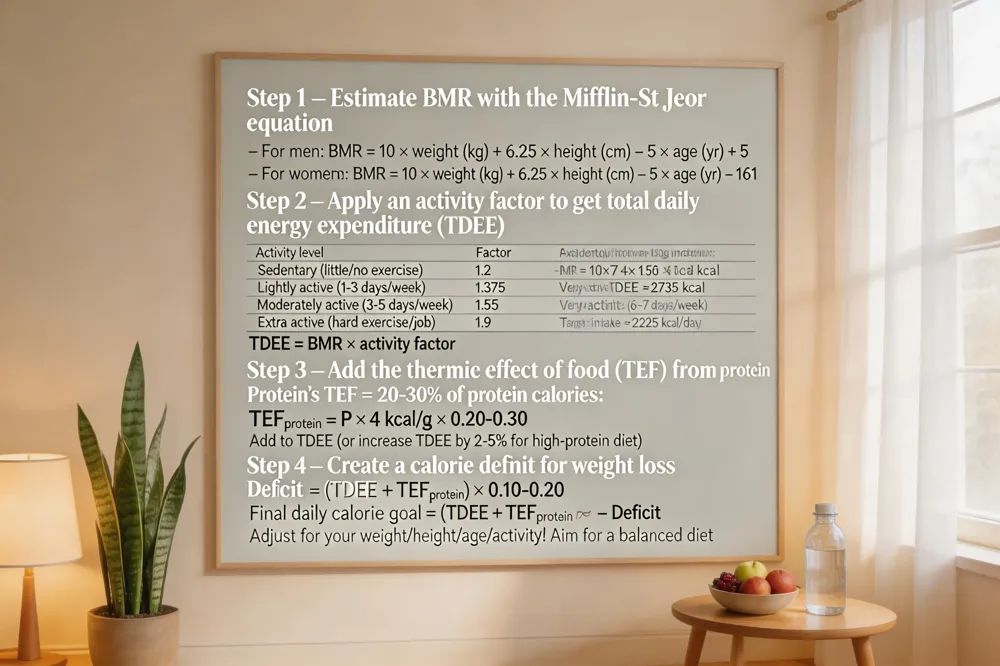 Your body’s energy needs start with the basal metabolic rate (BMR), the calories needed to keep vital organs running at rest. Most U.S. clinicians estimate BMR with the Mifflin‑St Jeor equation, which uses weight, height, age, and sex (e.g., BMR = 10 × weight(kg) + 6.25 × height(cm) – 5 × age + 5 for men, –161 for women). To translate BMR into total daily energy expenditure (TDEE), multiply by an activity factor: 1.2 for sedentary, 1.375 lightly active, 1.55 moderately active, 1.725 very active, and 1.9 extra active. Once TDEE is known, a modest calorie deficit of 10‑20 % (≈300‑500 kcal) supports steady weight loss while preserving lean tissue. Protein stands out because its thermic effect of food (TEF) consumes 20‑30 % of its calories during digestion, compared with 5‑10 % for carbs and 0‑3 % for fats. Prioritizing protein (≈25‑35 % of calories) not only boosts TEF but also promotes satiety and muscle maintenance—key for a healthy, aesthetic transformation.
Building Sustainable Food Habits
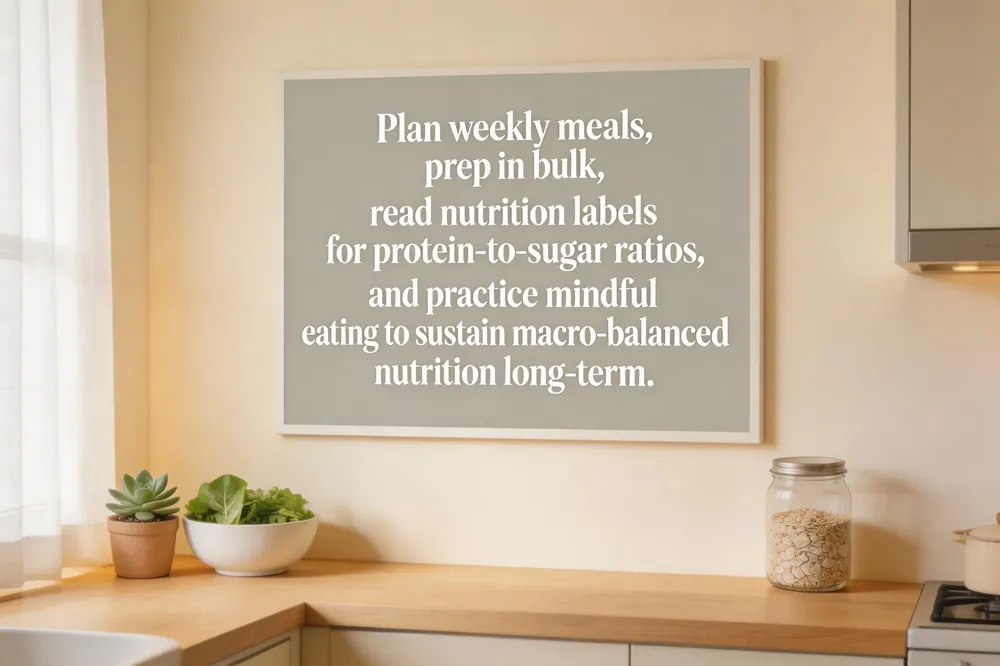 Creating lasting eating habits starts with thoughtful meal planning and batch cooking. By mapping out a week’s worth of meals and preparing proteins, whole grains, and roasted vegetables in advance, you reduce reliance on high‑calorie convenience foods and ensure each plate contains a balanced mix of carbs, protein, and healthy fats. Portion‑control cues—such as using your palm for protein, a fist for carbs, and a thumb for fats—help you stay within your macro targets without constantly counting grams. Reading nutrition labels is another practical tool: look for foods that provide more protein than sugar per serving, choose whole‑grain sources with at least 3 g of fiber per ounce, and verify that saturated fat stays below 10 % of total calories. Finally, practice mindful eating by sitting down without distractions, chewing slowly, and checking in with hunger and fullness cues; this simple habit can curb overeating, improve digestion, and reinforce the satisfaction that comes from nutrient‑dense, macro‑balanced meals.
Putting It All Together at Jana HealthCare
A solid macro foundation starts with the three fuel sources: protein, carbohydrates and fats. Protein and carbs each supply 4 kcal per gram, while fat provides 9 kcal per gram, and the U.S. Dietary Guidelines suggest 10‑35 % of calories from protein, 45‑65 % from carbs and 20‑35 % from fats. A common weight‑loss split—40 % carbs, 30 % protein, 30 % fat—promotes satiety, preserves lean muscle and creates a modest calorie deficit (≈500 kcal/day) for a safe 1‑2 lb weekly loss.
At Jana HealthCare we personalize these ratios using the Mifflin‑St Jeor equation to calculate your TDEE, then adjust for activity level and goals. Our registered dietitians help you choose nutrient‑dense foods—whole‑grain carbs, lean proteins, unsaturated fats—and set realistic portion‑control strategies, such as hand‑portion cues or the plate method.
Your next steps: schedule a one‑on‑one nutrition consult, log meals with a trusted app or food scale, and integrate regular movement, adequate sleep and stress‑management techniques. This holistic, data‑driven plan supports sustainable weight loss while enhancing overall health and aesthetic well‑being.