Introduction to PRP Therapy and Its Growing Popularity
What Is Platelet-Rich Plasma (PRP)?
PRP is a biological product made from a patient’s own blood. It contains a concentrated portion of plasma rich in platelets and growth factors such as PDGF, VEGF, TGF-β, and EGF. These components play critical roles in tissue healing and regeneration by stimulating cell growth, collagen synthesis, and new blood vessel formation.
Expanding Uses in Medicine and Aesthetics
PRP therapy is gaining popularity for its wide applications. Medically, it supports healing in musculoskeletal injuries, osteoarthritis, and post-surgical recovery. Aesthetically, it's used for skin rejuvenation, hair restoration, scar treatment, and improving skin texture and tone. This versatility has made PRP a valuable tool in both fields.
Safety Through Autologous Treatment
Because PRP is derived from the patient’s own blood, it minimizes risks such as allergic reactions or disease transmission. Side effects are generally mild and temporary, like bruising or soreness at the injection site. The autologous nature ensures a high safety profile, making PRP a favorable option for patients seeking natural, biocompatible therapies.
The Science and Process Behind PRP: How It Promotes Healing and Regeneration
How is PRP obtained and how does it promote healing?
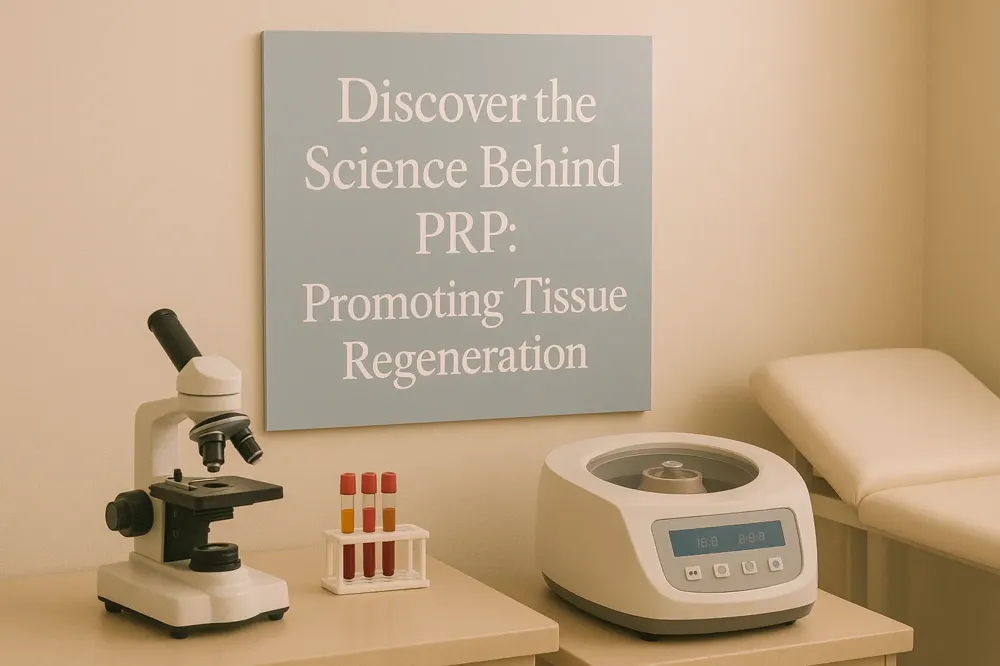
Platelet-rich plasma (PRP) overview is derived from a small sample of a patient’s own blood (PRP derived from patient's blood), which is drawn and then processed through centrifugation. This process separates and concentrates the platelets and plasma, isolating the portion rich in growth factors in PRP, essential for tissue repair and regeneration.
Role of concentrated platelets and growth factors in tissue repair
The concentrated platelets in PRP release over 30 growth factors, including PDGF in PRP, TGF-beta in PRP, VEGF in PRP, EGF in PRP, and IGF-1. These factors activate cellular signaling pathways that promote blood vessel formation (angiogenesis), cell division (mitogenesis), and the remodeling of the extracellular matrix.
Mechanisms of collagen synthesis, angiogenesis, and cellular proliferation
PRP stimulates fibroblast proliferation and collagen synthesis, which are fundamental for PRP for skin rejuvenation and PRP wound healing. By enhancing angiogenesis, PRP improves blood supply to damaged tissues, fostering a better healing environment. Cellular proliferation triggered by these growth factors helps regenerate tissue, reduce inflammation, and restore function.
Variability of PRP formulations and their tailored applications
Different PRP preparation techniques—such as Single spin PRP centrifugation, Double spin PRP centrifugation, and PRP activation with calcium chloride—result in variable formulations. Some contain higher leukocyte concentrations (leukocyte-rich), while others are leukocyte-poor. These variations allow clinicians to tailor the formulation based on the condition treated, optimizing outcomes for musculoskeletal injuries, aesthetic skin treatments, or hair restoration.
Treatment is minimally invasive and uses the patient’s own blood, greatly minimizing risks of allergic reactions and transmission of infections. The process is quick, usually performed outpatient, and promotes natural healing by delivering concentrated growth factors directly to the affected area, accelerating recovery and improving tissue quality (PRP therapy process, Benefits of PRP Therapy).
Applications and Effectiveness of PRP in Dermatology and Aesthetic Medicine

What is PRP treatment and how is it used in aesthetics?
PRP treatment uses a patient’s own blood to harness natural healing abilities. Through centrifugation, platelets and growth factors are concentrated and then injected into targeted skin or scalp areas. In aesthetic medicine, PRP promotes collagen synthesis, boosts tissue regeneration, and enhances skin texture and elasticity. It is commonly used for facial rejuvenation, wrinkle reduction, and repairing acne scars or other skin imperfections.
Patients typically undergo a series of 2-3 treatments spaced about 4-6 weeks apart, with effects developing gradually over a few months. PRP can be combined with microneedling, laser therapy, or dermal fillers to increase effectiveness. This synergistic approach supports deeper collagen remodeling and faster skin healing, resulting in improved firmness, reduced pigmentation, and smoother skin.
For hair restoration, PRP injections stimulate dormant hair follicles and promote proliferation in conditions like androgenic alopecia and alopecia areata. Treatment enhances hair density and thickness, with maintenance sessions recommended to sustain results. Overall, PRP treatments are minimally invasive, have a favorable safety profile, and require little downtime.
What are the applications and efficacy of platelet-rich plasma in dermatology?
Platelet-rich plasma is increasingly embraced in dermatology for diverse uses including:
- Facial rejuvenation
- Acne and scar remodeling
- Hair loss disorders such as androgenic alopecia and alopecia areata
- Pigmentation disorders like vitiligo
Clinical studies have shown that PRP’s rich growth factors — including PDGF, TGF-β, VEGF, and IGF-1 — promote angiogenesis, collagen synthesis, and cellular proliferation needed for skin and hair restoration. When combined with fractional CO2 laser or microneedling, PRP enhances skin regeneration and reduces recovery time.
Evidence indicates improvements in:
- Skin texture and elasticity
- Reduction in fine lines, wrinkles, and pigmentation
- Increased hair density and thickness
- Softening of acne scars and stretch marks
While promising, most studies note the need for larger, controlled clinical trials to standardize PRP preparation and confirm long-term benefits. However, existing research supports PRP as a safe and effective adjunctive tool in dermatologic and aesthetic protocols.
| Application Area | Treatment Focus | Outcomes |
|---|---|---|
| Skin Rejuvenation | Collagen stimulation, wrinkle reduction | Improved tone, elasticity, and texture (PRP facial rejuvenation) |
| Scar Remodeling | Acne scars, stretch marks | Reduced scar depth and visibility (PRP scar treatment benefits) |
| Hair Restoration | Androgenic alopecia, alopecia areata | Increased hair density and thickness (Platelet-Rich Plasma in hair loss treatment |
| Combination Therapy | PRP with microneedling, lasers, fillers | Enhanced collagen remodeling, faster healing (PRP combined with microneedling) |
PRP’s Role in Orthopedics and Musculoskeletal Care: Enhancing Recovery and Reducing Pain

What is the PRP treatment process for musculoskeletal issues such as knee and shoulder pain?
PRP therapy for healing for musculoskeletal problems starts with drawing a small amount of the patient's blood. This blood is then spun in a centrifuge to concentrate the platelets, which are rich in growth factors like PDGF in PRP, VEGF in PRP, and TGF-β. The resulting platelet-rich plasma is injected directly into the injured tendon, ligament, muscle, or joint, often guided by imaging tools such as ultrasound to ensure precise placement (PRP injection technique in musculoskeletal injuries).
This approach is used to treat various conditions including tendonitis, ligament sprains, muscle tears, and osteoarthritis-related joint pain. The growth factors released by the platelets stimulate tissue regeneration, encourage collagen synthesis, and reduce inflammation, promoting faster and more natural healing compared to traditional therapies (Platelet-Rich Plasma treatment.
What are the expected recovery times and potential side effects after PRP injections in the shoulder?
After a PRP injection in the shoulder, patients usually experience a short rest period of several days to a week. During this time, mild inflammation and soreness at the injection site may occur but generally resolve quickly. Gradual resumption of physical therapy and activity follows based on the individual’s healing progress.
The therapeutic effects of PRP develop over weeks to months, with many patients reporting reduced pain and improved joint function lasting from 6 to 12 months or longer. Major side effects such as infection or nerve injury are rare due to the autologous nature of PRP and sterile technique during administration (PRP treatment safety.
How does PRP reduce inflammation and promote tissue regeneration?
PRP works on injured tissues by releasing growth factors that activate cellular signaling pathways responsible for cell division, angiogenesis, and extracellular matrix remodeling (PRP impact on extracellular matrix remodeling). This promotes the regeneration of tendons, ligaments, and cartilage while modulating inflammatory mediators to decrease swelling and pain (PRP growth factors and tissue healing).
Unlike corticosteroids that provide temporary relief by suppressing inflammation, PRP encourages healing at the root cause, leading to sustained tissue repair and functional improvement (Natural Pain Relief with PRP injections.
What advantages does PRP offer over traditional therapies and how does it affect recovery timelines?
PRP is a natural, minimally invasive treatment using the patient’s own blood, which reduces risks of allergic reactions and systemic side effects common with steroids or synthetic drugs. It targets the injured area precisely and promotes tissue regeneration rather than masking symptoms (Benefits of PRP Therapy.
Patients undergoing PRP treatments often experience faster recovery times compared to surgery or standard injection therapies. Many return to normal activities sooner, with lasting benefits in pain reduction and mobility enhancement. Moreover, PRP can be used repeatedly and combined with physical rehabilitation to optimize healing (Safety and risks of PRP injections.
| Aspect | Description | Benefit |
|---|---|---|
| Treatment Process | Autologous blood draw, centrifugation, and guided injection | Safe, precise, and biocompatible |
| Conditions Treated | Tendon, ligament, muscle, joint injuries, osteoarthritis | Broad orthopedic applications |
| Mechanism | Growth factors stimulate healing and reduce inflammation | Natural tissue regeneration |
| Recovery Time | Days to weeks rest and months for maximal effect | Faster recovery and long-lasting symptom relief |
| Side Effects | Mild pain, swelling; rare infection or tissue injury | Low-risk due to autologous nature |
| Advantages over Traditional | Targets root cause and promotes healing vs symptom relief | Reduced dependency on steroids or surgery |
Safety, Side Effects, and Professional Standards in PRP Treatment

What are common side effects and safety considerations of PRP treatments for the face?
PRP treatment safety are generally considered safe due to their autologous nature—using the patient's own blood reduces risks of allergic reactions and disease transmission. Typical side effects at injection sites include mild redness, swelling, tenderness, bruising, and slight tingling, which usually resolve within a few days.
Despite the low risk, rare complications can occur, such as inflammation, nodule formation, or, in extremely rare cases involving facial injections, more serious issues like vascular injury leading to vision problems. Such adverse events highlight the importance of meticulous sterile technique during blood processing and injection.
Patients should be screened to rule out contraindications like blood disorders or infections. Following post-treatment care instructions—such as avoiding makeup and sun exposure for a few days—also supports safe recovery.
Can aestheticians perform PRP treatments, or are they medical procedures requiring licensed professionals?
PRP therapy involves injections requiring a deep understanding of human anatomy and the management of potential complications. Due to this, PRP treatments are classified as medical procedures.
Typically, only licensed healthcare providers such as physicians (MDs or DOs), nurse practitioners, or physician assistants with specialized training are authorized to perform PRP injections. While aestheticians are skilled in skin care, they generally lack the medical training necessary for safe injection administration.
Receiving PRP treatments from medical professionals ensures adherence to safety protocols, correct technique, and effective outcomes, minimizing risks such as infection, tissue damage, or improper injection.
Patients seeking PRP therapy should verify their provider’s credentials and experience to guarantee both safety and efficacy.
Integrating PRP into Comprehensive Aesthetic and Medical Protocols for Optimal Outcomes

What is the typical protocol for PRP treatment for skin rejuvenation or aesthetic facial treatments?
Aesthetic PRP treatments usually start with drawing the patient’s blood, which is then processed through centrifugation to concentrate the platelets rich in growth factors. These growth factors stimulate collagen production, skin regeneration, and overall tissue renewal. The PRP is commonly administered via intradermal PRP injections or combined with PRP combined with microneedling. Microneedling creates tiny channels in the skin, enabling deeper penetration of growth factors and enhancing collagen synthesis, leading to improved skin texture, tone, and elasticity.
Treatment sessions are typically spaced 4 to 6 weeks apart, with most protocols recommending 3 to 6 sessions for optimal and lasting results. The procedure generally lasts under an hour, allowing for minimal downtime. Patients should avoid certain medications like Accutane for six months and anti-inflammatory drugs for at least three days prior to treatment. Post-treatment care involves protecting the skin from sun exposure for a minimum of two weeks and following advised guidelines to minimize side effects such as redness, bruising, and swelling.
How do PRP treatments aid healing after cosmetic surgery or aesthetic procedures?
PRP accelerates healing after cosmetic surgeries and aesthetic procedures by delivering a concentrated dose of platelets and growth factors directly to the affected areas. These growth factors boost cellular regeneration, activate fibroblasts for collagen synthesis, and promote angiogenesis—forming new blood vessels—which improves oxygen and nutrient delivery to healing tissues.
Besides enhancing tissue repair, PRP reduces inflammation and swelling, helping to shorten recovery times. It supports remodeling of the extracellular matrix, which improves skin firmness and texture. As a result, patients experience smoother, rejuvenated skin with fewer complications and a more natural healing process.
Combining PRP with other aesthetic treatments
PRP is frequently combined with laser therapies, microneedling, dermal fillers, and fat grafting to amplify rejuvenation effects. When used alongside fractional CO2 laser or microneedling, PRP reduces downtime and inflammation while enhancing collagen production for superior outcomes. Similarly, PRP can be injected post-laser treatment to accelerate tissue repair and improve skin tone and elasticity.
This integrative approach not only optimizes aesthetic results but also supports holistic skin health, making PRP a versatile component of advanced beauty regimens.
Future directions: Standardizing PRP protocols and expanding research
Despite promising clinical results, variability in PRP preparation methods and treatment protocols affects consistency. Standardization efforts are necessary, to optimize platelet concentration, activation methods, dosage, and session frequency tailored to specific indications.
Ongoing research aims to address these gaps, explore the roles of leukocytes and individual growth factors, and expand PRP’s applications in both medical and aesthetic dermatology. As understanding deepens, more refined protocols will enhance efficacy, safety, and personalized care, ensuring PRP’s growing role in comprehensive treatment plans.
Conclusion: The Transformative Potential of PRP in Modern Medicine and Aesthetics
Multifaceted Benefits of PRP
PRP—derived from a patient’s own blood—is a powerful, natural treatment that promotes tissue healing, regeneration, and aesthetic enhancement. It improves skin texture, stimulates hair growth, reduces pain in musculoskeletal injuries, and supports wound healing. Its autologous nature minimizes risks, making it a safe option across various medical and cosmetic uses.
The Need for Continued Research
Despite promising clinical results, standardizing PRP preparation methods and treatment protocols remains essential. Ongoing research will optimize efficacy, clarify the roles of different growth factors, and help tailor therapies for individual patient needs.
Opportunities in Combined and Personalized Therapies
PRP’s effectiveness can be enhanced when combined with procedures like microneedling and laser treatments, creating synergistic effects for better skin and hair outcomes. Personalized treatment plans that consider patient conditions, age, and skin type are the future of PRP therapy, maximizing benefits while maintaining safety and patient satisfaction.