Why Electrolytes Matter
Electrolytes—charged minerals such as sodium, potassium, magnesium and calcium—drive water movement across cell membranes by osmosis, keeping fluids where they’re needed. Pure water alone can dilute these ions, leading to hyponatremia or reduced muscle efficiency, especially during heavy sweating, heat, or illness. By restoring the precise sodium‑potassium‑magnesium balance, electrolyte drinks support nerve signaling, heart rhythm, and muscle contraction, which translates into clearer thinking, steadier endurance, and quicker recovery. For everyday wellness, a diet rich in fruits, vegetables, coconut water or fortified powders supplies the needed minerals, while personalized supplementation helps athletes, older adults, or those recovering from illness maintain optimal hydration and overall performance. Balanced electrolytes also promote healthy skin tone and reduce bloating, reinforcing the aesthetic benefits of proper hydration.
Fundamentals of Electrolytes and Hydration
Key Electrolyte Facts
| Electrolyte | Primary Physiological Role | Common Food Sources | Deficiency Symptoms |
|---|---|---|---|
| Sodium (Na⁺) | Fluid balance, nerve impulse transmission, muscle contraction | Table salt, soy sauce, processed foods, cheese | Cramps, weakness, hyponatremia, dizziness |
| Potassium (K⁺) | Cellular fluid balance, heart rhythm, muscle function | Bananas, avocados, potatoes, leafy greens | Muscle twitching, arrhythmias, fatigue |
| Magnesium (Mg²⁺) | Enzyme co‑factor, nerve signaling, muscle relaxation | Nuts, seeds, whole grains, leafy vegetables | Tremors, cramps, irritability, cardiac arrhythmia |
| Calcium (Ca²⁺) | Bone health, muscle contraction, nerve signaling | Dairy, fortified plant milks, sardines, leafy greens | Tingling, muscle spasms, bone demineralization |
| Chloride (Cl⁻) | Maintains acid‑base balance, works with sodium for fluid retention | Table salt, tomatoes, olives, seaweed | Dehydration, metabolic acidosis |
Take‑away: Electrolytes enable electrical signaling and fluid balance; plain water is sufficient for everyday hydration, but electrolyte‑enhanced drinks help when large salt losses occur (sweat, vomiting, diarrhea).
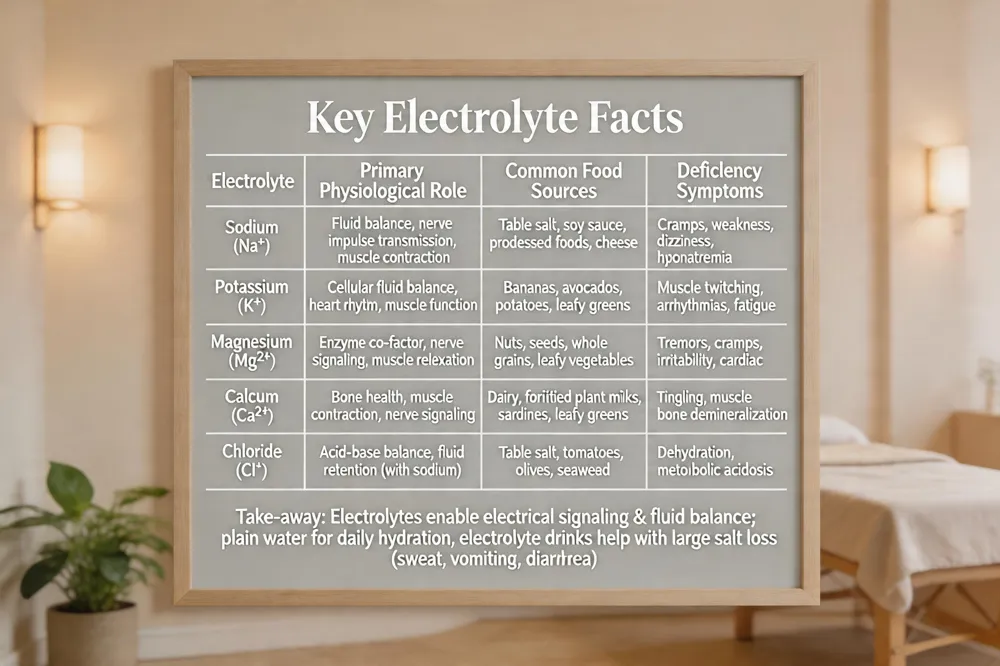 Electrolytes are minerals that carry a positive or negative charge when dissolved in the body’s water‑based fluids, enabling electrical signaling for muscle contraction, nerve impulses, and heart rhythm while regulating fluid balance and pH. Chemically, an electrolyte dissociates into ions (cations or anions) in solution, allowing the liquid to conduct electricity—a principle used in batteries and many biological reactions. Low electrolyte levels disrupt these electrical gradients, producing cramps, weakness, irregular heartbeat, dizziness, and even seizures. When sweat, vomiting, or diarrhea strip large amounts of salt, electrolyte‑enhanced drinks can pull water back into the bloodstream faster than plain water, but for everyday hydration plain water suffices. Electrolytes also support nerve function, help maintain skin moisture, and counteract high‑cortisol stress by stabilizing fluid balance. Athletes rely on this rapid re‑hydration to sustain performance, prevent hyponatremia, and keep muscles firing efficiently.
Practical Hydration Strategies for Athletes
Hydration Timing & Volumes
| Phase | Timing | Fluid Volume | Goal |
|---|---|---|---|
| Pre‑exercise | 2 h before | 16–24 oz (≈470–710 ml) | Start fully hydrated |
| Pre‑exercise | 10–20 min before | 7–10 oz (≈200–300 ml) | Top‑up without feeling heavy |
| During activity | Every 10–20 min | 6–12 oz (≈180–350 ml) | Keep body‑weight loss < 2 % |
| Post‑exercise | Within 2 h | 16–24 oz per pound lost (≈470–710 ml) + sodium/potassium | Replenish fluids & electrolytes |
| Daily baseline | Throughout day | 0.5 × body‑weight (oz) + 12 oz per 30 min of work | Example: 180‑lb athlete ≈ 90 oz (≈2.7 L) |
Athlete Sodium & Potassium Targets: 300–500 mg Na/L, 100–200 mg K/L. Visual cues: thirst, dark urine, > 2 % weight loss.
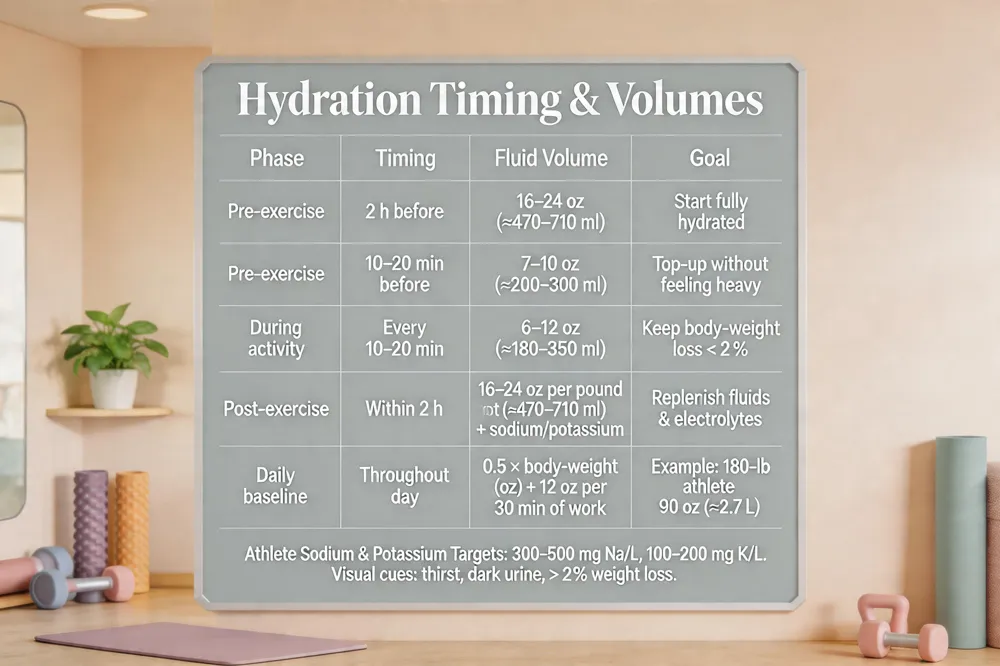 Proper fluid management starts before you train: drink 16–24 oz of water 2 hours pre‑exercise and another 7–10 oz 10–20 minutes before start. During activity, sip 6–12 oz every 10–20 minutes, aiming to keep body‑weight loss under 2 %. After a session, replace each pound lost with 16–24 oz of fluid that includes sodium, potassium and a modest carbohydrate boost; rehydrate within two hours and fully within six. Use a simple hydration calculator—half your body weight in ounces plus 12 oz for every 30 minutes of work—to set daily goals; a 180‑lb male athlete targets ~90 oz (≈2.7 L) plus extra for sweat. Endurance athletes need higher sodium (300–500 mg/L) and potassium (100–200 mg/L) to prevent hyponatremia and cramps. Visual cues—thirst, dark urine, weight drop—signal dehydration. Top electrolyte foods include bananas, avocados, coconut water, leafy greens, watermelon, Greek yogurt, nuts, seeds, and salmon, while water‑dense vegetables (cucumber, lettuce, celery) accelerate recovery.
Electrolyte Supplementation: When and How
When to Use Electrolyte‑Enhanced Drinks
| Situation | Recommended Drink / Method | Key Minerals |
|---|---|---|
| Heavy sweating / hot climate | Low‑sugar plant‑based powder (e.g., Liquid I.V., Ultima) with Na as primary mineral | Na⁺, K⁺, Mg²⁺, Ca²⁺ |
| Illness, diarrhea, vomiting | WHO‑style oral rehydration solution or homemade mix (water + pinch sea salt + citrus + honey) | Na⁺, K⁺, Cl⁻, small carbs |
| Hangover | Glass of water + pinch Himalayan pink salt + lemon splash; add watermelon or cucumber slices | Na⁺, K⁺, Mg²⁺ |
| Quick home rehydration | 1 L water + 1/8 tsp sea salt + lime juice (+ optional coconut water) | Na⁺, K⁺, Mg²⁺, Ca²⁺ |
| Normal daily intake | Whole foods (bananas, dairy, leafy greens) – no commercial powder needed | Balanced mix of Na⁺, K⁺, Mg²⁺, Ca²⁺ |
Low‑sugar tip: Choose formulas that list sodium first and avoid artificial sweeteners to reduce gut upset.
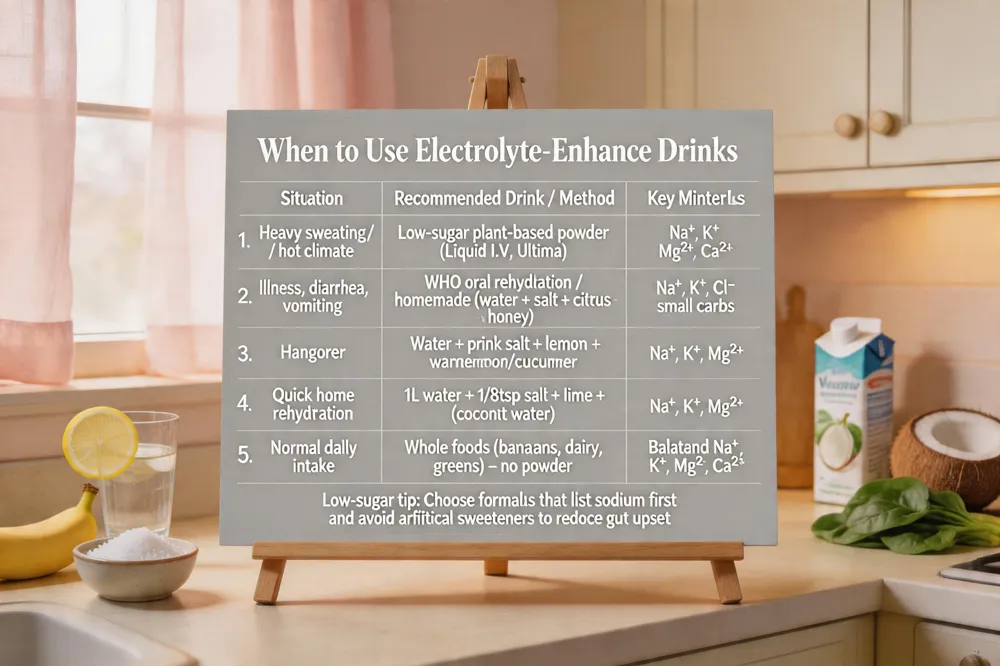 Electrolyte‑enhanced drinks are water‑based beverages that add sodium, potassium, magnesium, and calcium to support fluid retention, nerve‑muscle signaling and skin health. They are most useful during heavy sweating, hot weather, high altitude, or travel, and when illness, diarrhea, or a hangover depletes salts.
Hydrating drinks with electrolytes – Choose low‑sugar plant‑based formulas (e.g., Liquid I.V., Ultima Replenisher) that list sodium as the primary mineral and avoid artificial sweeteners that can upset the gut.
Best electrolyte drink when sick – A homemade oral‑rehydration mix (water + pinch sea salt + citrus juice + honey) or coconut water provides the needed sodium‑potassium balance without excess sugar.
Quick rehydration at home – Sip a glass of water with a pinch of Himalayan pink salt and a splash of lemon; add watermelon or cucumber slices for extra water‑rich nutrients.
Adding electrolytes to water naturally – Stir 1/8 tsp sea salt per liter, squeeze fresh lime, and optionally blend in a quarter cup coconut water or a drizzle of honey for taste and extra minerals.
Natural vs. commercial – Whole foods (bananas, dairy, leafy greens) meet daily needs for most people; commercial powders or tablets are handy for intense exercise, diarrhea, or hangovers when rapid mineral replacement is needed.
Special Populations and Medications
Hydration Guidance for Specific Groups
| Population | Hydration Concern | Recommended Electrolyte Approach |
|---|---|---|
| GLP‑1 therapy patients (Mounjaro, Wegovy) | Nausea, vomiting, diarrhea → increased Na⁺/K⁺ loss | Low‑sugar ORS or powder (e.g., LMNT); avoid excess potassium unless supervised |
| Elderly | Blunted thirst, reduced renal concentrating ability | Low‑sugar, balanced powders (HydroMATE, LMNT) or coconut water; moderate Na⁺ (~100 mg) |
| High‑stress / cortisol‑elevated | Skin dryness, nerve tingling, fatigue | Daily modest electrolyte drink (Na⁺ ≈ 150 mg, K⁺ ≈ 200 mg) to support fluid balance |
| Hangover / alcohol‑induced dehydration | Rapid loss of Na⁺, K⁺, Mg²⁺ | Homemade ORS or electrolyte‑rich water + pinch salt + citrus; include magnesium source (e.g., almond milk) |
Quick Q&A: Yes, electrolytes are safe with GLP‑1 agents; daily modest drink advised for most patients on these meds.
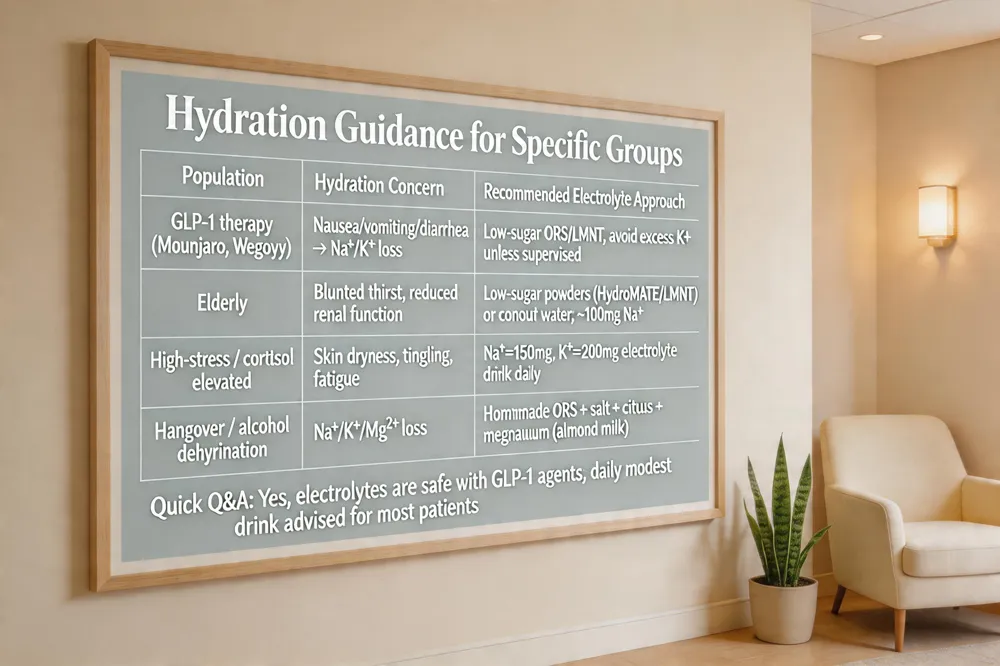 GLP‑1 therapies (Mounjaro, Wegovy) – Both drugs can cause nausea, vomiting or diarrhea, which increase fluid‑mineral loss. Electrolyte‑rich fluids (e.g., WHO‑style oral rehydration solutions, low‑sugar powders) safely replace sodium, potassium, and magnesium. Potassium supplements should be taken only under medical supervision, especially with kidney disease or ACE‑inhibitor use. A daily modest electrolyte beverage can guard against fatigue, brain fog, and muscle cramps during the early weeks of treatment.
Elderly hydration needs – Thirst blunts and kidney function declines with age, making electrolyte‑balanced drinks essential. Low‑sugar, no‑artificial‑sweetener options such as LMNT, HydroMATE, or natural coconut water provide sodium, potassium, calcium, and magnesium without excess calories.
Cortisol, stress, skin, and nerve health – Electrolytes support fluid balance, nerve impulse transmission, and epidermal moisture retention, helping to reduce dry skin, tingling, and stress‑related fatigue.
Hangover and fatigue – Replacing sodium, potassium, magnesium, and chloride after alcohol intake speeds rehydration and eases headache, dizziness, and lethargy, though it does not accelerate alcohol metabolism.
Quick answers
- Can I drink electrolytes on Mounjaro? Yes, with the caveats above.
- Should I take electrolytes on Wegovy? Yes, especially if gastrointestinal losses occur.
- Should you drink electrolytes every day on GLP‑1? A modest daily drink is advisable for most patients.
- Best electrolyte drinks for elderly? Low‑sugar, balanced powders or coconut water.
- Do electrolytes help with dry skin, nerve function, fatigue, or hangover? Yes, they improve fluid balance and cellular function, mitigating these issues.
Food Sources and Everyday Nutrition
Top Electrolyte‑Rich Foods & Their Benefits
| Food | Electrolytes Provided | Additional Nutrient Benefits |
|---|---|---|
| Bananas | K⁺ (≈ 420 mg) | Vitamin B6, fiber |
| Avocados | K⁺ (≈ 485 mg), Mg²⁺ | Healthy monounsaturated fats |
| Coconut water | Na⁺ (≈ 60 mg), K⁺ (≈ 600 mg), Mg²⁺ | Low‑calorie hydration |
| Sweet potatoes | K⁺, Mg²⁺, Ca²⁺ | Vitamin A, fiber |
| Spinach | Mg²⁺, K⁺, Ca²⁺ | Iron, folate |
| Watermelon | K⁺, Mg²⁺, high water content | Lycopene, antioxidants |
| Greek yogurt | Ca²⁺, Na⁺, K⁺, protein | Probiotics |
| Almonds | Mg²⁺, Ca²⁺, K⁺ | Vitamin E, healthy fats |
| Salmon | Na⁺, K⁺, Mg²⁺, omega‑3 | Vitamin D, protein |
| Cucumber | K⁺, Mg²⁺, > 95 % water | Silica for skin health |
Everyday Hydration Tip: Sip low‑sodium electrolyte tea (e.g., Nuun Vitamins) throughout the day and aim for a Mediterranean‑style diet rich in these foods.
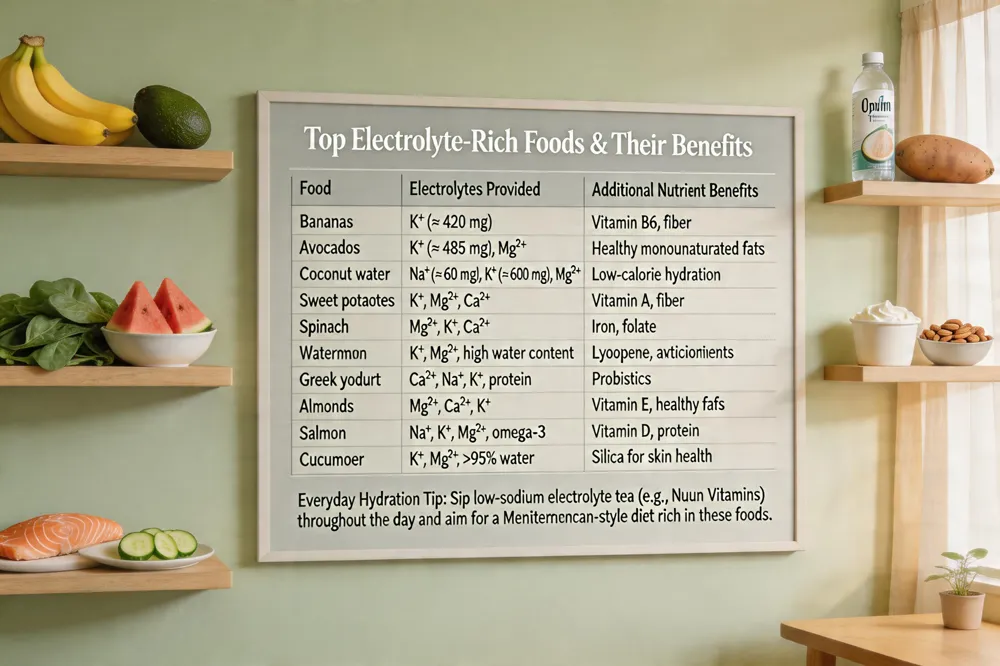 Whole‑food electrolyte sources keep dietary diet balanced and hydrated. Water‑dense vegetables and fruits—cucumber, iceberg lettuce, celery, romaine, zucchini, bell peppers, watermelon, and oranges—supply >95 % water plus potassium, magnesium and phosphorus, helping replace fluids lost through sweat or illness. Bone broth and dairy (Greek yogurt, cow’s milk) provide calcium, sodium, potassium and protein for post‑exercise recovery. Natural electrolyte drinks such as coconut water, homemade citrus‑salt mixes, or a simple blend of filtered water, a pinch of Himalayan pink salt, lemon juice, and honey deliver sodium, potassium, magnesium, and calcium without added sugars. For regular hydration, aim a Mediterranean‑style pattern rich in fruits, leafy greens, nuts, seeds, and lean proteins, and sip a low‑sodium electrolytes tea (e.g., Nuun Vitamins) throughout the day.
Best foods for dehydration recovery – cucumber, lettuce, celery, plus a pinch of sea salt.
Top 10 electrolyte‑rich foods – bananas, avocados, coconut water, sweet potatoes, spinach, watermelon, oranges, Greek yogurt, almonds, salmon.
Natural electrolyte solutions for hydration – homemade citrus‑salt drink, coconut water, bone broth.
Best electrolyte for everyday use – Ultima Replenisher (balanced sodium, potassium, magnesium, calcium, zero sugar).
Best source for athletes – low‑sodium, mineral‑balanced powders (Nuun Vitamins, Skratch Labs combined with sodium‑rich snacks.
Electrolyte solutions for adults – Nuun tablets for low‑sodium needs; LMNT or Skratch for high sweat loss.
Home electrolyte drinks – 2 cups water, coconut water, lemon juice, honey, pinch of pink salt.
Add electrolytes to water naturally – sea‑salt pinch, lemon/lime juice, a splash of orange or coconut water, frozen berries or cucumber infusions.
Choosing the Right Product: Brands and Recommendations
Product Comparison Table
| Brand / Product | Form | Sodium (mg) per serving | Sugar (g) per serving | Ideal Use |
|---|---|---|---|---|
| LMNT | Powder | 1 000 mg (high sweat) | 0 g | Endurance athletes, heavy sweat loss |
| Nuun Vitamins | Tablet | 100 mg | 0 g | Daily low‑sodium electrolyte maintenance |
| Ultima Replenisher | Powder | 250 mg | 0 g | Everyday hydration, sugar‑free option |
| Liquid I.V. Hydration Multiplier | Ready‑to‑drink | 500 mg | 2 g (low) | Rapid rehydration after illness or intense work |
| Pedialyte | Ready‑to‑drink | 370 mg | 2 g | Diarrhea, pediatric dehydration |
| Coconut Water (brand‑agnostic) | Natural drink | 60 mg | 6 g (natural) | Light electrolyte boost, casual use |
| Transparent Labs Hydrate | Powder | 250 mg | 0 g | Low‑calorie, low‑sugar athletes |
| HydroMATE | Powder | 150 mg | 0 g | Elderly or low‑sodium needs |
Choosing Guidance: Match sodium level to sweat rate, keep sugar ≤ 2 g per serving for weight‑loss or diabetic plans, and pick powder vs. ready‑to‑drink based on convenience.
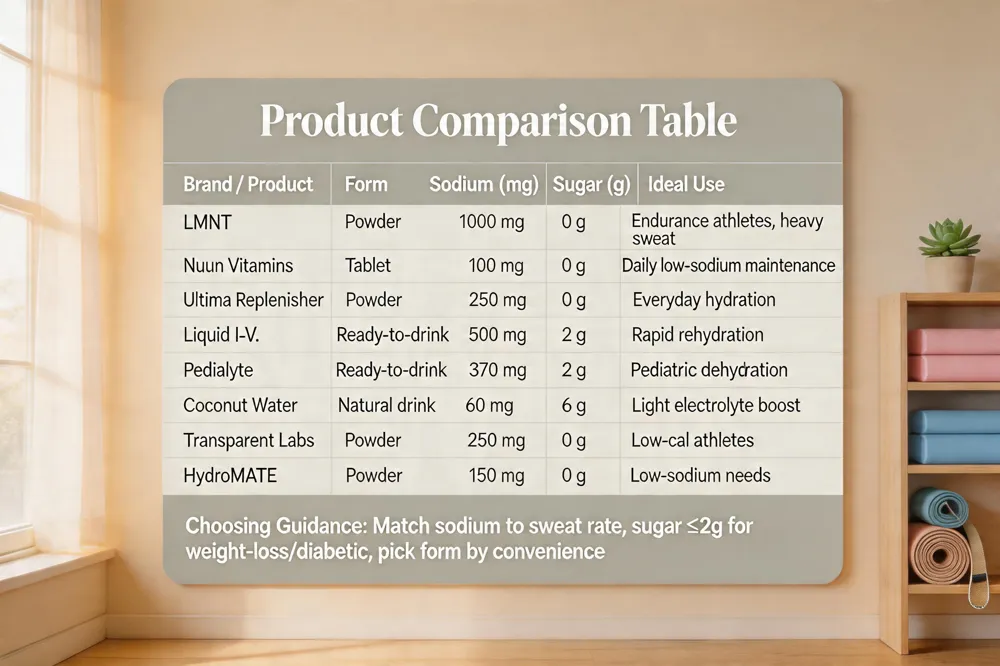 Electrolyte products come as tablets, powders, or ready‑to‑drink mixes. For low‑sugar or sugar‑free options, look for formulations that keep added sweeteners minimal—e.g., Transparent Labs Hydrate or Ultima Replenisher, which provide 0‑5 calories per serving.
Sodium guidelines: Most active individuals need 200‑500 mg sodium per serving; athletes sweating heavily may require up to 1,000 mg (LMNT). Older adults benefit from modest sodium (≈100 mg) to avoid hyponatremia while still supporting fluid retention.
Specialty needs:
- Adults: Nuun Vitamins Electrolyte Tablets (100 mg Na, balanced minerals) offer convenient daily dosing.
- Dehydration: Liquid I.V. Hydration Multiplier (500 mg Na, glucose‑enhanced) speeds water uptake.
- Diarrhea: Pedialyte (WHO‑based ORS) provides optimal Na‑K‑glucose ratios with low sugar.
- Sick: Coconut water or a homemade ORS (water + pinch sea salt + citrus + honey) supplies potassium and magnesium without excess calories.
- Elderly: Low‑sugar powders (LMNT, HydroMATE) or natural coconut water safely replace Na, K, Mg, Ca.
- Everyday: Ultima Replenisher delivers a clean electrolyte blend without sugar, supporting routine hydration.
Overall, choose a product that matches your activity level, health status, and taste preference while keeping sodium and sugar within recommended ranges.
Putting It All Together
Electrolytes are the charged minerals—sodium, potassium, magnesium, calcium and chloride—that move water across cell membranes, sustain nerve signals and muscle contraction, and keep blood pH stable. Without the right balance, plain water can dilute blood sodium, leading to hyponatremia, cramps, fatigue, or brain fog. For everyday health, aim for 2–3 L of fluid daily, spread over regular intervals, and include electrolyte‑rich foods—bananas, leafy greens, dairy, coconut water, bone broth. During vigorous activity lasting >45 min or in heat, add a low‑sugar electrolyte drink delivering 200–500 mg sodium and 100–300 mg potassium per serving, and sip 4–8 oz every 15 min. Special groups—older adults, pregnant people, those on diuretics or with kidney disease—should monitor sodium and potassium closely, using physician‑guided formulas or modest‑salt foods, and avoid excess sugars and artificial sweeteners for optimal long‑term wellness daily.