Why Immunotherapy Matters
Allergic rhinitis affects up to 30% of U.S. adults and children, causing sneezing, congestion, itchy eyes and even triggering asthma, which can dramatically lower daily productivity, sleep quality and overall wellbeing. Standard antihistamines and nasal steroids only mask symptoms and often fall short for many patients. Allergen immunotherapy (AIT) – delivered as allergy shots (SCIT) or sublingual tablets/drops (SLIT) – goes beyond symptom control by retraining the immune system, offering long‑lasting disease modification and the chance for true relief.
Understanding Allergy Shots and Their Mechanism
 Allergy shots, also known as subcutaneous immunotherapy (SCIT), are a long‑term, physician‑directed treatment that injects tiny, gradually increasing amounts of a patient’s specific allergens under the skin. The regimen follows a two‑phase schedule: a buildup phase of weekly injections for 3–10 months that escalates the dose, then a maintenance phase of monthly injections for 3–5 years. By exposing the immune system to controlled allergen doses, SCIT re‑educates immune cells—shifting the response from IgE‑driven inflammation toward protective IgG4 and regulatory T‑cell activity, symptoms of allergic rhinitis, asthma, conjunctivitis, or insect‑venom reactions become milder or disappear. About 80‑90 % of patients notice improvement within the first year, and many retain relief for years after therapy stops. The primary injection type is SCIT; experimental intralymphatic immunotherapy delivers allergen directly into a lymph node, while sublingual immunotherapy (SLIT) offers a tablet or drop alternative for those who avoid needles. All modalities target common airborne allergens and insect venoms, but not food, medications, or latex.
Effectiveness, Success Rates, and Patient Benefits
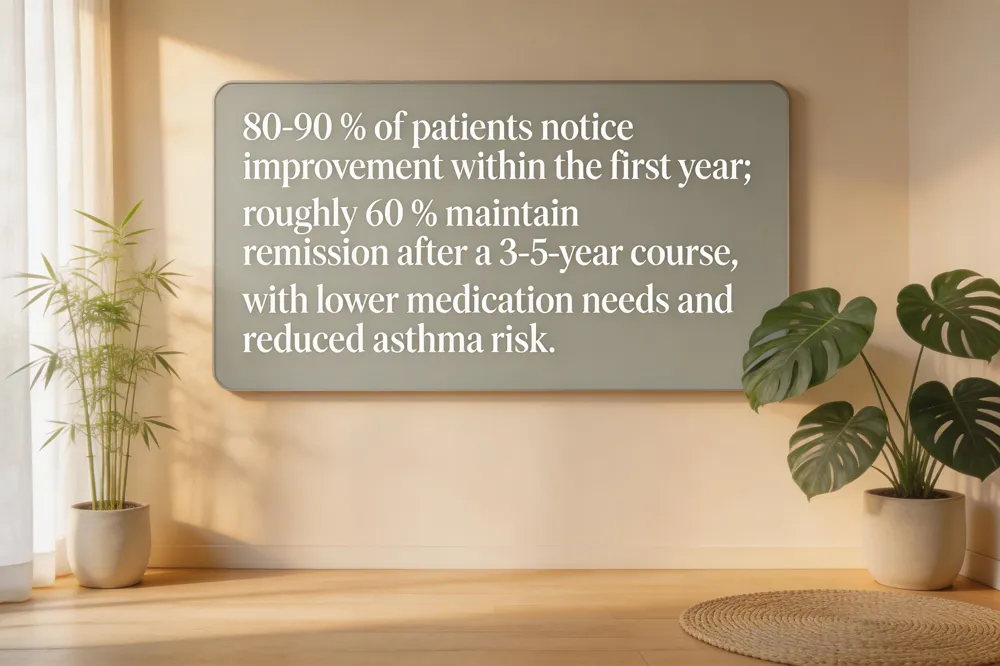 Allergy immunotherapy delivers a striking clinical response—about 80‑90 % of patients notice meaningful symptom relief, and roughly 60 % maintain remission after a 3‑5‑year course. The therapy works by gradually desensitizing the immune system, which translates into long‑term reductions in sneezing, nasal congestion, itchy eyes and asthma flares, while cutting the need for daily antihistamines, nasal steroids and rescue inhalers by 20‑45 %. Beyond symptom control, immunotherapy can prevent the emergence of new allergen sensitivities and has been shown to lower the risk of asthma development in children with allergic rhinitis. These disease‑modifying effects stem from increased allergen‑specific IgG4 and regulatory T‑cell activity, fostering lasting tolerance. Patients who adhere to the build‑up and monthly maintenance phases enjoy improved quality of life, fewer medication side effects, and a holistic, cost‑effective pathway to lasting allergy relief.
Safety Profile and Managing Reactions
 Allergen immunotherapy—whether subcutaneous shots (SCIT) or sublingual drops (SLIT)—is generally safe, but patients should know the expected side‑effects and how reactions are handled.
Common local and systemic side effects: Most patients experience mild local reactions such as redness, swelling, or itching at the injection site (SCIT or oral itching and tingling (SLIT. Systemic symptoms can include sneezing, nasal congestion, hives, coughing, throat tightness, wheezing, or shortness of breath, especially in asthmatic individuals.
Incidence of anaphylaxis: Severe systemic reactions are rare. In large U.S. cohorts, anaphylaxis occurs in about 0.1 % of SCIT visits and is virtually absent in SLIT trials.
Guidelines for observation and emergency handling: After each SCIT dose, patients remain in the clinic for ≥30 minutes for monitoring; SLIT patients are observed only after the first dose. If a systemic reaction appears, the allergist may administer epinephrine, antihistamines, and/or bronchodilators and arrange emergency care if needed. Dose adjustments or pre‑medication with antihistamines can reduce future reactions.
Allergy immunotherapy side effects: Mild local redness or swelling is typical; systemic hives, nasal congestion, or wheezing may arise and are managed by dose modification and observation. Anaphylaxis, though rare, requires immediate epinephrine and emergency referral.
Long‑term side effects: Long‑term AIT is safe; most adverse events occur immediately after dosing. Over years, patients enjoy reduced symptoms and medication use without new health problems; the therapy induces durable IgG4‑mediated tolerance rather than chronic complications.
Allergy shot reaction – when to worry: Seek urgent care for difficulty breathing, throat or tongue swelling, rapid weak pulse, sudden blood‑pressure drop, or spreading hives. Local swelling that is large, warm, or lasts >24 hours warrants a call to the allergist. Always stay for the observation period after each injection.
Treatment Duration, Scheduling, and Age Guidelines
 Allergen immunotherapy (AIT) is most effective when delivered as a minimum three‑year course; this duration is required to achieve disease‑modifying effects and sustained tolerance after the therapy stops. The regimen starts with a build‑up phase of weekly injections (or daily sublingual doses) lasting 3–6 months, followed by a maintenance phase where shots are given every 2–4 weeks (approximately 14–28 days) for the remainder of the 3‑5 year treatment window.
Best age to start: AIT is generally safe for children 5 years and older, when they can reliably report symptoms and tolerate regular dosing. Early school‑age initiation helps prevent progression to asthma and offers the greatest long‑term benefit. Adolescents and adults can also begin therapy, but starting later may reduce the preventive advantage.
Shots vs. drops: Allergy shots (SCIT) are administered by a clinician, allowing precise dosing and monitoring, and tend to produce the strongest symptom reduction across many allergens. They require office visits but are usually covered by insurance. Allergy drops (SLIT) are taken daily at home, offering needle‑free convenience; they are customized for each patient but are often off‑label in the U.S., may lack insurance coverage, and can be slightly less effective for some sensitivities. The choice depends on lifestyle, needle aversion, specific allergens, and insurance considerations.
Cost, Insurance, and Practical Considerations
 Allergy shots (subcutaneous immunotherapy, SCIT) usually cost $1,500–$3,000 per year for a 3‑5‑year course, roughly $20‑$100 per injection and $150‑$300 per office visit. Most U.S. health plans—private, Medicare, Medicaid—cover AIT when medically necessary, reimbursing the extract (CPT 95165 + dose count) and the injection (CPT 95115 for one shot, 95117 for two‑plus). After meeting the deductible, insurers often pay 80‑100 % of the bill, though co‑pay, co‑insurance, and prior‑authorization requirements vary. Common adult SCIT products include Odactra (dust‑mite), Grastek (timothy grass), Ragwitek (ragweed), and Oralair (five‑grass blend), while some clinicians use compounded extracts tailored to individual sensitivities. Patients should verify specific benefits and out‑of‑pocket costs with their insurer before starting, and consider flexible payment plans or wellness‑focused budgeting to maintain long‑term health and confidence in allergy control.
Special Topics: Food Allergens and SLIT Details
 Allergy sufferers encounter the so‑called “Big Nine” foods that drive more than 90 % of allergic reactions in the United States. These are cow’s milk, eggs, peanuts, tree nuts, shellfish (including crustaceans), finned fish, wheat, soybeans, and sesame. Because these allergens account for most severe and life‑threatening responses, strict avoidance and clear labeling are essential.
Sublingual immunotherapy (SLIT) offers a needle‑free way to re‑educate the immune system. FDA‑approved SLIT tablets are available for grass pollen, ragweed, and house‑dust‑mite allergies, while customized allergy drops—though not FDA‑approved—can target a broader spectrum of airborne allergens such as tree pollen, pet dander, and molds. Both forms deliver tiny allergen doses under the tongue, leading to gradual tolerance and reduced rhinitis or asthma symptoms. The most common side effects are mild oral itching or brief stomach discomfort, and serious systemic reactions are extremely rare. A typical course lasts three to five years, after which many patients enjoy lasting symptom relief and a decreased need for daily antihistamines.
Making an Informed Choice
Choosing allergen immunotherapy involves balancing lasting symptom relief with the time and expense of a multi‑year program. A three‑to‑five‑year course can cut medication use, lower asthma risk, and improve quality of life, but requires regular clinic visits or daily home dosing and out‑of‑pocket costs that vary by insurance. Schedule a consultation with a board‑certified allergist at Jana HealthCare to review test results, discuss safety, and design a personalized plan that fits your schedule, budget, and health goals for lasting wellness.