Why a Medical Exam Matters for Your Green Card Journey
U.S. immigration law treats health as a public‑good, and the Immigration and Nationality Act (INA) explicitly lists health‑related grounds of inadmissibility in Section 212(a)(1). Any condition that poses a risk to public health—active tuberculosis, untreated syphilis, certain communicable diseases, or a lack of required vaccinations—can block a green‑card application unless a waiver is granted. To verify that applicants meet these standards, USCIS requires a civil surgeon to complete Form I‑693, the Report of Immigration Medical Examination and Vaccination Record. The form captures a concise medical history, physical exam findings, TB and STI test results, and a detailed vaccination checklist. Once the surgeon signs and seals the I‑693, it becomes the official health credential attached to the Form I‑485 adjustment packet. If the exam reveals a Class A medical condition or missing immunizations, the applicant must address treatment or receive a waiver before USCIS can approve the visa. In short, a clean, properly sealed I‑693 is the linchpin that transforms a medical screening into a smooth, eligibility‑affirming step on the path to permanent residency.
Understanding the Immigration Medical Exam Requirements
 What are the general requirements for an immigration medical exam?
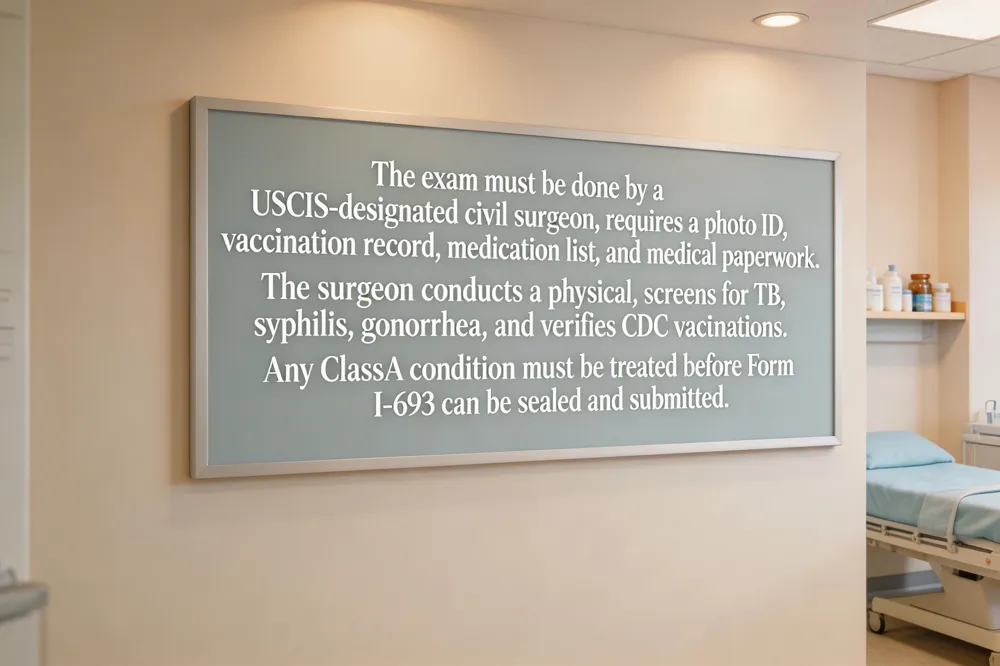
The exam must be performed by a USCIS‑designated civil surgeon (or an approved panel physician abroad). You will need a government‑issued photo ID, your vaccination record (or a signed translation), a list of current medications, and any relevant medical paperwork. The civil surgeon reviews your medical history, conducts a full physical exam, screens for communicable diseases (TB via IGRA blood test or chest X‑ray, syphilis, gonorrhea), and verifies vaccinations against the CDC schedule. Any Class A condition—active TB, untreated syphilis, leprosy, or other quarantinable illnesses—must be treated before Form I-693 can be completed. After the exam, the surgeon signs and seals Form I-693, which you submit together with your I-485 or visa package.
What does the USCIS immigration medical exam check?
The exam evaluates overall physical health, reviews medical history for INA 212(a)(1) inadmissibility grounds, and screens for specific infectious diseases (TB, syphilis, gonorrhea). It also confirms that required vaccinations are up‑to‑date, assesses mental‑health status for disorders that could pose a safety risk, and checks for substance‑use history. All findings are recorded on Form I-693, which must stay sealed until USCIS receipt. This comprehensive screening protects public health while helping applicants move forward with confidence in their immigration journey.
Preparing Your Documents and Vaccination Records
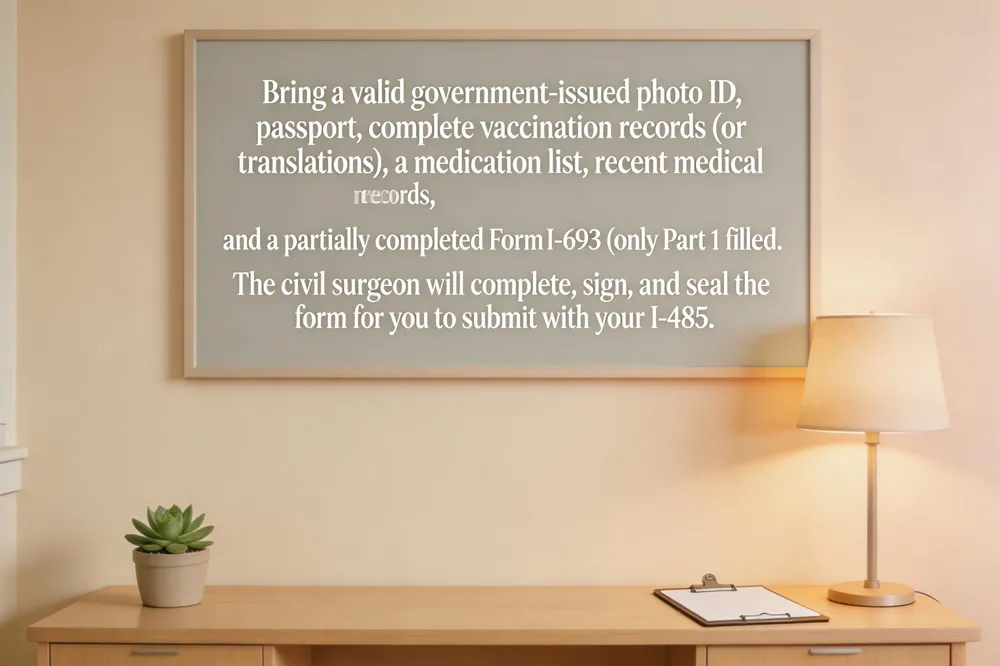 Before you step into a USCIS‑approved civil surgeon’s office, gather a few essential items to keep the immigration medical exam smooth and stress‑free.
Identification and passport – Bring a valid government‑issued photo ID (passport, driver’s license, or state ID) and the passport itself. The civil surgeon will verify your identity and record your name exactly as it appears on Form I‑485.
Vaccination documentation – USCIS follows the CDC’s routine immunization schedule. Required vaccines typically include MMR, varicella, hepatitis B, and the Tdap series. Adults should also have a recent seasonal influenza shot; depending on age, HPV and pneumococcal vaccines may be needed. If any of these are missing, the surgeon can administer them on site or request a titer test. Bring any English‑language vaccination records or certified translations.
Medical history and medication list – Prepare a concise list of all prescription and over‑the‑counter medicines, recent lab reports, and any treatment certificates for tuberculosis, syphilis, or other reportable conditions. This helps the surgeon assess chronic illnesses (e.g., diabetes, hypertension) that do not penalize the applicant.
Form I‑693 handling – Download the blank Form I‑693, fill out Part 1 (applicant information) only, and leave the rest unsigned. The civil surgeon will complete the remaining sections, sign, and place the form in a sealed “DO NOT OPEN” envelope. You are responsible for mailing the sealed envelope with your Form I‑485; never open it yourself.
FAQ
-
What documents do I need for my immigration medical exam? Bring a valid photo ID, passport, complete vaccination record (including COVID‑19), any TB or syphilis treatment certificates, a current medication list, recent medical records, the interview appointment letter, and, if you have one, a partially completed Form I‑693.
-
What vaccinations are required for the USCIS medical exam? Required vaccines follow the CDC schedule: MMR, varicella, hepatitis B, Tdap, seasonal influenza, and—depending on age—HPV and pneumococcal vaccines. Missing doses will be given by the civil surgeon during the visit.
Scheduling and Timing Your Appointment
 How to Book the Exam
Select a USCIS‑approved civil surgeon or panel physician from the list provided by the U.S. consulate or embassy handling your case. Clinics such as Jana HealthCare, Windermere Medical Group, and FastCare allow online scheduling or phone appointments. When you call, give your visa case number and confirm that you will bring your interview confirmation letter, a valid passport, recent passport‑size photos, and any vaccination or medical records.
Ideal Timeline Before Filing
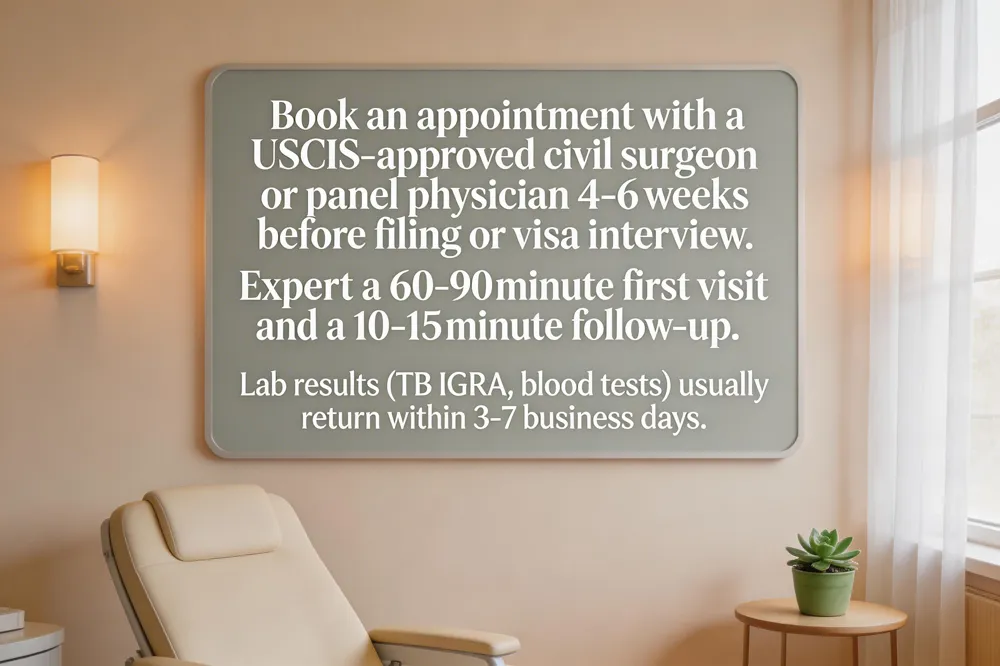
Plan to complete the medical exam 4‑6 weeks before your green‑card filing (Form I‑485) or visa interview. This window accommodates lab processing—TB IGRA results take 2‑5 business days, syphilis and other blood tests 1‑3 business days—and any catch vaccinations. The 2024 USCIS policy requires the sealed Form I‑693 to be submitted together with the I‑485, so scheduling early prevents last‑minute delays.
Typical Appointment Length
The first visit, which includes medical history review and a physical exam, TB test, and required blood draws, usually lasts 60‑90 minutes. If additional vaccinations are needed, they are administered during the same visit. A follow‑up visit to deliver the sealed Form I‑693 packet typically takes 10‑15 minutes.
Lab‑Result Turnaround
Most results are ready within 3‑7 business days. Clinics with on‑site labs can often return the sealed Form I‑693 the same day or within two days, while external labs may need up to a week. Expedited processing is available if all documentation is complete.
FAQ
Q: How do I schedule a medical appointment for a U.S. immigrant visa?
A: Select a USCIS‑approved panel physician from the list provided by the U.S. consulate or embassy handling your case. Most clinics, including Jana HealthCare, allow online booking or phone scheduling. Quote your visa case number and confirm you will bring your interview confirmation letter, a valid passport, four recent photographs, and any vaccination or medical records. Schedule the exam at least 4‑6 weeks before your visa interview or I‑485 filing to accommodate lab processing (TB IGRA 2‑5 business days, syphilis 1‑3 business days) and any needed vaccinations. The first visit usually lasts 60‑90 minutes; a second visit for results and seal‑up may be 10‑15 minutes.
Common Reasons for Exam Failure and Inadmissibility
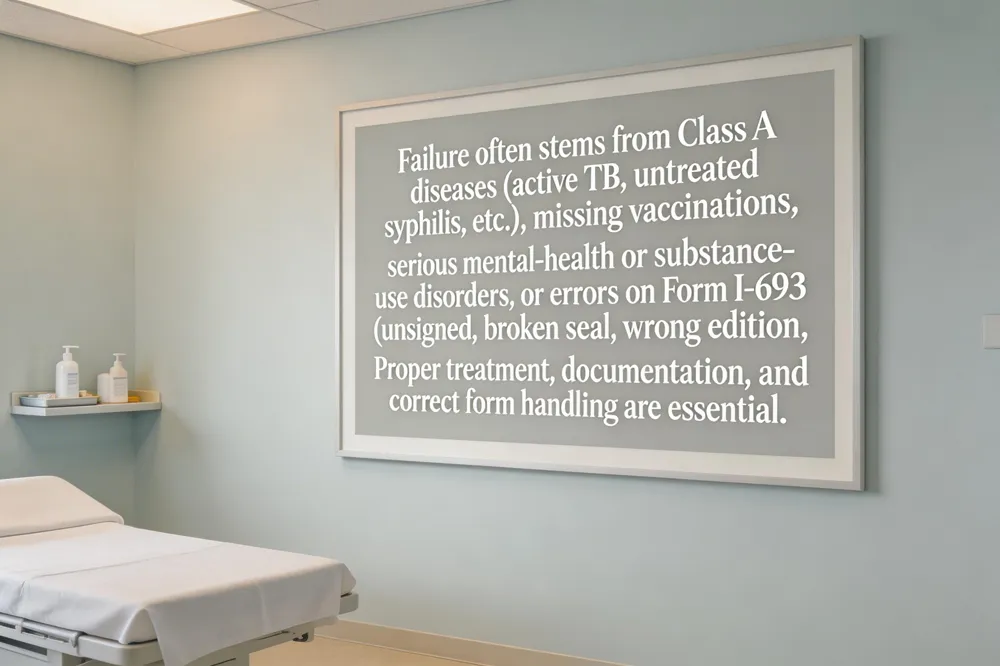 U.S. immigration law classifies certain health issues as Class A medical conditions – diseases that present a direct threat to public health. Active tuberculosis, untreated syphilis, gonorrhea, leprosy, measles, polio, rubella, cholera, plague, smallpox, and yellow fever all fall into this category. If a civil surgeon identifies any of these, the applicant must complete treatment and obtain a physician’s certificate before Form I‑693 can be sealed; otherwise the exam is rejected.
Vaccination gaps are another frequent cause of failure. USCIS requires up‑to‑date CDC‑recommended immunizations such as MMR, varicella, polio, hepatitis B, Tdap, and influenza (seasonal). Missing records can be supplemented with titer testing, but undocumented gaps must be filled on site, or the sealed Form I‑693 will be denied.
Mental‑health and substance‑use issues are screened for serious disorders linked to violent behavior or chronic institutional care, as well as documented drug abuse. While well‑managed conditions like hypertension are acceptable, untreated severe psychiatric illness or active addiction can render an applicant inadmissible.
Form I‑693 errors—unsigned sections, mismatched edition pages, broken seals, or omitted treatment documentation—trigger a Request for Evidence or outright rejection. The form must be completed on the correct edition (01/20/25 after July 3 2025), signed by the civil surgeon and applicant, and remain sealed until USCIS receives it.
What may cause you to fail an immigration medical exam?
Failure can result from a diagnosis of a public‑health communicable disease (Class A), such as active tuberculosis, infectious syphilis, gonorrhea, leprosy, measles, polio, or rubella. The examiner also checks for mental or physical disorders that pose a threat to safety, and serious conditions can render an applicant inadmissible. Missing or incomplete required vaccinations, untreated diseases, or any condition that would trigger quarantine under a presidential executive order can also cause a refusal. Finally, an outdated, unsigned, or improperly sealed Form I‑693—especially missing treatment documentation for a previously identified disease—will be rejected by USCIS.
What diseases disqualify you from a visa?
U.S. immigration law bars entry for anyone with a “Class A” communicable disease that threatens public health: active TB, syphilis, gonorrhea, leprosy, cholera, plague, smallpox, yellow fever, and measles. Lack of required vaccinations—particularly MMR, varicella, polio, and hepatitis B—can also make an applicant inadmissible. Serious mental or physical disorders that could lead to harmful behavior or require extensive institutional care, as well as documented drug abuse or addiction, are additional grounds for denial. Waivers may be available for some conditions, but without a waiver the applicant is disqualified.
Cost, Payment, and Insurance Considerations
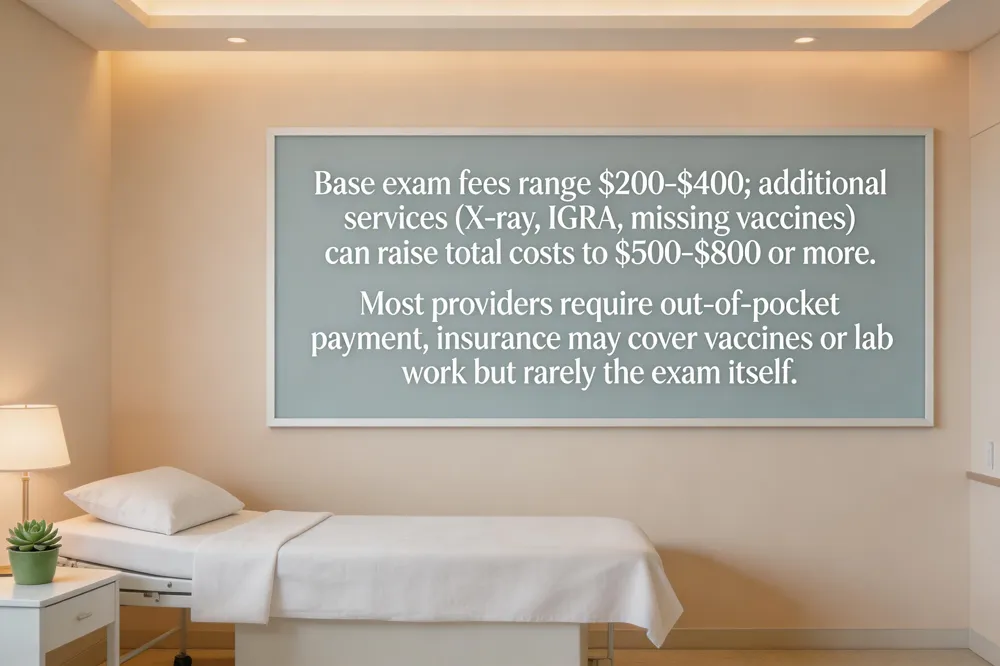 When you schedule a USCIS‑approved immigration medical exam, the base physician fee for the exam and the completion of Form I‑693 typically falls between $200 and $400. This amount covers the history review, physical exam, and the doctor’s certification on the form. Additional costs can arise if the civil surgeon needs to order a chest X‑ray, an IGRA blood test for tuberculosis, syphilis or gonorrhea screening, or if you are missing any of the required vaccinations (MMR, Tdap, varicella, Hepatitis B, influenza, etc.). Those extra services can push the total bill into the $500‑$800 range or higher, especially if multiple vaccines must be administered on site.
Insurance coverage is limited: most civil surgeons do not bill health plans for the immigration exam itself, although they often accept insurance for individual vaccines, lab work, or imaging when those services are covered under your policy. It’s a good idea to verify with your insurer which items are reimbursable before you arrive.
Payment methods are usually out‑of‑pocket, with credit or debit cards accepted; cash and personal checks are rarely taken. Because fees vary by provider and location, obtain quotes from several USCIS‑designated surgeons in your area—especially in high‑volume markets like New York—to compare costs and avoid surprises.
Finding a Panel Physician in Brooklyn and Across New York
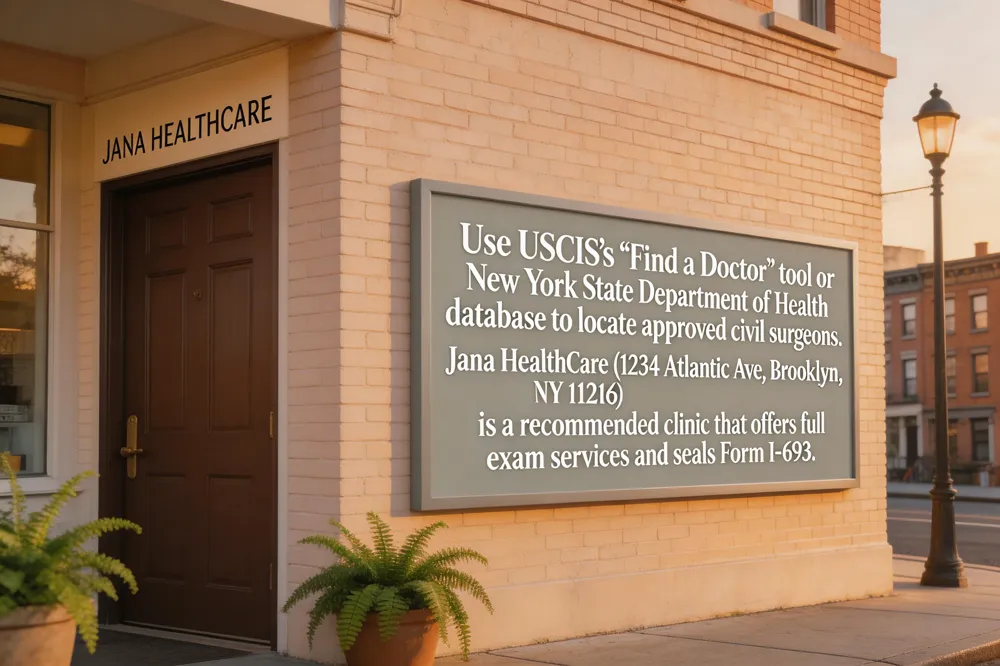 If you’re preparing for your green‑card medical exam, the first step is locating a USCIS‑approved civil surgeon or panel physician. Jana HealthCare at 1234 Atlantic Ave, Brooklyn, NY 11216, is a trusted option that offers the full suite of required services—IGRA TB testing, chest X‑ray interpretation, syphilis and gonorrhea screening, and on‑site vaccination review or administration. Walk‑ins are welcome Monday‑Friday, 9 a.m.–5 p.m., and appointments can be booked by calling (555) 123‑4567 or via their online portal.
Verifying panel status is essential: check the physician’s designation on the U.S. Citizenship and Immigration Services (USCIS) “Find a Doctor” tool (www.uscis.gov/medical) and confirm the listing matches the clinic’s address. The New York State Department of Health also maintains an “Immigration Health Services” database where you can search by county or ZIP code for additional panel physicians.
Where can I get an immigration medical exam near me in Brooklyn, NY? Jana HealthCare provides a comprehensive, one‑stop exam and will seal your Form I‑693 for submission.
Where can I find a USCIS‑approved panel physician in New York? Use the state health‑department resource or USCIS’s portal, and call 1‑800‑375‑5283 for the latest listings before scheduling your visit.
Final Checklist Before You Walk into the Office
Before you step into the civil surgeon’s office, take a moment to assemble a concise, wellness‑focused packet that will keep your immigration medical exam on track. 1. Review your document list: a valid government‑issued photo ID (passport or driver’s license), the appointment letter, a partially completed Form I‑693 (Part 1 only), a printed list of current medications, and any medical letters for chronic conditions such as diabetes or hypertension. 2. Confirm vaccine status: gather all CDC‑recommended immunization records, including MMR, Tdap, varicella, hepatitis B, and the COVID‑19 series (if required by your visa class). If any record is missing or in a foreign language, bring a certified translation or be prepared for on‑site titer testing. 3. Schedule early: book the exam 4–6 weeks before your intended Form I‑485 filing date to accommodate lab turnaround (TB IGRA, syphilis blood work) and any follow‑up chest X‑ray. 4. Budget for fees: the civil surgeon’s fee (often $200‑$350) covers the physical, labs, and Form I‑693 sealing; vaccines, additional labs, or expedited processing are billed separately, so ask for a detailed estimate up front. This proactive checklist blends clinical precision with a personalized, health‑optimization mindset, ensuring a smooth, stress‑free path toward your green‑card goal.