Why the Immigration Medical Exam Matters
The immigration medical exam is a central piece of the U.S. residency process. Its findings are recorded on Form I‑693, the Report of Immigration Medical Examination and Vaccination Record, which the civil surgeon completes, signs and seals. Only a USCIS‑designated civil surgeon may perform this exam; these physicians are trained to follow CDC technical instructions, verify vaccination status, screen for communicable diseases, and note any chronic conditions that could affect admissibility. Because Form I‑693 must be submitted together with Form I‑485 (or a visa packet) the exam directly influences whether a green‑card or visa application moves forward. A sealed, unopened envelope is the only acceptable submission—any breach of the seal leads to rejection. Clinics such as Jana HealthCare in Brooklyn combine the required medical assessment with holistic wellness counseling and aesthetic services, helping applicants stay healthy, meet federal standards, feel confident throughout the immigration journey and support their long‑term health goals.
Exam Basics, Forms, and Provider Requirements
 Immigration medical exam Form I‑693 – Form I‑693, Report of Immigration Medical Examination and Vaccination Record, is the USCIS‑required proof that you meet health admissibility standards. Completed by a USCIS‑approved civil surgeon, it records your medical history, physical exam findings, TB and syphilis testing, and vaccination status. The sealed form is generally valid for one year from the surgeon’s signature and must be filed together with Form I‑485 (or the appropriate visa petition) to avoid rejection.
USCIS immigration medical exam requirements – Applicants filing Form I‑485 must schedule an exam with a designated civil surgeon in the United States. The surgeon reviews your health history, conducts a physical exam, verifies required vaccinations, and performs laboratory screens for communicable diseases. The completed I‑693 is sealed in a tamper‑evident envelope; opening it before USCIS receipt results in denial.
Immigration medical exam Doctor list – Brooklyn‑based Jana HealthCare offers USCIS‑approved civil surgeons who can perform the exam, administer missing vaccines, and seal Form I‑693. Use the USCIS “Find a Civil Surgeon” tool or call the office to schedule.
USCIS vaccine requirements by age – Vaccinations follow CDC ACIP guidelines and include MMR, Tdap, varicella, polio, hepatitis A/B, influenza, and others appropriate to your age. Missing doses are administered on‑site; contraindicated vaccines are noted on the form.
USCIS medical exam cost – Fees vary; most civil surgeons charge $400‑$600 for the exam, lab work, and Form I‑693. Insurance rarely covers the exam itself, though it may pay for vaccines or X‑rays. Contact several providers for exact pricing.
How to Pass the Exam in Indiana and Around the Country
 Finding a designated civil surgeon is the first step. Use the USCIS “Find a Civil Surgeon” tool or call local urgent‑care centers—American Family Care in Indiana, Jana HealthCare in Brooklyn, or any listed clinic—to confirm they are USCIS‑approved civil surgeon. Bring the blank Form I‑693, a government‑issued photo ID, vaccination records, a medication list, and payment method. Hydration helps with urine samples, and a translator can ensure accurate medical history communication. The exam includes a physical, TB IGRA blood test, syphilis screening, and, if needed, a chest X‑ray; many offices can give missing vaccines on‑site to avoid extra trips. After the exam the civil surgeon seals the completed I‑693—keep a copy for your records but never open the envelope before USCIS receives it. For visa applicants, bring your passport, appointment letter, and any prior medical documentation; children under 15 may skip X‑ray and blood work. Follow the surgeon’s guidance for any required follow‑up or vaccinations, and you’ll be on track for a smooth,
K‑1 Visa Medical Exam: Requirements and Costs
 Preparing for a K‑1 fiancé(e) visa medical exam is straightforward when you know what to expect. The exam must be performed by a State Department‑approved panel physician and includes a review of your medical history, a physical, a chest X‑ray, and blood tests for syphilis, HIV and tuberculosis. Children under 15 are exempt from the chest X‑ray and syphilis test (Chest X‑ray and blood tests are not usually required for children under the age of fifteen). Bring a valid passport or another photo ID and your visa‑appointment letter (Applicants must bring their passport (or other photo ID) and the medical examination appointment letter to the panel physician; the panel physician will complete the forms and forward them to embassy or consulate.
Cost varies by provider. A basic exam typically ranges from $250 to $350, while some clinics charge a flat fee of $200‑$500 that includes the exam, lab work and vaccinations (Typical exam cost ranges $100‑$500; $200 most common, paid by applicant). Extra vaccines such as MMR or varicella titers add $50‑$150 each (Vaccination requirements for immigration include ... Varicella. Insurance plans do not cover immigration exam, so plan for payment (Most health‑insurance plans do not cover I‑693 exam cost, though they may cover vaccines, laboratory tests, and X‑rays). Contact USCIS‑approved civil surgeons in area to compare fees and confirm which vaccines or tests you will need, allowing you to budget accurately (The USCIS website provides a ‘Find a Civil Surgeon’ tool and a contact center (800‑375‑5283) for assistance locating a designated physician
What to Expect During the I‑693 Examination
 During your I‑693 immigration medical exam you first meet a USCIS‑designated civil surgeon who checks your photo ID and vaccination record. Step‑by‑step, the doctor reviews your medical history, then conducts a basic physical exam—height, weight, blood pressure, heart, lungs, eyes, ears, throat, skin, lymph nodes and extremities. A mental‑health screen asks about mood, judgment and any history of violent behavior. Laboratory testing follows: an IGRA blood test for tuberculosis (or a chest X‑ray if needed), syphilis serology and a urine test for gonorrhea for ages 15 and older. The surgeon verifies required vaccines (MMR, polio, varicella, Tdap, influenza, hepatitis A/B, etc.) and can give any missing shots on the spot. All findings are entered on Form I‑693, sealed, and returned to you unopened for USCIS submission. The sealed envelope remains valid for two years from the surgeon’s signature. Our Brooklyn‑based clinic, Jana HealthCare, blends this medical screening with wellness counseling and optional cosmetic dermatology, ensuring a personalized, health‑optimizing experience.
Cost Breakdown: Fees, Vaccines, and Lab Tests
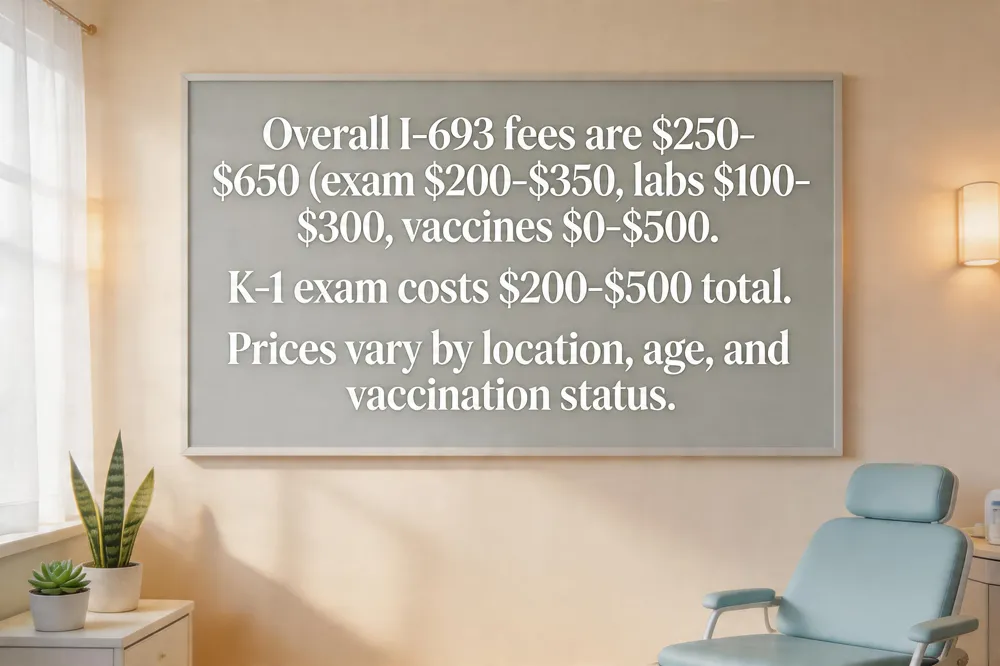 Immigration medical exams are billed directly by the civil surgeon, not by USCIS. Most U.S. providers charge $250‑$650 for the complete Form I‑693 package, which includes the physical exam, required labs (TB IGRA, syphilis serology, urine gonorrhea screen) and administrative work. The exam itself typically runs $200‑$350; laboratory testing adds $100‑$300, and a separate administrative fee is $50‑$100. Vaccinations are a variable add‑on: missing shots such as MMR, Tdap, varicella or hepatitis B can cost $0‑$500 depending on the vaccine and the patient’s age. In high‑cost cities (e.g., New York) total fees may approach $1,000, while bundled packages can be found for $349‑$450.
How much do doctors charge for Form I‑693? $250‑$650 overall, with $200‑$350 for the exam, $100‑$300 for labs, and $0‑$500 for vaccines.
K‑1 visa exam cost? $200‑$500 total; basic exam $250‑$350, plus $50‑$150 per extra vaccine or test.
USCIS medical exam cost? $400‑$600 for basic exam and Form I‑693; insurance rarely covers it, and additional vaccine or X‑ray fees apply. Factors influencing cost include geographic location, patient age, vaccination status, and any required follow‑up testing.
Common Reasons for Medical Inadmissibility and Waivers
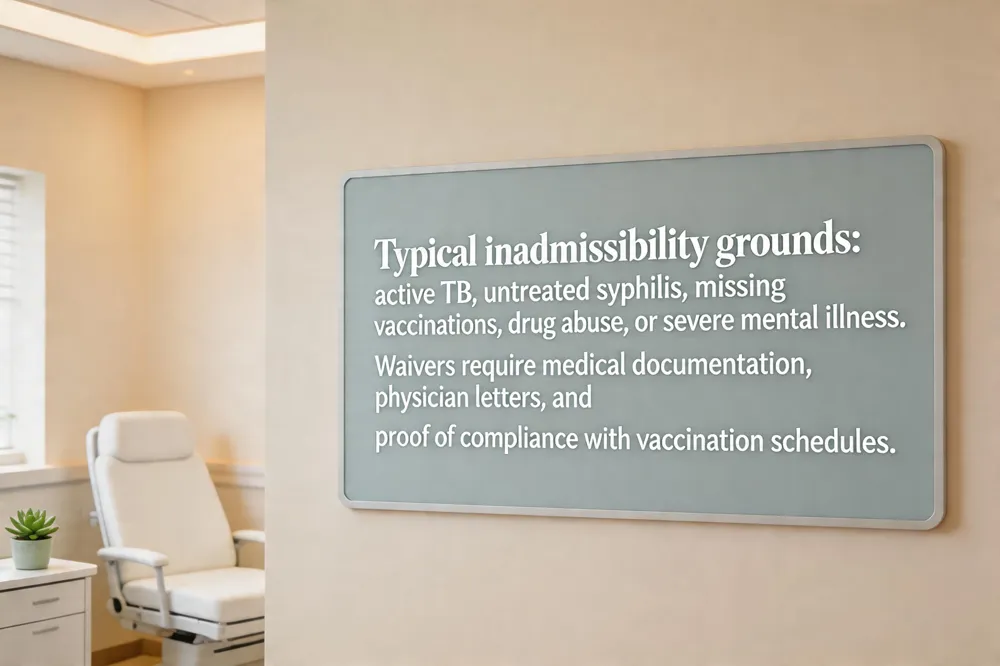 U.S. immigration medical exams screen for health conditions that could pose a public‑health risk or affect an applicant’s ability to thrive in the United States. Common grounds for denial include active tuberculosis, untreated syphilis, insufficient vaccination records, or evidence of drug abuse or severe mental illness. A positive hepatitis B test does not automatically bar entry; a physician’s letter confirming chronic, non‑contagious status and overall health usually satisfies the requirement. Failure can also stem from procedural errors—using a non‑civil‑surgeon, an outdated I‑693 edition, missing signatures, or incomplete lab work. When a medical inadmissibility is identified, USCIS may request treatment, additional documentation, or a waiver. Waivers often rely on detailed medical records, doctor certifications, and proof of compliance with vaccination schedules. Holistic care providers, such as Jana HealthCare in Brooklyn, can streamline this process by offering comprehensive exams, on‑site vaccinations, and personalized counseling, ensuring applicants meet health standards while supporting overall wellness and aesthetic goals.
Post‑Exam Process: Sealed Form I‑693 and Submission
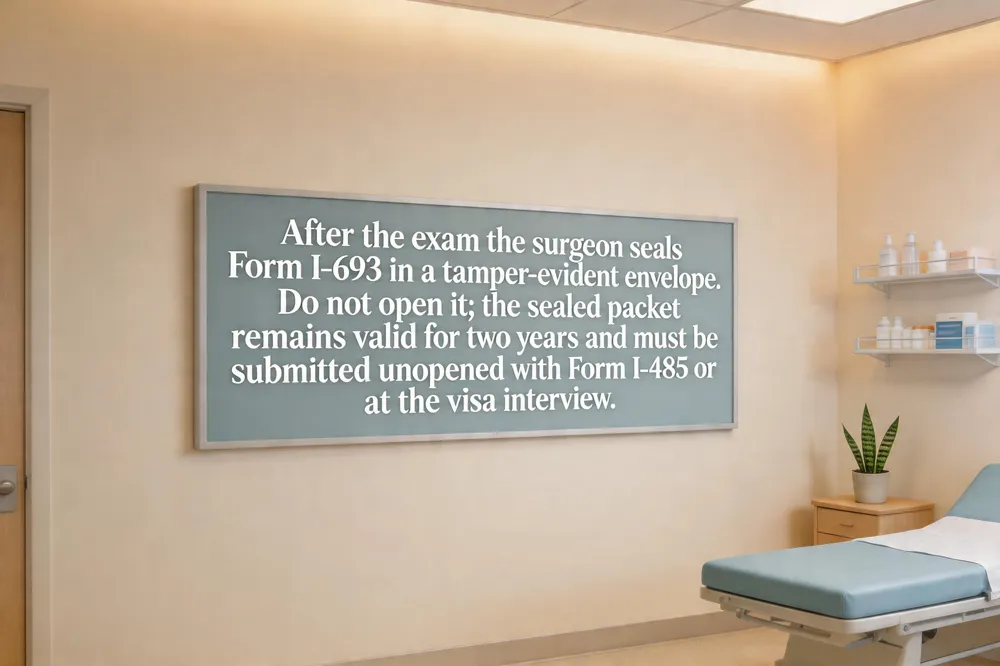 After your immigration medical exam, the civil surgeon places the completed Form I‑693 in a sealed envelope. Do not open the envelope; any breach of the seal will cause USCIS to reject the form. The sealed packet remains valid for two years from the surgeon’s signature, although for adjustment‑of‑status filings the envelope must accompany Form I‑485 at the time of filing or be presented at the consular interview. Submit the sealed envelope exactly as received—by mail with your I‑485 package or hand‑delivered at the interview—ensuring it stays unopened.
I‑693 medical exam what to expect: During the exam a USCIS‑designated civil surgeon verifies your identity, reviews medical history, conducts a basic physical, and screens for TB, syphilis, and gonorrhea. Required vaccinations (MMR, polio, varicella, etc.) are checked and any gaps can be filled on the spot. Once cleared, the surgeon signs and seals Form I‑693, which is valid for two years.
U.S. visa medical appointment: For visa applicants the exam is performed by an authorized panel physician. Bring your passport, interview letter, and an unsigned Form I‑693. The physician completes, signs, and seals the form, then forwards it to the embassy or consulate. If you’re in Brooklyn, Jana HealthCare can connect you with a qualified civil surgeon to streamline the process.
Quick FAQ Checklist and Resources
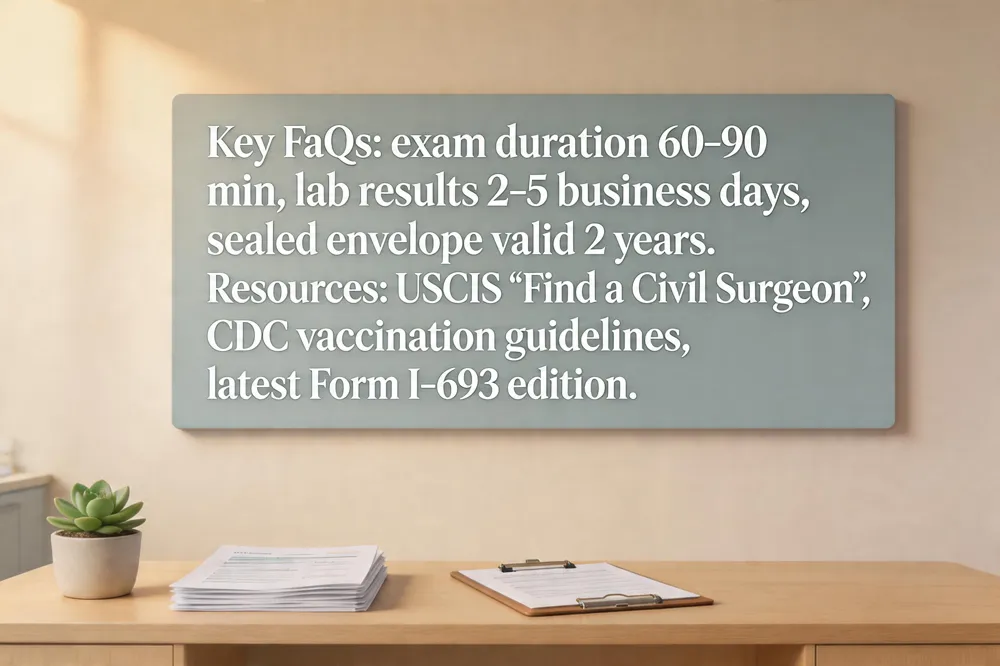 Key questions and concise answers
- How long does the U.S. immigration medical exam take? A typical appointment lasts 60‑90 minutes. Lab work (TB IGRA, syphilis, HIV, gonorrhea) and any chest X‑ray usually return in 2‑5 business days. The civil surgeon then seals Form I‑693 and hands it to you within 3‑7 business days. Schedule 4‑6 weeks before filing your I‑485 to avoid delays.
- U.S. visa medical appointment: Required for immigrant‑visa applicants and performed by a designated panel physician (or U.S. civil surgeon for status adjustment). Bring passport, interview letter, and unsigned Form I‑693. The physician completes, signs, and seals the form, which is sent to the embassy/USCIS. Jana HealthCare in Brooklyn can connect you with an authorized civil surgeon and streamline paperwork.
Helpful links and search terms
- “USCIS Find a Civil Surgeon”
- “Form I‑693 latest edition 01/20/25”
- “CDC vaccination requirements immigration”
Next steps for applicants
- Gather ID, vaccination records, medication list, and Part 1 of Form I‑693.
- Call or use USCIS’s tool to book a civil surgeon (e.g., Jana HealthCare).
- Attend the exam, receive the sealed envelope, and submit it with your I‑485 or bring it to your interview.
Final Takeaways
First, gather all required documents—photo ID, vaccination records, a list of current medications, and a printed Form I‑693 with Part 1 filled but unsigned. Schedule an appointment with a USCIS‑designated civil surgeon at least four weeks before filing your green‑card or visa packet, and be prepared for the physical exam, tuberculosis IGRA blood test, syphilis blood work, and any needed chest X‑ray. Bring any prior chest X‑ray films or treatment certificates for TB, syphilis, or substance‑use disorders, and stay hydrated for urine collection. The civil surgeon will review your medical history, verify vaccinations, administer any missing shots, and complete and seal Form I‑693 in a tamper‑proof envelope that you must not open. Using a USCIS‑approved civil surgeon guarantees that the exam follows the CDC Technical Instructions and that the sealed envelope will be accepted by USCIS. Jana HealthCare in Brooklyn offers civil‑surgeon services and a process to help you meet all requirements.