Why Preventive Care Matters
Internists coordinate adult health by scheduling age‑specific screenings, vaccinations, and mental‑health checks, catching disease before symptoms appear. Early detection paired with personalized lifestyle counseling—diet, exercise, tobacco cessation—lowers risk of heart disease, diabetes, and cancer while supporting overall wellness. At Jana HealthCare in Brooklyn, NY, clinical preventive services are seamlessly blended with aesthetic and wellness therapies, creating a holistic, patient‑centered plan that optimizes health, confidence, and long‑term quality of life.
Understanding Preventive Screening: Foundations and Definitions
 The four levels of preventive medicine are primordial, primary, secondary, and tertiary. Primordial prevention aims to prevent the emergence of risk factors themselves by influencing societal, environmental, and behavioral determinants. Primary prevention seeks to avert disease onset through interventions such as vaccinations, health education, and lifestyle modification. Secondary prevention focuses on early detection and prompt treatment of disease in its subclinical stage, using screening and follow‑up. Tertiary prevention reduces complications and disability in established disease by providing rehabilitation, chronic disease management, and support to maintain quality of life.
Internists weave these concepts into a personalized, holistic approach: they assess risk, order age‑appropriate screenings, and combine medical findings with wellness counseling—nutrition, exercise, stress‑reduction—and even aesthetic enhancements that boost confidence, ensuring that Preventive care supports both health and overall well‑being.
Core Routine Screenings Every Adult Should Have
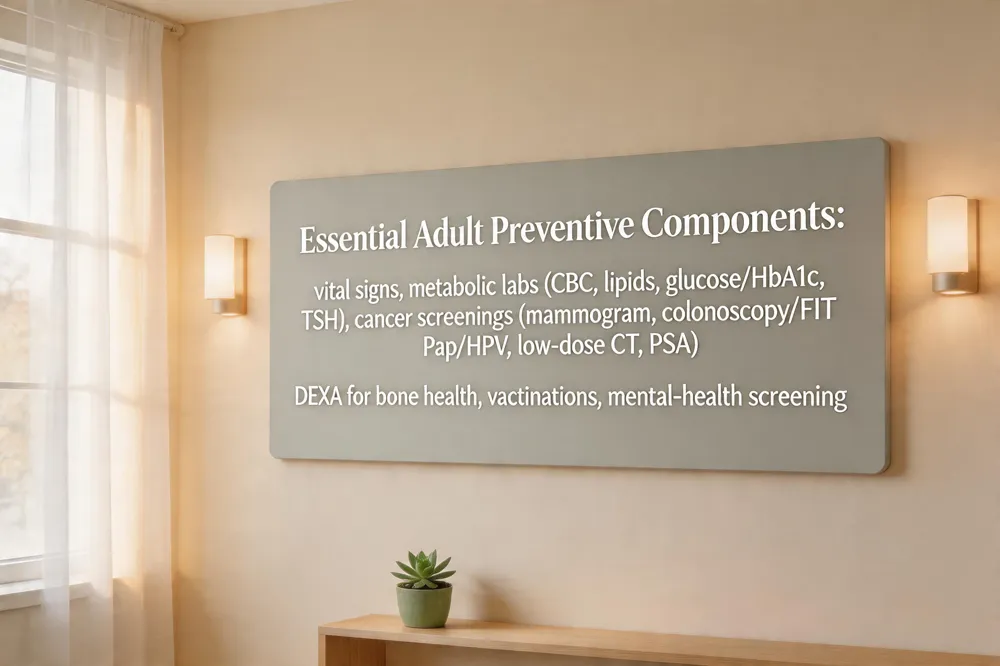 Adult preventive care is anchored by three pillars: vital‑sign checks, a metabolic laboratory panel, and age‑specific cancer and bone‑density screening.
What are the recommended routine screenings for adults? At each wellness visit, an internist measures blood pressure, heart rate, BMI and performs a focused physical exam. Blood work evaluates cholesterol, fasting glucose or HbA1c, and renal‑liver function. Cancer screening follows USPSTF and ACP guidelines—mammograms (women ≥ 40 y), colonoscopy or FIT (both sexes ≥ 45 y), Pap/HPV women 21‑65 y), low‑dose CT for lung cancer (high‑risk smokers 50‑80 y), and PSA discussion for men ≥ 50 y. A DEXA scan is added for osteoporosis risk (women ≥ 65 y, men ≥ 70 y or earlier with risk factors).
What lab tests are typically included in a preventive visit? The core panel includes a complete blood count, lipid profile (LDL, HDL, triglycerides), fasting glucose or HbA1c, and a thyroid‑stimulating hormone level when indicated. Kidney and liver function panels, vitamin D, and targeted serologies (e.g., hepatitis C) may be added based on age, history, or risk.
What tests are typically part of a preventive health check‑up? Beyond vitals and labs, the visit incorporates vaccination review (influenza, COVID‑19, Tdap, shingles), mental‑health screening (PHQ‑9, GAD‑7, skin and eye exams, and counseling on diet, exercise, tobacco cessation, and weight management. This comprehensive, personalized approach—often integrated with aesthetic wellness services—helps you stay ahead of disease, optimize health, and feel your best.
Age‑Specific Guidelines from USPSTF and CDC
 USPSTF recommendations by age and gender Adults ≥18 years should have blood‑pressure checks at least every 2 years; cholesterol panels start at age 20 and repeat every 4‑6 years. Cervical cancer screening (Pap alone every 3 years or Pap + HPV every 5 years) is advised for women 21‑65. Breast cancer mammography is recommended biennially for women 40‑74. Colorectal cancer screening (colonoscopy every 10 years or stool‑based tests) is for adults 45‑75. Lung‑cancer low‑dose CT screening is for ages 55‑80 with a 30‑pack‑year smoking history. Men 65‑75 who have ever smoked receive a one‑time abdominal aortic aneurysm ultrasound.
CDC health‑screening chart & vaccination schedule The CDC emphasizes routine blood‑pressure and lipid panels for all adults. Women 21‑65 receive cervical screening; women 50‑74 have mammograms every 2 years. Colorectal screening starts at 45 for both sexes. Bone‑density (DEXA) testing is for women ≥ 65 and men with risk factors. One‑time hepatitis C testing is recommended for everyone 18‑79; STI/HIV screening follows risk‑based guidelines. Annual influenza vaccine, a 10‑year Tdap booster, and age‑appropriate vaccines (shingles, pneumococcal, HPV up to age 26) are covered.
Special considerations for high‑risk groups Smokers, individuals with a family history of cancer, obesity, or hypertension may need earlier or more frequent screenings—e.g., low‑dose CT for lung cancer at 50 years if smoking ≥ 20 pack‑years, or earlier colonoscopy for first‑degree relatives with colorectal cancer before 60. Internists tailor plans, coordinate specialist referrals, and incorporate lifestyle counseling to optimize long‑term health and aesthetic wellness.
Specialty Areas: Thyroid Care, Pap Smear Updates, and Mental Health
 Internists are the first line for thyroid health. They evaluate symptoms, order TSH and hormone panels, and prescribe levothyroxine for hypothyroidism or antithyroid drugs for hyperthyroidism. Regular follow‑up lets them fine‑tune doses, track weight, energy, and mood changes, and refer to an endocrinologist when nodules, cancer, or refractory disease arise.
In 2026, cervical‑cancer screening became more flexible. Women 30‑65 can opt for an at‑home, self‑collected HPV test instead of a clinician‑performed Pap smear. The traditional Pap remains available every three years, while primary HPV testing alone is recommended every five years. These options aim to boost access and adherence while preserving safety.
Mental‑wellness screening is now routine. Internists use validated tools such as the PHQ‑9 for depression and the GAD‑7 for anxiety, completing them during wellness visits. Positive scores trigger counseling, lifestyle coaching, or referral to mental‑health specialists, ensuring a holistic approach that blends medical care with wellness and aesthetic goals.
Integrating Preventive Care in Practice: Vaccinations, Lifestyle Counseling, and Coordinated Care
 Adult preventive care begins with a routine vaccination schedule that protects against the most common infectious threats while supporting overall vitality. Every year, all adults—no matter their age—should receive an influenza shot, and a Tdap booster is due every ten years. Age‑specific vaccines follow: shingles (Shingrix) at 50 years, pneumococcal (PCV20) at 65 years, and HPV up to 26 years (with shared decision‑making through 27‑45). Internists at Jana HealthCare review immunization records at each visit, ensuring no gaps and coordinating with insurance to keep services $0 for the patient.
Beyond shots, lifestyle counseling is woven into every appointment. Internists assess diet, activity, sleep, and tobacco use, using evidence‑based tools such as the PHQ‑9 for mood and the GAD‑7 for anxiety. Personalized plans emphasize plant‑forward meals, at least 150 minutes of moderate exercise weekly, and a step‑by‑step smoking‑cessation strategy that may include nicotine replacement or prescription aids.
Jana HealthCare’s multidisciplinary model brings together internal medicine, nutritionists, mental‑health counselors, and aesthetic specialists. This team‑based approach aligns preventive screenings, vaccine updates, and wellness coaching with aesthetic goals—such as skin health and body‑confidence—creating a seamless, patient‑centered pathway to long‑term health optimization.
Putting It All Together for a Healthier Future
Your health journey thrives when you and your internist work as partners. At Jana HealthCare, the same physician who orders your blood‑pressure check also tailors skin‑care, nutrition and wellness plans, so medicine and aesthetic enhancement reinforce each other. By staying current with age‑appropriate screenings—blood pressure, cholesterol, cancer tests, vaccinations and mental‑health checks—you catch issues and keep your body looking and feeling its best. Schedule visits, ask about guidelines, and let the team keep you on track for a healthier future.